
To start composting easily, choose a spot in your yard or a simple container for your compost. Gather kitchen scraps like vegetable peels, fruit waste, and coffee grounds, then add brown materials such as dry leaves or shredded paper. Balance green and brown wastes, keep the pile moist, and turn it regularly to aerate. With consistent effort, you’ll soon see rich soil forming—plus, there’s more to discover on how to make your compost even better.
Key Takeaways
- Choose a dedicated spot or container for composting in your yard or kitchen.
- Collect kitchen scraps like vegetable peels, coffee grounds, and eggshells as green materials.
- Add brown materials such as dry leaves, shredded paper, or straw to balance the compost.
- Keep the compost moist and turn it regularly to aerate and speed up decomposition.
- Monitor the compost until it turns dark, crumbly, and ready to use in your garden.
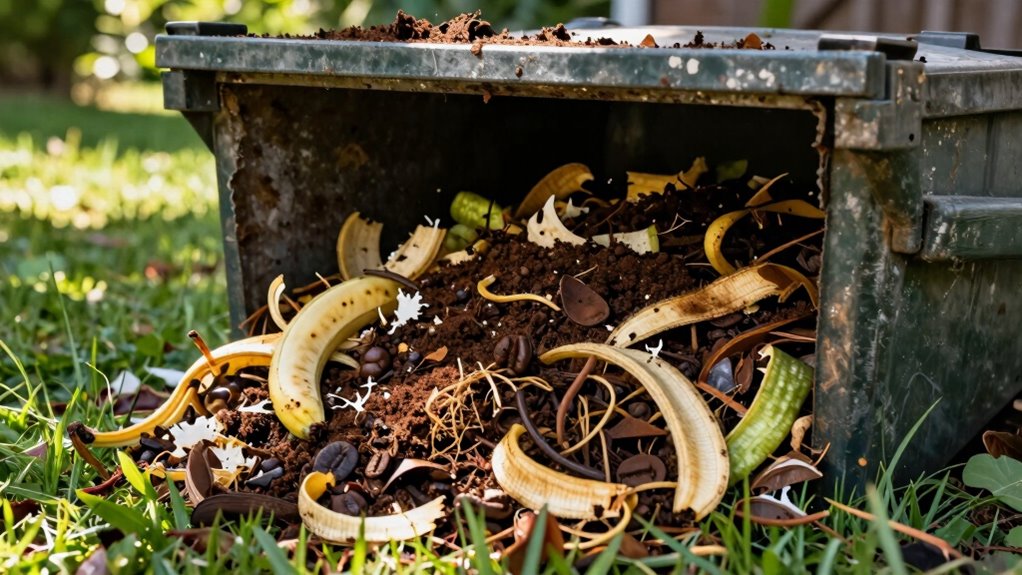
Starting your composting journey is easier than you might think. The first step is understanding how composting benefits soil health and waste reduction. Composting adds vital nutrients back into the soil, improving its structure and fertility. Composting also supports biodiversity by creating a healthier environment for beneficial organisms in your garden. By recycling kitchen scraps and yard waste, you reduce the amount of trash sent to landfills, which decreases methane emissions and lessens environmental impact. With just a few simple actions, you can turn everyday waste into rich, organic compost that supports healthy plants and a healthier planet.
Starting your composting journey is simple—recycle waste, enrich your soil, and help protect the environment with just a few easy steps.
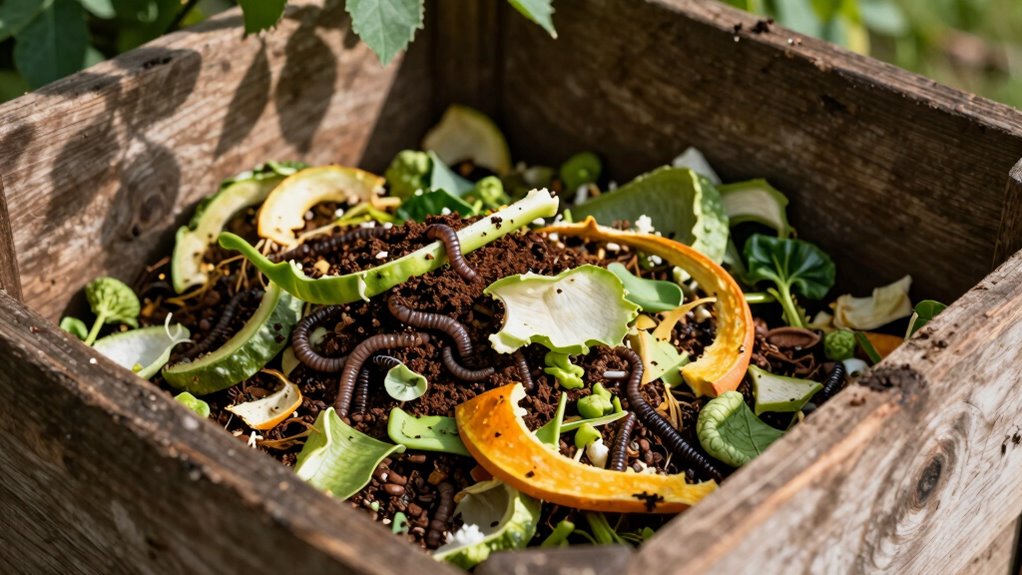
To begin, choose a designated spot in your yard or even a container if you’re limited on space. You don’t need a fancy setup; a simple bin or a dedicated corner works well. The key is to provide good airflow and manage moisture levels. Start collecting kitchen scraps like vegetable peels, coffee grounds, eggshells, and fruit waste. These are “green” materials, meaning they’re rich in nitrogen and help accelerate composting. Complement these with “brown” materials such as dry leaves, shredded paper, or straw, which provide carbon and balance out moisture and nutrients. Combining these correctly creates an ideal environment for beneficial microbes to thrive and break down waste efficiently. Understanding the importance of microbial activity can help you optimize the composting process and achieve faster results.
Keep your compost moist but not soaked, and turn it regularly to aerate the pile. Turning helps introduce oxygen, which is vital for decomposition and prevents unpleasant odors. As the process unfolds, you’ll notice the pile gradually shrinking and transforming into dark, crumbly soil. This rich compost is packed with nutrients that boost soil health, making your garden more vibrant and resilient. Interestingly, maintaining proper moisture levels also encourages beneficial microbial growth, which speeds up the composting process. Additionally, choosing the right composting method can further enhance efficiency and ease of use for your specific space and needs. The more you manage your compost, the faster organic matter decomposes, and the more you reduce waste that would otherwise end up in landfills. Additionally, understanding the science behind composting accelerates your learning and improves your results.
You don’t need to wait long to see results. Within a few months of consistent effort, you’ll have nutrient-dense compost that can be used to nourish your plants, vegetables, and flowers. This not only improves your garden’s productivity but also closes the loop on waste, making your household more sustainable. The initial steps are simple but powerful: selecting a container or spot, gathering kitchen scraps and yard waste, balancing green and brown materials, maintaining moisture, and turning the pile regularly. As you get into the habit, composting becomes second nature, turning waste into a valuable resource that benefits your soil and reduces your environmental footprint.
As an affiliate, we earn on qualifying purchases.
Frequently Asked Questions
How Long Does Composting Typically Take to Produce Usable Compost?
Composting usually takes about 3 to 6 months to produce usable compost, depending on factors like composting temperature and moisture levels. When you maintain the right temperature—around 135°F to 160°F—and keep moisture levels consistent, the process speeds up. Turning the pile regularly also helps. If conditions stay ideal, you’ll soon have rich, dark compost ready to nourish your garden.
Can I Compost Pet Waste Safely?
You can compost pet waste, but it requires careful pet waste management and safety precautions. Always use a dedicated, sealed compost bin away from edible gardens, and avoid composting cat or dog waste with food crops. Follow composting safety tips by adding carbon-rich materials like sawdust or leaves, maintaining proper moisture, and ensuring the pile reaches high temperatures to kill pathogens. Regularly check and turn your compost for safe, effective breakdown.
What Are Common Pests Attracted to Compost Bins?
Common pests attracted to compost bins include rats, flies, raccoons, and ants. To prevent pests, focus on pest prevention strategies like securing your compost bin with a tight-fitting lid and avoiding adding meat, dairy, or oily foods. Proper compost bin security keeps pests out and maintains a healthy compost environment. Regularly turning your compost and keeping it moist also discourages pests and promotes decomposition.
Is It Okay to Compost Cooked Food Scraps?
Cooking residues can find a cozy spot in your compost bin, but you should do so with caution. While composting cooked food scraps is okay, it’s essential to *take into account* food safety—avoid greasy, salty, or dairy-rich leftovers that might attract pests or cause odors. Think of it as a delicate dance: add small amounts, turn the compost regularly, and keep it balanced to turn cooking residues into rich earth without inviting trouble.
How Do I Troubleshoot a Smelly Compost Pile?
If your compost pile smells, it’s likely due to poor odor management or inadequate pile aeration. To fix this, turn the compost regularly to introduce oxygen, which helps break down materials and reduce odors. Also, add dry materials like leaves or straw to balance excess moisture and nitrogen-rich scraps. Proper aeration and balancing green and brown materials will keep your compost smelling fresh and functioning efficiently.
As an affiliate, we earn on qualifying purchases.
Conclusion
Starting your composting journey might seem intimidating at first, but remember, every small step counts. With just a few simple changes, you’ll soon be turning kitchen scraps into rich soil. Why not give it a try today? Isn’t it rewarding to see your waste transform into something that nurtures your garden? Embrace the process, and you’ll find composting becomes a satisfying part of your eco-friendly routine. Ready to make a difference, one compost bin at a time?
As an affiliate, we earn on qualifying purchases.
As an affiliate, we earn on qualifying purchases.