Indoor urban gardening lets you grow fresh food without outdoor space by using hydroponic systems that are ideal for small areas. These soil-less setups grow plants quickly, boost yields, and work year-round. Choosing the right system and containers—like colorful, well-draining options—can maximize your space and improve aesthetics. Whether you want herbs or vegetables, this approach makes indoor gardening practical and efficient. Keep exploring to discover how you can turn tiny spots into a thriving garden.

Get school and study supplies delivered free — and shop member deals
- Fast, free delivery on millions of items
- Access to Prime Big Deal Days deals on October 6–7
- Prime Video, Amazon Music and more included
Key Takeaways
- Use compact hydroponic systems like nutrient film technique for efficient indoor food production.
- Choose appropriately sized containers with drainage to support healthy plant growth in limited space.
- Select colorful, decorative containers to enhance indoor aesthetics while maintaining functionality.
- Grow a variety of herbs, leafy greens, and small vegetables suitable for small indoor environments.
- Maximize space by stacking or vertical gardening to increase yield in confined indoor areas.
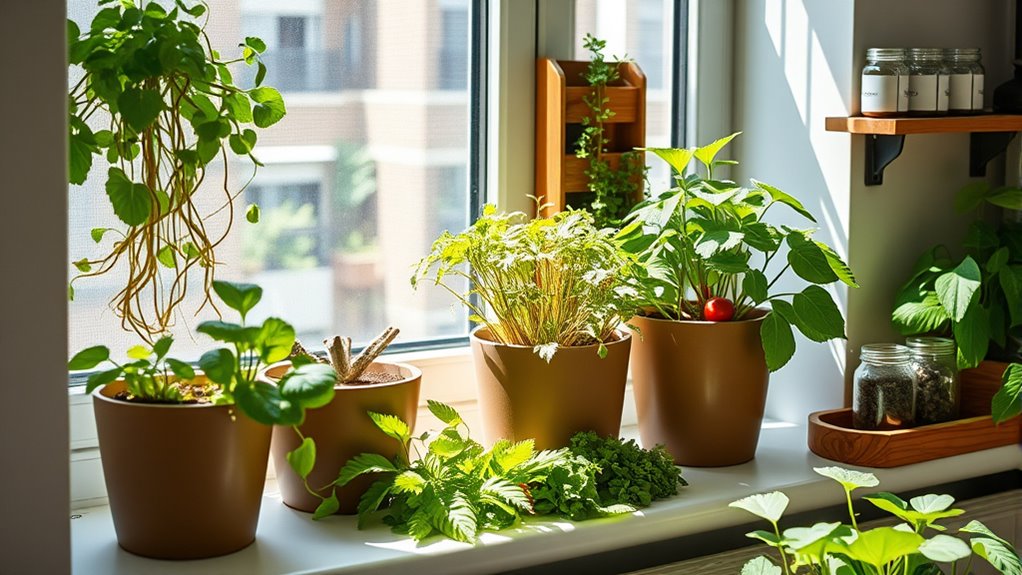
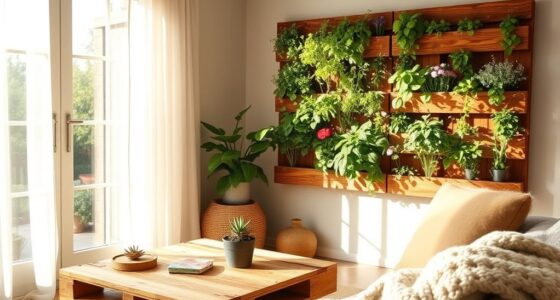
Urban gardening indoors is a practical way to bring fresh greenery into your living space, even if you lack outdoor yard space. One of the most efficient methods to do this is by exploring hydroponic systems. These soil-less setups allow you to grow plants directly in nutrient-rich water, making them ideal for small spaces and indoor environments. When choosing a hydroponic system, consider the types available—such as deep water culture, nutrient film technique, or aeroponics—and select one that fits your available space and your gardening goals. These systems tend to be compact, easy to set up, and require less maintenance than traditional soil-based gardening. Plus, they enable faster plant growth and higher yields, which is perfect if you want quick results or are limited on space.
Container selection is equally vital to successful indoor gardening. You need containers that are appropriately sized for your plants, with good drainage to prevent waterlogging. For herbs, leafy greens, or small vegetables, choose smaller pots or containers that fit comfortably on shelves or windowsills. If you’re growing larger plants or root vegetables, opt for bigger containers with sufficient depth to support healthy root development. When selecting containers, also think about the material—ceramic, plastic, or fabric pots each have their benefits. Plastic containers are lightweight and durable, while fabric pots provide excellent breathability, which can promote healthier root systems. Whichever you choose, ensure your containers have drainage holes to avoid excess water accumulating, which can lead to root rot. Additionally, using colorful containers can enhance the aesthetic appeal of your indoor garden.
As an affiliate, we earn on qualifying purchases.
Frequently Asked Questions
What Are the Best Lighting Options for Indoor Gardening?
You should choose LED grow lights or fluorescent bulbs for indoor gardening. LED grow lights are energy-efficient, produce less heat, and can be customized for different plant needs, making them ideal for small spaces. Fluorescent bulbs are affordable and provide good light spectrum coverage, perfect for seedlings and leafy greens. Both options support healthy plant growth, so pick based on your budget and space constraints.
How Do I Prevent Pests Indoors?
Think of pests as tiny invaders trying to steal your indoor garden’s treasure. To prevent them, you can use organic pest prevention methods like neem oil or introducing beneficial insects. Keep your space clean, inspect plants regularly, and avoid overwatering to create a hostile environment for pests. By staying vigilant and using natural defenses, you protect your garden’s bounty without harmful chemicals.
What Indoor Plants Grow Best Without Natural Sunlight?
You can grow shade-tolerant herbs like mint, parsley, and chives indoors without natural sunlight. Low light vegetables such as lettuce, spinach, and kale also thrive in indirect light. Place your plants near windows with sheer curtains or in well-lit rooms to maximize available light. Use grow lights if necessary, ensuring they’re on for 12-16 hours daily. This way, you’ll enjoy fresh herbs and vegetables even in low-light indoor spaces.
How Often Should I Water Indoor Garden Plants?
Did you know that overwatering is a common mistake that can harm your indoor plants? For a healthy indoor garden, you should water based on your plants’ needs, typically every 2-3 days. Keep an eye on moisture levels by checking the top inch of soil; if it feels dry, it’s time to water. Adjust your watering schedule as seasons change to maintain consistent moisture levels and avoid root rot.
Which Containers Are Safest for Edible Indoor Gardening?
For edible gardening indoors, choose containers made from food-safe materials like glazed ceramic, stainless steel, or BPA-free plastic. Avoid containers with lead-based glazes or recycled plastics that may leach harmful chemicals. Confirm your containers have drainage holes to prevent waterlogging. By selecting safe, quality containers, you protect your plants and ensure your indoor garden remains healthy and safe for consumption. Always verify container labels for food safety assurances.
compact LED grow lights for herbs
As an affiliate, we earn on qualifying purchases.
As an affiliate, we earn on qualifying purchases.
Conclusion
As you start growing your own food indoors, you’ll find it’s more than just a hobby—it’s a coincidence of convenience and creativity. Suddenly, those small spaces become lush, productive gardens, and your efforts turn into fresh meals. You might notice how a simple windowsill or closet transforms into a thriving green oasis. It’s almost like nature conspired to bring more freshness and flavor into your life, all tucked neatly into your everyday space.
colorful indoor plant containers with drainage
As an affiliate, we earn on qualifying purchases.
As an affiliate, we earn on qualifying purchases.
As an affiliate, we earn on qualifying purchases.
Halloween Picks
halloween
As an affiliate, we earn on qualifying purchases.