Make a wearable science-themed Halloween costume that people can recognize at a glance. This guide is for beginners, families, students, and anyone who wants to dress as a scientist, astronaut, atom, planet, or other science subject using accessible materials. You will choose a concept, gather supplies, assemble the outfit, and check that it is comfortable and safe to wear. Allow 1-3 hours, with extra time for paint or glue to dry.

Prime made for students and young adults
- Fast, free delivery for dorm and study essentials
- Prime Video and Amazon Music included
- Member-only deals

Hercicy 3-Piece Halloween American Scientist Costume Set
- ✔ Fabric: Polyester
- ✔ Care: Machine wash
- ✔ Coat length: 40.94 inches (104 cm)

Kids’ Doctor and Scientist Costume Kit with Lab Coat, Goggles, ID Card, and Magnifying Glass
- ✔ Coat fabric: Polyester-cotton blend
- ✔ Coat features: Buttons and two pockets
- ✔ Fit: Loose fit
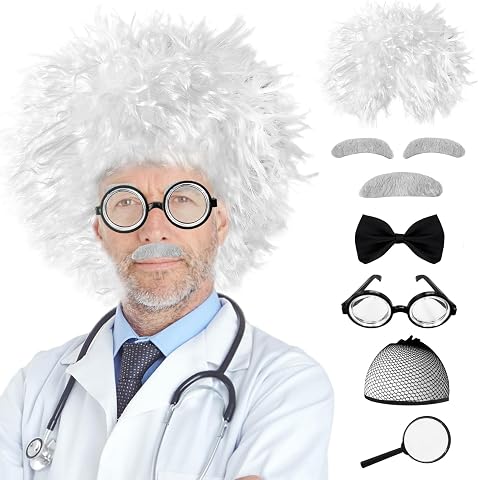
Mad Scientist Old Man Costume Set with Wig, Glasses, Beard, and Accessories
- ✔ Set contents: Wig, eyebrows, beard, glasses, magnifying glass, and bow tie
- ✔ Wig material: Synthetic fibers
- ✔ Glasses material: Plastic
Difficulty: Beginner | Time: 1-3 hours, plus drying time if using paint or glue
What You’ll Need
Tools & Materials:
- Clothes or a base outfit that fits comfortably
- Scissors
- Tape, safety pins, or fabric-safe adhesive
- Cardboard, paper, or lightweight craft foam
- Markers or washable paint
- Optional: a lab coat, clear plastic goggles, foil, or a headband
Knowledge:
- Basic cutting, drawing, and fastening skills
- Ability to check clothing and props for a comfortable fit
Set a budget and choose materials you already have before buying costume supplies. Ask permission before cutting or attaching anything to borrowed clothing. Avoid glass containers, loose small parts for young children, and materials that block vision or movement. If using paint or glue, follow its label and allow it to dry fully before wearing the costume.
Hercicy 3-Piece Halloween American Scientist Costume Set
For shoppers who want people to recognize the science theme quickly, Hercicy’s lab coat, bow tie, and molecule balls make the most balanced outfit in this group. The coat supplies the silhouette, while the contrasting accessories keep it from reading as ordinary workwear. Compared with the Mad Scientist Old Man set, Hercicy puts more emphasis on a conventional scientist identity; the old man set is more expressive, but depends on facial hair and a wig to establish its character.The 40.94-inch coat length and listed chest measurement offer some fit guidance, and the unisex styling broadens its potential audience. Still, the supplied size information is limited, so we should not assume it will sit comfortably over every outfit or suit every body shape. Polyester and machine washing make it a lower-maintenance choice than the hand-wash wig set, although the description does not establish details such as fabric weight or how the coat drapes.This is our top adult pick because it combines a wearable base garment with science-specific props, rather than relying on a single costume gimmick. It is less suitable for anyone seeking an intentionally wild, comic mad scientist look, and it does not offer the child-oriented comfort cues found in the Kids’ kit. We should also check the measurements against the intended wearer before ordering.
Pros:
- Includes a lab coat, bow tie, and chemistry molecule balls for a coordinated look.
- Unisex design can suit a range of costume settings.
- Machine-washable polyester is simpler to care for than the wig-based alternative.
- Listed coat measurements provide some fit reference.
Cons:
- Limited size information may make fit difficult to judge.
- The conventional scientist style is less characterful than the old man mad scientist set.
- The product details do not specify fabric weight or additional fit features.
Best for: Adults who want an immediately recognizable scientist costume with a coat and science-themed prop included.
Not ideal for: Shoppers who need detailed size options, want an exaggerated mad scientist character, or are buying specifically for a child.
Bottom line: We recommend Hercicy for the most complete adult scientist look, provided the listed coat measurements work for the wearer.
“We recommend Hercicy for the most complete adult scientist look, provided the listed coat measurements work for the wearer.”
Kids’ Doctor and Scientist Costume Kit with Lab Coat, Goggles, ID Card, and Magnifying Glass
Among these three options, this is the one built specifically around a child’s dress-up experience. The loose-fit coat, two pockets, and simple accessories make it suitable for moving around and inventing games, not just standing for a Halloween photo. Its goggles, ID card, and magnifying glass support doctor or scientist role-play, giving it more flexible pretend-play potential than Hercicy’s adult-oriented set.The polyester-cotton blend and machine-washable coat are practical advantages for a garment likely to be worn during activities. By comparison, the Mad Scientist set offers a more defined character but requires careful hand washing and includes adhesive facial pieces. The kids’ kit avoids that particular fuss, though its plastic accessories feel more like lightweight play props than substantial costume details. The supplied description does not give coat measurements or an age range, so we should verify fit and suitability rather than assume the loose cut will work for every child.We place it ahead of the old man set for family buyers because it combines a clear science-and-doctor theme with repeated-use potential. It is not the right choice for adults, or for a child who wants a spooky, eccentric mad scientist persona. It also lacks the molecule-themed prop that makes Hercicy especially specific to science at a glance.
Pros:
- Includes a lab coat, goggles, ID card, and magnifying glass.
- Loose fit and two pockets support movement and interactive pretend play.
- Machine-washable coat is convenient for repeated use.
- Works for Halloween, school projects, and themed parties.
Cons:
- Accessories are plastic and may feel lightweight.
- No coat measurements or age range are supplied in the provided details.
- The doctor-and-scientist combination is less character-specific than the adult options.
Best for: Children who want a comfortable lab-coat costume they can also use for classroom activities, parties, and pretend play.
Not ideal for: Adults, shoppers seeking a dramatic mad scientist look, or buyers who want non-plastic costume accessories.
Bottom line: For children, this kit offers the most useful blend of a recognizable coat and play-friendly accessories, with fit still worth checking.
“For children, this kit offers the most useful blend of a recognizable coat and play-friendly accessories, with fit still worth checking.”
Mad Scientist Old Man Costume Set with Wig, Glasses, Beard, and Accessories
This set takes a different route from the two lab-coat costumes: the wig, eyebrows, beard, glasses, and bow tie turn the wearer into an elderly, eccentric character. That makes it the most theatrical option here, especially if the goal is a funny costume rather than a straightforward scientist uniform. Hercicy is easier to read as a conventional scientist because it includes a coat and molecule prop; this set instead relies on its face and hair accessories to do the storytelling.The glasses are described as not affecting sight, a useful distinction for a costume accessory, and the synthetic wig is described as soft. Yet the facial hair and eyebrows are self-adhesive, which can make application and staying power less dependable than putting on a coat or goggles. Care is also more demanding: the wig needs gentle hand washing, air drying, and no heat. That is a sharper maintenance tradeoff than either machine-washable coat option.We rank it third overall not because its character idea is weak, but because it is a narrower interpretation of a science costume. It suits shoppers who already have suitable clothing and want a playful old scientist persona. Those seeking an all-in-one lab look, or a lower-fuss option for a child, should choose Hercicy or the Kids’ kit instead. The supplied details do not list every accessory material or explain how the adhesive pieces are applied, so expectations should stay focused on the listed contents.
Pros:
- Several character-defining pieces are included, including a wig, beard, eyebrows, glasses, and bow tie.
- Creates a more exaggerated persona than either lab-coat set.
- Glasses are described as not affecting sight.
- Can suit Halloween, costume parties, and classroom activities.
Cons:
- Mustache and eyebrows are self-adhesive.
- Wig requires gentle hand washing and air drying without heat.
- No lab coat is included, so the set depends on the wearer’s own clothing for a full outfit.
Best for: Adults or older costume wearers who want a humorous old scientist character and already have clothing to complete the outfit.
Not ideal for: Anyone who wants a lab coat included, dislikes adhesive facial hair, or prefers machine-washable costume components.
Bottom line: Choose this set when character and comic effect matter more than a complete, low-maintenance lab outfit.
“Choose this set when character and comic effect matter more than a complete, low-maintenance lab outfit.”
As an Amazon Associate we earn from qualifying purchases.
Before You Start
Choose a costume idea that suits the wearer’s age, weather, event rules, and available materials. For a fast build, use regular clothes as the base and make one bold, readable feature, such as a planet sign or cardboard atom model. Check whether the event allows toy props, masks, or battery-powered lights. Keep the face visible and leave hands free if the wearer will be walking, carrying treats, or supervising children.
Step-by-Step Instructions
Step 1: Choose one science concept
Pick a single subject that can be recognized through clothing, color, and one or two props. For a scientist, use a shirt, coat, name badge, and paper clipboard. For an astronaut, use a light-colored outfit, a mission patch, and a cardboard control panel. For an atom, planet, or molecule, use a plain base outfit and a large labeled symbol. Write the concept in a few words before collecting supplies so the design stays focused.
Tip: Choose a design that can be explained in one sentence. If a concept needs a long explanation, add a large, readable label.
Check: You can name the costume idea and identify its most recognizable feature.
Step 2: Check the event and wearer
Confirm the costume’s setting, likely weather, and any school, workplace, or party rules. Ask whether props, face coverings, lights, or loose accessories are allowed. Check the wearer’s clothing size and mobility needs. Plan a warm layer under the costume for outdoor events, and leave enough room to sit, climb stairs, and use the bathroom without removing complicated pieces.
Tip: For a child’s costume, get the child’s input and plan to attach decorations securely. Avoid long capes, trailing wires, or parts that can catch on furniture.
Check: The design fits the event rules and can be worn while walking, sitting, and moving the arms.
Step 3: Gather and prepare materials
Lay out the base clothing, signs, props, and fastening materials before assembling anything. Reuse a white shirt or coat for a scientist, dark clothing for a space theme, or a plain shirt as the base for a large science symbol. Cut cardboard or foam on a protected surface, round sharp corners, and test markers or paint on a small scrap first. Keep labels short and use large lettering that can be read from several steps away.
Tip: Use lightweight materials for anything worn on the head or attached to the body. Secure cardboard with tape or safety pins rather than carrying an awkward piece in one hand all evening.
Check: All planned pieces are present, light enough to wear, and free of sharp edges.
Step 4: Make the main costume feature
Create the costume’s focal point first. Draw a clear atom diagram, planet, molecule, or mission patch on cardboard or paper, then color it with a small number of contrasting colors. For a scientist costume, add a name badge such as “Dr. Nova” and a simple diagram on a clipboard. Attach the feature to clothing with removable tape or safety pins, or use a headband for a small, lightweight decoration. Keep the face, eyes, and clothing fasteners clear.
Tip: Do not attach heavy objects to a headband or place decorations where they can swing into the wearer’s face.
Check: The main feature stays in place and is easy to identify without explanation.
Step 5: Add supporting details
Add only a few details that reinforce the idea: a paper mission patch, a labeled sample card, a drawn constellation, or a safe toy telescope. Use pretend science props made from paper or empty, clean containers; do not use chemicals, real lab equipment, or glass. Put small accessories in a pocket or attach them securely so they do not become tripping or choking hazards. Keep all lettering and symbols visible against the outfit.
Tip: A prop should add recognition, not get in the way. Skip it if it needs to be held constantly or could be mistaken for a real tool or weapon.
Check: The extra details support the concept while leaving the wearer’s hands and path clear.
Step 6: Try on and secure the costume
Have the wearer put on the complete outfit, including any jacket, shoes, and accessories intended for the event. Walk, sit, bend, raise both arms, and turn the head. Tighten or reposition anything that slips, pokes, blocks vision, or catches on clothing. Replace unsafe shoes with well-fitting walking shoes, and remove loose decorations that come off during movement. Check that fastening points do not scratch skin.
Tip: Test the costume in the lighting where it will be worn. Add reflective tape to a dark outfit if the event will be outdoors at night and the organizer permits it.
Check: The costume stays in place through normal movement, and the wearer can see, breathe, and walk comfortably.
Step 7: Pack a small repair kit
Set aside spare tape, a few safety pins, and a marker for quick repairs. Pack them in a small bag with any removable pieces that need to be put back on later. Before leaving, check that paint and glue are dry, props are secured, and the costume still meets the event’s rules. Keep repair materials with an adult when the wearer is a young child.
Tip: Do not carry scissors or sharp tools at the event. Make any cutting or repair that needs a blade before leaving home.
Check: The outfit is dry, complete, and ready to wear, with a simple way to fix a loose attachment.
Common Mistakes to Avoid
- Adding too many scientific references, so the costume looks cluttered. — Use one main concept, one focal feature, and a small number of supporting details. Make the central idea readable from a distance.
- Using heavy, sharp, glass, or chemical props. — Make pretend props from paper, cardboard, or clean empty containers. Round cut edges and check event rules before carrying any prop.
- Attaching decorations where they block vision or restrict movement. — Try on the full outfit and test walking, sitting, bending, and turning before the event. Move or remove anything that interferes.
- Using paint or adhesive before checking whether it is suitable for the material. — Test it on a scrap first, follow the product label, and leave enough drying time to prevent stains or skin contact.
Troubleshooting
Problem: The costume idea is not recognizable.
Solution: Add a large label naming the science subject, increase contrast, or make the focal symbol larger. Remove decorative details that compete with it.
Problem: A cardboard feature keeps bending or falling off.
Solution: Use thicker cardboard or foam, reduce the feature’s size, and attach it at several points with tape or safety pins. Avoid attaching a large piece to a stretchy or delicate area of clothing.
Problem: The costume feels uncomfortable or too warm.
Solution: Remove nonessential layers and props, switch to a breathable base outfit, and try the costume on again. Keep a warm layer available for outdoor weather rather than wearing a heavy costume indoors.
Problem: Paint, glue, or tape damages the clothing.
Solution: Stop applying it to the garment. Use a paper feature pinned or clipped onto the clothing, or attach decorations to a separate accessory instead. Follow the product label for cleanup and avoid wearing anything with wet material against skin.
What Success Looks Like
The finished costume communicates one science idea through a recognizable outfit or symbol, has no sharp or hazardous props, and stays attached during ordinary movement. The wearer can see clearly, breathe comfortably, walk and sit without tripping, and comply with the event’s costume rules. Someone should be able to identify the theme from the main visual feature or its label.
Next Steps
After the event, remove pins and detachable decorations before washing or storing the clothing. Store reusable cardboard or foam pieces flat and dry, and discard materials that are damaged or no longer safe. Save the design notes and reusable accessories if you plan to repeat the costume; replace any worn fasteners before the next event.
Frequently Asked Questions
What is the quickest science-themed costume to make?
Wear a white shirt or coat, add a paper name badge, and carry a clipboard with a simple labeled diagram. This scientist costume needs few materials and avoids a bulky prop.
How can I make a costume without a lab coat?
Use everyday clothing as the base and rely on a large science symbol, mission patch, name badge, or clear label. A recognizable feature matters more than a specific garment.
How do I make a science costume suitable for a young child?
Choose soft, light materials; keep the face uncovered; and attach decorations securely. Avoid small detachable pieces, long cords, sharp edges, and props the child could put in their mouth.
Can I use glow sticks or battery lights?
Check the event rules and follow the product instructions. Keep batteries and small parts inaccessible to young children, secure lights so they do not dangle, and do not use damaged batteries or wiring.
How can I make the costume visible outdoors at night?
Choose contrasting colors and add permitted reflective tape to the front and back. Keep the face visible and use well-fitting shoes; decorative lights do not replace adult supervision or ordinary pedestrian safety.