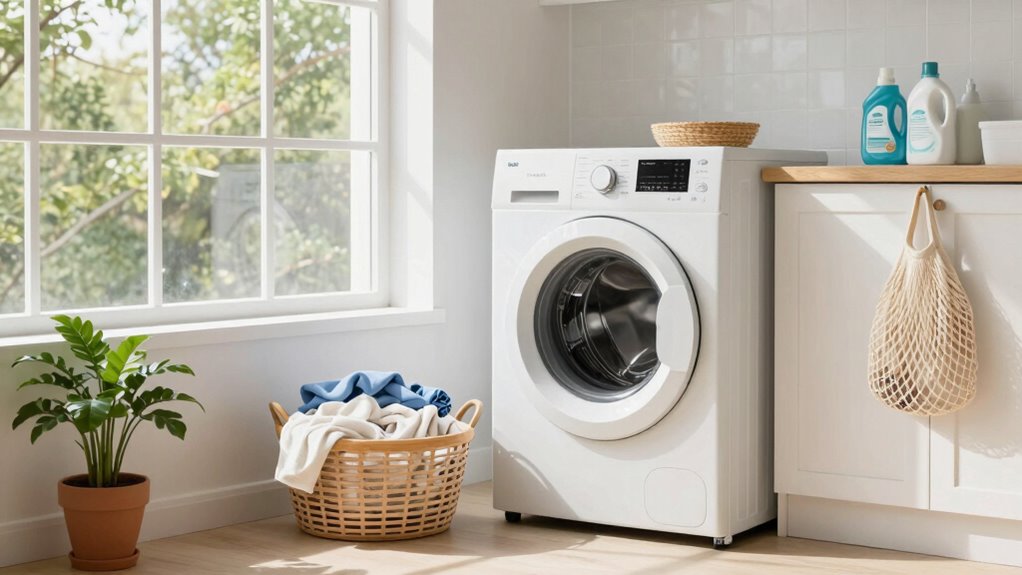

To make your laundry more eco-friendly, switch to biodegradable, chemical-free detergents that break down naturally. Use energy-efficient machines in eco or cold water modes, and aim for full loads to save both water and energy. Opt to air-dry clothes outside or on moisture sensors to reduce dryer use. Incorporate water-saving techniques and natural detergents to further lessen environmental impact. Keep exploring more simple ways to make your laundry routine greener and more sustainable.
Key Takeaways
- Use biodegradable, phosphate-free detergents to reduce chemical runoff and pollution.
- Wash full loads on cold water and select energy-saving modes to conserve water and electricity.
- Air-dry clothes outdoors or on energy-efficient dryers with moisture sensors.
- Upgrade to energy-efficient washing machines to minimize resource consumption.
- Practice water-saving techniques and avoid over-washing to lower environmental impact.
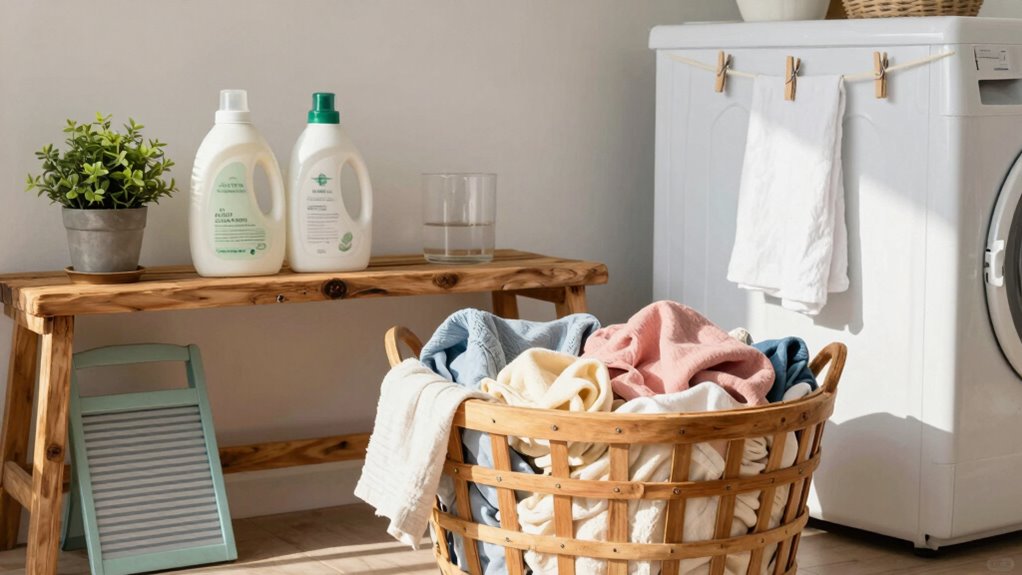
Doing laundry might seem like a small task, but it has a notable environmental impact. Every load consumes water, energy, and often introduces chemicals into the environment. The good news is, you can make your laundry routine more eco-friendly with simple changes. One effective way is to switch to biodegradable detergents. These cleaning products break down naturally in the environment, reducing pollution and lessening the burden on ecosystems. Unlike traditional detergents with harsh chemicals, biodegradable options are gentle on the planet, ensuring that when your clothes go down the drain, they don’t contribute to long-lasting water pollution. Choosing these detergents sends a clear message that you care about the environment, and it helps promote a cleaner, healthier planet.
Another impactful step is to prioritize energy-efficient washing practices. Modern washing machines often come with eco or energy-saving modes. Using these settings minimizes electricity consumption without compromising the cleanliness of your laundry. You should also aim to wash full loads whenever possible, as running a half-empty machine wastes both water and energy. When you select the right cycle, especially cold water options, you greatly reduce the energy needed to heat water. Cold water washing is just as effective for many stains and dirt, so you don’t have to sacrifice cleanliness for sustainability. Additionally, consider upgrading to an energy-efficient washer if yours is outdated. These models use less water and electricity, making each wash more environmentally friendly over time. Energy-efficient appliances can significantly reduce your household’s overall environmental footprint. Incorporating sustainable laundry practices can further enhance your eco-friendly efforts.
Beyond choosing eco-friendly products and settings, you can adopt habits that further reduce your laundry’s impact. For example, air-drying your clothes instead of using a dryer cuts down on energy use drastically. If you do need to use a dryer, make sure it’s energy-efficient and use moisture sensors to avoid over-drying. Using natural detergents and opting for laundry additives that are free from phosphates and artificial fragrances can also lessen environmental harm. Additionally, when possible, drying clothes outside on a line can help reduce your energy consumption and extend the life of your garments. Not only does this method save energy, but it also fosters a connection with natural biodiversity, contributing to a more sustainable lifestyle. Incorporating water conservation techniques during laundry can further lower your environmental footprint.
As an affiliate, we earn on qualifying purchases.
Frequently Asked Questions
Can I Use Homemade Laundry Detergents Safely?
Yes, you can use homemade laundry detergents safely if you follow proper guidelines. When creating DIY formulas, prioritize ingredient safety by choosing non-toxic, eco-friendly ingredients like washing soda, borax, and natural oils. Always test your homemade detergent on a small fabric area first and store it out of reach of children and pets. Properly labeling your homemade detergent helps prevent misuse, ensuring your laundry routine remains safe and eco-friendly.
Are Eco-Friendly Laundry Products More Cost-Effective Long-Term?
Eco-friendly laundry products often prove to be more cost-effective in the long run. You’ll notice savings through better product longevity and less frequent purchases, thanks to concentrated formulas and natural ingredients. While upfront costs might be slightly higher, the durability and efficiency of these products mean you’ll spend less over time. Plus, you’re making a positive environmental impact, which adds value beyond just your wallet.
How Can I Reduce Water Usage During Laundry?
You can reduce water usage during laundry by focusing on water conservation and laundry efficiency. Use full loads whenever possible to maximize water use and avoid running small loads. Opt for high-efficiency washers that use less water per cycle. Additionally, select eco or water-saving modes on your machine. Washing clothes in cold water also conserves energy and water, making your laundry routine more sustainable overall.
Do Eco-Friendly Detergents Work as Well as Conventional Ones?
Yes, eco-friendly detergents work just as well as conventional ones. They often use plant-based cleaning ingredients and come in biodegradable packaging, reducing environmental impact. While some skeptics worry about cleaning power, many brands now formulate effective solutions that tackle stains and odors effectively. You might need to try a few to find the right one, but rest assured, eco-friendly options can deliver powerful cleanings without compromising the planet.
What Are the Best Ways to Dry Clothes Sustainably?
To dry clothes sustainably, you should air dry whenever possible, as it uses no energy and reduces your carbon footprint. Hang your clothes outside or use indoor drying racks. Consider investing in solar dryers, which harness sunlight to dry clothes efficiently, even during cloudy days. These methods cut down on electricity use, save money, and are gentle on fabrics, making your laundry routine more eco-friendly.
energy-efficient washing machine
As an affiliate, we earn on qualifying purchases.
As an affiliate, we earn on qualifying purchases.
Conclusion
By making small changes, you can considerably reduce your laundry’s environmental impact. For example, using cold water saves about 90% of the energy compared to hot water. Plus, sticking to eco-friendly detergents and avoiding over-washing can cut down on waste and pollution. Remember, every effort counts—your eco-conscious choices help protect our planet for future generations. So, next time you do laundry, think green and make a positive difference!
As an affiliate, we earn on qualifying purchases.
As an affiliate, we earn on qualifying purchases.