TL;DR

Get school and study supplies delivered free — and shop member deals
- Fast, free delivery on millions of items
- Access to Prime Big Deal Days deals on October 6–7
- Prime Video, Amazon Music and more included
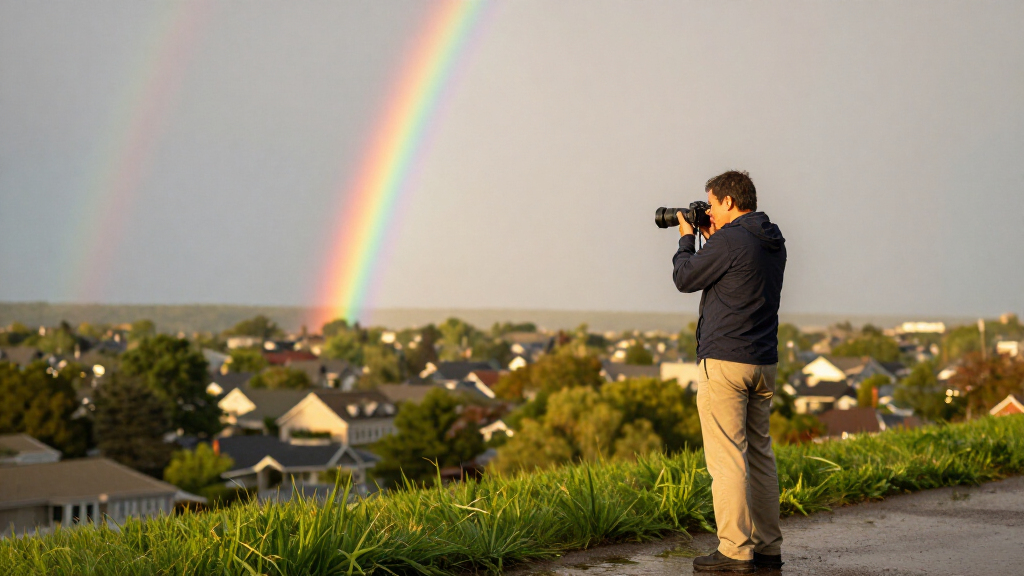
NASA’s Astronomy Picture of the Day for October 4, 2026, features a photograph of at least five supernumerary rainbows over the New Jersey shore. The image was taken in 2018 after remnants of Hurricane Florence passed through; the closely spaced color bands result from light waves interfering in similarly sized raindrops.
NASA’s Astronomy Picture of the Day for October 4, 2026, features a photograph of at least five supernumerary rainbows appearing over the Jersey Shore in New Jersey. Photographer John Entwistle took the image in 2018, after the remnants of Hurricane Florence passed through; the unusual closely spaced bands offer a visible example of light behaving as a wave.
NASA’s APOD description says that the scene appeared after the storm remnants moved over the Jersey Shore. The Sun emerged in one direction while rainbows formed in the opposite part of the sky. Over the next half hour, the bands faded in and out. Entwistle’s featured image captures at least five of the additional, narrow arcs, according to the NASA explanation.
These are called supernumerary rainbows. NASA explains that they form when falling water droplets are nearly the same size, typically less than a millimeter across. Sunlight interacting with the droplets produces not only the familiar rainbow but also interference patterns that appear as extra, closely spaced bands.
The October 4 page credits the image to John Entwistle and identifies Robert Nemiroff, Jerry Bonnell, Cecilia Chirenti and Keighley Rockcliffe as authors and editors. APOD, short for Astronomy Picture of the Day, pairs a daily image or photograph with an explanation written by a professional astronomer.
A Rainbow That Shows Light’s Waves
The image is more than an unusual sky photograph: it records a phenomenon whose explanation depends on the wave nature of light. NASA says sunlight waves interacting after passing through droplets can reinforce or cancel one another, creating extra bands beside the main rainbow. The effect makes wave interference visible in an everyday outdoor setting.
Supernumerary rainbows also depend on conditions within the cloud and rainfall. The droplets need to be nearly uniform in size, rather than a broad mixture of sizes. Their appearance can therefore reveal something about the droplets through which sunlight is passing, although the APOD description does not report measurements from this particular storm.
For readers, the feature connects an accessible visual event with a central idea in physics. NASA notes that the existence of supernumerary rainbows in the early 19th century was considered early evidence for light’s wave nature. The photograph provides a contemporary illustration of that history, not a new scientific finding or a claim that the effect was first observed in New Jersey.
As an affiliate, we earn on qualifying purchases.
The 2018 Storm and the 2026 Feature
The image’s publication date and the event it depicts are separated by several years. NASA identifies October 4, 2026 as the APOD date, while its accompanying explanation places the rainbow display in 2018, after remnants of Hurricane Florence passed over the New Jersey shore. The feature is a selection and explanation of an existing photograph, rather than a report that the rainbows appeared in 2026.
APOD presents a different astronomy-related image or photograph each day, accompanied by explanatory text. Although this selection focuses on an atmospheric optical effect rather than a distant astronomical object, the science of light links the subject to the project’s wider interest in explaining how the universe and natural phenomena can be observed.
NASA’s description says the photographer was with his daughter and watched the colors appear and fade during the half hour after the Sun came out. It does not give a more precise date or location along the shore, or describe the camera settings. The source credits Entwistle for the photograph and NASA’s listed editorial team for the APOD entry.
As an affiliate, we earn on qualifying purchases.
Details the APOD Does Not Give
NASA’s description identifies the broad setting as the Jersey Shore, New Jersey, and the year as 2018, but does not specify the exact date, town or observation point. It also does not identify the size distribution of droplets in the photographed shower through direct measurements; the droplet explanation is the general account of how supernumerary rainbows form.
The source says that at least five bands appear in the featured single image and that the display lasted around half an hour. It does not provide a technical image analysis, exposure details or an independently measured count. No new weather event, research study or scientific announcement is reported alongside the 2026 feature.
outdoor weatherproof camera for rainbows
As an affiliate, we earn on qualifying purchases.
As an affiliate, we earn on qualifying purchases.
The Daily APOD Continues
NASA’s page identifies the feature as the October 4, 2026, APOD and lists “open space” as the subject of the following day’s picture. The next development is the scheduled daily image and explanation, rather than a stated follow-up investigation of Entwistle’s 2018 photograph.
Readers interested in the image can consult the original NASA APOD entry for its photograph credit and explanation. The source does not announce additional analysis, new observations or further details about the New Jersey rainbow event.
As an affiliate, we earn on qualifying purchases.
Key Questions
What did NASA feature on October 4, 2026?
NASA’s Astronomy Picture of the Day featured John Entwistle’s photograph of at least five supernumerary rainbows over the Jersey Shore.
When were the rainbows photographed?
NASA says the image was taken in 2018, after remnants of Hurricane Florence passed over the New Jersey shore. October 4, 2026, is the APOD publication date, not the date of the rainbow event.
What causes supernumerary rainbows?
They form when sunlight interacts with falling water droplets that are nearly the same size, typically less than a millimeter across. Wave interference creates additional bands beside the main rainbow.
How long did the display last?
NASA’s description says the rainbows faded in and out over the next half hour. It does not give an exact start or end time.
Does the NASA feature report a new scientific discovery?
No. The October 4 page presents an existing photograph and an explanation of the optical effect. NASA does not report new research or measurements from the 2018 event.
Source: primary
Fall Picks
fall essentials
As an affiliate, we earn on qualifying purchases.
![Navier-Stokes – Tristan Buckmaster [Pdf]](https://listof.org/wp-content/uploads/2026/09/navier-stokes-tristan-buckmaster-pdf-featured-560x300.jpg)