The best educational science kits for kids turn curiosity into hands-on learning, but the right choice depends on age, interests, and how much adult help is welcome. I name the National Geographic Science Magic Kit best overall for its playful demonstrations, while the UNGLINGA 150-Experiment Kit stands out for variety and the Doctor Jupiter Preschool Kit for younger beginners. A large experiment count can offer more to explore, but it may also mean more setup, consumables, or adult guidance. Focused kits, such as a terrarium or microscope set, trade breadth for a clearer subject and repeatable activities. Read on for the full breakdown and help matching a kit to your child.

Prime made for students and young adults
- Fast, free delivery for dorm and study essentials
- Prime Video and Amazon Music included
- Member-only deals
Key Takeaways
- The roundup’s strongest all-around fit is the National Geographic Science Magic Kit: its magic-themed activities offer an approachable way to spark interest, while broad experiment sets prioritize quantity over a single memorable theme.
- The two UNGLINGA kits serve different kinds of repeat play: the 150-experiment set favors breadth, while the 40+ set is a more contained choice for families who do not need the largest activity count.
- Age fit matters more than headline experiment counts: Doctor Jupiter is designed for ages 3–5, while the Amazing Chemistry Set targets ages 8–12, making their intended learning levels quite different.
- Focused kits can make science feel more tangible: the Grow ‘N Glow Terrarium centers on plant growth, and the Uarzt microscope kit focuses on observation rather than a wide mix of experiments.
- National Geographic’s options cover distinct interests: Earth Science emphasizes activities about the planet, Junior Chemistry offers a smaller chemistry-focused set, and Amazing Chemistry provides a larger activity collection for older children.
| National Geographic Science Magic Kit for Kids |  | Best for Science-Minded Showmanship | Brand: Blue Marble | Age range: 8 years and up | Experiment count: 100+ | VIEW LATEST PRICE | See Our Full Breakdown |
| Kuovei Science Kit for Kids with 80 Experiments |  | Best for Younger First-Time Experimenters | Brand: Kuovei | Recommended age: 6 years and up | Experiment count: 80 | VIEW LATEST PRICE | See Our Full Breakdown |
| UNGLINGA 150-Experiment Science Kit for Kids | 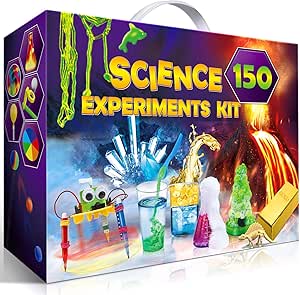 | Best for Broad Science Exploration | Brand: UNGLINGA | Experiment count: 150 | Recommended age: 8 years and up | VIEW LATEST PRICE | See Our Full Breakdown |
| Doctor Jupiter Preschool Science Kit for Kids Ages 3–5 |  | Best for Preschool Sensory Science | Brand: Doctor Jupiter | Age range: 3 years and up | Activities: 100+ | VIEW LATEST PRICE | See Our Full Breakdown |
| UNGLINGA 40+ Experiments Science Kit for Kids |  | Best Compact Starter Kit | Brand: UNGLINGA | Experiment count: 40+ | Recommended age: 8 years and up | VIEW LATEST PRICE | See Our Full Breakdown |
| National Geographic Earth Science Kit with 100+ Activities for Kids | 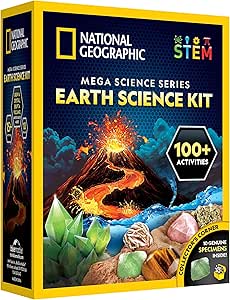 | Best for Earth Science Variety | Brand: Blue Marble | Age range: 8 years and up | Listed activities: 100+ | VIEW LATEST PRICE | See Our Full Breakdown |
| Creativity for Kids Grow ‘N Glow Terrarium Kit |  | Best Science-and-Craft Project | Recommended age: 6+ | Planting cycles: 2 | Seeds: Chia and wheatgrass | VIEW LATEST PRICE | See Our Full Breakdown |
| National Geographic Junior Chemistry Set with 50 Experiments |  | Best for Young Chemistry Beginners | Brand: Blue Marble | Age range: 4 years and up | Experiments: 50 | VIEW LATEST PRICE | See Our Full Breakdown |
| National Geographic Amazing Chemistry Set, 100+ Experiments for Ages 8–12 |  | Best for Older Kids Seeking Chemistry Variety | Brand: Blue Marble | Age range: 8 years and up | Experiments: 100+ total: 15 with included materials and 85 using household items | VIEW LATEST PRICE | See Our Full Breakdown |
| Uarzt 58-Piece Kids Microscope Kit with Carrying Case |  | Best for Hands-On Microscopy | Brand: Uarzt | Piece count: 58 | Prepared slides: 13 | VIEW LATEST PRICE | See Our Full Breakdown |
| educational science kits for kid | Brand | Age range | Included components |
|---|---|---|---|
| National Geographic Science Ma | Blue Marble | 8 years and up | — |
| Kuovei Science Kit for Kids wi | Kuovei | — | Goggles, chemical materials, petri dishes, ping-pong ball, pigments, effervescent tablets, measuring cups, test tubes, gloves, rubber bands, droppers, straws, toothpicks, rotary needles, measuring spoons, balloons, twisting rods, rainbow candy, color-changing flower, and guidance cards |
| UNGLINGA 150-Experiment Scienc | UNGLINGA | — | Science experiment tools and materials |
| Doctor Jupiter Preschool Scien | Doctor Jupiter | 3 years and up | Beaker, conical flask, 2 cups, 2 stirring sticks, color mixing tray, spatula, funnel, spray bottle, bubble wand, face mask tablets, aroma bags, snowman mold, pH paper, instruction manual, and online activity access |
| UNGLINGA 40+ Experiments Scien | UNGLINGA | — | Science experiments |
| National Geographic Earth Scie | Blue Marble | 8 years and up | — |
| Creativity for Kids Grow ‘N Gl | — | — | — |
| National Geographic Junior Che | Blue Marble | 4 years and up | Test tubes, goggles, and other lab tools |
| National Geographic Amazing Ch | Blue Marble | 8 years and up | — |
| Uarzt 58-Piece Kids Microscope | Uarzt | — | — |
More Details on Our Top Picks
National Geographic Science Magic Kit for Kids
Magic gives the science a purpose in this kit: kids can practice 20 tricks while exploring the chemistry and hands-on ideas behind them. It is listed for ages 8 and up, with a bonus booklet of more than 85 additional experiments, so the activities can extend beyond the supplied trick materials. Compared with the UNGLINGA 150-Experiment Science Kit, this one has a narrower, more performance-focused theme rather than a broad sweep of science topics. That makes it a better fit for children who like demonstrations and sharing what they discover, but a weaker match for families seeking a balanced introduction to chemistry, physics, and earth science. The booklet adds variety, though the product details do not specify that materials for all 85-plus bonus activities are included.
Pros:- Connects magic tricks with chemistry and hands-on STEM activities.
- Includes materials for 20 magic experiments.
- Bonus booklet offers more than 85 additional experiment ideas.
- Clear age guidance makes it a better fit for school-age children than preschool kits.
Cons:- Its magic-centered format is less broad than the UNGLINGA 150-Experiment Science Kit.
- The product details do not confirm that supplies are included for the 85-plus bonus experiments.
- Recommended for ages 8 and up, so it is not suited to preschool science play.
Best for: Families with children ages 8 and up who enjoy magic tricks and want science activities they can demonstrate to others.
Not ideal for: Buyers seeking a broad, topic-by-topic science kit or confirmation that supplies are included for every activity in the bonus booklet.
- Brand:Blue Marble
- Age range:8 years and up
- Experiment count:100+
- Included experiments:Materials for 20 magic experiments
- Bonus booklet:More than 85 additional magic experiments
- Educational objective:STEM
- Dimensions:8.86 x 3.15 x 12 inches
- Weight:1.5 pounds
Our verdict“Choose this kit for an older child who will enjoy performing science-themed tricks, not for a broad, fully supplied survey of science topics.”
Kuovei Science Kit for Kids with 80 Experiments
An age range starting at 6 sets this kit apart from the National Geographic Science Magic Kit and both UNGLINGA kits, which are listed for ages 8 and up. Its 80 activities include familiar visual experiments such as rainbow rain, a volcano, and a balloon inflated with a bottle; guidance cards explain steps and scientific principles. Goggles and gloves are included, a useful prompt for treating experiments as guided activities rather than unsupervised play. The tradeoff is that the kit includes chemical materials that call for careful handling, so adult oversight matters. Compared with the Doctor Jupiter Preschool Science Kit, Kuovei is aimed at older children and offers more experiment-led activities, but it is not the better pick for preschool sensory play. The listed dimensions are unusually small, so they may not describe the full kit.
Pros:- Offers 80 activities, including visual demonstrations such as rainbow rain and an erupting volcano.
- Guidance cards provide experiment steps and explain scientific principles.
- Includes goggles and gloves alongside experiment materials.
- Age recommendation begins at 6, younger than the listed ages for the National Geographic Science Magic Kit and UNGLINGA kits.
Cons:- Chemical materials require careful handling and adult supervision.
- The listed dimensions of 1 x 1 x 1 inches appear unusually small and may not represent the complete kit.
- Its guided experiment format is less focused on preschool sensory exploration than the Doctor Jupiter kit.
Best for: Adults choosing a guided, hands-on science set for a child around age 6 or older who is ready to follow experiment steps with supervision.
Not ideal for: Families wanting a preschool-focused sensory kit or activities a child can conduct independently, since some experiments use chemical materials that require careful handling.
- Brand:Kuovei
- Recommended age:6 years and up
- Experiment count:80
- Theme:Scientist
- Material:Plastic
- Included components:Goggles, chemical materials, petri dishes, ping-pong ball, pigments, effervescent tablets, measuring cups, test tubes, gloves, rubber bands, droppers, straws, toothpicks, rotary needles, measuring spoons, balloons, twisting rods, rainbow candy, color-changing flower, and guidance cards
- Item weight:0.75 kg
- Listed item dimensions:1 x 1 x 1 inches
Our verdict“Pick Kuovei for a supervised first science kit for a school-age child who wants varied, visually engaging experiments.”
UNGLINGA 150-Experiment Science Kit for Kids
Breadth is the reason to choose this kit: its 150 experiments span chemistry, physics, earth science, and surface tension, with an illustrated, step-by-step manual to help children follow each project. Compared with the UNGLINGA 40+ Experiments Science Kit, it offers a much wider activity range and more topic variety, making it a stronger fit for a child who wants to keep exploring different kinds of science. Some projects use common household items, however, so the listed experiment count does not mean every activity is ready to start straight from the box. Its age recommendation is 8 and up, which also makes it less suitable than the Kuovei kit for younger beginners. The compact 11.42 x 8.67 x 3.94-inch package holds tools and materials, but buyers should expect some preparation beyond the kit.
Pros:- Covers chemistry, physics, earth science, and surface tension.
- Includes an illustrated, step-by-step manual.
- Some projects use common household items, extending activities beyond the supplied tools.
- Offers more experiments and subject range than the UNGLINGA 40+ Experiments kit.
Cons:- Some activities require household items that are not included.
- Recommended for ages 8 and up, making it a less suitable first kit for younger children than Kuovei.
- The broad activity count may require more adult help gathering supplies and organizing projects.
Best for: Families with children ages 8 and up who want a varied set of guided activities across several science subjects and can supply some household materials.
Not ideal for: Buyers seeking a kit with every experiment material included, or a science set for children younger than 8.
- Brand:UNGLINGA
- Experiment count:150
- Recommended age:8 years and up
- Topics:Chemistry, physics, earth science, and surface tension
- Educational objective:Creative skills
- Included components:Science experiment tools and materials
- Material:Plastic
- Dimensions:11.42 x 8.67 x 3.94 inches
Our verdict“Choose this UNGLINGA kit for an older child who wants the broadest subject mix here and does not mind gathering a few extra materials.”
Doctor Jupiter Preschool Science Kit for Kids Ages 3–5
Made for preschool-age discovery, this kit uses colors, bubbles, water, motion, sound, and simple reactions to introduce science through hands-on play. Its beaker, funnel, spray bottle, bubble wand, color mixing tray, and other tools give young children concrete ways to explore, while illustrated instructions and online activities support screen-free sessions with an adult. Compared with the Kuovei kit, which starts at age 6 and emphasizes a larger set of guided experiments, Doctor Jupiter is better matched to younger children who need simpler activities and adult participation. The tradeoff is that its preschool focus may not hold the attention of older children looking for detailed, age-8-and-up experiments such as those in the UNGLINGA 150-Experiment Science Kit. Activities are intended to be explored with a parent, not as independent projects.
Pros:- Offers more than 100 activities across sensory-friendly science themes.
- Includes tools for exploring color mixing, bubbles, water, and simple reactions.
- Illustrated instructions and online activity access support guided play.
- Age range fills a gap between preschool play and kits aimed at children ages 6 or 8 and up.
Cons:- Activities may be too simple for older children compared with the UNGLINGA 150-Experiment Science Kit.
- Instructions recommend exploring experiments with a parent, limiting independent use.
- The preschool emphasis is less suited to children seeking deeper, subject-specific experiments.
Best for: Parents or caregivers looking for supervised, sensory-led science play for children ages 3–5.
Not ideal for: Older children seeking challenging experiments they can follow independently, or families who do not plan to join the activities.
- Brand:Doctor Jupiter
- Age range:3 years and up
- Activities:100+
- Themes:Biology, chemistry, earth science, and physics
- Included components:Beaker, conical flask, 2 cups, 2 stirring sticks, color mixing tray, spatula, funnel, spray bottle, bubble wand, face mask tablets, aroma bags, snowman mold, pH paper, instruction manual, and online activity access
- Material:Cardboard
- Dimensions:11.6 x 9.8 x 1.8 inches
- Weight:1.5 pounds
Our verdict“Choose Doctor Jupiter for adult-guided, sensory-based science play with preschoolers, rather than for an older child’s challenging experiment set.”
UNGLINGA 40+ Experiments Science Kit for Kids
A smaller experiment set with a compact footprint makes this UNGLINGA kit a practical starting point for families who want hands-on projects without the wider scope of a 150-experiment collection. Its 40-plus activities include making bouncy balls and lava lamps, with illustrated, step-by-step instructions to help children ages 8 and up follow along. Compared with the UNGLINGA 150-Experiment Science Kit, it offers fewer experiments and less stated subject breadth, but its 8 x 5.7 x 2.7-inch dimensions and 0.32 kg weight make it the more compact option. Most experiment materials are included, though some common household items are still needed. That means it is not a fully self-contained activity set, and buyers looking for maximum variety may prefer the larger UNGLINGA kit.
Pros:- Includes more than 40 hands-on experiments, including bouncy balls and lava lamps.
- Illustrated, step-by-step instructions support guided activity.
- Compact dimensions and low listed weight make it easier to store than the UNGLINGA 150-Experiment kit.
- Activities encourage creativity, observation, and problem-solving.
Cons:- Some experiments require common household items that are not included.
- Offers fewer activities and less stated topic breadth than the UNGLINGA 150-Experiment Science Kit.
- Recommended for ages 8 and up, so it is not a preschool starter set like Doctor Jupiter.
Best for: Families with children ages 8 and up who want a compact, guided set of more than 40 experiments and can provide occasional household supplies.
Not ideal for: Buyers seeking the widest range of science topics or a kit that supplies every material for every experiment.
- Brand:UNGLINGA
- Experiment count:40+
- Recommended age:8 years and up
- Included components:Science experiments
- Material:Plastic
- Dimensions:8 x 5.7 x 2.7 inches
- Weight:0.32 kg
- Educational objectives:Creative skills, imagination development, and observation skills
Our verdict“Choose this kit for an older child who wants a compact introduction to hands-on experiments rather than the broadest possible science collection.”
National Geographic Earth Science Kit with 100+ Activities for Kids
For kids drawn to rocks, weather, and dramatic reactions, this kit brings several Earth science topics into one activity set. Crystal growing, a volcano build, water tornadoes, and geologic dig kits give children different ways to explore, while the full-color guide explains the ideas behind the steps. Compared with the National Geographic Amazing Chemistry Set, this pick favors geology and natural phenomena over chemistry experiments and lab tools, making it a better match for a child who wants broad Earth science themes. There is a notable gap between the headline and the listed activity count: the description specifies more than 15 experiments, not 100 separate experiments. Some activities may also need adult help with setup. Choose it for topic variety, not for a large supply of fully provisioned experiments.
Pros:- Covers several Earth science themes, including crystals, volcanoes, and geology.
- Full-color guide explains the science behind activities.
- Clear instructions support independent participation by older children.
Cons:- The description lists more than 15 experiments, despite the 100+ activities headline.
- The included components are described broadly, so the extent of supplies for each activity is unclear.
- Some setup may call for adult assistance.
Best for: Children ages 8 and up who want hands-on activities spanning crystals, volcanoes, water effects, and geology.
Not ideal for: Families looking for 100 individually supplied experiments or a focused chemistry set with reusable lab tools.
- Brand:Blue Marble
- Age range:8 years and up
- Listed activities:100+
- Experiments:More than 15
- Theme:Earth Sciences
- Item dimensions:8.66 x 3.15 x 12 inches
- Item weight:2.6 pounds
- Model number:NGMEGAEARTH
Our verdict“Choose this for an Earth science-minded child who values varied topics and guided activities more than a clearly itemized count of supplied experiments.”
Creativity for Kids Grow ‘N Glow Terrarium Kit
This terrarium makes plant growth the central lesson, then gives kids room to personalize the display with figurines, stones, stickers, and glow-in-the-dark sand. With chia and wheatgrass seeds and supplies for two planting cycles, children can revisit the activity rather than treating it as a one-time build. Compared with the National Geographic Earth Science Kit, which ranges across several experiment types, this one is narrower and more focused on caring for living plants over time. That slower pace can suit younger makers, but it also means the payoff depends on providing water and suitable light; the glow decorations do not replace those growing conditions. It is more of a guided STEM craft than a traditional experiment set, so skip it if your child wants frequent chemical reactions or many different science topics.
Pros:- Combines planting and decoration in one approachable STEM activity.
- Includes chia and wheatgrass seeds for two planting cycles.
- Glow-in-the-dark decorations give the finished terrarium a nighttime display element.
- Includes a jar, growing medium, stones, figurines, and stickers.
Cons:- Plant growth depends on water and suitable light, so results require ongoing care.
- The activity centers on one terrarium project rather than a range of science experiments.
- The glow effect comes from decorative materials, not from the growing plants.
Best for: Children ages 6 and up who enjoy decorating, planting seeds, and checking on a small project over time.
Not ideal for: Kids seeking a varied experiment sequence or families unable to provide a suitable lighted spot and regular watering.
- Recommended age:6+
- Planting cycles:2
- Seeds:Chia and wheatgrass
- Growing medium:Vermiculite potting mix
- Included items:Plastic jar, decorative lid, seeds, potting mix, figurines, colored sand, river stones, and stickers
- Seed origin:Seeds packaged in the USA
Our verdict“Pick this for a young child who will enjoy both decorating a terrarium and caring for its plants, rather than a kit built around many experiments.”
National Geographic Junior Chemistry Set with 50 Experiments
For an early introduction to chemistry, this set pairs 50 illustrated experiments with more than 20 kid-friendly lab tools. The step-by-step format and familiar materials such as baking soda and vinegar can help young children follow a sequence and see a visible result without needing a large collection of specialist supplies. Compared with the National Geographic Amazing Chemistry Set, this junior version is aimed at younger learners and supplies more listed experiments, while the older-age set offers a narrower set of experiments with included materials and additional household-item ideas. The tradeoff is that the junior kit still depends on household ingredients beyond the tools in the box, so it is not a fully self-contained activity set. Its age range also calls for caregiver judgment and supervision during experiments.
Pros:- Includes more than 20 kid-friendly lab tools, including test tubes and goggles.
- Offers 50 hands-on experiments with illustrated instructions.
- Uses familiar household materials such as baking soda and vinegar.
- No batteries are required.
Cons:- Some experiments require household supplies that are not included.
- Young children will need caregiver supervision and help with setup.
- The 4+ age range may be too basic for older children seeking more challenging chemistry.
Best for: Families introducing children ages 4 and up to guided chemistry activities with adult oversight and common household ingredients.
Not ideal for: Buyers wanting a kit with all experiment materials included or a set designed specifically for older children seeking more advanced chemistry.
- Brand:Blue Marble
- Age range:4 years and up
- Experiments:50
- Lab tools:20+
- Included components:Test tubes, goggles, and other lab tools
- Educational objective:STEM
- Battery required:No
- Item dimensions:11 x 4.22 x 9.64 inches
Our verdict“Choose this as a guided first chemistry set for a young child if you are comfortable supplying household ingredients and supervising activities.”
National Geographic Amazing Chemistry Set, 100+ Experiments for Ages 8–12
This chemistry set suits older children ready to follow experiments with tools such as test tubes, beakers, and pipettes. The materials in the box support 15 activities, including a crystal tree, color-changing solutions, and a bouncy ball; a guide adds 85 more experiments using common household items. That distinction matters: the 100+ total does not mean supplies for every activity are included. Compared with the Junior Chemistry Set, this option targets an older age group and adds a larger bank of household-material experiments, while the junior set lists 50 activities and more than 20 kid-friendly tools. Its appeal is breadth for a child who likes chemistry, but families wanting to open the box and complete every listed activity without gathering extras may prefer a more self-contained kit.
Pros:- Includes materials for 15 experiments, including crystal growing and color-changing solutions.
- Adds a guide to 85 further experiments using common household items.
- Includes useful lab tools such as test tubes, beakers, and pipettes.
- Offers a chemistry-focused progression for older children.
Cons:- Materials for the 85 additional experiments are not included.
- The 100+ experiment headline can overstate how many activities are ready to do from the box.
- Designed for ages 8 and up, so younger beginners may need a different set.
Best for: Children ages 8 and up who enjoy chemistry and are happy to gather common household materials for additional experiments.
Not ideal for: Families seeking a fully supplied set for all listed activities, or children who need a simpler introduction than the 8+ age range suggests.
- Brand:Blue Marble
- Age range:8 years and up
- Experiments:100+ total: 15 with included materials and 85 using household items
- Included tools:Test tubes, beakers, and pipettes
- Educational objective:STEM
- Item dimensions:8.78 x 3.19 x 11.93 inches
- Item weight:1.8 pounds
- Model number:NGMEGACHEMAR
Our verdict“Pick this for an older child who wants an extensive chemistry idea bank and does not mind sourcing supplies for most of the listed experiments.”
Uarzt 58-Piece Kids Microscope Kit with Carrying Case
Rather than organizing learning around a sequence of chemical reactions, this kit lets children examine small details in prepared samples and make their own slides. Its 13 prepared slides and 31 blank slides offer a mix of ready-to-view material and room for simple investigations, while the LED-lit microscope and included tools support basic sample handling. Compared with the National Geographic Junior Chemistry Set, this is a better fit for a child curious about what plants, insects, and everyday objects look like up close, but it offers less guided variety in the form of discrete experiments. The up to 1200× magnification is an advertised maximum, not a promise of professional-level viewing. Buyers should also account for two AA batteries, which are not included, and keep expectations suited to an introductory microscope.
Pros:- Includes 13 prepared slides and 31 blank slides for viewing and simple DIY samples.
- LED lighting supports viewing of slide specimens.
- Tweezers, dropper, scalpel, and a guide add basic sample-preparation tools.
- Carrying case helps keep the 58 components together.
Cons:- Requires two AA batteries, which are not included.
- Designed for introductory educational activities rather than professional lab work.
- The advertised maximum magnification does not by itself guarantee clear viewing at every setting.
Best for: Beginner science learners who want to inspect prepared samples and make slides at home, with a kit they can store and carry together.
Not ideal for: Families looking for a sequence of guided experiments, professional microscope performance, or a battery-ready kit straight out of the box.
- Brand:Uarzt
- Piece count:58
- Prepared slides:13
- Blank slides:31
- Magnification:Up to 1200×
- Light source:LED
- Microscope dimensions:4.6 x 2.75 x 8.15 inches
- Power:2 AA batteries, not included
- Included accessories:Tweezers, dropper, scalpel, carrying case, and guide
Our verdict“Choose this for a beginner who is more curious about observing specimens than following chemistry experiments, and keep spare AA batteries on hand.”
How We Picked
I compared these educational science kits for kids by how clearly each one supports hands-on learning, how well its stated age range matches the likely complexity, and whether its activities give children a reason to keep exploring. I also weighed subject focus, experiment variety, the practical demands of setup and adult involvement, and how easy it is to see what kind of learning experience a kit offers. A large activity count can add variety, but it does not automatically make a kit a better fit.
The ranking favors options with a clear appeal and a useful balance of accessibility, engagement, and learning potential. Broad sets rank well for families seeking variety, while focused kits earn their place when they offer a stronger match for a specific interest or age group. I distinguish between products with different intended uses rather than treating every experiment count as directly comparable; the separate reviews should be checked for kit contents and activity details before purchase.
| educational science kits for kid | Brand | Included components |
|---|---|---|
| National Geographic Science Ma | Blue Marble | — |
| Kuovei Science Kit for Kids wi | Kuovei | Goggles, chemical materials, petri dishes, ping-pong ball, pigments, effervescent tablets, measuring cups, test tubes, gloves, rubber bands, droppers, straws, toothpicks, rotary needles, measuring spoons, balloons, twisting rods, rainbow candy, color-changing flower, and guidance cards |
| UNGLINGA 150-Experiment Scienc | UNGLINGA | Science experiment tools and materials |
| Doctor Jupiter Preschool Scien | Doctor Jupiter | Beaker, conical flask, 2 cups, 2 stirring sticks, color mixing tray, spatula, funnel, spray bottle, bubble wand, face mask tablets, aroma bags, snowman mold, pH paper, instruction manual, and online activity access |
| UNGLINGA 40+ Experiments Scien | UNGLINGA | Science experiments |
| National Geographic Earth Scie | Blue Marble | — |
| Creativity for Kids Grow ‘N Gl | — | — |
| National Geographic Junior Che | Blue Marble | Test tubes, goggles, and other lab tools |
| National Geographic Amazing Ch | Blue Marble | — |
| Uarzt 58-Piece Kids Microscope | Uarzt | — |
Factors to Consider When Choosing Educational Science Kits For Kids
Before choosing a kit, match its learning style to your child and your household. Age, supervision, and activity format often matter more than the biggest number on the box.
Match the Kit to Your Child’s Age and Independence
Age labels are a starting point, not a guarantee that a child can complete every activity alone. Younger children often benefit from simple steps and an adult who can turn observations into questions; older children may want more control over measuring, recording, and repeating experiments. A kit aimed at ages 3–5 should be judged by accessibility and shared play, while a set aimed at ages 8–12 can reasonably invite more involved exploration. A common mistake is buying for the child’s future ability rather than what they can enjoy now. Check whether the activities call for reading, fine-motor control, or patience your child is ready to practice. If siblings will share the kit, choose one that adults can adapt rather than assuming the same activity will suit every age.
Choose Breadth or a Strong Subject Focus
Broad experiment collections can keep a curious child moving between topics, but variety may come at the cost of depth in any one subject. A focused chemistry, Earth science, plant-growing, or microscope kit gives a child a clearer thread to follow and can be a better match for a specific interest. Think about whether your child enjoys sampling many activities or returning to one question over several days. Do not treat an experiment count as a measure of educational value: activities can differ in length, complexity, and how much they invite observation. For a first kit, a coherent theme can make it easier to connect what happened to what the child learned. If interest is still broad, a multi-topic set may be a more flexible starting point.
Look Beyond the Number of Experiments
Experiment counts are useful for comparing the advertised scope, but they do not reveal how much usable play each kit provides. Some activities may use the same tools in different ways, while others may depend on materials that need replenishing or household supplies. Before buying, check the contents and instructions for clues about what is included and what you may need to provide. A kit with fewer activities can be a better choice if its projects are easier to repeat or connect to everyday observations. Conversely, a larger collection may suit a child who likes moving quickly from one challenge to another. Decide whether you value a long list of prompts, repeatable investigations, or a mix of both.
Plan for Supervision and Household Setup
Adult involvement can be part of the learning experience, but it should fit your available time and the child’s expectations. Some families want a shared activity that invites discussion; others need a kit a child can use with limited help. Read instructions for signs of preparation, cleanup, or specialized handling, and check whether the work surface and storage demands suit your home. A large box of components may offer range but can be harder to organize between sessions. A compact, subject-specific set may be easier to keep ready, though it can offer fewer kinds of activity. Choosing based on your real routine prevents a promising kit from becoming a project that is rarely taken out.
Decide Whether You Want a One-Time Project or Ongoing Observation
Not every science kit delivers the same rhythm of play. Demonstrations and short experiments can provide quick results, which suits children who want immediate feedback. Growing plants or examining specimens can encourage observation over time, but those activities ask for patience and follow-through. Think about whether your child likes seeing a fast result or tracking change across multiple sessions. A long-running project may create a richer opportunity to notice patterns, yet it can lose appeal if the child expects instant completion. You can also pair a focused kit with a simple notebook or drawing habit to make observations more meaningful without adding another elaborate project. Pick the format that fits your child’s attention and the amount of ongoing care your household can support.
Check What the Kit Lets a Child Learn by Doing
Hands-on activity is most useful when a child can observe a result, ask why it happened, and try a variation. Look for instructions that encourage prediction, comparison, or recording rather than only following steps to reach a reveal. A magic-themed demonstration can be a friendly hook, while a microscope set can shift attention toward careful looking and describing. Neither format is automatically better; the learning opportunity depends on whether the child gets to think and notice, not just watch. If you are choosing a gift, consider whether an adult will be available to ask follow-up questions or whether the kit needs to stand on its own. This helps distinguish a fun activity from a format that also supports curiosity beyond the first session.
Frequently Asked Questions
Should I choose the kit with the most experiments?
Not automatically. A higher activity count can suit a child who likes variety, but it says little about the length, difficulty, or repeatability of each project. A smaller kit with a clear subject may hold attention better when a child already loves chemistry, plants, Earth science, or looking closely at specimens. Check the age guidance and the kinds of materials or adult help activities require. Choose by how your child likes to learn, not by the largest number on the package.
Can a science kit work for children of different ages?
It can, especially when an adult can adjust the questions and level of independence for each child. Younger children may enjoy observing and describing what happens, while older siblings can handle measuring, reading steps, or comparing results. The age range still matters because a kit may contain instructions or tasks that are frustrating for a child who is not ready for them. If you are buying for siblings, consider whether they can take different roles in the same activity. A kit designed for a very specific age band may be less flexible for a mixed-age group.
Are focused science kits better for learning than experiment collections?
Neither format is always better; they support different kinds of curiosity. A broad collection helps a child sample several activities and may be a good fit when their interests are still developing. A focused kit can build a more connected experience around one subject, which may help a child notice details or return to a question. Consider whether your child prefers variety or sustained exploration. The best match is the one they are likely to use and discuss, not simply the one with the broadest or narrowest theme.
How much adult supervision should I expect?
That depends on the child’s age, reading ability, and the activity instructions, so check the kit’s stated age range and contents before buying. Even a child who can follow steps independently may benefit from an adult helping frame questions or talk through results. For preschoolers, shared participation is often part of making an activity useful and enjoyable. If independent play is your priority, look for clear instructions and activities suited to your child’s current skills. Plan for setup and cleanup as well as the experiment itself.
What should I check before buying a kit as a gift?
Start with the recipient’s age and interests, then check what the kit includes and whether any activities call for materials from home. Consider whether the child has space to work and store components, and whether an adult is likely to help. A themed option can feel more personal for a child who already enjoys a subject, while a broader set may suit a curious beginner. If the recipient is young, favor a clear age fit over a large activity count. When those details are unknown, choose a kit whose subject and activity style are easy to understand from its description.
Conclusion
For most families, I’d start with the National Geographic Science Magic Kit as the best overall pick because its playful theme offers an approachable entry into hands-on science. For best value in breadth, compare the UNGLINGA 40+ Experiments Kit with the Kuovei 80-Experiment Kit and choose based on the activity mix and contents that best suit your child; the larger UNGLINGA 150-Experiment Kit is a better match for families prioritizing variety. The National Geographic Amazing Chemistry Set is the best premium-style choice for older children who want a larger chemistry-focused collection, while Doctor Jupiter Preschool Science Kit is the clearest beginner pick for ages 3–5. For specific interests, choose the Grow ‘N Glow Terrarium for plant growth, the Earth Science Kit for planet-focused activities, the Junior Chemistry Set for a smaller chemistry set, or the Uarzt Microscope Kit for observation. The right choice is the kit your child’s age, interests, and available adult support make likely to use.