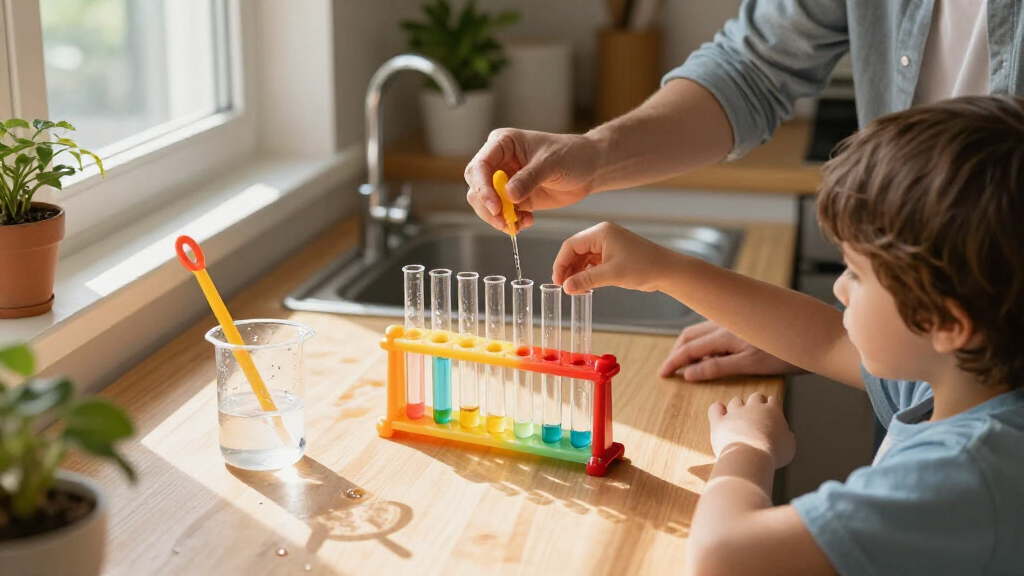

When choosing educational science kits for kids, the real decision is whether learning should center on materials a child can handle or digital guidance that leads them through activities. Hands-on science kits use physical components—such as magnets, simple circuits, lenses, or growing materials—to make cause and effect tangible. Digital science kits use apps, videos, simulations, or connected devices to explain concepts and guide activities, sometimes alongside physical parts.

Get school and study supplies delivered free — and shop member deals
- Fast, free delivery on millions of items
- Access to Prime Big Deal Days deals on October 6–7
- Prime Video, Amazon Music and more included
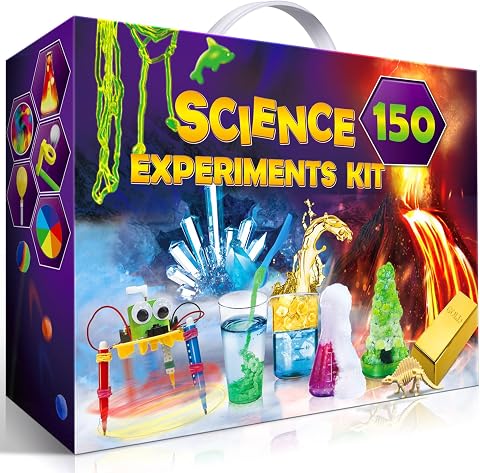
UNGLINGA 150-Experiment Science Kit for Kids
- ✔ Brand: UNGLINGA
- ✔ Experiments: 150
- ✔ Recommended age: 8 years and up

National Geographic Science Magic Kit for Kids, 100+ Experiments
- ✔ Brand: Blue Marble
- ✔ Recommended age: 8 years and up
- ✔ Experiments: 20 with included materials, plus 85+ in bonus booklet

Kids’ Handheld Digital Microscope, 200x–1000x Magnification
- ✔ Recommended age: 5–13 years
- ✔ Optical magnification: 200x–1000x
- ✔ Digital zoom: 1x–4x
Neither format is automatically more educational. Physical experiments tend to suit children who learn by building, testing, and making a mess; digital activities can work better for families seeking structured instructions, repeatable demonstrations, or less storage. The comparison below focuses on learning experience, independence, setup, screen use, variety, and value. Choose hands-on for tactile exploration and reusable materials; choose digital when clear guidance and convenient access matter more than keeping screens out of the activity.
At a Glance
| Criteria | Hands-on science kits | Digital science kits | Winner |
|---|---|---|---|
| Learning through experimentation | Physical materials make results and cause-and-effect visible. | Simulations and guided activities show processes, sometimes paired with physical tasks. | A |
| Guidance and explanations | Instructions may be printed; explanations vary by kit. | Often offers step-by-step prompts, animations, and immediate explanations. | B |
| Child independence | Depends on reading level, component complexity, and adult help. | Prompts can help children proceed, though device or app support may be needed. | B |
| Setup and cleanup | Requires space, handling materials, and sometimes cleanup. | Usually less physical cleanup; setup can involve downloads, accounts, or charging. | B |
| Screen dependence | Usually low; a screen may only be needed for instructions. | Typically higher, with possible device and connectivity requirements. | A |
| Variety and repeat use | Experiments can be repeated, though consumables may run out. | Software can present many activities, but access may depend on an app or subscription. | Depends |
| Value over time | Can offer durable reuse, but replacement supplies may add cost. | Worthwhile when content stays accessible and the device is already available. | Depends |
UNGLINGA 150-Experiment Science Kit for Kids
For families who want one kit to introduce several areas of science, UNGLINGA is the most versatile activity set here. Its 150 experiments cover topics including chemistry, physics, earth science, and surface tension, with highlighted activities such as volcanoes, crystals, digging, and physics demonstrations. That range gives children different ways to engage with science instead of keeping every session within one theme.The illustrated, step-by-step manual is important because a high experiment count is only useful when kids can understand how to begin. It can help turn the contents into a sequence of activities rather than a box of tools, though younger users may still need an adult to read instructions or help with setup. Some experiments also rely on common household items, so families should expect to gather supplies beyond what is included.Compared with the National Geographic magic kit, UNGLINGA offers broader subject coverage rather than a performance hook. Compared with the handheld microscope, it prioritizes doing experiments over inspecting and capturing specimens. That breadth earns it the top spot, but buyers should not assume that every activity is fully self-contained. It is best when a child enjoys trying varied projects and a caregiver can help fill occasional supply gaps.
Pros:
- Offers 150 activities across several science subjects.
- Illustrated, step-by-step manual supports independent progress.
- Includes tools and materials for hands-on projects.
- Some experiments use common household items, making it possible to continue exploring with supplies already at home.
Cons:
- Some activities require household items in addition to kit contents.
- The number of activities may feel less useful to children who prefer a focused theme.
Best for: Children ages 8 and up who want a broad mix of guided experiments across multiple science topics, with an adult available to help gather supplies when needed.
Not ideal for: Families seeking a fully self-contained kit for every activity, or children who prefer one narrowly defined theme or digital specimen viewing.
Bottom line: We recommend UNGLINGA first for families seeking the broadest hands-on science experience, provided they are comfortable supplementing some activities with household supplies.
“We recommend UNGLINGA first for families seeking the broadest hands-on science experience, provided they are comfortable supplementing some activities with household supplies.”
National Geographic Science Magic Kit for Kids, 100+ Experiments
This kit makes sense for children who are drawn to surprising demonstrations and enjoy showing what they have learned. The magic-and-science format gives activities an immediate performance angle, which can make concepts feel inviting to kids who might be less interested in a conventional experiment set. It includes materials for 20 experiments, while a bonus booklet provides more than 85 additional magic experiment ideas.That distinction between supplied materials and booklet ideas matters. The large idea count broadens the possible activities, but the included components are specified for 20 experiments; families should not assume that all the additional ideas come with complete materials. Some activities may also require adult supervision, so this is not necessarily a kit for fully independent use.Against UNGLINGA, this option is more focused and theatrical, not as broad across science subjects. Its magic theme may be a stronger engagement tool for a child who likes tricks, while UNGLINGA is a better match for varied project work. The microscope is the more observational choice, but lacks this kit’s guided performance premise. Choose National Geographic when the magic hook is likely to get a child to try, explain, and repeat demonstrations; skip it if the goal is a wide-ranging science curriculum in one box.
Pros:
- Combines magic tricks with hands-on science activities.
- Includes materials for 20 experiments.
- Bonus booklet adds more than 85 experiment ideas.
- Its presentation-focused theme can make demonstrations appealing to reluctant experimenters.
Cons:
- Some activities may require adult supervision.
- Materials are specified for 20 experiments, so booklet ideas may require additional supplies.
- Its magic focus is narrower than UNGLINGA’s coverage of multiple science topics.
Best for: Children ages 8 and up who enjoy magic tricks, demonstrations, and sharing science activities with family or friends.
Not ideal for: Buyers who want an equally broad mix of science disciplines or expect all 100-plus ideas to include their materials in the box.
Bottom line: We favor this kit for kids motivated by tricks and demonstrations, but families wanting the widest range of hands-on science should choose UNGLINGA instead.
“We favor this kit for kids motivated by tricks and demonstrations, but families wanting the widest range of hands-on science should choose UNGLINGA instead.”
Kids’ Handheld Digital Microscope, 200x–1000x Magnification
Unlike the two experiment bundles, this handheld microscope builds science learning around looking closely at specimens. A 2.4-inch color screen lets children view what the device sees without needing to look through a traditional eyepiece, while adjustable LED lighting and manual focus help them explore different samples. Twelve prepared slides provide a starting point, which is useful when a child is still learning what to examine.The portable format and recommended age range of 5–13 make it the youngest-friendly choice in this group. Its camera can capture photos, and built-in storage holds up to 200 images, so children can keep a record of discoveries on the device. There are limits: video recording requires a separately sold microSD card, and product information says device photos cannot be downloaded. Battery life is listed as up to two hours, which may also constrain longer sessions away from charging.We rank it behind both activity kits because it is a specialist observation tool, not a broad set of guided experiments. It can complement activities from UNGLINGA or the magic kit, but it does not replace their range of projects. Choose it when examining and documenting small details is the main attraction; skip it if you want a sequence of varied experiments or easy transfer of images to another device.
Pros:
- Combines a color screen with adjustable optical magnification and manual focus.
- Includes 12 prepared slides to help children get started.
- Adjustable LED lighting supports viewing different specimens.
- Portable design stores up to 200 photos on the device.
Cons:
- Video recording requires a separately sold microSD card.
- Battery life is up to two hours.
- Product notes that device photos cannot be downloaded.
Best for: Children ages 5–13 who are especially curious about specimens, visual observation, and capturing images on a portable screen.
Not ideal for: Families looking for a broad experiment curriculum, longer sessions without recharging, or a straightforward way to download captured photos.
Bottom line: We recommend this microscope for children who want to inspect and record specimens, but not as a substitute for a multi-topic experiment kit.
“We recommend this microscope for children who want to inspect and record specimens, but not as a substitute for a multi-topic experiment kit.”
As an Amazon Associate we earn from qualifying purchases.
Key Differences
The biggest difference is what the child does to learn. With a hands-on kit, a child may connect a circuit, compare magnetic objects, or observe a material change directly. That physical feedback can make testing and troubleshooting part of the lesson. A digital kit can make hard-to-see ideas easier to visualize and can give a child an orderly sequence to follow, but a simulation may not provide the same experience as handling real materials. For topics where physical action is central, that distinction is substantial.
Convenience tends to favor digital activities: there may be less loose equipment to store, and prompts can explain each step without an adult interpreting a booklet. That convenience is conditional, though. A suitable device, working software, and sometimes internet access may be necessary. Hands-on kits trade that dependence for physical setup and possible cleanup. For value, compare more than the box price: check whether components are reusable, which activities need replacement supplies, and whether digital access is permanent or tied to a subscription.
For most families seeking a first science kit, a well-matched hands-on set is the stronger default when the child is curious about building or testing and an adult can help as needed. Digital is the better fit when visual explanations, structured pacing, or minimal physical mess are the priorities. Some kits combine both; that can be a sensible choice when the app supports real experimentation rather than replacing it.
Detailed Comparison
Learning through experimentation (Hands-on science kits wins — moderate)
Hands-on kits win, with a moderate advantage for learning that depends on manipulating real objects. Children can change one factor, observe what happens, and try again with the materials in front of them. Digital simulations can demonstrate outcomes and let children test virtual variables, which is useful for processes that are difficult to reproduce, but virtual feedback is not identical to physical trial and error. For a kit about simple machines, circuits, or specimens, physical interaction usually makes the activity feel more concrete.
Guidance and explanations (Digital science kits wins — moderate)
Digital kits usually win by a moderate margin when they include a well-designed app or instructional content. Animations, spoken prompts, and sequential directions can clarify what to do next and explain a result as it appears. Printed instructions can be effective, but their usefulness depends on the child’s reading level and how clearly the kit is written. Digital guidance is not guaranteed to be good, so check that an app provides meaningful explanations rather than just entertainment or a sequence of taps.
Child independence (Digital science kits wins — minor)
Digital kits have a minor advantage when prompts let a child follow the activity without asking an adult to interpret every step. However, younger children may still need help with reading, device controls, or account access. Hands-on kits can encourage self-directed tinkering, but small parts, unfamiliar tools, and unclear instructions can increase adult involvement. The better choice depends on the child’s age, reading ability, and confidence, not simply on whether the kit is physical or digital.
Setup and cleanup (Digital science kits wins — moderate)
Digital kits generally win by a moderate margin for households that want fewer materials to organize and wash. Activities can begin once the software is ready, though installing an app, charging a device, or connecting to the internet can add friction. Hands-on experiments need a clear work surface and may involve water, soil, powders, or small components. That is a real inconvenience for some families, but cleanup is also part of practicing careful lab habits.
Screen dependence (Hands-on science kits wins — major)
Hands-on kits win by a major margin for families who want science activities away from screens. Many can be used with a printed guide and ordinary household items, while digital kits make the device part of the lesson. For children who already have substantial screen time, or families without reliable access to a compatible device, this may decide the purchase. Digital instruction can still be useful in moderation, especially when a video demonstrates a process a booklet cannot show clearly.
Variety and repeat use (moderate difference)
This is a depends category. Digital platforms may offer a wide catalog of guided activities or simulations without adding physical parts, but the catalog can be limited by software support, access rules, or a subscription. Hands-on components can be reused and recombined, although consumables may run out and a kit’s topic may be narrow. Check the actual activity list and whether the child can return to projects independently; a long app menu is not necessarily more lasting than a few well-designed experiments.
Value over time (moderate difference)
Neither format wins across the board, so the gap is moderate and depends on what the purchase includes. A physical kit may justify a higher upfront cost if its main components are durable, reusable, and supported by low-cost household supplies. A digital kit can be good value if it works on a device the family already owns and provides continued access without recurring fees. Add the cost of replacements, subscriptions, batteries, or a required device before treating either option as the cheaper buy.
Hands-on science kits: Pros and Cons
Pros:
- Makes many science concepts tangible through direct handling and experimentation.
- Can support screen-free play and practical trial and error.
- Reusable components may support repeat experiments and open-ended tinkering.
Cons:
- Needs storage and a suitable space for activities.
- Some projects require adult help, cleanup, or replacement consumables.
- Printed explanations may be less engaging or less accessible for some children.
Digital science kits: Pros and Cons
Pros:
- Can provide step-by-step prompts, animations, and immediate explanations.
- May show processes that are hard to observe directly or recreate at home.
- Often reduces the amount of physical equipment and cleanup.
Cons:
- Usually requires a compatible device and may need internet access or accounts.
- Adds screen time to an activity meant to teach science.
- Access may depend on software support, paid content, or a subscription.
Who Should Choose What
Choose Hands-on science kits if:
- Your child enjoys building, handling materials, and testing what happens when they change something.
- You want science activities that do not depend on a phone or tablet.
- You prefer reusable physical components and are comfortable setting aside space for experiments.
Choose Digital science kits if:
- Your child benefits from visual demonstrations and clear, step-by-step prompts.
- You want guided activities with less equipment to store and less physical cleanup.
- You already have a compatible device and have confirmed that the app or content remains accessible without costly recurring fees.
Skip both if: Skip both if the kit is far above or below the child’s developmental level, relies on supplies you cannot obtain, or requires supervision and equipment your household cannot provide. A library science program, simple household experiment, or age-appropriate book may be a better starting point.
Value for Money
Paying more is worthwhile only when the added features match how the child learns. Spend extra on a hands-on kit if the materials are sturdy, support several experiments, and can be reused with inexpensive supplies. Pay more for a digital kit if its instruction meaningfully improves understanding, its activities suit the child’s age, and access will last without a costly subscription. A high price does not prove better learning: compare the number and quality of activities, replacement costs, required equipment, and any ongoing fees. For many families, the best value is a modest physical kit used repeatedly; for a child who needs strong visual guidance, a well-supported digital option may earn its premium.
Final Verdict
Choose a hands-on science kit as the default for a child who learns by making, testing, and observing real materials, particularly if reducing screen use matters. It offers the clearest route to physical experimentation and often makes cause and effect tangible. Choose a digital kit instead when guided explanations, visual simulations, and simpler cleanup solve a real need—and only after checking device compatibility and ongoing access costs.
The biggest deciding factor is whether the child should interact mainly with physical materials or with a screen-led lesson. Do not pay extra for digital features that merely decorate an activity, or for physical components that the child is unlikely to use. Match the format to the child’s interests and the household’s tolerance for setup, supervision, and screen time.
Frequently Asked Questions
Are hands-on science kits more educational than digital kits?
Not in every case. Hands-on kits are usually stronger for practicing physical experimentation and observing real materials. Digital kits can explain abstract or hard-to-see processes clearly. The more educational choice is the one that fits the concept and gives the child an active role rather than passive viewing.
Are digital science kits suitable for young children?
They can be, if the activities match the child’s age and the interface is simple. Check reading demands, device controls, and whether an adult must set up accounts or guide each step. Younger children may benefit from an adult working alongside them, especially when a digital lesson includes physical materials.
Do hands-on science kits need adult supervision?
Some do. The required supervision depends on the child’s age, the kit’s tools and materials, and the activity. Read the age guidance and safety instructions before buying. A kit that needs close adult help may still be a good shared activity, but it is a weaker fit for independent play.
What should I check before paying more for a digital kit?
Confirm that your device is compatible, whether activities need internet access, and whether an account or subscription is required. Check how long digital content remains available and whether the app provides useful explanations. Pay more only if those features solve a learning or convenience need your child actually has.
Fall Picks
fall essentials
As an affiliate, we earn on qualifying purchases.

![Navier-Stokes – Tristan Buckmaster [Pdf]](https://listof.org/wp-content/uploads/2026/09/navier-stokes-tristan-buckmaster-pdf-featured-560x300.jpg)