
TL;DR

Prime made for students and young adults
- Fast, free delivery for dorm and study essentials
- Prime Video and Amazon Music included
- Member-only deals
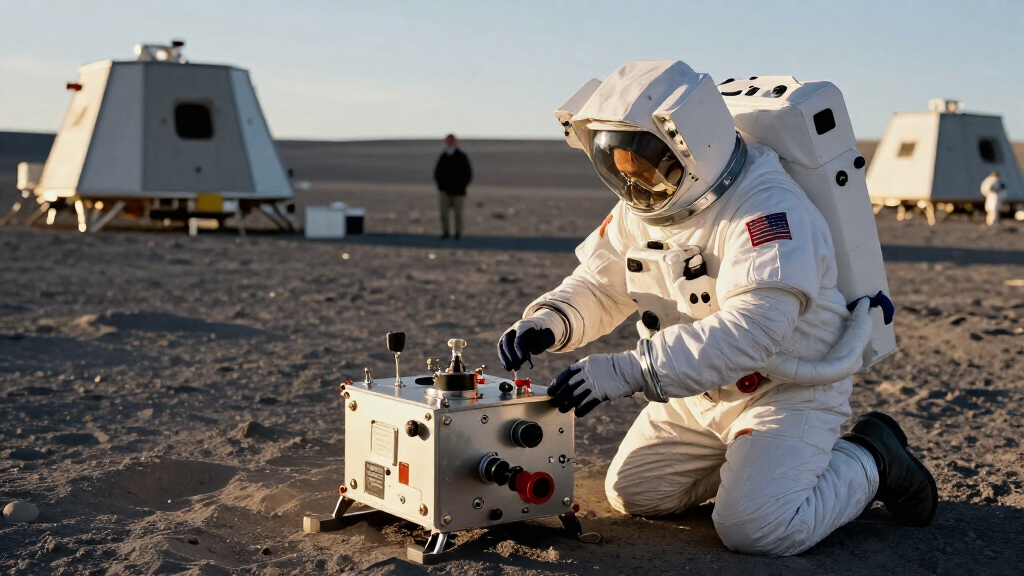
NASA announced the addition of three new science investigations for the Moon Base, focusing on lunar environment monitoring, subterranean mapping, and resource detection. These payloads aim to enhance safety and resource utilization for future human presence on the Moon.
NASA has announced the addition of three new scientific investigations to support the development of its Moon Base, with payloads scheduled for deployment on upcoming lunar surface missions. These investigations aim to enhance understanding of lunar hazards, resources, and environment, laying critical groundwork for sustained human presence on the Moon.
The three payload suites include the Lunar Environment Monitoring Station – South Pole (LEMS-SP), the Geophysical Investigation for Mapping Lunar Interior (GIMLI), and the Depth Imager with Spectral and Color Optics (DISCO). These investigations are part of NASA’s PRISM program and will be delivered via the CLPS initiative, which partners with American companies to land scientific instruments on the lunar surface.
LEMS-SP will serve as a long-term environmental hazard monitor, tracking micrometeoroids and volatile gases, and using seismic sensors to detect lunar seismic activity. Principal Investigator Dr. Mehdi Benna from the University of Maryland stated that this data will be vital for assessing hazards and ensuring safety for Moon Base hardware and future astronauts.
GIMLI will explore the Marius Hills Pit to determine if it leads into a large underground lava tube, which could provide natural shelter from extreme temperatures and radiation. Principal Investigator Dr. Nathaniel Putzig emphasized that confirming such subterranean spaces could significantly influence habitat planning for long-term lunar missions.
DISCO will analyze the lunar surface to locate and quantify ice deposits in micro-cold traps, and study surface behavior to aid in resource utilization and operational safety. Dr. Ariel Deutsch from NASA’s Ames Research Center highlighted that understanding ice distribution and surface stability is essential for future surface activities and resource extraction.
Implications for Lunar Safety and Resource Use
The addition of these investigations marks a significant step toward establishing a sustainable human presence on the Moon. By providing detailed hazard assessments, mapping potential underground shelters, and locating lunar ice, NASA aims to mitigate risks for astronauts and enable resource utilization, which are critical for long-term lunar habitation and future missions to Mars.
These payloads will help NASA develop technologies and operational strategies that ensure safety, resource management, and environmental understanding, directly supporting the agency’s Artemis and Moon Base objectives.
lunar environment monitoring station
As an affiliate, we earn on qualifying purchases.
As an affiliate, we earn on qualifying purchases.
Background of Lunar Science and Moon Base Planning
NASA’s Moon Base program is part of the Artemis initiative, aiming to establish a sustainable human presence on the lunar surface by the late 2020s. The agency has been steadily increasing lunar missions, deploying scientific instruments and technology payloads through the CLPS program to explore resources, hazards, and surface conditions.
Previous investigations have focused on lunar geology, ice deposits, and environmental hazards, providing foundational data for future habitat and resource strategies. The recent selection of these three payloads continues this trajectory, emphasizing hazard monitoring, subterranean exploration, and resource detection as key areas of interest.
The PRISM program, under which these investigations are funded, is designed to deliver innovative science that supports lunar exploration and resource utilization, aligning with NASA’s broader goals of scientific leadership and human spaceflight.
As an affiliate, we earn on qualifying purchases.
Remaining Questions About Deployment and Impact
Details are still emerging regarding the exact deployment schedule of these payloads and how their data will be integrated into operational planning. It is also unclear how effectively these investigations will address all environmental hazards or resource challenges, and whether additional payloads will be added in future missions.
Further information is needed on the technical readiness and operational integration of these instruments, as well as the timeline for their data availability and impact on habitat design.
As an affiliate, we earn on qualifying purchases.
Upcoming Missions and Data Collection Milestones
The selected payloads are scheduled to be deployed on upcoming lunar missions under the CLPS initiative, with initial data expected within months of landing. NASA will analyze the findings to refine hazard assessments, resource maps, and habitat planning, informing the design of the first lunar outpost.
Further announcements regarding mission timelines, deployment specifics, and data sharing are anticipated as the investigations progress. The agency also plans to expand its lunar science portfolio to include additional payloads and experiments aimed at supporting long-term human exploration.
As an affiliate, we earn on qualifying purchases.
Key Questions
When will these payloads be deployed on the Moon?
The payloads are scheduled for deployment on upcoming lunar surface missions as part of NASA’s CLPS program, with specific dates to be announced soon.
How will the investigations improve safety for lunar explorers?
The investigations will provide detailed hazard assessments, locate safe underground shelters, and identify water ice deposits, all of which are crucial for protecting astronauts and ensuring mission success.
Will these investigations be used for future Mars missions?
While primarily focused on lunar exploration, the technologies and data gathered could inform resource utilization and hazard mitigation strategies for future Mars missions.
Are these payloads the first of their kind?
Some of these investigations, such as the hazard monitoring station and ice detection, are among the first designed specifically for long-term lunar surface deployment to support human presence.
What is the significance of the Marius Hills Pit investigation?
Confirming underground lava tubes could provide natural shelters that offer thermal and radiation protection, potentially reducing the need for artificial habitats and lowering mission costs.
Source: primary
Halloween Picks
halloween
As an affiliate, we earn on qualifying purchases.