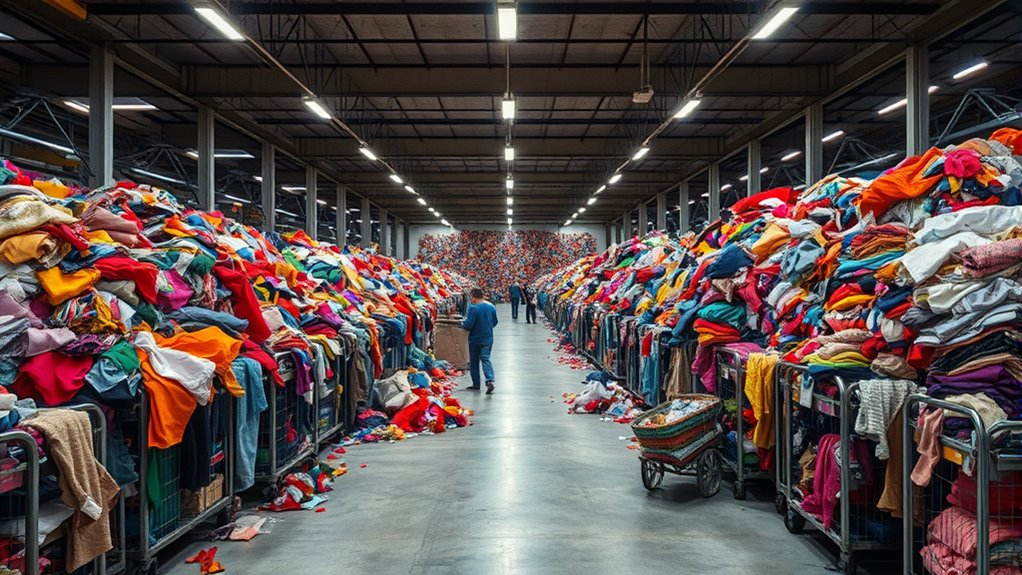

Fast fashion’s quick cycle causes huge amounts of textile waste as garments are produced rapidly and discarded after a few wears. To reduce overproduction, brands are turning to sustainable materials like organic cotton and recycled fabrics, which last longer and cut pollution. Consumer choices, like buying fewer, high-quality pieces and supporting second-hand shops, can also make a difference. Exploring the efforts behind these changes reveals how the industry is working to become more responsible and waste-conscious.
Key Takeaways
- Brands are adopting sustainable materials like recycled polyester and organic cotton to reduce reliance on virgin resources and lower waste.
- Recycling and upcycling initiatives, including clothing swaps and take-back programs, help divert garments from landfills.
- Consumer demand for durable, high-quality, and timeless pieces incentivizes brands to produce less overproduction.
- Industry efforts focus on transparent practices and innovation in recycling technologies to minimize excess inventory.
- Supporting second-hand shopping and sustainable brands encourages a shift toward responsible manufacturing and waste reduction.
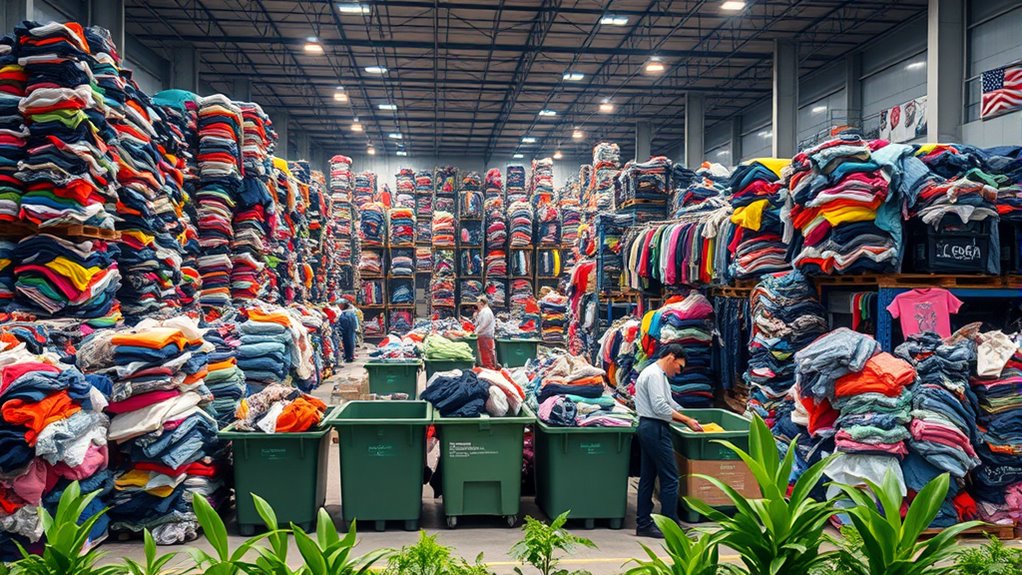
Fast fashion has revolutionized the clothing industry by making trendy styles affordable and accessible, but it also fuels a staggering amount of waste. Every season, millions of garments are produced, often quickly discarded after only a few wears. To combat this, many brands are turning to sustainable materials—think organic cotton, recycled polyester, and hemp—to create clothing that’s better for the environment. Using sustainable materials reduces the reliance on virgin resources, cuts down on pollution, and helps lower the carbon footprint of fashion production. But simply switching to eco-friendly fabrics isn’t enough. Consumer behavior plays a vital role in shaping the future of sustainable fashion. When you choose to buy fewer, higher-quality pieces, and opt for items made from sustainable materials, you send a clear message to brands that durability and eco-consciousness matter.
Choosing durable, sustainable fashion sends a powerful message to brands about eco-conscious priorities.
Your purchasing habits can influence the entire industry. For example, by prioritizing timeless designs over fleeting trends, you extend the life of your wardrobe and reduce the cycle of overproduction. Fast fashion thrives on the constant demand for new styles, which encourages brands to flood the market with cheap, disposable clothing. When consumers shift their behavior towards buying consciously—such as seeking out brands that emphasize sustainable materials or supporting second-hand shops—you help slow down this cycle. This change in consumer behavior not only decreases waste but also pressures companies to adopt more responsible manufacturing practices.
Furthermore, your behavior impacts the development of better recycling and upcycling initiatives. When you participate in clothing swaps, donate unused garments, or buy second-hand, you’re helping to keep clothes out of landfills. Many brands are responding by offering take-back programs or creating collections from recycled fabrics, which is driven by consumer demand. Sustainable materials are often more durable, encouraging longer wear, but without your support, these efforts might not gain the momentum needed for widespread change. Developing a deeper understanding of the role of attention in creative practice can help consumers become more mindful and intentional in their shopping choices. Your choices can incentivize brands to innovate, prioritize transparency, and invest in eco-friendly production processes.
In essence, the fight against fast fashion waste hinges on your actions. Embracing sustainable materials and adjusting your consumer behavior isn’t just about making eco-friendly choices; it’s about reshaping the entire fashion industry. Your decisions influence what companies produce, how they produce it, and ultimately, how much waste ends up in landfills. By being a conscious shopper, you help create a market where sustainability and quality are valued over low cost and rapid turnover. This collective shift can pave the way for a more responsible, less wasteful fashion future.

Organic Linen Clothing for Women Casual Linen Cotton Tunic Blouse 3/4 Sleeve V Neck Peasant Shirts Beach Vacation Tees 100% Natural Fiber Clothing
- Lightweight Gauze Fabric: Soft breathable cotton-linen gauze
- V-Neck Peasant Design: Feminine V-neckline with relaxed silhouette
- 3/4 Sleeve Casual Top: Comfortable coverage with breezy feel
As an affiliate, we earn on qualifying purchases.
As an affiliate, we earn on qualifying purchases.
Frequently Asked Questions
How Do Consumers Unintentionally Contribute to Fast Fashion Waste?
Your consumer habits and purchase patterns unintentionally contribute to fast fashion waste when you buy more clothing than you need or wear items only a few times. Fast fashion brands encourage rapid turnover, leading you to discard clothes quickly. By frequently purchasing trendy pieces without considering durability, you increase waste. To help reduce this, you can buy fewer, higher-quality items and prioritize sustainable brands, making mindful choices that lessen overproduction and waste.
What Are the Environmental Impacts of Fast Fashion Waste?
Ironically, by loving fast fashion, you contribute to environmental chaos. Fast fashion waste causes severe textile pollution, filling landfills with discarded clothes, and depletes precious resources like water and energy during production. This cycle accelerates resource depletion and pollutes ecosystems, harming wildlife and human health. Your quick purchases may seem harmless, but they fuel a system that devastates the planet, highlighting the urgent need for more sustainable choices.
Which Brands Are Leading in Sustainable Practices?
You’ll notice brands like Patagonia, Stella McCartney, and Everlane leading in sustainable practices. They prioritize sustainable brand initiatives and showcase ethical fashion collaborations, making a real difference. These companies use eco-friendly materials, transparent supply chains, and fair labor practices. By supporting their efforts, you help promote a shift toward more responsible fashion, encouraging other brands to follow suit and reduce environmental impacts associated with overproduction and waste.
How Can Policymakers Incentivize Waste Reduction in Fashion?
You can push policymakers to incentivize waste reduction by advocating for tax incentives for sustainable brands and supporting stricter regulatory standards on fast fashion. These measures encourage brands to adopt eco-friendly practices and reduce overproduction. By voicing your support and participating in campaigns, you help create a demand for responsible fashion. Policymakers respond when constituents prioritize sustainability, making it easier to implement effective policies that promote waste reduction.
What Are Innovative Materials Reducing Overproduction?
Imagine your wardrobe as a garden where innovative materials bloom. You’ll find biodegradable textiles that break down naturally, like leaves returning to the earth, and recycled fibers that reuse old threads to create new garments. These materials reduce overproduction by extending garment life and minimizing waste. Embracing such sustainable options allows you to nurture a more eco-friendly fashion ecosystem, where creativity and responsibility grow side by side.

Amazon Essentials Men's Moisture Wicking Golf Polo Shirt, Short Sleeve, Slim-Fit, Quick-Dry, Active Wear, Port, X-Large
- Fit: Slim fit through shoulders and waist
- Material: Quick-dry polyester pique
- Design: Sport polo for golf and active wear
As an affiliate, we earn on qualifying purchases.
As an affiliate, we earn on qualifying purchases.
Conclusion
You have the power to change the tide of fast fashion’s waste. Every choice to buy less, opt for sustainable brands, or recycle clothes becomes a ripple in a pond of hope. Imagine a world where your actions echo through generations, breaking free from the cycle of overproduction. Don’t let the future be buried under mountains of discarded garments—stand up now, for the planet’s sake, and let your voice be the spark of real change.
I Love Recycling – Cute and Funny Recycling T-Shirt
- Humorous recycling quote: I just really love recycling, OK?
- Perfect gift for recycling fans: Recycling lover gift
- Comfortable and durable fit: Lightweight, classic fit, double-needle hem
As an affiliate, we earn on qualifying purchases.
As an affiliate, we earn on qualifying purchases.

Second Chances: The Ultimate Guide to Thrifting, Sustainable Style, and Expressing Your Most Authentic Self
As an affiliate, we earn on qualifying purchases.
As an affiliate, we earn on qualifying purchases.