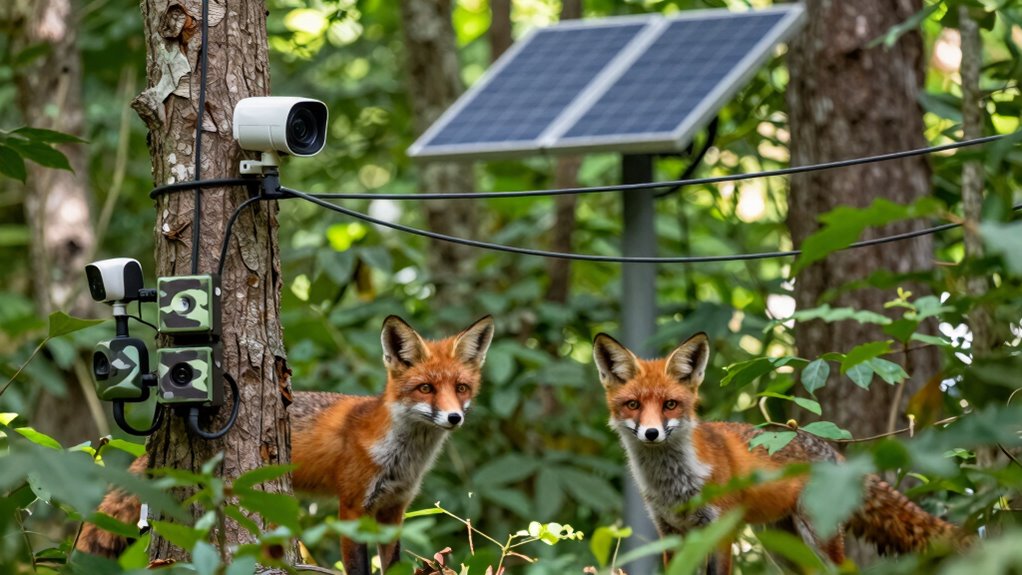

Technology in wildlife monitoring uses drones to quickly cover large, remote areas, capturing high-resolution images and tracking animal movement silently to reduce disturbance. Acoustic sensors record sounds over time, helping you analyze animal behavior and detect illegal activities. Machine learning processes vast data sets, recognizing patterns to inform conservation decisions faster. These tools improve accuracy, support endangered species, and make monitoring more efficient. If you want to discover how these innovations are shaping conservation, keep exploring this subject.

Prime made for students and young adults
- Fast, free delivery for dorm and study essentials
- Prime Video and Amazon Music included
- Member-only deals
Key Takeaways
- Drones provide rapid, silent aerial surveillance to monitor habitats, animals, and detect poaching activities.
- Acoustic sensors record sounds to analyze animal behavior, migration, and identify illegal activities like logging.
- Machine learning processes large datasets from drones and sensors for pattern recognition and conservation insights.
- Remote sensing technology enhances data accuracy, covers vast and hard-to-reach areas efficiently.
- Technology enables real-time data collection and analysis, supporting timely conservation decisions.
Have you ever wondered how scientists track and protect endangered species more effectively? Technology has revolutionized wildlife monitoring, making it more precise and less invasive. One of the most innovative tools is drone surveillance. Drones allow researchers to cover vast, remote areas quickly and efficiently, capturing high-resolution images and videos of habitats and animal populations. Unlike traditional methods that require humans to trek through difficult terrain, drones can silently hover overhead, reducing disturbance to wildlife. You might see drones as flying eye-in-the-sky, gathering data on animal movements, counting herds, or spotting poachers before they can harm vulnerable species. Their ability to access hard-to-reach areas makes them invaluable for conservation efforts worldwide. Additionally, the use of remote sensing technology enhances the accuracy and scope of data collection, further transforming conservation strategies. This technology, combined with geospatial analysis, enables a comprehensive understanding of ecological changes over time. Moreover, advancements in sensor technology have improved the durability and sensitivity of monitoring devices, allowing for more reliable long-term data collection. Incorporating real-time data processing further accelerates decision-making, ensuring rapid responses to emerging threats or opportunities in conservation.
Drones provide a silent, efficient way to monitor wildlife and combat poaching in remote areas.
Furthermore, the development of machine learning algorithms allows for more sophisticated analysis of the large datasets generated, helping identify subtle patterns that inform conservation actions.
Alongside drones, acoustic sensors have become a crucial part of wildlife monitoring. These small, often solar-powered devices are placed in the wild to record sounds over extended periods. They detect and analyze calls from animals, especially those that are elusive or nocturnal, like certain bird species, amphibians, or even large mammals. Acoustic sensors help scientists understand animal behavior, migration patterns, and population numbers without disturbing the animals. By listening to the natural soundscape, researchers can identify the presence of rare or endangered species and monitor their health over time. These sensors also aid in detecting illegal activities such as poaching or logging, as they can pick up the sounds associated with such activities, alerting authorities promptly.
Both drone surveillance and acoustic sensors demonstrate how technology enables more effective conservation strategies. They reduce the need for intrusive human presence, which can disturb fragile ecosystems. These tools also generate large volumes of data, which can be analyzed using advanced algorithms and machine learning to identify patterns and trends that would otherwise go unnoticed. As a result, conservationists can make better-informed decisions, prioritize areas needing urgent protection, and track the success of conservation initiatives more accurately.
In your role as someone interested in wildlife protection, it’s inspiring to see how these technological advances make a real difference. They empower scientists to gather critical data faster and more efficiently than ever before, ultimately helping to safeguard endangered species for future generations. The integration of drone surveillance and acoustic sensors marks a new era in conservation efforts, one where technology and nature work hand in hand to preserve the planet’s biodiversity.
As an affiliate, we earn on qualifying purchases.
Frequently Asked Questions
How Cost-Effective Are Wildlife Monitoring Technologies?
Wildlife monitoring technologies are generally quite cost-effective when you consider the cost comparison and conduct an affordability analysis. You save money by using automated tools like camera traps and drones, reducing the need for extensive human resources. While initial investments can be high, the long-term benefits, such as continuous data collection and reduced labor costs, make these technologies a smart, budget-friendly choice for effective wildlife conservation.
What Are the Privacy Concerns Related to Wildlife Tracking?
You should be aware that wildlife tracking raises significant privacy concerns, especially regarding data privacy and ethical issues. Tracking devices might inadvertently capture data about nearby humans, infringing on their privacy. Ethical concerns also arise if animals are stressed or harmed by the technology. It’s essential to balance conservation efforts with respecting privacy rights, ensuring data is protected and tracking methods are humane and transparent.
How Do Climate Changes Affect Monitoring Technology?
Climate changes challenge monitoring technology by impacting equipment resilience and data accuracy. You need to adapt your technology for climate resilience, ensuring it withstands extreme weather and environmental shifts. Climate adaptation becomes essential, as rising temperatures and unpredictable conditions can disrupt data collection. By upgrading sensors and deploying durable, flexible systems, you can maintain reliable wildlife monitoring, even amid changing climates, helping conservation efforts stay effective in the face of global environmental shifts.
Can Local Communities Access Wildlife Monitoring Data?
Yes, local communities can access wildlife monitoring data, especially when there’s a focus on community engagement and data accessibility. Many organizations and projects share data openly through online platforms or local outreach programs, empowering you to participate actively. This approach fosters collaboration, builds awareness, and helps protect local ecosystems. By engaging with these resources, you can contribute valuable insights and support conservation efforts in your area.
What Are Future Innovations in Wildlife Monitoring Technology?
Future innovations in wildlife monitoring will surprise you. AI integration will revolutionize data analysis, making it faster and more accurate, while drone advancements will enable you to access remote areas effortlessly. Imagine drones equipped with sensors that detect animal movements or health indicators. These breakthroughs will deepen your understanding of ecosystems, helping you protect wildlife more effectively. The future holds exciting possibilities, transforming how you observe and conserve the natural world.
As an affiliate, we earn on qualifying purchases.
Conclusion
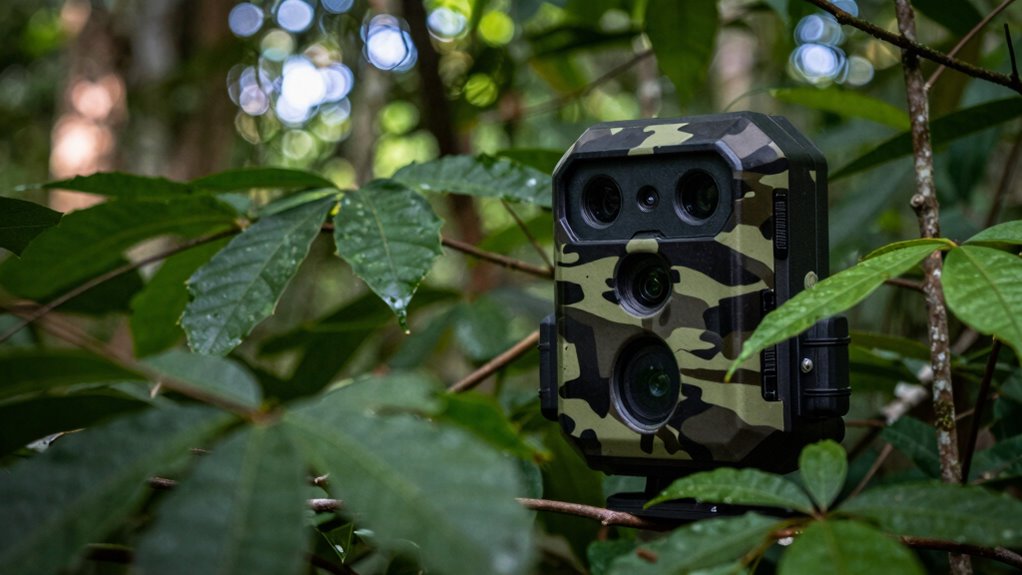
You can see how technology transforms wildlife monitoring, making it more efficient and accurate. For instance, using camera traps in a rainforest, researchers can track elusive species like jaguars without disturbing their habitat. Imagine deploying these cameras and receiving real-time data that helps protect endangered animals. With advancements like drones and AI, your efforts to conserve wildlife become more impactful, empowering you to make smarter decisions and guarantee the survival of these amazing creatures for generations to come.
machine learning data analysis tools
As an affiliate, we earn on qualifying purchases.
As an affiliate, we earn on qualifying purchases.
remote sensing technology for conservation
As an affiliate, we earn on qualifying purchases.
As an affiliate, we earn on qualifying purchases.
Fall Picks
fall essentials
As an affiliate, we earn on qualifying purchases.