

National Geographic Kids Why?: Over 1,111 Answers to Everything is my best overall pick for children who enjoy quick, question-led facts across many subjects. For younger readers, National Geographic Little Kids First Big Book of Why offers an easier entry point, while DK Children’s Encyclopedia suits families who want a broad, highly visual reference. The main choice is between an all-purpose book and a focused or age-specific one, with differences in reading level, layout, depth, and how children browse. Some options answer questions in short bursts; others work better for exploring pictures or a specific subject. Read on for my full comparison of all 14 encyclopedias for kids and how to match one to your reader.

Prime made for students and young adults
- Fast, free delivery for dorm and study essentials
- Prime Video and Amazon Music included
- Member-only deals
Key Takeaways
- Question-led books stand out for casual browsing: National Geographic Kids Why? and the 100,000 Whys titles organize knowledge around children’s questions rather than a traditional reference format.
- Age fit matters as much as subject coverage: National Geographic Little Kids First Big Book of Why and My Encyclopedia of Very Important Things are aimed at younger learners, while broader DK and Knowledge Encyclopedia titles suit children ready for more detail.
- Visual browsing is a distinct strength: Picturepedia and DK Children’s Encyclopedia make image-led exploration central, while question-and-answer titles are more direct when a child wants a specific explanation.
- Specialist books trade breadth for focus: The Animal Book and The Elements Book are stronger choices for particular interests, but they cannot replace an all-subject encyclopedia for general reference.
- Format and scope shape value: The eight-book Knowledge Encyclopedia set offers breadth across multiple volumes, while single-volume choices take up less space and are easier to pick up for a quick read.
| National Geographic Kids Why?: Over 1,111 Answers to Everything |  | Best for Quick Answers | Format: Book | Answer count: Over 1,111 | Audience: Kids | VIEW LATEST PRICE | See Our Full Breakdown |
| Knowledge Encyclopedia for Children: Box Set of 8 Books |  | Best Multi-Book Set | Book count: 8 | Format: Box set | Audience: Children | VIEW LATEST PRICE | See Our Full Breakdown |
| 100,000 Whys for Smart Kids: A Visual Encyclopedia for Curious Kids |  | Best for Curious School-Age Readers | Format: Visual encyclopedia | Age range: 6–12 years | Included activities: 500 brain challenges | VIEW LATEST PRICE | See Our Full Breakdown |
| National Geographic Little Kids First Big Book of Why |  | Best for Younger Questioners | Format: Question-and-answer book | Audience: Young children | Subject scope: Topics about the world | VIEW LATEST PRICE | See Our Full Breakdown |
| The Animal Book: A Visual Animal Kingdom Encyclopedia for Kids |  | Best for Animal-Loving Kids | Format: Visual animal encyclopedia | Subject: Animal kingdom | Audience: Kids | VIEW LATEST PRICE | See Our Full Breakdown |
| The Elements Book: A Visual Periodic Table Encyclopedia for Kids |  | Best for Science Starters | Series: DK Our World in Pictures | Subject: Periodic table and chemical elements | Audience: Kids | VIEW LATEST PRICE | See Our Full Breakdown |
| Knowledge Encyclopedia: The World as You’ve Never Seen It Before | 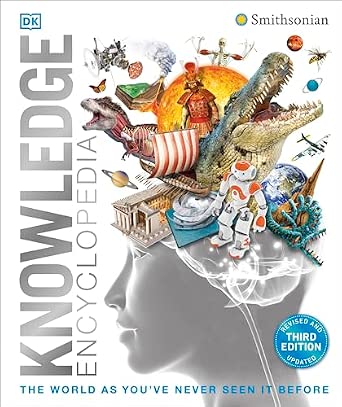 | Best for Broad Topic Browsing | Title: Knowledge Encyclopedia: The World as You’ve Never Seen It Before | Subject: Broad range of knowledge topics | Audience: Not specified in supplied product details | VIEW LATEST PRICE | See Our Full Breakdown |
| DK Children’s Encyclopedia: The Book That Explains Everything! (DK Children’s Visual Encyclopedias) |  | Best Broad Visual Reference | Series: DK Children’s Visual Encyclopedias | Subject: Broad reference topics | Format: Illustrated book | VIEW LATEST PRICE | See Our Full Breakdown |
| 100,000 Whys: The Big Journey for Curious Kids |  | Best for Question-Led Reading | Age range: 6–12 years | Format: Book | Content style: Questions, answers, and fun facts | VIEW LATEST PRICE | See Our Full Breakdown |
| What on Earth! Kids’ Encyclopedia: What We Know & What We Don’t |  | Best for Open-Ended Curiosity | Title focus: What is known and what is not known about the world | Subject: The world | Audience: Kids | VIEW LATEST PRICE | See Our Full Breakdown |
| Picturepedia, Second Edition: An Encyclopedia on Every Page |  | Best for Visual Browsing | Edition: Second Edition | Format: Illustrated encyclopedia | Organization: Described as an encyclopedia on every page | VIEW LATEST PRICE | See Our Full Breakdown |
| National Geographic Little Kids First Encyclopedia of Almost Everything |  | Best for Young Beginners | Series or audience label: Little Kids First | Book type: Encyclopedia | Coverage: Broad range of topics, described as almost everything | VIEW LATEST PRICE | See Our Full Breakdown |
| 100,000 Whys for Kids: A Full-Color Visual Encyclopedia |  | Best for Broad Age Coverage | Format: Full-color visual encyclopedia | Age range: 6–13 | Topics: Science, space, animals, nature, history, inventions, and how the world works | VIEW LATEST PRICE | See Our Full Breakdown |
| My Encyclopedia of Very Important Things: For Little Learners Who Want to Know Everything |  | Best for Curious Little Learners | Book type: Encyclopedia | Intended audience: Little learners | Stated focus: Broad range of things for curious learners | VIEW LATEST PRICE | See Our Full Breakdown |
| encyclopedias for kid | Format | Audience | ASIN | Age range |
|---|---|---|---|---|
| National Geographic Kids Why?: | Book | Kids | 1426320965 | — |
| Knowledge Encyclopedia for Chi | Box set | Children | 9354405231 | — |
| 100,000 Whys for Smart Kids: A | Visual encyclopedia | Curious kids | 196910306X | 6–12 years |
| National Geographic Little Kid | Question-and-answer book | Young children | 1426307934 | — |
| The Animal Book: A Visual Anim | Visual animal encyclopedia | Kids | 1465414576 | — |
| The Elements Book: A Visual Pe | Book | Kids | 1465456600 | — |
| Knowledge Encyclopedia: The Wo | Book | Not specified in supplied product details | 0744081467 | — |
| DK Children’s Encyclopedia: Th | Illustrated book | Children | 0744059798 | — |
| 100,000 Whys: The Big Journey | Book | Curious children | B0GY862XJM | 6–12 years |
| What on Earth! Kids’ Encyclope | Book | Kids | 1804661503 | Not specified in supplied product details |
| Picturepedia | Illustrated encyclopedia | — | — | Not provided |
| National Geographic Little Kid | Not provided | — | — | Not specified in supplied product data |
| 100,000 Whys for Kids: A Full- | Full-color visual encyclopedia | — | — | 6–13 |
| My Encyclopedia of Very Import | Not provided | — | — | Not provided |
More Details on Our Top Picks
National Geographic Kids Why?: Over 1,111 Answers to Everything
I’d choose National Geographic Kids Why? for a child who likes firing off questions and wants short, direct answers rather than a topic-by-topic reference book. Its advertised 1,111-plus answers give it a broader question-and-answer premise than National Geographic Little Kids First Big Book of Why, which is specifically aimed at younger children. That makes this a stronger fit for readers ready to browse a large collection of curiosities, though the available product details do not identify its age range, subjects, or layout. Unlike The Animal Book, it isn’t presented as a focused visual guide to one subject. The tradeoff is that buyers have less information about how its answers are organized or illustrated, so it may be harder to judge fit before choosing it.
Pros:- Advertises more than 1,111 answers, offering many prompts for browsing
- Question-and-answer approach suits children who prefer specific queries to long topic chapters
- A children’s title rather than a general adult reference
Cons:- Product details do not specify the subjects covered
- Age range and illustration or layout details are not provided
- The available information does not show how answers are grouped for independent lookup
Best for: Families seeking a broad question-and-answer book for children who enjoy looking up a variety of curiosities.
Not ideal for: Buyers who need a confirmed age range, subject list, or visual-format details before selecting an encyclopedia.
- Format:Book
- Answer count:Over 1,111
- Audience:Kids
- Title:National Geographic Kids Why?: Over 1,111 Answers to Everything
- Publisher or series:National Geographic Kids
- ASIN:1426320965
Our verdict“Choose it for a child who enjoys jumping between questions and wants a large answer collection, but not if you need a clearly described age range or subject scope.”
Knowledge Encyclopedia for Children: Box Set of 8 Books
Knowledge Encyclopedia for Children: Box Set of 8 Books is the clearest choice here for families who want a set rather than a single volume. Eight books can offer a ready-made reference shelf, while National Geographic Kids Why? centers on one question-and-answer book and The Animal Book focuses on the animal kingdom. The distinction is useful, but the supplied details do not name the eight books’ subjects, so I can’t tell whether the set spans several fields or repeats a narrower theme. It is identified as designed for children, yet no age range, dimensions, or materials are provided. That makes this a potentially convenient collection for a shared home library, but a less predictable choice for buyers trying to fill a specific knowledge gap or match a particular reading level.
Pros:- Eight books provide a multi-volume starting point for a home reference shelf
- The set is described as designed for children
- A collection format differs from the single-volume question-and-answer options
Cons:- The subjects and contents of the eight books are not specified
- No age range is provided to guide reading-level selection
- Dimensions and material details are unavailable
Best for: Families who want a children’s reference collection in one purchase and are comfortable checking the individual book contents before choosing.
Not ideal for: Buyers seeking a known subject mix, a particular age level, or one specialist encyclopedia such as an animal reference.
- Book count:8
- Format:Box set
- Audience:Children
- Series:Knowledge Encyclopedia
- Subjects:Not specified in provided product data
- ASIN:9354405231
Our verdict“Pick this set if having eight children’s reference books matters more than knowing the exact subject coverage in advance.”
100,000 Whys for Smart Kids: A Visual Encyclopedia for Curious Kids
For a child who wants both information and something to do with it, 100,000 Whys for Smart Kids has the most clearly defined activity element in this group: 500 brain challenges. Its visual encyclopedia format and stated ages 6–12 make its intended reader easier to identify than the broad-age details supplied for National Geographic Kids Why?. Compared with The Animal Book, this title has a wider curiosity-and-questions premise rather than an animal-only focus. That breadth may suit children who move quickly between topics, while the challenges add an interactive angle beyond browsing facts. The tradeoff is that the provided description does not list its subject areas or explain how the challenges fit into the reference material. Buyers wanting a clearly focused subject encyclopedia may prefer the animal volume.
Pros:- States an age range of 6–12 years
- Visual encyclopedia format supports browsing as well as reading
- Includes 500 brain challenges to add activities beyond fact lookup
- Combines questions, unusual facts, and explanations
Cons:- The provided details do not identify its subject areas
- The relationship between the brain challenges and encyclopedia content is not described
- Its broad curiosity focus may be less suitable than a focused book for children seeking one subject
Best for: Families with children ages 6–12 who enjoy visual explanations, varied questions, and short brain challenges alongside reference reading.
Not ideal for: Buyers looking for a specialist reference with a specified subject scope or a book aimed at a clearly younger preschool audience.
- Format:Visual encyclopedia
- Age range:6–12 years
- Included activities:500 brain challenges
- Content approach:Big questions, unusual facts, and clear explanations
- Audience:Curious kids
- ASIN:196910306X
Our verdict“Choose this for ages 6–12 when an illustrated mix of explanations and brain challenges is more appealing than a single-subject reference.”
National Geographic Little Kids First Big Book of Why
National Geographic Little Kids First Big Book of Why is the most age-conscious pick in this set: its description explicitly frames it for young children and presents information through questions and answers. That makes it a more natural starting point for younger readers than 100,000 Whys for Smart Kids, which specifies ages 6–12 and adds brain challenges. It also differs from National Geographic Kids Why?: both use a why-question premise, but the available description for this title emphasizes accessible presentation for little kids rather than a count of more than 1,111 answers. The tradeoff is that no exact age range, subject list, or format details are supplied, so buyers cannot gauge the reading level precisely. I’d favor it for a younger child beginning to explore broad questions, not someone seeking a detailed reference.
Pros:- Designed for young children
- Question-and-answer format gives curious readers a direct way into topics
- Explores topics about the world rather than focusing on one named subject
- Accessible presentation is positioned for younger readers
Cons:- No exact age range is given
- The available description does not list the topics covered
- No format or layout details are provided
Best for: Parents and caregivers choosing an accessible question-and-answer book for a young child who is beginning to explore the world.
Not ideal for: Older children seeking a stated age range, extensive subject detail, or the added challenges included with 100,000 Whys for Smart Kids.
- Format:Question-and-answer book
- Audience:Young children
- Subject scope:Topics about the world
- Presentation:Accessible format
- Publisher or series:National Geographic Little Kids
- ASIN:1426307934
Our verdict“Choose it as an accessible first question-and-answer reference for a young child, but look elsewhere if you need precise age or content details.”
The Animal Book: A Visual Animal Kingdom Encyclopedia for Kids
If a child’s questions keep returning to wildlife, The Animal Book offers the most focused subject choice in this lineup: a visual encyclopedia of the animal kingdom from DK’s Our World in Pictures series. That narrow scope is its advantage over broad question collections such as National Geographic Kids Why?, where the supplied details describe many answers but no dedicated subject area. A visual approach also gives animal-curious readers a different browsing experience from the question-led format of National Geographic Little Kids First Big Book of Why. The tradeoff is clear: this is not the pick for a child who wants one book covering many fields, and the available product data does not specify an age range or particular animal groups. I’d choose it for sustained interest in animals, not as the only general encyclopedia at home.
Pros:- Animal kingdom focus gives the book a clear subject identity
- Visual encyclopedia format suits browsing through animal topics
- Part of DK’s Our World in Pictures series
- More specialized than broad question-and-answer titles
Cons:- Animal-focused coverage is less suited to children wanting a general reference
- No age range is provided in the supplied product data
- Specific animal groups and coverage details are not listed
Best for: Families seeking a picture-led reference for a child whose strongest interest is animals and the animal kingdom.
Not ideal for: Buyers who want a broad, all-subject encyclopedia or need a confirmed age range and detailed topic breakdown.
- Format:Visual animal encyclopedia
- Subject:Animal kingdom
- Audience:Kids
- Series:DK Our World in Pictures
- Publisher:DK
- ASIN:1465414576
Our verdict“Pick this for a child who wants a visual animal reference, but choose a broader title if one book needs to cover many subjects.”
The Elements Book: A Visual Periodic Table Encyclopedia for Kids
For a child drawn to chemistry, The Elements Book makes the periodic table its whole subject rather than one stop in a general reference. Its place in DK’s Our World in Pictures series signals a visual approach, which can help make an abstract lineup of elements more approachable for young readers. Compared with DK Children’s Encyclopedia: The Book That Explains Everything!, it offers a narrower subject and a clearer path for exploring one branch of science. That focus is also its main tradeoff: it is not the single all-purpose encyclopedia to reach for when a child wants answers about animals, history, and the wider world. I’d choose it as a science-focused supplement, especially for a child curious about what matter is made of.
Pros:- Visual format is designed with children in mind.
- Keeps the subject focused on the periodic table and chemical elements.
- Part of DK’s Our World in Pictures series.
Cons:- Narrower in scope than a general children’s encyclopedia.
- The supplied product details do not specify an age range or how much explanatory text accompanies the visuals.
Best for: Children who are beginning to ask about chemistry and want a visual introduction to the elements.
Not ideal for: Families looking for one broad reference book covering many subjects; this title focuses on the periodic table and chemical elements.
- Series:DK Our World in Pictures
- Subject:Periodic table and chemical elements
- Audience:Kids
- Format:Book
- Editorial focus:Visual introduction to the elements
- ASIN:1465456600
Our verdict“Choose this as a visual science supplement for a child interested in elements, not as the household’s only encyclopedia.”
Knowledge Encyclopedia: The World as You’ve Never Seen It Before
Knowledge Encyclopedia: The World as You’ve Never Seen It Before is the broad-topic choice in this group, described as exploring the world through a range of knowledge subjects. That makes it a better fit for children who like moving from one curiosity to another than The Elements Book, which concentrates on chemistry. The tradeoff is that the available product details say little about its intended age, format beyond the book title, or how the material is organized. I would choose it for a household seeking a general reference rather than a focused subject book, but I would compare its listing and sample pages with DK Children’s Encyclopedia: The Book That Explains Everything! before deciding: the supplied descriptions do not establish which has more visual support or clearer explanations for a particular reader.
Pros:- Explores a broad range of knowledge topics.
- General scope suits readers with varied interests.
- The title positions it as a reference for seeing familiar subjects from new angles.
Cons:- The supplied product details do not identify specific topics or explain how broadly they are covered.
- No audience age range or format details are provided.
- Available information does not show how its presentation differs from other broad children’s encyclopedias.
Best for: Families seeking a general-knowledge encyclopedia for a child who enjoys browsing across different subjects.
Not ideal for: Buyers who need a clearly specified age level, subject breakdown, or visual format before choosing a reference book.
- Title:Knowledge Encyclopedia: The World as You’ve Never Seen It Before
- Subject:Broad range of knowledge topics
- Audience:Not specified in supplied product details
- Format:Book
- Series:Not specified in supplied product details
- ASIN:0744081467
Our verdict“Consider it for broad browsing, but check the book’s contents and reading level if those details will guide your choice.”
DK Children’s Encyclopedia: The Book That Explains Everything! (DK Children’s Visual Encyclopedias)
When I want one book to cover many subjects rather than a single interest, DK Children’s Encyclopedia is the clearest fit in this batch. Its DK Children’s Visual Encyclopedias series identity and illustrated format make it a more explicitly visual general reference than Knowledge Encyclopedia: The World as You’ve Never Seen It Before, whose supplied details do not describe its presentation. Compared with The Elements Book, this title trades depth on one science topic for broader reference use. That breadth is useful for children whose questions shift from subject to subject, though the description does not name individual topics or give an age range. I’d pick it as a general starting point, while buyers with a focused interest may get more from a dedicated subject book.
Pros:- Designed as a broad reference book rather than a single-subject guide.
- Part of DK’s dedicated Children’s Visual Encyclopedias series.
- Illustrated format offers a visual entry point for browsing.
Cons:- The supplied description does not list the specific subjects covered.
- No age range or reading-level information is provided.
- Its broad scope may offer less focused detail than a subject-specific book such as The Elements Book.
Best for: Families who want an illustrated general encyclopedia for a child with interests across multiple subjects.
Not ideal for: Children seeking an in-depth guide to one subject, or buyers who need a specified reading age and topic list before purchasing.
- Series:DK Children’s Visual Encyclopedias
- Subject:Broad reference topics
- Format:Illustrated book
- Audience:Children
- Reading level:Not specified in supplied product details
- ASIN:0744059798
Our verdict“Choose this as a visual, all-purpose starting reference for a child whose questions span many subjects.”
100,000 Whys: The Big Journey for Curious Kids
100,000 Whys: The Big Journey for Curious Kids organizes its appeal around questions, answers, and fun facts for readers aged 6–12. That question-led approach gives a child an easy reason to open the book, unlike the broader reference framing of DK Children’s Encyclopedia: The Book That Explains Everything!. It also reaches across a range of topics, so it can suit a child whose curiosity changes from day to day. The tradeoff is that the supplied details do not identify the subjects, layout, or depth of its explanations; buyers cannot tell from this information whether it works better for quick browsing or sustained research. I’d favor it for informal discovery and shared question time, but compare its contents with National Geographic Kids Why?: Over 1,111 Answers to Everything if the number and style of questions matter.
Pros:- Designed for children ages 6–12.
- Uses a question-and-answer format that gives readers a direct prompt for browsing.
- Combines answers with fun facts across a range of topics.
Cons:- The supplied details do not identify the topics covered.
- No information is provided about illustrations, layout, or depth of coverage.
- Question-led browsing may be less suited to readers seeking a structured, subject-by-subject reference.
Best for: Curious readers ages 6–12 who enjoy learning through short questions, answers, and fun facts.
Not ideal for: Older children needing detailed research material, or buyers who want a listed subject breakdown or described visual layout.
- Age range:6–12 years
- Format:Book
- Content style:Questions, answers, and fun facts
- Subject scope:A range of topics
- Audience:Curious children
- ASIN:B0GY862XJM
Our verdict“Pick it for a 6–12-year-old who likes quick, curiosity-led reading more than a structured encyclopedia survey.”
What on Earth! Kids’ Encyclopedia: What We Know & What We Don’t
What on Earth! Kids’ Encyclopedia: What We Know & What We Don’t stands apart by foregrounding both established knowledge and unanswered questions. That framing may appeal to children who enjoy wondering how much is known about the world, rather than only collecting straightforward facts. Compared with 100,000 Whys: The Big Journey for Curious Kids, which is explicitly described as a collection of questions, answers, and fun facts for ages 6–12, this title’s stated distinction is its focus on what remains unknown. The tradeoff is limited detail in the supplied listing: it does not identify an age range, subjects, or format beyond the encyclopedia title. I’d shortlist it for a child interested in open-ended questions, but check the contents before choosing it over a better-specified general reference such as DK Children’s Encyclopedia.
Pros:- Its framing includes both what is known and what is not known.
- A children’s encyclopedia format points to broad reference use.
- Offers a distinct angle from question-and-fun-fact collections such as 100,000 Whys.
Cons:- The supplied details do not specify the subjects covered.
- No target age range or reading-level guidance is provided.
- Available information does not describe its layout or visual approach.
Best for: Children who enjoy open-ended questions about the world and want a reference framed around both known facts and unknowns.
Not ideal for: Buyers who need a confirmed age range, topic list, or clear description of the book’s visual presentation.
- Title focus:What is known and what is not known about the world
- Subject:The world
- Audience:Kids
- Format:Book
- Age range:Not specified in supplied product details
- ASIN:1804661503
Our verdict“Choose it for a child intrigued by unanswered questions, provided the listing or sample pages confirm a suitable age level.”
Picturepedia, Second Edition: An Encyclopedia on Every Page
Picturepedia, Second Edition is the strongest fit here for children who prefer to explore through images rather than follow a question-and-answer path. Its subtitle promises an encyclopedia on every page, pointing to a page-by-page browsing experience; the available details, however, do not specify subjects, age guidance, or how the information is organized. Compared with 100,000 Whys for Kids, which names a broad set of topics and an age range, Picturepedia gives families less information to judge topic coverage before buying. The second-edition label identifies the edition, but does not tell me what changed from the earlier one. I’d choose it for casual, open-ended browsing, and skip it if you need verified subject coverage or a specific reading level.
Pros:- The title signals an illustrated, visual approach to encyclopedia topics.
- Its page-by-page concept may suit browsing better than a book built around specific questions.
- The second edition is explicitly identified in the product title.
Cons:- The supplied details do not identify its topics or subject coverage.
- No age guidance or reading-level information is provided.
- The available data does not explain how the second edition differs from the first.
Best for: Families seeking an image-led reference book for children who like browsing pages at their own pace.
Not ideal for: Buyers who need a stated age range, a confirmed list of subjects, or a clearly described question-and-answer structure.
- Edition:Second Edition
- Format:Illustrated encyclopedia
- Organization:Described as an encyclopedia on every page
- Age range:Not provided
- Topics:Not specified in supplied product data
- Physical format:Not provided
Our verdict“Choose Picturepedia for image-led browsing, but choose 100,000 Whys for Kids if a stated age range and topic list matter more.”
National Geographic Little Kids First Encyclopedia of Almost Everything
National Geographic Little Kids First Encyclopedia of Almost Everything is the clearest choice in this group for families starting an encyclopedia habit with a young child: its title explicitly identifies it as a first encyclopedia for little kids and signals broad subject coverage. That beginner framing makes it a more age-targeted option than Picturepedia, Second Edition, whose supplied details do not state an intended age. The tradeoff is that the available product information gives no specific topics, format details, or guidance on reading level, so I can’t compare its depth with the broader age span listed for 100,000 Whys for Kids. I’d favor it for a first introduction to reference browsing, not for parents choosing based on a confirmed curriculum or detailed subject list.
Pros:- The title clearly presents it as a first encyclopedia for little kids.
- Its broad-scope positioning suits children with varied interests.
- It offers a more explicitly beginner-focused framing than the other products in this batch.
Cons:- The supplied description does not list specific topics.
- No age range or reading-level guidance is provided.
- The format and physical features are not described.
Best for: Parents introducing a young child to a broad first reference book, especially when beginner positioning matters more than a detailed topic checklist.
Not ideal for: Families who need a stated age range, named subject coverage, or enough format detail to compare reading depth before buying.
- Series or audience label:Little Kids First
- Book type:Encyclopedia
- Coverage:Broad range of topics, described as almost everything
- Age range:Not specified in supplied product data
- Format:Not provided
- Physical details:Not provided
Our verdict“Pick this as a first encyclopedia for a young child, but choose 100,000 Whys for Kids if you want a stated age range and named subjects.”
100,000 Whys for Kids: A Full-Color Visual Encyclopedia
100,000 Whys for Kids has the most specific audience and subject information in this batch: it is described for ages 6–13 and names science, space, animals, nature, history, and inventions. That gives parents a clearer sense of fit than My Encyclopedia of Very Important Things, whose supplied details do not identify an age range or topics. Its full-color visual format also points toward an approachable reference style, while the wide age span could make it useful for children at different stages. The tradeoff is that the description does not explain how questions are selected, how answers are organized, or how depth changes for younger versus older readers. Choose it when broad coverage and visual presentation matter; skip it if you need precise reading-level guidance.
Pros:- A stated age range of 6–13 helps families judge audience fit.
- Named subjects span science, space, animals, nature, history, and inventions.
- The full-color visual format is suited to children who engage with images.
- Its broad coverage gives curious readers several routes into the book.
Cons:- The supplied details do not explain how the questions and answers are organized.
- No reading-level breakdown is given for the wide age range.
- The listed topics may be too broad for buyers seeking depth in one subject.
Best for: Families looking for a full-color, multi-subject reference for children aged 6–13, particularly siblings who can share a broad topic range.
Not ideal for: Buyers seeking a narrowly focused subject encyclopedia or detailed information about reading levels and answer organization.
- Format:Full-color visual encyclopedia
- Age range:6–13
- Topics:Science, space, animals, nature, history, inventions, and how the world works
- Coverage style:Big questions and clear answers
- Subject scope:Broad, multi-subject coverage
- Physical details:Not provided
Our verdict“Choose this for a visual, wide-ranging reference for ages 6–13; choose National Geographic Little Kids First Encyclopedia of Almost Everything for a more explicitly beginner-focused option.”
My Encyclopedia of Very Important Things: For Little Learners Who Want to Know Everything
My Encyclopedia of Very Important Things is positioned for little learners with curiosity across many subjects, making it the most explicitly curiosity-led choice in this batch. That focus separates it from National Geographic Little Kids First Encyclopedia of Almost Everything, which more directly frames itself as a first encyclopedia, and from 100,000 Whys for Kids, which provides an age range and named topics. The supplied details do not say what those very important things are, how the material is arranged, or what age the book suits. That leaves buyers with a warm audience cue but little evidence for judging coverage or reading fit. I’d consider it for a child drawn to broad discovery, but favor a better-specified title when topic lists or age guidance are deciding factors.
Pros:- The title directly addresses little learners and their curiosity.
- Its broad-interest positioning can suit children whose questions span subjects.
- It offers a distinct curiosity-led framing compared with explicitly first-encyclopedia or question-based titles.
Cons:- The supplied description does not name any subjects.
- No age range or reading-level guidance is provided.
- The format and organization are not described.
Best for: Families choosing a broad-interest book for a little learner who enjoys exploring varied subjects.
Not ideal for: Parents who need a stated age range, a specific topic list, or details about the book’s layout and reading level.
- Book type:Encyclopedia
- Intended audience:Little learners
- Stated focus:Broad range of things for curious learners
- Age range:Not provided
- Topics:Not specified in supplied product data
- Format:Not provided
Our verdict“Choose this for a little learner drawn to broad discovery, but favor 100,000 Whys for Kids if age guidance and named topics are priorities.”

How We Picked
I compared these encyclopedias for kids by how well they serve different kinds of reading: answering a specific question, supporting independent browsing, introducing a subject to a younger child, or offering broad reference coverage. I also weighed the apparent age fit, visual presentation, range of topics, depth of explanation, and whether a title’s format makes it easy for a child to return to.
The ranking favors books with a useful balance of accessibility, breadth, and repeat browsing value. That places a versatile, question-led general reference first, while age-specific, specialist, and multi-volume options rank higher for particular needs than as a single default choice. A focused animal or science book can be the best match for a child with a strong interest, but I rank it below broad references for families seeking one encyclopedia to cover many topics.
| encyclopedias for kid | Audience |
|---|---|
| National Geographic Kids Why?: | Kids |
| Knowledge Encyclopedia for Chi | Children |
| 100,000 Whys for Smart Kids: A | Curious kids |
| National Geographic Little Kid | Young children |
| The Animal Book: A Visual Anim | Kids |
| The Elements Book: A Visual Pe | Kids |
| Knowledge Encyclopedia: The Wo | Not specified in supplied product details |
| DK Children’s Encyclopedia: Th | Children |
| 100,000 Whys: The Big Journey | Curious children |
| What on Earth! Kids’ Encyclope | Kids |
| Picturepedia | — |
| National Geographic Little Kid | — |
| 100,000 Whys for Kids: A Full- | — |
| My Encyclopedia of Very Import | — |
Factors to Consider When Choosing Encyclopedias For Kids
Choosing among children’s encyclopedias is less about finding the book with the most facts and more about matching its structure to how a child learns and reads. These factors can help narrow the options before you choose a general reference, a visual browsing book, or a subject-focused title.
Match the Reading Level to the Child, Not Just Their Age
A child may be ready for complex topics but still prefer short explanations, large images, or an adult reading alongside them. Check whether the book is built around simple questions, short captions, or longer blocks of information, since those formats call for different reading stamina. For early readers, an accessible page can invite independent browsing even if an adult supplies some of the answers. Older children may outgrow a simplified book quickly if they want more context and detail. A common mistake is choosing the most advanced-looking reference because it seems more future-proof. A better fit is a book the child can use now, with room to grow into its harder sections.
Choose a Structure That Fits How Questions Arise
Question-and-answer books work well when a child arrives with a specific curiosity and wants a clear response without searching through an index. Visual encyclopedias encourage wandering from image to image, which can lead to discoveries but may be less direct for a focused question. Alphabetical or subject-grouped references can be easier to consult when a child has a topic in mind, though they may feel less inviting as a read-through. Think about whether the book will be used at bedtime, during homework, or for unplanned browsing. Parents sometimes assume that one format can serve all three purposes equally well. If your child alternates between quick questions and long browsing sessions, a broad visual reference paired with a question-led book may be more useful than a single title.
Decide Between Broad Coverage and a Favorite Subject
A general encyclopedia gives a child a route into many topics, which helps when interests change from week to week. A specialist book can provide more space for a subject the child already loves, such as animals or the periodic table. The tradeoff is practical: a focused book may be reread often, but it will not answer as many unrelated questions. Before buying, ask whether the child needs a first reference or a deeper extension of an existing hobby. Avoid choosing a specialist title solely because its topic is popular at the moment if the child has not shown lasting interest. For a child who already collects animal facts or asks about chemistry, focused coverage can be a stronger fit than another general overview.
Use Visual Design as a Learning Tool
Images, diagrams, labels, and page layout affect whether information feels approachable, not just how attractive a book looks. A photo-led spread can help a child recognize real objects, while a diagram may clarify processes or relationships that are hard to explain in a short paragraph. Picture-heavy pages also let emerging readers engage before they can read every caption. The tradeoff is that a highly visual book may give less room to explain complex ideas in depth. Look for visuals that carry useful information rather than simply filling the page. If your child tends to scan rather than read continuously, a clear visual hierarchy can make a reference easier to revisit.
Think About Single Volumes Versus Sets
A single-volume encyclopedia is simpler to store, hand over, and use as an everyday reference. A set divides information across books, which can make subject browsing feel more manageable and give a child several volumes to explore. Sets also take up more shelf space, and a child may gravitate toward only one or two books. Consider where the collection will live and whether your child enjoys choosing from several volumes. A common buying misstep is treating a larger set as automatically more useful. If the goal is an easy first reference, one well-matched book may see more regular use than a collection that feels unwieldy.
Check What the Book Can and Cannot Keep Current
Printed encyclopedias are stable resources for foundational knowledge, but facts about science, technology, discoveries, and current events can change. For school assignments that require up-to-date figures, children may need a current source alongside a print book. The book’s strongest role may be explaining core concepts and sparking questions rather than serving as the final authority on every changing fact. Parents can make this distinction clear without discouraging independent reading. A useful habit is to check publication information when timeliness matters and confirm fast-changing details through a trusted current source. This is especially relevant when a child uses an encyclopedia for a report rather than casual exploration.
Frequently Asked Questions
Which type of encyclopedia is best for a child who asks lots of unrelated questions?
A broad, question-led encyclopedia is usually the most convenient starting point because it groups explanations around the questions children naturally ask. It can be easier to dip into than a reference organized mainly for formal research. If the child also enjoys browsing pictures without a specific question, a visual general encyclopedia can complement that format. The best choice depends on whether they want quick answers or open-ended exploration more often. For a household with mixed interests, prioritize broad topic coverage before buying several specialist books.
Should I buy a book for my child’s current reading level or choose one they can grow into?
Choose a book your child can engage with now, even if they will need help with some sections. An overly advanced reference can sit unused when its pages feel dense or difficult to browse independently. A slightly challenging book can still work if it has clear visuals, short sections, or an adult who can read passages aloud. Think about whether the child will use it alone or with family support. If you want a book to last, look for varied levels of detail across its pages rather than relying on a label or age range alone.
Is a visual encyclopedia or a question-and-answer book better for homework?
For a specific homework question, a question-and-answer book can make relevant explanations easier to locate. A visual encyclopedia may be more helpful for understanding a topic through diagrams, labeled images, or related examples. Neither format should be treated as the only source when an assignment requires current information or citations. The child’s task matters: quick background reading calls for direct answers, while learning how parts connect may benefit from visual pages. If homework is a regular use, consider how easily the book’s contents and index let a child find a topic.
When does a subject-specific encyclopedia make more sense than a general one?
A specialist encyclopedia makes sense when a child repeatedly returns to one subject and wants more detail than a general reference can give. It can turn a strong interest into sustained reading, especially when the topic has clear visual appeal. A general book remains more useful for children whose questions range across many areas or whose interests change often. Before choosing a specialist title, consider whether the child already seeks out that topic or is only briefly curious. If you are unsure, a broad encyclopedia is the safer first reference, with a focused book as a follow-up.
Is a multi-book encyclopedia set worth choosing over one large book?
A set can be a good fit when its separate volumes make subjects easier to browse and your child enjoys having several books to choose from. One volume is often more practical for a first reference, limited shelf space, or quick everyday use. Sets can be less useful if the child repeatedly reaches for only one volume or finds the collection cumbersome. Consider the child’s browsing habits and where the books will be kept, not just the amount of information included. A set is most compelling when its range and format support regular use across multiple topics.
Conclusion
For one adaptable reference, I recommend National Geographic Kids Why?: Over 1,111 Answers to Everything as the best overall choice, especially for children who jump between subjects and prefer direct answers. For best value in coverage, the Knowledge Encyclopedia for Children: Box Set of 8 Books is the broad collection to compare, provided your family has room for several volumes and will use them. The Knowledge Encyclopedia: The World as You’ve Never Seen It Before is my best premium-style pick for readers who want a more expansive visual reference. For beginners, choose National Geographic Little Kids First Big Book of Why or My Encyclopedia of Very Important Things, depending on whether questions or broad early-learning topics better suit the child. For specific interests, The Animal Book and The Elements Book are the focused picks; choose the former for animal exploration and the latter for a child drawn to chemistry and the periodic table.