Blue carbon ecosystems like mangroves, seagrasses, and salt marshes are key to coastal conservation because they effectively absorb and store large amounts of carbon, helping to fight climate change. They also protect shorelines from erosion, support marine life, and offer sustainable livelihoods for communities. Preserving and restoring these ecosystems boosts their natural ability to sequester carbon and strengthen coastal resilience. Keep exploring to discover how these essential habitats can make a real difference for our coasts.

Prime made for students and young adults
- Fast, free delivery for dorm and study essentials
- Prime Video and Amazon Music included
- Member-only deals
Key Takeaways
- Blue carbon ecosystems, like mangroves and seagrasses, naturally absorb and store atmospheric CO₂, aiding climate change mitigation.
- Protecting blue carbon habitats enhances their capacity to sequester carbon and supports resilient coastal ecosystems.
- Restoring degraded blue carbon habitats helps rebuild biodiversity, stabilize shorelines, and improve water quality.
- Integrating blue carbon conservation with community-led initiatives boosts sustainable livelihoods and ecosystem health.
- Blue carbon efforts provide co-benefits such as storm surge buffers, habitat creation, and improved fisheries.
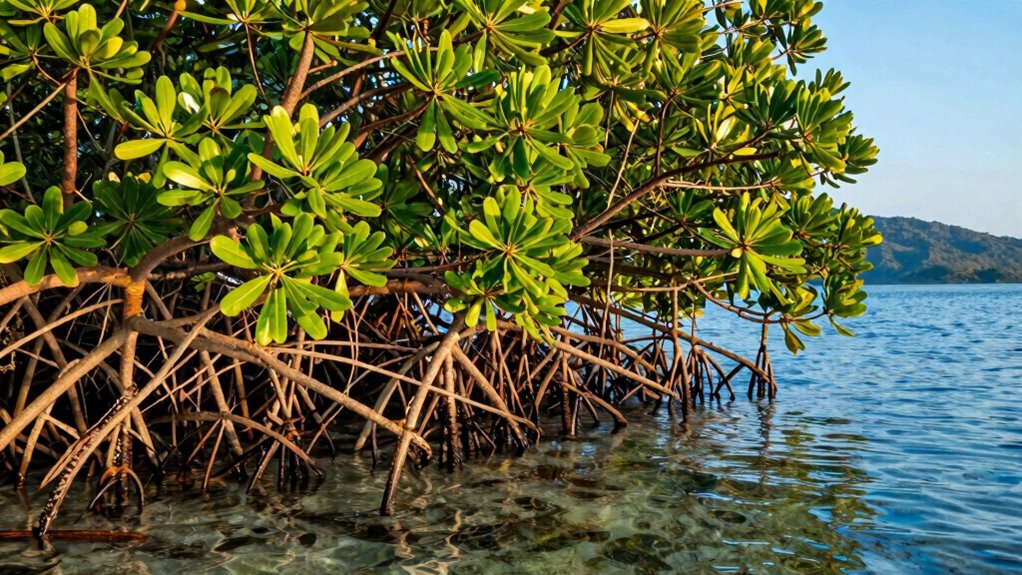
Have you ever wondered how coastal ecosystems can help combat climate change? The answer lies in the remarkable ability of blue carbon ecosystems—like mangroves, seagrasses, and salt marshes—to absorb and store carbon dioxide from the atmosphere. These environments act as natural carbon sinks, capturing greenhouse gases and reducing their impact on our planet. By investing in efforts such as mangrove restoration and seagrass preservation, you play an essential role in enhancing these ecosystems’ capacity to fight climate change while also safeguarding the coastal areas you cherish.
Coastal blue carbon ecosystems absorb and store greenhouse gases, helping fight climate change and protect our cherished coastlines.
Mangrove restoration is a powerful tool in this fight. When you support or participate in restoring degraded mangroves, you help rebuild an indispensable habitat that can sequester large amounts of carbon. Mangroves grow in tropical and subtropical coastal zones and are particularly efficient at trapping carbon in their dense root systems and soil. Restoring these forests not only ups their carbon storage capacity but also stabilizes coastlines against erosion, provides habitat for diverse species, and supports local communities. Every effort to replant or protect mangroves contributes directly to reducing atmospheric CO₂ levels and enhancing coastal resilience.
Similarly, seagrass preservation is essential. These underwater meadows are some of the most efficient blue carbon ecosystems, capable of storing carbon up to 35 times faster than terrestrial forests. When you focus on protecting existing seagrass beds or restoring those that have been damaged, you preserve a natural carbon sink that also supports fisheries, water quality, and biodiversity. Seagrasses stabilize sediments, prevent erosion, and create nurseries for many marine species. Their decline due to pollution, dredging, and climate change diminishes their ability to absorb carbon, so active preservation efforts are necessary. Recognizing the importance of biodiversity in these ecosystems can further enhance their resilience and carbon sequestration potential. Additionally, understanding the carbon sequestration process in these habitats can help optimize conservation strategies. Incorporating community-led conservation initiatives can also significantly increase the effectiveness of preservation efforts. Engaging local communities in coastal management efforts can further strengthen these ecosystems’ resilience and effectiveness in carbon storage.
Together, mangrove restoration and seagrass preservation form an extensive approach to coastal conservation. They help mitigate climate change by increasing the amount of carbon stored in coastal soils and vegetation. More than that, these ecosystems provide critical services—buffer zones against storm surges, habitats for fish and wildlife, and opportunities for sustainable livelihoods. By understanding and supporting blue carbon initiatives, you contribute to a healthier planet and more resilient coastlines. Protecting and restoring these ecosystems isn’t just about conserving nature; it’s about harnessing nature’s power to help us tackle one of the most urgent challenges of our time.
As an affiliate, we earn on qualifying purchases.
Frequently Asked Questions
How Is Blue Carbon Different From Other Carbon Storage Methods?
Blue carbon refers to the carbon stored in coastal and marine ecosystems like mangroves, salt marshes, and seagrasses, making it different from land-based methods. You benefit from its high carbon sequestration capacity and rapid storage ability, which helps fight climate change. Unlike terrestrial methods, blue carbon ecosystems trap carbon directly in sediments underwater, providing a unique, efficient way to store carbon and protect coastal environments simultaneously.
Can Blue Carbon Projects Be Implemented in Urban Coastal Areas?
Yes, you can implement blue carbon projects in urban coastal areas. While urban planning often focuses on development, integrating blue carbon initiatives can protect and restore essential ecosystems like mangroves and salt marshes. Engaging the community becomes important, turning residents into stewards of their environment. This way, you balance urban growth with ecological preservation, fostering resilience and healthier coastlines for future generations.
What Are the Main Challenges in Measuring Blue Carbon Stocks?
You face several challenges measuring blue carbon stocks. Remote sensing helps monitor large areas efficiently, but data accuracy can be problematic due to cloud cover, water turbidity, and varying sensor resolutions. These factors make it difficult to precisely estimate carbon levels in coastal ecosystems. Additionally, ground-truth validation is essential to improve remote sensing data, but it can be resource-intensive. Overcoming these obstacles is vital for effective blue carbon assessment and coastal conservation efforts.
How Do Blue Carbon Ecosystems Benefit Local Fisheries?
You might imagine vibrant coastal waters teeming with life, thanks to blue carbon ecosystems. These habitats support marine biodiversity, providing shelter and food for fish and shellfish. Their resilience helps maintain healthy fish populations, which benefits local fisheries. By protecting mangroves, salt marshes, and seagrasses, you guarantee a thriving environment that sustains fish stocks, supports livelihoods, and preserves the rich diversity that keeps coastal waters productive and resilient.
Are There Successful Global Examples of Blue Carbon Conservation?
Yes, there are successful global examples of blue carbon conservation. For instance, mangrove restoration projects in Indonesia and the Philippines have considerably increased carbon sequestration and protected coastal communities. Seagrass mapping initiatives in Australia help identify essential areas for conservation and restoration. These efforts demonstrate how targeted actions like mangrove restoration and seagrass mapping can effectively preserve blue carbon ecosystems, benefiting climate resilience and local livelihoods worldwide.
As an affiliate, we earn on qualifying purchases.
Conclusion
By protecting blue carbon ecosystems like mangroves and salt marshes, you’re helping to combat climate change and preserve essential habitats. Did you know that these ecosystems store up to four times more carbon per hectare than terrestrial forests? This staggering fact shows how important your efforts are in safeguarding our coastlines. When you support coastal conservation, you’re not just protecting nature—you’re also fighting for a healthier planet for future generations.
coastal erosion control products
As an affiliate, we earn on qualifying purchases.
As an affiliate, we earn on qualifying purchases.
blue carbon ecosystem conservation supplies
As an affiliate, we earn on qualifying purchases.
As an affiliate, we earn on qualifying purchases.
Halloween Picks
halloween
As an affiliate, we earn on qualifying purchases.