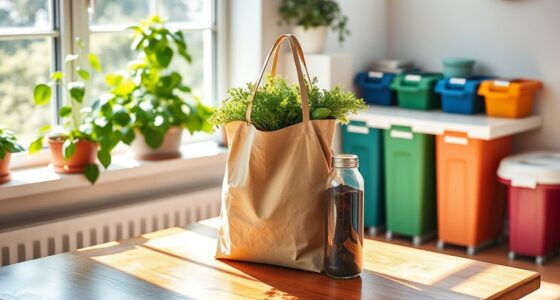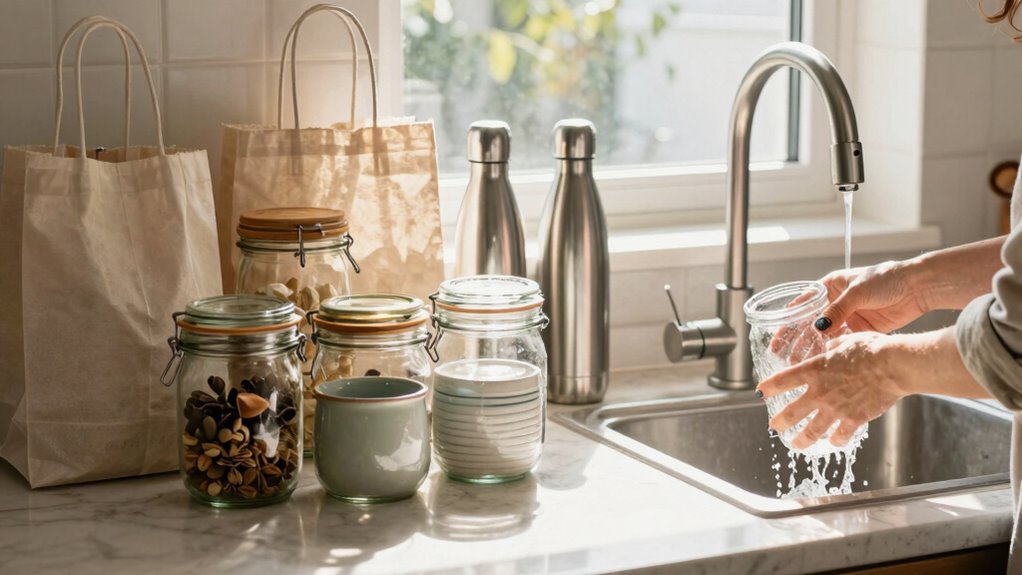

To build better reuse habits at home, start by evaluating your belongings and finding creative ways to repurpose or upcycle items instead of discarding them. Create designated spaces for reusable containers and label them for easy access, making it more convenient to use sustainable options. Incorporate small routines, like turning old magazines into gift wraps or storing leftovers in eco-friendly containers. Keep exploring new ideas to deepen your eco-conscious habits, and more tips await you as you go along.
Key Takeaways
- Designate specific storage areas for reusable items to encourage easy access and consistent use.
- Label and organize upcycled containers to integrate reuse into daily routines seamlessly.
- Replace single-use plastics with durable, eco-friendly containers to reduce disposable waste.
- Regularly evaluate belongings to identify items suitable for upcycling or reuse.
- Incorporate eco-conscious practices into daily habits, such as using reusable bags and bottles.
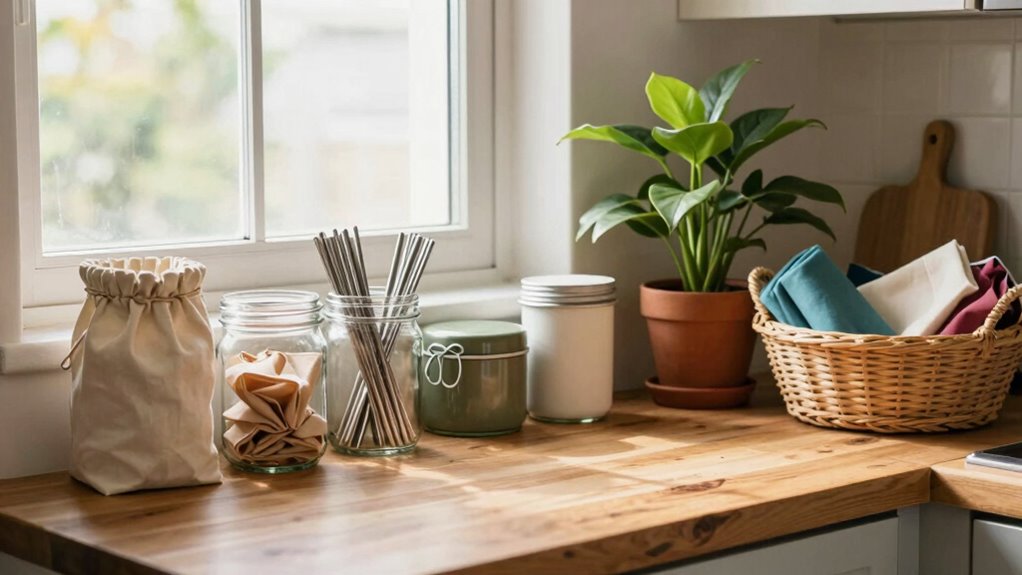
Building better reuse habits at home can considerably reduce waste and save you money, but it requires intentional effort. The good news is, small changes can lead to big impacts over time. One effective way to start is by exploring upcycling tips—finding creative ways to give your old items a new purpose instead of tossing them away. For instance, you can transform glass jars into storage containers for spices or craft supplies, or repurpose worn-out T-shirts as cleaning rags. These simple upcycling strategies not only cut down on trash but also add a personal touch to your space.
Transform old items into useful, personalized space-saving solutions through simple upcycling ideas.
In addition to upcycling, using eco friendly containers makes a significant difference. Replace single-use plastics with durable, reusable options like stainless steel or bamboo containers. Not only do they last longer, but they also reduce the reliance on disposable packaging that often ends up in landfills or oceans. When you shop or pack lunches, opt for these eco friendly containers, and you’ll find it easier to stick to your reuse goals. Keeping a stash of reusable bags, bottles, and storage boxes nearby encourages you to choose them over disposables, turning reuse into a natural part of your routine.
Creating habits around reuse isn’t just about buying new items; it’s about rethinking what you already have. Take a moment to evaluate your belongings and identify things that can be repurposed. For example, old magazines or cardboard boxes can become organizers or gift wraps. When you’re about to throw something away, ask yourself if it can be upcycled or reused in another way. Developing this mindset shifts your perspective from waste to resourcefulness. Additionally, understanding the importance of biodiversity can inspire you to make more environmentally conscious decisions in your home. Incorporating sustainable practices can further enhance your efforts and foster a deeper connection with the environment. You can also explore recycling programs available in your community to properly dispose of items that cannot be reused or upcycled.
To reinforce these habits, set up dedicated spaces for your reusable items. Keep eco friendly containers in places where you prepare food or store essentials, making it convenient to grab them instead of reaching for disposables. Label your upcycled containers for easy identification, so they become a familiar part of your daily routine. Over time, these small adjustments become second nature, and you’ll notice less clutter and waste in your home.
Building better reuse habits requires mindfulness and consistency but doesn’t have to be complicated. Incorporate simple upcycling tips into your daily life, invest in eco friendly containers, and reevaluate your use of everyday items. These actions, taken consistently, will transform your approach to waste and help you live more sustainably. With patience and commitment, you’ll find that reducing your environmental footprint becomes an easy, even enjoyable, part of your home life.

GIUOIDUO Stainless Steel Lunch Box 6-Pack,Stackable Snack Storage Boxes, Lid Food Container, Reusable Food Storage Container for Travel and Work, Dishwasher Safe, Freezer Safe
Product dimensions: length 10X width 7.68X height 2.1 inches, This series can meet the preferences of different customers…
As an affiliate, we earn on qualifying purchases.
As an affiliate, we earn on qualifying purchases.
Frequently Asked Questions
How Can I Encourage Family Members to Adopt Reuse Habits?
You can encourage family members to adopt reuse habits by involving them actively in the process. Make it fun and show how reuse benefits everyone, fostering family involvement. Set clear expectations and practice habit consistency, so reuse becomes a natural part of daily routines. Praise small successes and share eco-friendly tips to motivate everyone. When everyone participates, reuse habits become a shared responsibility, making it easier to sustain long-term.
What Are Simple Daily Reuse Practices I Can Start Immediately?
Channel your inner MacGyver and start simple with daily reuse practices. Use DIY projects and upcycling ideas to turn old jars into storage, or fabric scraps into cleaning rags. Carry reusable bags and bottles to cut down waste. Reuse envelopes and packaging for notes or crafts. These small steps, like a hero’s toolkit, can make a big impact, turning everyday items into eco-friendly solutions.
How Do I Find Creative Ways to Reuse Everyday Items?
To find creative ways to reuse everyday items, start with upcycling projects that turn old objects into something useful or decorative. Look around your home for items like jars, boxes, or bottles, and think of creative storage solutions you can make. Explore online ideas for upcycling projects, and challenge yourself to repurpose items instead of discarding them. This approach keeps waste out of landfills and adds a personal touch to your space.
Are There Any Common Reuse Mistakes to Avoid at Home?
Avoid recycling misconceptions that can lead to contamination and waste. Don’t assume single-use items can be reused endlessly; they often wear out or aren’t meant for multiple uses. Be cautious about over-reusing items that aren’t durable, which can cause safety issues or reduce effectiveness. Also, skip the temptation to reuse items for purposes they weren’t designed for, as this can create health or safety risks. Stay informed to make smarter reuse choices.
How Can I Track My Progress in Reducing Waste Through Reuse?
Think of yourself as a waste warrior, tracking your progress through waste reduction techniques. Use a journal or app to record your reuse efforts, noting changes in recycling statistics and waste amounts. Set weekly goals, then review your progress to stay motivated. By consistently monitoring, you’ll see your impact grow—like a hero in a story who learns their power through small, deliberate steps, turning habits into lasting change.

ROYAL CRAFT WOOD 5-Piece Bamboo Drawer Organizer Set – Multi-Use Storage Trays for Kitchen, Bathroom, Office, Makeup, Jewelry & More – Junk Drawer Tray, Utensil Holder, Storage Box & Bin Set (5 Boxes)
5-𝑷𝑰𝑬𝑪𝑬 𝑩𝑨𝑴𝑩𝑶𝑶 𝑺𝑻𝑶𝑹𝑨𝑮𝑬 𝑫𝑹𝑨𝑾𝑬𝑹 𝑶𝑹𝑮𝑨𝑵𝑰𝒁𝑬𝑹 𝑺𝑬𝑻: An ideal deep drawer organizer for everyday use, these storage boxes are…
As an affiliate, we earn on qualifying purchases.
As an affiliate, we earn on qualifying purchases.
Conclusion
Building reuse habits at home isn’t just about reducing waste; it’s about reclaiming a sense of purpose in everyday actions. Like turning an old jar into a flower vase, you transform discarded items into new treasures. While convenience tempts you to toss, choosing reuse offers timeless rewards—creativity, sustainability, and connection. Embrace small changes daily, and you’ll find that what once seemed wasteful can become your greatest sustainable joy.

NETANY 4-pack 16oz Glass jars with Airtight Lids, Overnight Oats Containers with Bamboo Lids, Wide mouth Mason Salad jars, Glass Food Storage Containers for Snacks Yogurt Spice Sugar
High-Grade Glass: Made with premium BPA-free and lead-free food-grade glass, ensures long-lasting durability and offers a clear view…
As an affiliate, we earn on qualifying purchases.
As an affiliate, we earn on qualifying purchases.

WISELIFE Reusable Grocery Shopping Bags 10 Pack Large Foldable Tote Bags Bulk, Eco Produce Bags with Long Handle for Shopping Groceries Clothes (Grey&Black)
Sturdy Rip-stop Fabric: the WISELIFE reusable grocery bag is made of heavy-duty non-woven fabric reinforced with finished stitches;…
As an affiliate, we earn on qualifying purchases.
As an affiliate, we earn on qualifying purchases.