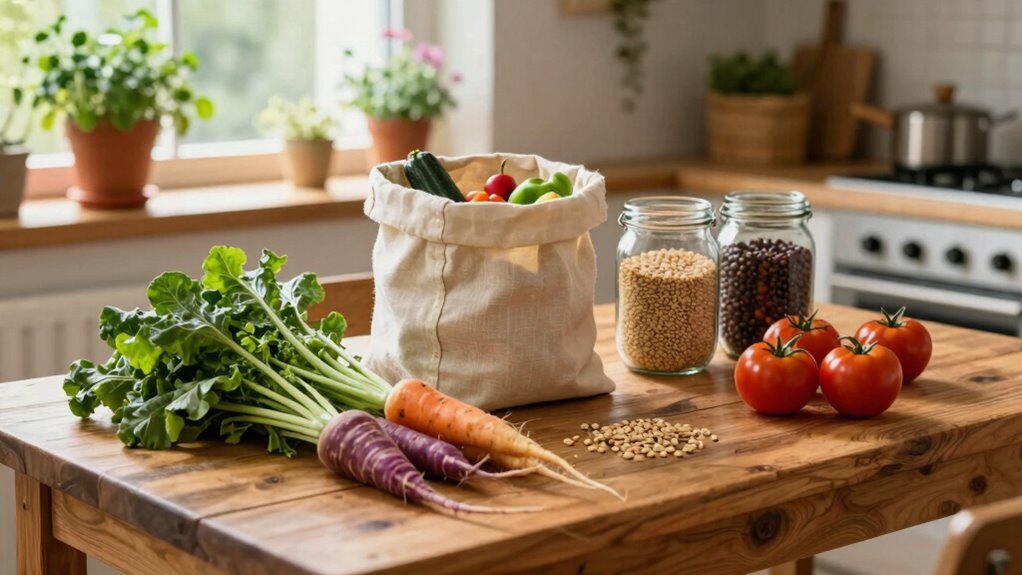

To eat more sustainably at home, plan your meals carefully to reduce waste and create shopping lists based on what you actually need. Support local and seasonal foods by shopping at farmers’ markets or growing your own herbs and vegetables. Shop in bulk with minimal packaging, use reusable bags, and store food in eco-friendly containers. Incorporate more plant-based meals and cook at home to control ingredients and waste. Keep exploring for more simple tips to boost your sustainability efforts.

Get school and study supplies delivered free — and shop member deals
- Fast, free delivery on millions of items
- Access to Prime Big Deal Days deals on October 6–7
- Prime Video, Amazon Music and more included
Key Takeaways
- Plan meals and create shopping lists based on actual needs to minimize food waste.
- Buy seasonal, local produce from farmers’ markets or grow your own herbs and vegetables.
- Use reusable containers, bags, and purchase in bulk to reduce packaging waste.
- Incorporate more plant-based meals to lower environmental impact.
- Store leftovers creatively and control portion sizes to avoid unnecessary food waste.

Eating more sustainably at home is easier than you might think, and small changes can make a big difference for the environment. One of the most effective ways to do this is by focusing on food waste reduction. Start by planning your meals carefully. When you shop, create a list based on what you truly need, avoiding impulse buys that might go bad before you eat them. Use leftovers creatively—transform yesterday’s roasted vegetables into a soup or a filling for wraps. Store food properly to extend its freshness, and get comfortable with understanding expiration dates. Often, foods are still safe to eat after the “use-by” date, and being mindful of portions can prevent uneaten food from ending up in the trash.
Plan meals, use leftovers creatively, and understand expiration dates to reduce food waste and help the environment.
Another impactful step is supporting local sourcing. Buying from local farmers’ markets or community-supported agriculture (CSA) programs reduces the carbon footprint associated with long-distance food transportation. Local foods are fresher, often more nutritious, and support your community’s economy. When you purchase seasonal produce, you’re also aligning your eating habits with the natural growing cycles, which is better for the environment. If you have space, consider growing your own herbs or vegetables. This gives you control over how your food is grown and cuts down on packaging waste. Learning which foods are in season locally helps you make smarter choices, saving money and reducing environmental impact.
In addition, consider adjusting your shopping habits to prioritize bulk buying and minimal packaging. Bring your own reusable bags, containers, and produce bags to stores to cut down on single-use plastics. When possible, buy whole foods rather than pre-cut or packaged items—this often results in less waste and more control over portion sizes. Storing foods in reusable containers instead of disposable packaging not only reduces waste but also keeps your food fresher longer. Using sustainable packaging can further reduce your environmental impact. Incorporating local sourcing and supporting sustainable practices can significantly lessen your environmental footprint while enriching your connection to your community. To maximize your efforts, look for stores that prioritize eco-friendly practices, which can make a notable difference in your overall sustainability. Cooking at home is a cornerstone of sustainable eating, as it allows you to control ingredients and portion sizes, and it minimizes packaging waste. Focus on plant-based meals more often—vegetables, grains, and legumes generally require fewer resources to produce than meat. Incorporating more plant-based dishes into your weekly menu can profoundly lower your environmental footprint.
reusable food storage containers
As an affiliate, we earn on qualifying purchases.
As an affiliate, we earn on qualifying purchases.
Frequently Asked Questions
How Can I Reduce Food Waste Effectively at Home?
To reduce food waste effectively at home, start with meal planning to buy only what you need and avoid impulse purchases. Practice portion control to prevent leftovers that may go bad. Store perishables properly to extend their shelf life, and get creative with leftovers by repurposing them into new meals. These steps help minimize waste, save money, and support sustainable eating habits.
What Are the Best Sustainable Alternatives to Plastic Packaging?
You can opt for sustainable packaging by using reusable wraps like beeswax or silicone covers instead of plastic wrap. Additionally, choose biodegradable containers made from materials like bamboo, cornstarch, or plant-based plastics. These alternatives reduce plastic waste and are environmentally friendly. By switching to reusable wraps and biodegradable containers, you help lower your carbon footprint and support a healthier planet, making your kitchen more sustainable.
How Do I Choose Eco-Friendly Groceries on a Budget?
To choose eco-friendly groceries on a budget, focus on eco-friendly shopping by prioritizing local, seasonal produce, which is often cheaper and fresher. Use reusable bags and avoid excess packaging to reduce waste. Look for store discounts on sustainable items and buy in bulk to save money. Planning your meals helps minimize impulse purchases, making your budget-conscious choices more effective while supporting environmentally friendly practices.
What Are Simple Ways to Compost Kitchen Scraps?
You can start composting kitchen scraps by setting up a compost bin in your backyard or kitchen. Collect your kitchen scraps like fruit peels, coffee grounds, and vegetable scraps regularly, then add them to the bin. Make sure to turn the compost occasionally to aerate it. This simple method reduces waste, enriches your soil, and makes composting an easy, eco-friendly habit in your daily routine.
How Can I Support Local Farmers Sustainably?
You can support local farmers sustainably by engaging in seasonal shopping, which reduces transportation emissions and supports regional agriculture. Joining a community-supported agriculture (CSA) program allows you to buy directly from farmers, ensuring fresh produce and fair wages. Additionally, visiting farmers’ markets and choosing organic, locally-grown products help promote sustainable farming practices. These actions connect you with your local food system, decreasing your environmental impact while supporting the community’s economy.
As an affiliate, we earn on qualifying purchases.
Conclusion
By making small changes, you can considerably reduce your environmental impact. For instance, choosing locally sourced foods can cut your carbon footprint by up to 25%. Remember, every meal is an opportunity to eat more sustainably—whether by reducing waste, choosing plant-based options, or supporting local farmers. Your efforts not only benefit the planet but also promote healthier eating habits. Start today, and watch how even simple swaps can make a big difference in creating a more sustainable future.
As an affiliate, we earn on qualifying purchases.
As an affiliate, we earn on qualifying purchases.
Halloween Picks
halloween
As an affiliate, we earn on qualifying purchases.