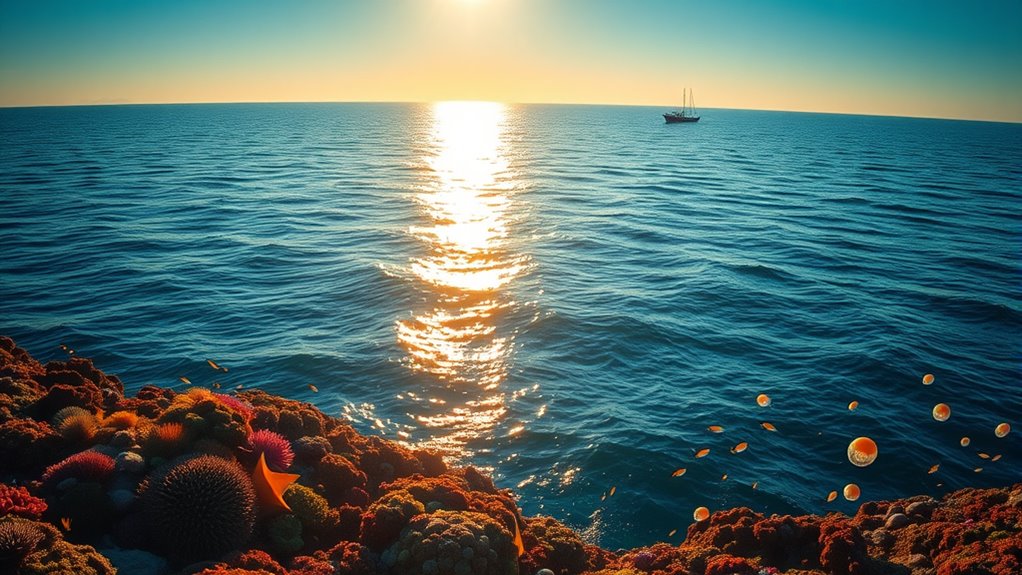

The activation of the High Seas Treaty marks a major milestone in ocean conservation, offering new rules to safeguard nearly two-thirds of Earth’s surface. It aims to promote sustainable practices, fight illegal fishing, and foster international cooperation for marine research. By establishing stronger protections for vulnerable species and habitats, it helps ensure a healthier future for our oceans. If you want to understand how this treaty shapes global efforts and what it means for the planet, there’s more to explore.

Prime made for students and young adults
- Fast, free delivery for dorm and study essentials
- Prime Video and Amazon Music included
- Member-only deals
Key Takeaways
- The High Seas Treaty establishes global rules to protect marine biodiversity and promote sustainable use of ocean resources.
- It enables international cooperation, data sharing, and coordinated enforcement efforts to combat illegal fishing and habitat destruction.
- The treaty creates mechanisms for expanding marine protected areas and safeguarding vulnerable species.
- It recognizes the high seas as a global commons, fostering shared responsibility among nations.
- The treaty’s activation marks a new era of enhanced ocean conservation and collaborative efforts for a healthier, resilient marine environment.
Have you ever wondered how countries manage the vast, unregulated areas of the high seas? These expansive waters, beyond national jurisdictions, cover nearly two-thirds of the Earth’s surface, making them a fundamental zone for marine biodiversity. Despite their importance, they’ve long lacked a detailed legal framework to protect and sustainably manage their resources. That’s where the High Seas Treaty steps in, marking a significant turning point for ocean conservation. When this treaty takes effect, it signals a new era where nations commit to safeguarding the high seas through enhanced international cooperation. You now have a global framework designed to guarantee these waters are not exploited recklessly but preserved for future generations. This treaty emphasizes the importance of protecting marine biodiversity, recognizing that the high seas are home to countless species, many of which remain undiscovered. From vibrant coral reefs to migratory species like whales and tuna, these ecosystems are essential for maintaining ecological balance. Yet, they face threats from overfishing, illegal activities, and climate change. The treaty aims to address these issues by establishing rules that promote sustainable practices and prevent destructive behaviors. You might wonder how countries will work together on such a vast scale. That’s where international cooperation becomes indispensable. The treaty encourages nations to share data, coordinate patrols, and enforce regulations uniformly. By doing so, it helps close gaps in existing enforcement, making it harder for illegal fishing vessels to operate unnoticed. It also creates a platform for countries to collaborate on research, which is crucial for understanding the complex ecosystems beneath the waves. Additionally, scientific research plays a vital role in informing policy decisions and conservation efforts. With a shared commitment, nations can better protect vulnerable species and habitats, ensuring biodiversity thrives rather than diminishes. This cooperation is essential because no single country can fully safeguard the high seas alone. The treaty promotes transparency and accountability, requiring signatory nations to report their activities and adhere to common standards. This collective effort fosters trust and a unified approach to managing these international waters. As the treaty takes effect, you can expect an increase in coordinated efforts, marine protected areas, and stricter regulations on resource extraction. It’s a bold step toward recognizing that the high seas are a global commons, belonging to all humanity and the planet’s health. By fostering stronger international bonds, the treaty aims to preserve marine biodiversity and promote sustainable use of ocean resources. Ultimately, it’s about securing a healthier, more resilient ocean, where marine life can flourish and future generations can enjoy the wonders of the deep.
marine biology research equipment
As an affiliate, we earn on qualifying purchases.
As an affiliate, we earn on qualifying purchases.
Frequently Asked Questions
How Will Enforcement of the Treaty Be Monitored Globally?
You’ll see enforcement monitored through advanced marine technology like satellite tracking and autonomous vessels, ensuring compliance across the high seas. These tools help coastal communities and international agencies detect illegal activities in real-time. Regular reporting and data sharing will keep everyone accountable, fostering transparency. By leveraging these technologies, the treaty promotes global cooperation and helps protect marine ecosystems, empowering coastal communities to participate actively in ocean conservation efforts.
What Are the Penalties for Violating Treaty Provisions?
Imagine the ocean’s delicate balance teeters on your actions. If you violate the treaty, penalties could include hefty fines, suspension of fishing rights, or even criminal charges, aiming to protect marine biodiversity. These measures deter illegal fishing and safeguard ocean health. Enforcement agencies worldwide will monitor compliance closely, ensuring that those who harm the high seas face consequences, so our oceans stay vibrant and resilient for generations.
How Does the Treaty Impact Existing Maritime Laws?
The treaty enhances existing maritime laws by prioritizing marine biodiversity and respecting maritime sovereignty. It creates a collaborative framework that complements current regulations, ensuring nations work together to protect ocean ecosystems. You’ll see stronger enforcement measures and clearer guidelines for sustainable use, helping to balance sovereignty rights with global conservation goals. This treaty doesn’t replace existing laws but integrates them, making ocean governance more effective and unified.
Who Are the Main Stakeholders Involved in Treaty Implementation?
You’ll find that key stakeholders involved in treaty implementation include governments, international organizations, and environmental groups. They work together to establish marine protected areas and guarantee coastal communities benefit from sustainable practices. Your role may involve advocating for stronger protections, supporting local conservation efforts, and promoting policies that balance economic needs with ocean health. By collaborating, these stakeholders help safeguard marine biodiversity and promote responsible stewardship of our oceans.
What Funding Mechanisms Support Ongoing Ocean Conservation Efforts?
Think of funding mechanisms as your ocean’s lifelines. You support initiatives like establishing marine protected areas and promoting sustainable fishing through government grants, international funds, and public-private partnerships. These resources enable ongoing conservation efforts, ensuring resilient ecosystems and healthy fish stocks. By backing these mechanisms, you help safeguard marine biodiversity, prevent overexploitation, and secure the future of our oceans for generations to come.
underwater drone for ocean exploration
As an affiliate, we earn on qualifying purchases.
As an affiliate, we earn on qualifying purchases.
Conclusion
With the High Seas Treaty now in effect, you’re witnessing a groundbreaking moment in ocean conservation. This treaty could be the most powerful tool humanity has ever had to safeguard our planet’s vast, mysterious waters. By working together, you and others can guarantee the future of marine life and ecosystems aren’t just a distant dream but a reality. It’s an incredible step forward—one that could change the course of history and save our oceans for generations to come.
As an affiliate, we earn on qualifying purchases.
As an affiliate, we earn on qualifying purchases.
Fall Picks
fall essentials
As an affiliate, we earn on qualifying purchases.