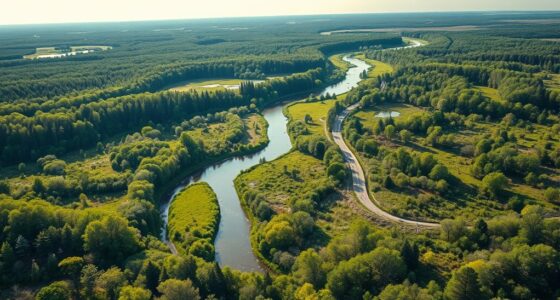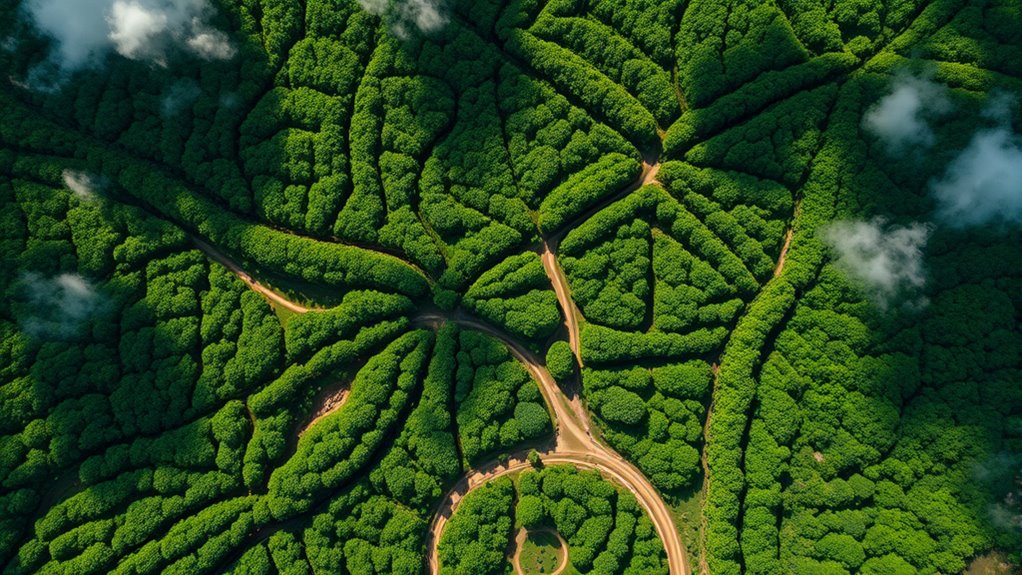

In 2025, the Amazon faces a serious crossroads as deforestation accelerates due to agriculture, mining, and infrastructure projects. Indigenous communities are key to safeguarding biodiversity and fighting illegal activities, but their rights are increasingly threatened. Protecting the rainforest requires global support for sustainable policies and recognizing Indigenous stewardship. If you want to understand how these forces shape the future of the Amazon, keep exploring the critical issues driving change in this essential ecosystem.
Key Takeaways
- Indigenous land rights recognition correlates with reduced deforestation and improved rainforest conservation efforts.
- Illegal logging, mining, and infrastructure projects continue to threaten Amazon ecosystems and Indigenous communities.
- Deforestation rates remain high, driven by agriculture expansion and resource extraction, risking irreversible environmental damage.
- Protecting Indigenous sovereignty and promoting sustainable practices are vital for long-term rainforest preservation.
- International support and policy reforms are essential to curb illegal activities and ensure ecological and social stability.
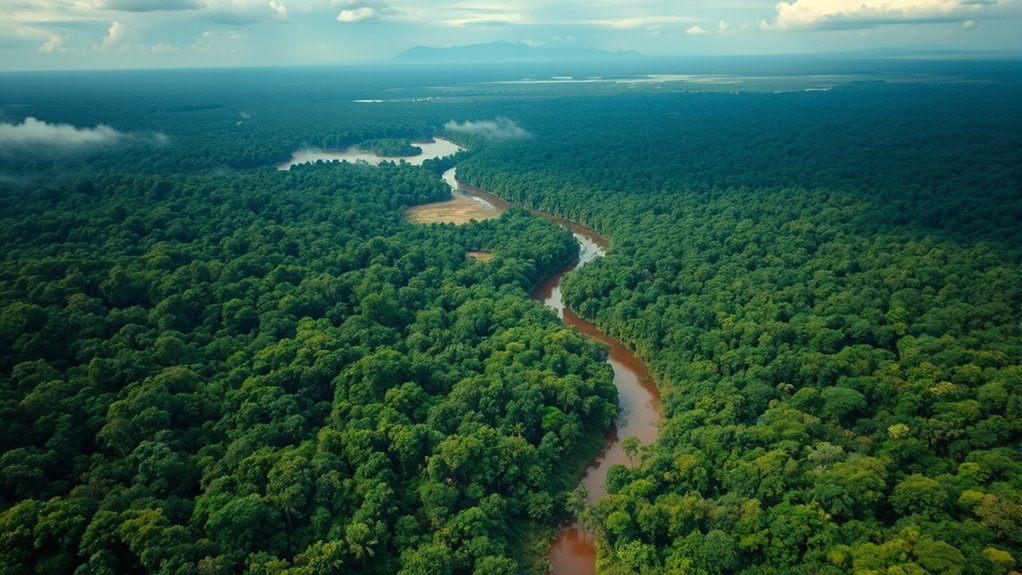
The Amazon Rainforest stands at a critical crossroads, facing rapid changes that threaten its delicate balance. One of the most pressing issues is the ongoing conflict over Indigenous rights. Indigenous communities have lived in harmony with the rainforest for centuries, maintaining its health and biodiversity. However, their rights are increasingly under threat as external pressures grow. Governments and corporations often prioritize economic development over Indigenous sovereignty, leading to encroachments on their lands. These communities possess invaluable knowledge about sustainable practices, yet their voices are frequently overlooked in policymaking. Protecting Indigenous rights isn’t just a moral obligation; it’s essential for preserving the rainforest. When Indigenous territories are respected, deforestation rates tend to decrease markedly. Studies show that areas where Indigenous peoples have legal recognition suffer less tree loss, highlighting their indispensable role as stewards of the land. Despite this, illegal logging, land grabbing, and infrastructure projects continue to threaten these communities, exacerbating deforestation. The faster deforestation rates accelerate, the more the rainforest’s resilience diminishes, impacting global climate regulation and local livelihoods alike. You need to understand that these issues are interconnected: respecting Indigenous rights directly influences the health of the rainforest. As deforestation rates climb, the loss of tree cover releases vast amounts of carbon into the atmosphere, fueling climate change. This, in turn, jeopardizes not only the biodiversity of the Amazon but also the climate stability of the entire planet. The race to exploit natural resources often ignores the long-term consequences, sacrificing ecological integrity for short-term gains. You can see this in the expansion of agriculture, mining, and road construction, all of which accelerate deforestation. Meanwhile, Indigenous communities are fighting to defend their land rights and oppose destructive projects. Their activism draws attention to the importance of sustainable management and the need for legal protections. Recognizing the crucial role of Indigenous stewardship can lead to more effective conservation strategies and better long-term outcomes. International pressure and local activism are essential to turning the tide, but change must come from policies that recognize Indigenous sovereignty and curb illegal activities. If these issues aren’t addressed, the rainforest’s future becomes increasingly precarious. Your awareness and support can help push for policies that protect Indigenous rights and reduce deforestation rates. These efforts are indispensable for the survival of this critical ecosystem. As the Amazon reaches this crossroads, your understanding of these intertwined issues can make a difference. The choices made today will determine whether the rainforest continues to thrive or falls into irreversible decline. Every action counts in ensuring that Indigenous communities are empowered, deforestation slows down, and the rainforest’s indispensable role in the global climate remains intact.

3 Pcs No One is Illegal On Stolen Land MMIW Indigenous Sticker Gifts for Indigenous Rights Advocates, Awareness Supporters, Social Justice Warriors, Native American Activists, Feminist Allies – 3"x3"
Personalized Decoration: Add a unique touch to your belongings by applying this sticker to your car, laptop, water…
As an affiliate, we earn on qualifying purchases.
As an affiliate, we earn on qualifying purchases.
Frequently Asked Questions
How Will Climate Change Specifically Impact Amazon Biodiversity?
Climate change will drastically impact Amazon biodiversity by disrupting habitats and causing shifts in species migration patterns. As temperatures rise, some species may struggle to adapt or find suitable environments, risking extinction. Additionally, reduced carbon sequestration from deforestation and warming may accelerate climate change further, creating a vicious cycle. You’ll see altered ecosystems, loss of unique species, and decreased resilience, making conservation efforts even more urgent to preserve this essential biodiversity hotspot.
What Are Indigenous Communities’ Roles in Rainforest Conservation?
You can play a crucial role in rainforest conservation by supporting indigenous communities, who use their traditional knowledge to protect biodiversity. Their cultural preservation efforts maintain sustainable practices that prevent deforestation and habitat loss. By respecting and amplifying indigenous voices, you help guarantee their wisdom continues to guide conservation. Your actions, like advocacy and responsible consumption, reinforce their essential role in safeguarding the rainforest for future generations.
Which Policies Are Most Effective for Curbing Deforestation?
Imagine a shield protecting your future—effective policies do just that. You’ll find carbon offsets help reduce emissions, turning your footprint into forest growth. Promoting eco-tourism encourages local communities to preserve biodiversity, making conservation economically rewarding. Clear land-use regulations, coupled with strict enforcement, prevent illegal logging. By supporting these policies, you actively contribute to curbing deforestation, ensuring the rainforest’s liveliness for generations to come.
How Does Illegal Logging Affect Local Economies?
Illegal logging disrupts local economies by fueling illegal markets, which often operate outside the law and evade taxes. This reliance on illegal activities creates economic dependency on unsustainable practices, undermining legitimate industries like sustainable forestry and eco-tourism. As a result, communities may experience short-term gains but face long-term economic instability, environmental degradation, and loss of biodiversity, making it harder for local economies to thrive sustainably.
What Innovations Are Emerging for Sustainable Rainforest Management?
You’re seeing exciting innovations in sustainable rainforest management, like agroforestry practices that blend agriculture with forest conservation, and eco technology solutions that monitor ecosystems efficiently. These approaches foster harmony between human activity and nature, reducing deforestation pressures. By embracing such innovations, you help promote a balanced ecosystem, ensuring the rainforest’s health and resilience for future generations, all while supporting local communities sustainably.

The North American Forest Owner's Handbook: Sustainable Management and Conservation
As an affiliate, we earn on qualifying purchases.
As an affiliate, we earn on qualifying purchases.
Conclusion
You stand at a pivotal moment, where your choices could steer the Amazon’s fate from destruction to rebirth. Every action you take can ignite a wildfire of change or let the rainforest’s voice fade into silence. It’s more than just a forest; it’s the heartbeat of our planet, pulsing with life and hope. Don’t let this be the last chapter—be the force that turns the tide before the Amazon’s cry for help becomes deafening.

BYDMSC Hidden Camera Detectors GPS Tracker Detector, Camera Finder, Hidden Device Detector with 6 Detection Modes for Hotel, Travel, Car, Matte Black
5-in-1 Privacy safety Protection: Easily identify hidden camera, GPS tracker and listening device, valuables safety. This Hidden bug…
As an affiliate, we earn on qualifying purchases.
As an affiliate, we earn on qualifying purchases.

Nature's Green Umbrella: A Colorful Picture Book About Rainforest Ecosystems for Kids (Ages 4-8)
Used Book in Good Condition
As an affiliate, we earn on qualifying purchases.
As an affiliate, we earn on qualifying purchases.