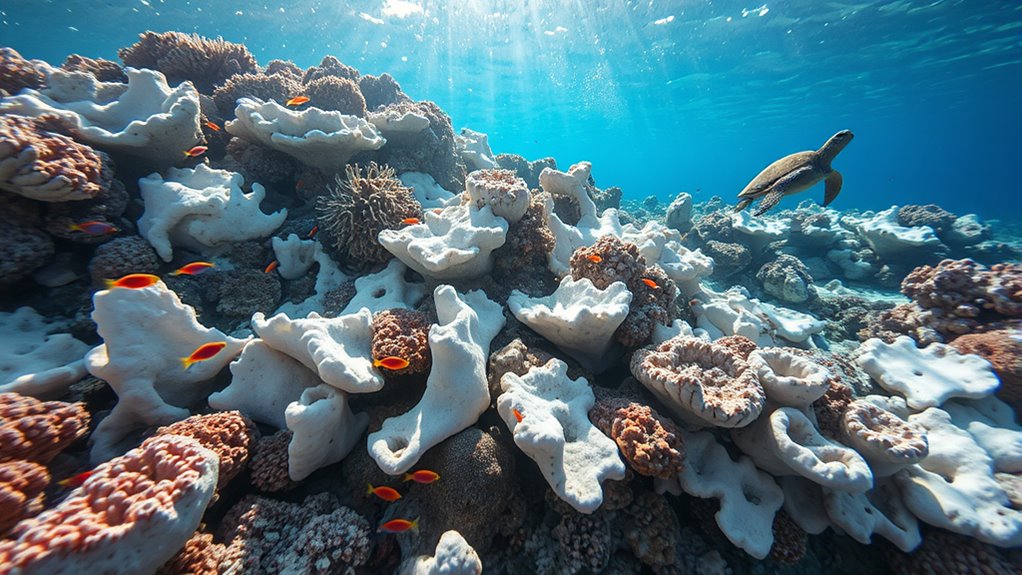

Coral reefs face urgent threats from climate change, causing bleaching, loss of marine life, and economic hardship for communities that depend on them. Rising sea temperatures stress corals, leading to algae expulsion and white, susceptible reefs. Your actions matter—reducing your carbon footprint, supporting conservation efforts, and advocating for sustainable policies can help protect these essential ecosystems. If you keep exploring, you’ll discover ways to make a real difference in saving coral reefs for future generations.

Get school and study supplies delivered free — and shop member deals
- Fast, free delivery on millions of items
- Access to Prime Big Deal Days deals on October 6–7
- Prime Video, Amazon Music and more included
Key Takeaways
- Coral bleaching caused by rising sea temperatures threatens reef ecosystems and marine biodiversity globally.
- Loss of reefs impacts fish populations, local economies, and coastal protection.
- Human activities like climate change, pollution, and overfishing accelerate reef degradation.
- Supporting conservation efforts, reducing carbon footprints, and sustainable practices can help protect reefs.
- Education and policy changes are vital for raising awareness and ensuring long-term reef survival.

Coral reefs, often called the rainforests of the sea, are facing unprecedented threats that threaten their very existence. These vibrant ecosystems support countless marine species and provide essential benefits to human communities, yet they are increasingly vulnerable to climate change, pollution, and overfishing. You might not realize it, but your actions can play a role in marine conservation efforts aimed at saving these precious habitats. One of the most alarming processes impacting corals worldwide is coral bleaching, a phenomenon triggered primarily by rising sea temperatures due to global warming. When water becomes too warm, corals become stressed and expel the symbiotic algae living within their tissues, which give corals their color and provide vital nutrients. Without these algae, the corals turn white—bleached—and become more susceptible to disease, starvation, and death.
Coral bleaching signals environmental stress and threatens reef ecosystems worldwide.
Understanding coral bleaching is essential because it serves as a clear warning sign of environmental distress. When bleaching occurs on a large scale, entire reef systems can be devastated in just a few weeks or months. This loss of vibrant life not only affects the corals themselves but also devastates the myriad of species that rely on the reefs for shelter and food. If bleaching continues unchecked, it could lead to the collapse of reef ecosystems, resulting in the loss of biodiversity and the disruption of local economies that depend on fishing and tourism. It’s a stark reminder that our planet’s climate is directly linked to the health of marine environments. Additionally, adopting high-efficiency projectors in educational campaigns can help raise awareness about the importance of reef conservation through vivid visual storytelling.
You might wonder what you can do to help combat these threats. The answer lies in supporting marine conservation initiatives that aim to protect and restore coral reefs. By reducing your carbon footprint, you contribute to lowering greenhouse gas emissions that cause global warming and, consequently, coral bleaching. You can also participate in local conservation projects, such as reef cleanups or advocating for sustainable fishing practices that lessen stress on marine populations. Educating yourself and others about the importance of coral reefs helps raise awareness and encourages collective action. Additionally, supporting policies that prioritize climate action and marine protection creates a broader impact on preserving these ecosystems for future generations.
Every effort counts when it comes to saving coral reefs. The fight against coral bleaching and other destructive forces demands a unified response. By making conscious choices, promoting marine conservation, and supporting initiatives aimed at reducing climate change, you can help guarantee that these incredible underwater landscapes continue to thrive. Protecting coral reefs isn’t just about saving colorful fish and intricate coral structures; it’s about safeguarding the health of our entire planet.
coral reef conservation educational kits
As an affiliate, we earn on qualifying purchases.
As an affiliate, we earn on qualifying purchases.
Frequently Asked Questions
How Do Coral Reefs Contribute to Global Carbon Cycles?
Coral reefs play a crucial role in the global carbon cycle through carbon sequestration, where they absorb CO2 from the water and help reduce atmospheric levels. They also contribute to ocean buffering, maintaining pH balance and protecting marine ecosystems. By supporting reef health, you help enhance these processes, which are essential for regulating climate and preventing climate change impacts on a larger scale.
What Are the Economic Impacts of Reef Degradation?
You might think reef degradation only affects marine life, but it hits your wallet too. As reefs decline, communities experience a drop in economic dependence on fishing and tourism revenue. This loss can lead to job cuts and reduced local incomes. Protecting reefs sustains these industries, ensuring you continue to benefit from vibrant tourism and sustainable fisheries. Investing in reef conservation keeps your economy resilient and thriving for the future.
Can Coral Reefs Recover Naturally From Bleaching Events?
You might wonder if coral reefs can recover naturally from bleaching events. Their resilience depends on factors like the severity of bleaching and underlying stressors. Coral resilience varies, but many corals can bounce back if conditions improve quickly. Understanding bleaching mechanisms helps predict recovery, yet prolonged stress weakens corals’ ability to adapt. To support natural recovery, reducing local threats and climate change is essential for maintaining healthy, resilient reefs.
How Do Local Communities Depend on Healthy Reefs?
If reefs vanish, your community’s lifeline disappears! You depend on healthy reefs for marine tourism, which fuels your local economy, and for cultural heritage, preserving traditions and stories tied to the sea. Reefs protect coastlines from storms and support fisheries that feed families. Without them, your community faces economic devastation, loss of identity, and environmental instability. Protecting reefs isn’t just about nature; it’s about your future and way of life.
What Innovative Technologies Are Being Used to Restore Reefs?
You explore innovative technologies like artificial reefs, which mimic natural habitats, helping to restore damaged areas. Coral farming also plays a key role, where you cultivate young corals in nurseries before transplanting them onto reefs. These methods boost reef recovery efforts, offering hope for damaged ecosystems. By supporting and advancing these technologies, you contribute to preserving essential marine life and ensuring the resilience of coral reefs for future generations.
As an affiliate, we earn on qualifying purchases.
Conclusion
If you think saving coral reefs is beyond your reach, think again. Every effort counts, and you don’t have to do it alone. By supporting conservation efforts, reducing your carbon footprint, and spreading awareness, you’re helping to turn the tide. Remember, it’s better to light a candle than curse the darkness. Together, we can make a difference and ensure these vibrant ecosystems don’t go the way of the dodo. Your actions truly matter.
As an affiliate, we earn on qualifying purchases.
coral bleaching awareness posters
As an affiliate, we earn on qualifying purchases.
As an affiliate, we earn on qualifying purchases.
Halloween Picks
halloween
As an affiliate, we earn on qualifying purchases.