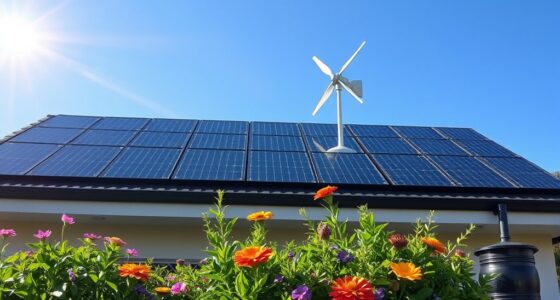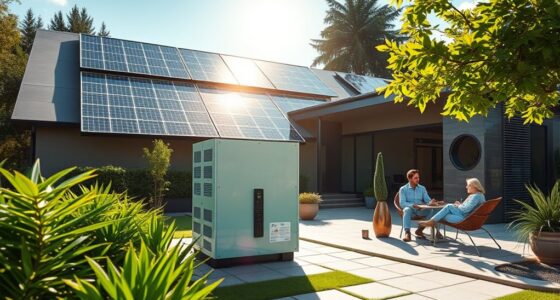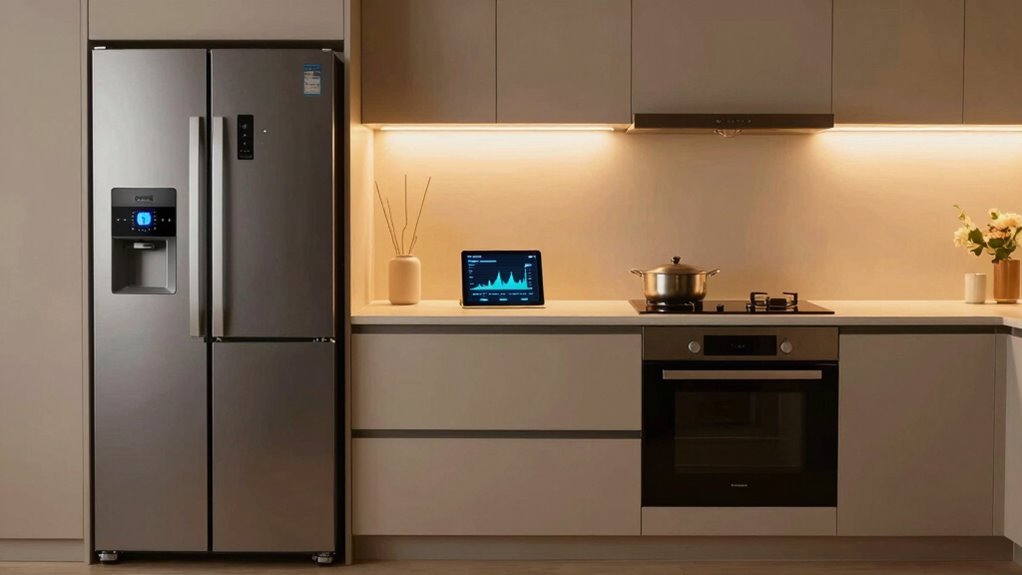

Efficient appliances connect to grid demand through smart technology that allows them to communicate with the energy system in real-time. They use smart meters and sensors to monitor current consumption and receive signals from the grid. During peak times, your appliances can delay non-essential tasks or automatically adjust operation to reduce load. This dynamic response helps balance supply and demand, making the system more sustainable. Continue exploring to discover how this technology benefits both you and the environment.

Get school and study supplies delivered free — and shop member deals
- Fast, free delivery on millions of items
- Access to Prime Big Deal Days deals on October 6–7
- Prime Video, Amazon Music and more included
Key Takeaways
- Efficient appliances communicate with the grid via smart meters to optimize energy use based on real-time demand data.
- They automatically delay or adjust operation during peak demand periods to support load balancing.
- Continuous data analysis predicts usage patterns, enabling appliances to modulate consumption proactively.
- Integration with smart grids allows appliances to respond dynamically, reducing energy costs and grid stress.
- These systems promote renewable energy use and overall grid stability through smarter demand management.
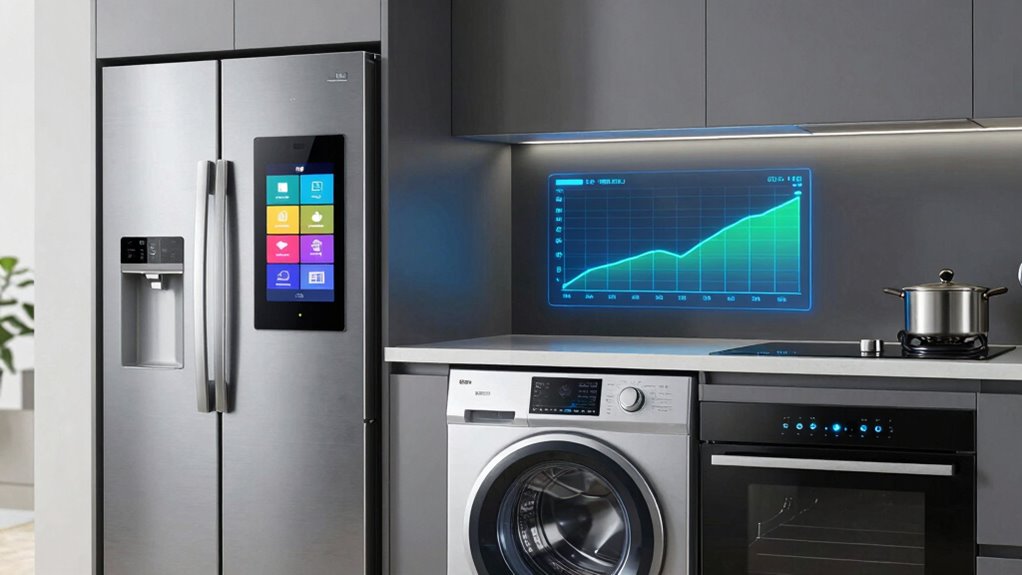
Connecting appliances to the grid based on demand allows for more efficient energy use and helps prevent overloads during peak times. This process is becoming increasingly sophisticated thanks to smart technology, particularly smart meter integration. As you use appliances, smart meters gather real-time data about your energy consumption, providing immediate feedback to the grid operators. This data allows the system to understand exactly when and how much energy your appliances are drawing, making it easier to optimize overall demand.
Smart meters enable real-time energy data collection, optimizing demand and preventing overloads during peak usage.
With smart meter integration, your appliances can communicate directly with the grid, automatically adjusting their operation based on current demand. For instance, during periods of high electricity use, your smart appliances might delay non-essential functions like running a dishwasher or charging an electric vehicle. This helps balance the load, ensuring the grid remains stable and reducing the risk of outages. When demand drops, your appliances can resume their usual operation without you needing to intervene, seamlessly aligning energy consumption with availability.
Real-time data analysis plays a core role in this process. The data collected by smart meters isn’t just stored; it’s continuously analyzed to identify patterns and predict peak times. This analysis enables grid operators to make informed decisions about energy distribution and to send signals to your appliances to modulate their activity accordingly. As a result, your home becomes part of a dynamic, responsive energy ecosystem. You don’t have to micromanage your appliances; instead, the system intelligently manages their operation to optimize efficiency and reduce waste.
This integration also benefits you directly. You could see lower energy bills because your appliances are consuming power only when it’s most efficient and affordable. Plus, you contribute to a more sustainable energy system by helping to flatten demand peaks, which reduces the need for additional power plants and lowers carbon emissions. The system’s ability to analyze real-time data and adapt appliance behavior on the fly creates a smarter, greener energy landscape. Additionally, leveraging smart technology enhances the accuracy and responsiveness of demand management.
Furthermore, this interconnected approach encourages the adoption of renewable energy sources, supporting a cleaner and more sustainable energy grid. In essence, connecting appliances to the grid based on demand isn’t just about saving energy; it’s about creating a smarter, more resilient infrastructure. By leveraging smart meter integration and real-time data analysis, your appliances become active participants in managing energy flow. This not only makes your home more efficient but also helps the entire grid operate more smoothly and sustainably, especially during those critical peak periods.
A dynamic energy system benefits everyone by balancing supply and demand more effectively.
smart appliances with grid demand response
As an affiliate, we earn on qualifying purchases.
As an affiliate, we earn on qualifying purchases.
Frequently Asked Questions
How Do Smart Appliances Communicate With the Grid?
Smart appliances communicate with the grid using wireless protocols like Wi-Fi, Zigbee, or Z-Wave, allowing seamless data exchange. They send and receive signals to adjust energy usage based on demand. To protect your data, these devices use data encryption, ensuring secure communication. You can typically control and monitor them via apps, giving you real-time insights into energy consumption and enabling you to optimize your household’s efficiency effortlessly.
What Security Measures Protect Connected Appliances From Cyber Threats?
You’re protected through cybersecurity protocols that safeguard connected appliances from cyber threats. These protocols include robust data encryption, which secures your device’s communication with the grid and prevents unauthorized access. Regular updates and strong passwords add extra layers of security. By implementing these measures, your appliances stay resilient against cyber attacks, ensuring your smart home remains safe and your data stays private while maintaining seamless energy management.
Can Consumers Manually Override Appliance Energy Requests?
Yes, you can manually override appliance energy requests by adjusting settings based on your preferences. Many smart appliances offer manual control options through their interfaces or mobile apps, allowing you to prioritize your comfort or efficiency. This way, you maintain flexibility to override grid-driven commands when needed, ensuring your user preferences are always respected while still benefiting from the energy management system’s overall efficiency.
How Does Appliance Connectivity Impact Overall Energy Efficiency?
Think of your appliances as dancers in harmony, where their synchronization reduces energy consumption. Connecting appliances to the grid improves overall energy efficiency by allowing smart systems to coordinate their activity, avoiding peaks and wastage. This synchronization guarantees energy is used wisely, lowering your bills and easing grid demand. As a result, your home becomes a well-orchestrated performance, maximizing efficiency and contributing to a sustainable energy future.
Are There Costs Associated With Connecting Appliances to the Grid?
Connecting appliances to the grid does have cost implications, including installation requirements and potential equipment upgrades. You might need to invest in smart meters or compatible devices, which can add to initial expenses. Additionally, some utility companies charge fees for connecting or upgrading systems. While these costs can seem significant upfront, they often lead to long-term savings through increased efficiency and better energy management.
energy-efficient smart home appliances
As an affiliate, we earn on qualifying purchases.
As an affiliate, we earn on qualifying purchases.
Conclusion
Think of your appliances as tiny sailors steering a vast ocean of energy. When they connect efficiently, they ride the waves smoothly, avoiding storms and conserving fuel. But if they’re reckless or disconnected, they cause chaos, wasting resources and straining the fleet. By understanding and optimizing how your appliances join this energy voyage, you help steer the grid toward calmer seas and brighter horizons. Together, you can keep the journey steady and sustainable.
smart meter compatible appliances
As an affiliate, we earn on qualifying purchases.
As an affiliate, we earn on qualifying purchases.
automated demand response appliances
As an affiliate, we earn on qualifying purchases.
As an affiliate, we earn on qualifying purchases.
Halloween Picks
halloween
As an affiliate, we earn on qualifying purchases.