

Coding kits for kids range from screen-free games for young beginners to robots and projects that introduce text-based code. My best overall pick is the Makeblock mBot STEM Coding Robot, which offers a practical first step from visual coding to hands-on robot control. For younger children, the Osmo Coding Family Bundle pairs physical pieces with guided tablet games; for older learners ready for real code, the Base Kit Computer Coding Game focuses on C++ and electronics. The main choice is between guided, easy-start activities and more flexible builds that ask for patience, setup, or compatible devices. Read on for how all 14 options compare and which type of learner each suits.

Prime made for students and young adults
- Fast, free delivery for dorm and study essentials
- Prime Video and Amazon Music included
- Member-only deals
Key Takeaways
- The mBot is the clearest all-round starting point in this lineup: it combines robot building and coding while being aimed at ages 8–12, whereas the mBot Ranger and Mech-5 target older children.
- Osmo’s two kits suit different household needs. The Family Bundle supplies three games for shared play, while the individual Coding Kit is a narrower entry point and requires a compatible iPad.
- Several robot kits put building before coding. The mBot Ranger, HPROMOT robotic arm, and ACEBOTT arm-and-tank kit make more sense for children who enjoy assembly as much as programming.
- The strongest route to text-based learning is age dependent. The Base Kit introduces C++ and electronics, while CodaKid centers on Minecraft modding and Java with online mentor support.
- There is no single best format for every learner. Ozobot and Osmo favor approachable, guided activities; the Nous AI kit, programmable car, and multi-configuration robots suit children who want more technical projects.
| Let’s Start Coding Base Kit – Learn Code & Electronics with Real C++ Projects |  | Best for Real Programming | Brand: Let’s Start Coding | Age Range: 8–13 years | Language Taught: C++ | VIEW LATEST PRICE | See Our Full Breakdown |
| Teach Tech Mech-5 Mechanical Coding Robot Building Kit |  | Best Screen-Free Coding | Brand: Teach Tech | Age Range: 10+ years | Coding Method: Mechanical snap-button coding wheel | VIEW LATEST PRICE | See Our Full Breakdown |
| Playz Coding Learning Kit for Kids Ages 8–12 |  | Best Unplugged Introduction | Brand: Playz | Recommended Age: 8–12 years | Components Included: 30+ tools, ingredients, and parts | VIEW LATEST PRICE | See Our Full Breakdown |
| ACEBOTT QD106 Programmable Robot Car Kit |  | Best for Growing Skills | Brand: ACEBOTT | Model: QD106 | Controller: ESP32 | VIEW LATEST PRICE | See Our Full Breakdown |
| Makeblock mBot Ranger 3-in-1 Coding Robot Building Kit |  | Best Overall Robotics Pick | Age Range: 8–12 years (10+ recommended) | Robot Forms: Tank, self-balancing bird, three-wheel racing car | Programming Languages: Scratch, Arduino (mBlock5) | VIEW LATEST PRICE | See Our Full Breakdown |
| HPROMOT STEM Robotic Arm Building Kit for Kids and Teens, 1029 Pieces, App & Remote Control |  | Best Big-Build Engineering Project | Brand: HPROMOT | Model: T2007 | Age Range: 8-16 years | VIEW LATEST PRICE | See Our Full Breakdown |
| Makeblock mBot STEM Coding Robot for Kids Ages 8-12 | 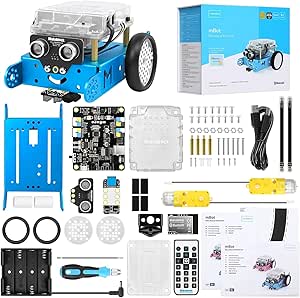 | Best Overall Coding Robot | Brand: Makeblock | Model Number: 90053 | Age Range: 8-12 years | VIEW LATEST PRICE | See Our Full Breakdown |
| Osmo Coding Family Bundle for Kids, 3 Games, Ages 5-10+ |  | Best for Youngest Beginners | Age Range: 5-10+ years | Included Games: Coding Awbie, Coding Jam, Coding Duo | Coding Blocks: 31 | VIEW LATEST PRICE | See Our Full Breakdown |
| MatataStudio Nous AI Coding Robot STEM Kit for Kids Ages 12+ |  | Best Premium Pick for Teens | Brand: MatataStudio | Model: Nous AI Set | Recommended Age: 12+ years | VIEW LATEST PRICE | See Our Full Breakdown |
| Osmo Coding Kit for Ages 5-10+, STEM Learning (iPad Required) |  | Best Complete Tablet Coding Setup | Age Range: 5-10+ years | Compatibility: iPad models running iOS 15 or later | Included Components: Osmo Base, reflector, 31 coding blocks | VIEW LATEST PRICE | See Our Full Breakdown |
| Thames & Kosmos My Robotic Pet: Coding Chameleon STEM Kit |  | Best Screen-Free Coding Kit | Robot Length: 15 inches | Sensors: Color sensor and infrared sensor | Lighting: RGB LEDs | VIEW LATEST PRICE | See Our Full Breakdown |
| ACEBOTT 4-in-1 Programmable Robot Arm and Tank Car Kit |  | Best for Serious STEM Teens | Configurations: 4 modular robot styles | Robotic Arm: 5DOF programmable arm | Controller: ESP32 | VIEW LATEST PRICE | See Our Full Breakdown |
| CodaKid Coding Box for Kids – Minecraft Modding & Java Game Design |  | Best Software-Only Coding Course | Age Range: 9+ | Platform Compatibility: Windows PC & Mac | Access Duration: 12 months | VIEW LATEST PRICE | See Our Full Breakdown |
| Ozobot Ozo at Home STEM Coding Robot Kit for Kids Ages 5+ |  | Best for Youngest Coders | Recommended Age: 5 years and up | Activities: 27 guided activities | Programming Methods: Color codes and Blockly | VIEW LATEST PRICE | See Our Full Breakdown |
| coding kits for kid | Age Range | Brand |
|---|---|---|
| Let’s Start Coding Base Kit | 8–13 years | Let’s Start Coding |
| Teach Tech Mech-5 Mechanical C | 10+ years | Teach Tech |
| Playz Coding Learning Kit for | — | Playz |
| ACEBOTT QD106 Programmable Rob | — | ACEBOTT |
| Makeblock mBot Ranger 3-in-1 C | 8–12 years (10+ recommended) | — |
| HPROMOT STEM Robotic Arm Build | 8-16 years | HPROMOT |
| Makeblock mBot STEM Coding Rob | 8-12 years | Makeblock |
| Osmo Coding Family Bundle for | 5-10+ years | — |
| MatataStudio Nous AI Coding Ro | — | MatataStudio |
| Osmo Coding Kit for Ages 5-10+ | 5-10+ years | — |
| Thames & Kosmos My Robotic Pet | — | — |
| ACEBOTT 4-in-1 Programmable Ro | — | — |
| CodaKid Coding Box for Kids | 9+ | — |
| Ozobot Ozo at Home STEM Coding | — | — |
More Details on Our Top Picks
Let’s Start Coding Base Kit – Learn Code & Electronics with Real C++ Projects
Most kits in this roundup lean on block-based coding or preset commands, but this one goes straight to real C++ with over 60 guided projects, which makes it the standout pick for kids ready to write actual code rather than drag blocks around. The video walkthroughs and browser-based workflow mean there’s nothing to install and no subscription lurking behind the purchase — a real contrast to the ACEBOTT QD106, which requires an app and separate batteries, or the Playz kit, which teaches concepts without any actual programming. Compared with the Teach Tech Mech-5’s snap-button coding wheel, the ceiling here is dramatically higher: kids modify genuine electronics code and see physical components respond. The tradeoff is hardware dependency — it needs a computer with internet, and newer laptops with only USB-C ports will need an adapter for the included cable.
Pros:- Teaches genuine C++ rather than only block-based coding
- Over 60 projects with video tutorials give a long runway of learning
- No subscriptions or software installs required
- Cross-platform support for Windows, Mac, and Chromebook
Cons:- Requires a compatible computer and internet — no tablet or phone support
- Included USB-A cable may need an adapter for USB-C-only laptops
Best for: Kids 8–13 who have outgrown block coding and want to write real C++ on real electronics
Not ideal for: Tablet-only households — this kit requires a Windows, Mac, or Chromebook computer and an internet connection
- Brand:Let’s Start Coding
- Age Range:8–13 years
- Language Taught:C++
- Number of Projects:60+
- Compatibility:Windows, Mac, Chromebook
- Subscription Required:No
- Model:Base-Kit-2019
Our verdict“This pick makes the most sense for families whose kids are ready to move from coding toys to writing real code on real hardware.”
Teach Tech Mech-5 Mechanical Coding Robot Building Kit
The Mech-5 takes a deliberately different path from everything else here: kids program it by snapping coding buttons onto a mechanical wheel, no screen, app, or internet required. That makes it the rare kit that teaches sequencing and logic without a tablet in sight — a welcome alternative to app-dependent options like the ACEBOTT QD106 or the Osmo kits, both of which presume a device is available. The battery-free pneumatic and solar power is a genuine engineering lesson in itself, and building it takes real effort, which is part of the appeal for patient kids. The flip side: compared with the Let’s Start Coding Base Kit, the coding itself is shallow — kids choose from preset button combinations rather than writing flexible programs, so it teaches coding concepts more than coding skills. Assembly can also stretch across multiple sessions, so younger builders may lose steam.
Pros:- Fully screen-free coding via a mechanical button wheel
- Runs on water, wind, or sun with no batteries needed
- Varied robot actions like throwing, lifting, kicking, and drawing keep play engaging
- Deep building experience builds genuine engineering and problem-solving skills
Cons:- Assembly can take multiple hours and may frustrate younger kids
- Coding is limited to preset button combinations, not true programmability
Best for: Parents who want to limit screen time while still teaching coding logic and mechanical engineering
Not ideal for: Kids who want to write their own programs — the button wheel only supports preset command sequences
- Brand:Teach Tech
- Age Range:10+ years
- Coding Method:Mechanical snap-button coding wheel
- Power Source:Water, wind, or sun (no batteries)
- Robot Actions:Throw, lift, kick, draw, and more
- Subject:STEM / Mechanical engineering
Our verdict“This model is better suited to screen-free households that value the building and engineering process over learning an actual programming language.”
Playz Coding Learning Kit for Kids Ages 8–12
Where the Teach Tech Mech-5 is a single deep build, the Playz kit spreads its value across many short unplugged activities — binary necklaces, encryption devices, mazes, and pixel art — making it feel more like a computer science activity box than a coding kit in the strict sense. That breadth is its strength for classrooms and rainy weekends: kids can rotate through 30+ components and illustrated experiments without any device or long attention commitment, something neither the ACEBOTT QD106 nor the Makeblock mBot Ranger can offer, since both demand hours of assembly before any learning starts. The honest tradeoff is depth. There’s no microcontroller, no software, and no robot at the end — kids learn the ideas behind computing, not coding itself, so this works best as a first step before a kit like Let’s Start Coding’s Base Kit.
Pros:- Wide variety of hands-on computer science activities in one box
- 30+ tools, parts, and ingredients support many repeat sessions
- Illustrated guide enables independent or classroom use
- No screens, batteries, or computers required
Cons:- Teaches computing concepts rather than actual programming
- Age guidance is inconsistent between listings, making sizing it to your child guesswork
Best for: Teachers and parents wanting a low-cost, device-free way to introduce computer science concepts through varied activities
Not ideal for: Kids who specifically want to program a robot or write code — none of the activities involve actual software
- Brand:Playz
- Recommended Age:8–12 years
- Components Included:30+ tools, ingredients, and parts
- Activities:Binary necklaces, encryption devices, sorting races, mystery mazes, pixel art
- Guide:Illustrated instruction guide
- Screen Required:No
Our verdict“This option stands out for families or classrooms that want screen-free CS fundamentals first, with a hardware coding kit as the natural next step.”
ACEBOTT QD106 Programmable Robot Car Kit
The QD106 earns its spot with a three-language progression from Scratch to Arduino to Python, giving it the longest skill runway of any kit in this batch. A 10-year-old can start with drag-and-drop blocks, then graduate to real text code years later on the same hardware — a flexibility the Playz kit and Teach Tech Mech-5 simply can’t match. Programming works on computers, tablets, and phones, so it’s more flexible than the Let’s Start Coding Base Kit, which locks you to a computer, and the 16 story-based tutorials plus app and IR remote control keep early sessions fun before the coding gets serious. The compromises: the 12-and-up manufacturer recommendation makes it a stretch for the middle of the 8–12 crowd, and batteries aren’t included, so factor that into the true cost of a first session.
Pros:- Scratch, Arduino, and Python support a multi-year learning progression
- Programmable on computers, tablets, and smartphones
- App control and included IR remote add immediate play value
- 16 story-based tutorials with no soldering required
Cons:- Batteries are not included
- Manufacturer recommends ages 12 and up, limiting fit for the core kids’ market
Best for: Kids 12+ (or ambitious 10–11-year-olds with adult help) who will grow from block coding into Python over several years
Not ideal for: Younger kids in the 8–10 range — the Arduino and Python tiers will sit unused until they’re older
- Brand:ACEBOTT
- Model:QD106
- Controller:ESP32
- Programming Languages:Scratch, Arduino, Python
- Control:iOS/Android app and IR remote
- Tutorials:16 story-based tutorials
- Assembly:No soldering required
- Recommended Age:12 years and up
- Batteries:Not included
Our verdict“This pick makes the most sense for teens who want one kit that carries them from beginner blocks to real Python programming.”
Makeblock mBot Ranger 3-in-1 Coding Robot Building Kit
The mBot Ranger lands at the top of the robotics entries because it balances everything better than its rivals: three rebuildable forms (tank, self-balancing bird, racing car), a rich sensor suite including ultrasonic, gyroscope, and line-tracking modules, and a Scratch-to-Arduino path that mirrors the ACEBOTT QD106’s progression with a lower entry age. Its sturdy metal construction and strong motors set it apart from plastic-heavy competitors — this is a robot that survives the backyard, where the Playz kit and Teach Tech Mech-5 can’t follow, and the Osmo kits can’t leave the tablet at all. The tradeoffs are real but manageable: it eats six AA batteries that aren’t in the box, and the rebuilds take long enough that kids on the younger end will need an adult for the tank conversion. Compared with the simpler Makeblock mBot, you’re paying in complexity for versatility.
Pros:- Three distinct robot forms in one kit extend replay value enormously
- Scratch and Arduino support a natural progression from blocks to text code
- Robust metal parts and strong motors handle rough indoor and outdoor terrain
- Broad sensor set (ultrasonic, line-tracking, gyroscope, light, temperature) enables complex projects
Cons:- Requires six AA batteries, which are not included
- Assembly and reconfiguration can be difficult for younger children without help
Best for: Families who want one durable, rebuildable robot that works indoors and outdoors and grows with the child
Not ideal for: Impatient younger builders — the three-form assembly and rebuilds often require adult help
- Age Range:8–12 years (10+ recommended)
- Robot Forms:Tank, self-balancing bird, three-wheel racing car
- Programming Languages:Scratch, Arduino (mBlock5)
- Mainboard:Me Auriga
- Sensors:Ultrasonic, line-tracking, 2 light sensors, gyroscope, temperature, Bluetooth
- Battery Type:6 AA batteries (not included)
- Construction:Metal frame with powerful motors
Our verdict“The mBot Ranger is the strongest all-around buy for kids 10+ who want a tough, rebuildable robot with room to grow from Scratch into Arduino.”
HPROMOT STEM Robotic Arm Building Kit for Kids and Teens, 1029 Pieces, App & Remote Control
HPROMOT’s robotic arm kit stands out for scale: with 1,029 pieces, it delivers a multi-session build that rewards patience and spatial reasoning far more than snap-together starter robots. Where the Makeblock mBot can be assembled in under 15 minutes, this kit turns construction itself into the learning experience — closer in spirit to the Teach Tech Mech-5 but with a much larger piece count and app-based control layered on top. Colour-coded instructions keep the process manageable, and once built, kids can switch between app and remote control, then experiment with basic programmable movements. The tradeoff is real, though: younger builders in the 8-10 range may stall partway through, and a single required AAA battery is an annoying extra to source.
Pros:- Huge piece count enables creative rebuilds beyond the main robot arm design
- Colour-coded, step-by-step instructions keep a long build accessible
- Dual control options — app and remote — let kids graduate from manual play to programming
- Genuinely teaches mechanical engineering concepts, not just screen-based coding
Cons:- The sheer piece count can overwhelm younger children in the stated 8-16 range
- Requires a AAA battery that isn’t a rechargeable or included power solution
- Coding features are shallower than dedicated programming platforms like the mBot
Best for: Patient builders aged 10-16 who enjoy long construction projects as much as the finished robot
Not ideal for: Impatient kids or parents wanting a quick out-of-the-box coding experience — the 1,029-piece build demands sustained focus
- Brand:HPROMOT
- Model:T2007
- Age Range:8-16 years
- Pieces:1,029
- Control:App and remote control
- Power:1 AAA battery required
- Dimensions:4.53 x 9.84 x 13.89 inches
Our verdict“A rewarding engineering marathon for older, patient kids — pick it for the building journey, not for deep coding instruction.”
Makeblock mBot STEM Coding Robot for Kids Ages 8-12
The mBot earns the top spot because it balances everything a first coding robot should do: quick assembly (under 15 minutes), immediate play value as a remote-control car, and a genuine programming pathway through Scratch and Arduino. Compared with the HPROMOT robotic arm, which front-loads hours of building before any coding happens, the mBot gets kids experimenting almost immediately — line-following and obstacle-avoidance modes work right away, giving instant payoff before the coding lessons begin. Its open-source expandability, including LEGO compatibility and over 100 add-on modules, means it grows with the child rather than being outgrown in a season. The main drawbacks are minor but real: batteries aren’t included, and the programming concepts take time for younger kids to absorb.
Pros:- Assembles in under 15 minutes, so play and learning start fast
- Scratch and Arduino support via free apps creates a real coding progression
- Works out of the box as a line-following, obstacle-avoiding remote-control car
- Expandable with 100+ electronic modules and LEGO compatible parts
Cons:- Batteries for both robot and remote are not included
- Younger children need extra time and adult support to master the programming concepts
Best for: Kids aged 8-12 getting their first coding robot who want to build, play, and program in one package
Not ideal for: Very young coders (5-7) — Osmo’s block-based system is a gentler entry point — or kids who want a long construction project
- Brand:Makeblock
- Model Number:90053
- Age Range:8-12 years
- Type:Robot kit (assembly required)
- Coding Languages:Scratch and Arduino
- Included Components:Robot kit, coding cards, lessons
- Batteries:Not included
Our verdict“The most complete all-around package for beginners — fast to start, fun immediately, and expandable enough to stay relevant for years.”
Osmo Coding Family Bundle for Kids, 3 Games, Ages 5-10+
Osmo’s Coding Family Bundle takes the opposite approach from robot kits like the mBot: instead of building hardware, kids ages 5-10 arrange 31 physical coding blocks in front of a tablet and watch their sequences come alive on screen. This makes abstract concepts like sequencing and loops tangible for children far too young for text-based tools. The three included games — Coding Awbie, Coding Jam, and Coding Duo — layer logic, music creation, and cooperative problem-solving, so the bundle holds attention longer than single-game alternatives. The tradeoff is dependency: the Osmo Base and a compatible iPad or Fire tablet are sold separately, so the true cost of entry is higher than the box suggests, and there’s no robotics or electronics learning here at all.
Pros:- Tactile blocks make coding logic concrete for pre-readers and early readers
- Three games span beginner to advanced, covering logic, music, and patterns
- Supports cooperative two-player play in Coding Duo
- No Wi-Fi required once set up
Cons:- Osmo Base and compatible tablet are required but not included
- Only works with supported iPad and Fire tablet models — check compatibility before buying
- Teaches coding logic only, with no electronics or engineering component
Best for: Families with young children (5-8) who already own a compatible iPad or Fire tablet and want a screen-plus-hands hybrid
Not ideal for: Households without a supported tablet, or kids who want to build and tinker with physical robots
- Age Range:5-10+ years
- Included Games:Coding Awbie, Coding Jam, Coding Duo
- Coding Blocks:31
- Connectivity:No Wi-Fi required for gameplay
- iPad Compatibility:Supported iPads running iOS 15 or later
- Fire Tablet Compatibility:Fire tablets running Fire OS 7-8
- Required Accessories:Osmo Base and compatible tablet (not included)
Our verdict“The gentlest on-ramp to coding logic for early elementary kids — provided you already own the tablet and base it depends on.”
MatataStudio Nous AI Coding Robot STEM Kit for Kids Ages 12+
The Nous AI Robot is the most advanced option in this lineup, aimed squarely at kids 12 and up who have outgrown beginner kits. Where the Makeblock mBot stops at Scratch and Arduino basics, the Nous pushes into Python programming and applied AI — speech recognition, computer vision, data collection, and model training — skills that map directly onto real computer science coursework. Its online platform and structured tutorials make it workable for classrooms, homeschool curricula, and robotics clubs, not just bedroom tinkering. The tradeoffs are steep for casual buyers: younger children will find it frustrating rather than inspiring, and the product documentation is vague about exactly which electronic modules ship in the box, which makes planning harder compared with more transparent kits like the mBot Ranger.
Pros:- Dual-language pathway from Scratch into real Python programming
- Covers genuinely modern AI topics: vision, speech recognition, and model training
- Beginner-friendly tutorials ease the jump into advanced concepts
- Versatile enough for classroom, homeschool, and club robotics use
Cons:- Complex for younger or first-time coders despite the broad age marketing
- Included electronic modules aren’t clearly specified, making comparisons with other kits difficult
- Demands sustained time investment to reach the rewarding AI projects
Best for: Teens and pre-teens with prior coding exposure, plus classrooms and homeschool families teaching serious STEM
- Brand:MatataStudio
- Model:Nous AI Set
- Recommended Age:12+ years
- Programming Languages:Scratch and Python
- AI Topics:Data collection, model training, speech recognition, computer vision
- Learning Goals:Coding, construction, critical thinking, problem solving, STEM
- Included Items:1 Nous AI robot with assembly instructions and tutorials
Our verdict“The right choice for a motivated teen ready to move beyond block coding into Python and AI — overkill for anyone younger.”
Osmo Coding Kit for Ages 5-10+, STEM Learning (iPad Required)
This Osmo Coding Kit is the better buy of the two Osmo entries for families starting from zero, because unlike the Osmo Coding Family Bundle, it includes the Base and reflector — everything except the iPad itself. Kids use the same 31 tangible blocks and three apps (Awbie, Jam, and Duo) to sequence commands, compose music, and solve puzzles, with real-time visual and audio feedback that encourages trial and error. Compared with a robot kit like the ACEBOTT QD106, there’s nothing to build or wire, which is either a strength (no frustration) or a limitation (no engineering learning) depending on your child. Note that iPad support only — no Fire tablet compatibility here — narrows the audience compared with the Family Bundle.
Pros:- Base and reflector included, so only an iPad is needed to start
- Physical blocks make abstract programming logic tangible for young kids
- Three apps cover coding, music creation, and cooperative problem-solving
- Works fully offline with instant feedback that rewards experimentation
Cons:- A compatible iPad is required and not included
- iPad-only — lacks the Fire tablet support of the Family Bundle
- No building or electronics component, limiting STEM breadth
Best for: iPad-owning families of 5-10 year olds who want a complete, ready-to-run kit without buying extra accessories
Not ideal for: Anyone without a compatible iPad, or kids seeking hands-on robotics and electronics rather than screen-guided logic games
- Age Range:5-10+ years
- Compatibility:iPad models running iOS 15 or later
- Included Components:Osmo Base, reflector, 31 coding blocks
- Included Apps:Coding Awbie, Coding Jam, Coding Duo
- Number of Apps:3
- Physical Blocks:31
- Connectivity:No Wi-Fi required for gameplay
Our verdict“The smarter Osmo purchase for first-time buyers with an iPad — everything’s in the box except the tablet itself.”
Thames & Kosmos My Robotic Pet: Coding Chameleon STEM Kit
Most coding kits in this roundup lean on an app or a computer from day one, but this robotic chameleon takes the opposite path: kids program it with physical action cards, no screen required. Building the 15-inch pet first, then teaching it behaviors, gives children a sense of ownership that a preassembled robot like the Makeblock mBot can’t match. The color sensor and RGB LEDs make the coding lessons feel magical — the chameleon actually changes to match surfaces it scans. Compared with the Ozobot Ozo at Home, another screen-free starter, this kit skews older because assembly is a genuine project rather than a five-minute setup. The tradeoff is real: younger builders will need an adult alongside them, and the three play modes, while fun, are shallower than what app-connected kits offer once the novelty fades.
Pros:- Screen-free coding using physical action cards
- Building the robot teaches mechanical and engineering skills before any coding starts
- Color-sensing and touch-reactive play modes add lasting play value
- 48-page manual explains assembly and core robotics concepts
Cons:- Adult help is recommended for builders under 12, so it isn’t a solo activity for younger kids
- Coding depth is limited compared with app- or Arduino-based kits in this guide
Best for: Parents of kids 8-12 who want a hands-on build-and-code project that keeps screens out of the equation entirely
Not ideal for: Households looking for deep, open-ended programming — the card-based system is beginner-level and won’t grow with a teen
- Robot Length:15 inches
- Sensors:Color sensor and infrared sensor
- Lighting:RGB LEDs
- Play Modes:Coding, Wild, and Pet
- Manual:48 pages
- Recommended Age:8+ with adult help; 12+ independent
Our verdict“This pick makes the most sense for families who want a buildable robotic pet that teaches coding logic without a single screen.”
ACEBOTT 4-in-1 Programmable Robot Arm and Tank Car Kit
This is the most ambitious kit in the lineup — a modular platform that rebuilds into four different machines, including a tank with a working 5DOF robotic arm. Where the Makeblock mBot Ranger offers three configurations, this kit goes further by pairing Arduino and Scratch compatibility with an ESP32 controller, meaning a motivated teen can graduate from block coding to real written code on the same hardware. The 16 guided tutorials do a lot of hand-holding through assembly and first programs, which matters because this is a genuine engineering project, not a toy. The tradeoffs: instructions and sample code live on the manufacturer’s website rather than in a printed manual, and beginners will likely stall without an adult or older sibling involved. Compared with the simpler ACEBOTT QD106 car kit, this one trades ease for far more capability.
Pros:- Four build configurations from one set of parts extends the value and challenge
- Scratch-to-Arduino pathway supports growth from beginner to advanced coding
- 5DOF arm adds manipulation challenges most car-only kits lack
- IR remote and app control make the finished builds fun to operate immediately
Cons:- Assembly and coding realistically require adult guidance for beginners
- Instructions and code must be downloaded from the manufacturer’s website, not included in print
Best for: Teens and pre-teens already curious about robotics who want hardware they can keep reprogramming for years
- Configurations:4 modular robot styles
- Robotic Arm:5DOF programmable arm
- Controller:ESP32
- Coding Compatibility:Arduino and Scratch
- Tutorials:16 guided tutorials
- Control Methods:IR remote and iOS/Android app
- Drive System:Rubber tank treads
Our verdict“This kit suits patient teens (or parent-child teams) ready for a long-haul engineering project that stretches well beyond a first robot.”
CodaKid Coding Box for Kids – Minecraft Modding & Java Game Design
Every other product here puts a physical robot or circuit board in a child’s hands; CodaKid bets instead on motivation. By teaching real Java through Minecraft modding, it converts a hobby kids already love into 90+ hours of genuine programming instruction — a completely different proposition than snapping together a Teach Tech Mech-5. The online mentor support is the differentiator that most boxed kits can’t offer: when a mod breaks, a human helps debug it. Compared with the Base Kit C++ course, CodaKid’s video format is more self-paced and kid-friendly, though less broad. The tradeoffs are structural: it requires a Windows PC or Mac plus internet, the 12-month access is a subscription model rather than something you own forever, and there’s no hardware to tinker with — kids who learn best with their hands may drift back to the chameleon or ACEBOTT kits instead.
Pros:- Teaches actual Java, a professional language, not just drag-and-drop logic
- Self-paced video lessons require zero prior programming knowledge
- Live mentor support helps kids past the debugging walls that cause most to quit
- 90+ hours across 22+ courses delivers far more content than any physical kit here
Cons:- Access expires after 12 months rather than being owned outright
- Content is limited to Minecraft modding, not general-purpose coding
- Requires a Windows PC or Mac and a dependable internet connection
Best for: Kids 9+ already obsessed with Minecraft whose parents want that screen time to teach employable skills
Not ideal for: Families without a reliable computer or internet, or kids who want hands-on hardware builds
- Age Range:9+
- Platform Compatibility:Windows PC & Mac
- Access Duration:12 months
- Number of Courses:22+
- Project Hours Included:90+
- Support:Online mentor assistance
Our verdict“Choose this when your goal is turning existing Minecraft enthusiasm into real Java skills, not buying another robot for the shelf.”
Ozobot Ozo at Home STEM Coding Robot Kit for Kids Ages 5+
Nothing else in this roundup starts at age 5. Where the Osmo Coding Kit requires an iPad and the Thames & Kosmos chameleon needs adult-supervised assembly, Ozobot gets preschoolers and kindergartners coding with nothing but markers and paper: draw colored lines and the tiny robot reads them as commands. The 27 structured activities form a genuine curriculum that ramps from screen-free color codes up to Blockly on a tablet, so the kit grows with the child for a couple of years. That said, the ceiling is low — a 10-year-old will outgrow it quickly and belongs with the mBot or ACEBOTT kits instead. Also worth flagging: the component list doesn’t confirm the protective case mentioned in the title, so treat the small robot as fragile around siblings.
Pros:- Marker-based color coding works with no reading ability and no screen
- 27 activities provide a structured progression rather than one-off play
- Pathway from physical play to Blockly block programming extends usefulness
- Two-sided magnetic board and tiles keep activities organized
Cons:- Blockly stage still requires a computer or tablet, so screen-free is only half the package
- Advertised protective case is not confirmed in the included components, and the robot is easy for small hands to misplace
Best for: Parents of 5-8 year olds who want an introduction to sequencing and logic before the child can read fluently
Not ideal for: Kids over about 8 — the activities will feel babyish next to a programmable robot arm or Minecraft modding
- Recommended Age:5 years and up
- Activities:27 guided activities
- Programming Methods:Color codes and Blockly
- Included Components:Ozo at Home robot, charging cable, markers, magnetic tiles, two-sided magnetic board
- Material:Plastic
- Dimensions:9 x 7.5 x 2 inches
- Model:70101KIT
Our verdict“If your coder is still learning to read, this is the gentlest on-ramp in the guide — just expect them to graduate past it by age 8.”

How We Picked
I compared these coding kits for kids by the kind of learning they put within reach: block-based coding, physical coding pieces, app-guided programming, electronics, or text-based languages. I also weighed the stated age range against setup demands, the role of building, device requirements, and whether a child can progress beyond a first activity. A kit that makes the first session approachable can be a better fit for a beginner than one with more advanced parts; older learners may get more from projects that introduce C++ or Java.
The order reflects fit across common buyer needs, not a claim that every child will prefer the same format. The mBot ranks first for its balance of coding and physical robot interaction. The picks that follow serve more specific priorities, including younger learners, multiple robot builds, electronics, and game design. I treat device dependence, complex assembly, narrow activity scope, and age suitability as real tradeoffs when describing each option.
Factors to Consider When Choosing Coding Kits For Kids
Before choosing among these coding kits for kids, decide what you want the child to do after the first activity. The best fit depends on age, patience for assembly, screen preferences, available devices, and whether the goal is playful logic or a path toward programming projects.
Match the coding style to the learner
Young beginners often benefit from visible cause and effect: arrange pieces, give a robot a sequence, or solve a short guided challenge. Older children may be ready for block-based programming that adds loops and conditions, then eventually text-based code. A common mistake is buying for the skill a child might want in a year instead of what they can use now. Check how the kit introduces its concepts and whether it offers a next step once the first tasks feel easy. If the child already enjoys typing code or modding games, a project-based kit may hold attention better than a physical coding game.
Count setup and build time as part of the activity
Some kits are ready for short sessions, while multi-piece robot builds may need an adult nearby and a clear work surface. That does not make a complex build a poor choice; it means assembly itself should be something the child enjoys. Consider whether the kit will be used in brief after-school bursts or during longer weekend projects. Smaller, guided activities can be easier to revisit, while a more involved build may reward a child who likes troubleshooting. Look for the likely balance of construction, coding, and play so the kit matches the time your family can give it.
Check device and software fit before choosing
A tablet-dependent kit can make instructions and feedback intuitive, but only if you own a compatible device and are comfortable sharing it. Confirm the required operating system, device model, app availability, and whether the core activities need an internet connection. A kit that relies on a screen may be a mismatch for a family seeking mostly screen-free play. On the other hand, an app can help children see how code changes a robot’s behavior. Treat device access as part of the kit’s practical fit, rather than assuming every tablet or computer will work.
Separate coding depth from the number of parts
A large build or multiple configurations can create variety, but part count alone does not tell you how much programming a child will learn. Some projects focus on assembling a robot and controlling it through an app; others make coding concepts the central challenge. Read the activity examples for evidence of sequencing, loops, conditions, sensors, or text-based code. If coding is the main goal, prioritize how the kit teaches and extends those ideas. If the child is drawn to making things move, a physical build may be the right doorway even when coding lessons are more guided.
Think about what keeps the kit useful over time
Children can outgrow a kit when it offers only a small set of fixed activities or stays at one difficulty level. Check whether projects can be changed, rebuilt, or programmed in new ways, and whether the kit supports a move to more advanced concepts. Online lessons or mentor support may extend a software-focused kit, while reusable robot parts can invite fresh physical projects. Ongoing access can also depend on subscriptions, software updates, or compatible devices, so check those details before buying. Paying more makes sense when the added depth matches a child’s interests and gives them a clear next challenge.
Choose the right kind of adult support
Some children will follow instructions independently; others may need help with setup, reading directions, or debugging. Think about who will be available during the first few sessions and how much guidance the kit assumes. A highly guided game may be easier for a child to use alone, while an advanced electronics or robot project can become a shared activity. Do not mistake the need for help as a flaw if building together is part of the appeal. If independent use is the priority, check the clarity of lessons and whether the kit gives children useful feedback when a program does not work.
Frequently Asked Questions
Which type of coding kit is a better first step: a robot or a screen-based game?
It depends on what gets the child curious. A robot gives a physical result, which can make sequencing and cause-and-effect easier to grasp; a guided game can reduce assembly and keep attention on solving coding puzzles. For a child who likes building, a robot may sustain interest through construction as well as programming. For a child who prefers short, structured challenges, a game-based kit may be a gentler entry. Check whether the kit allows new challenges after the introductory activities, since a good first step should leave room to progress.
Do I need to buy a tablet or computer with these kits?
Not necessarily, but some kits rely on a specific device or app, and compatibility varies. The Osmo Coding Kit explicitly requires an iPad, while other options use apps, online lessons, or programming software. Check the exact device requirements before buying and confirm that your device can install the needed software. Also consider whether the child will have regular access to that device, rather than just whether one is present at home. A physical kit that depends on unavailable software can be difficult to use as intended.
Is a kit with C++ or Java a good choice for a child who has never coded?
It can work for a motivated learner, but text-based languages ask children to manage typing and syntax along with the coding idea itself. The Base Kit’s C++ and electronics projects and CodaKid’s Java-focused Minecraft activities suit children who are drawn to those subjects and can work through structured lessons. A younger beginner may find physical coding pieces or visual programming easier at first. Consider whether the child wants to make electronics or game mods, since that project goal can make a steeper learning curve feel worthwhile. Adult guidance may help with setup and troubleshooting.
Should I choose a kit that has several builds or one focused activity?
Several builds can help a child who likes rebuilding and experimenting, but they do not automatically provide deeper coding lessons. A focused kit may teach one idea more clearly and be easier to start using. Ask whether the child is more excited by changing the physical creation or by solving progressively harder programming tasks. For a short attention span, a defined activity can reduce setup friction; for a maker who repeats and modifies projects, varied configurations can extend play. Look at the instructions and learning activities, not only the advertised build count.
When is it worth choosing an online coding program over a physical kit?
An online program is a stronger fit when the child’s main goal is making games or learning a programming language, rather than controlling a physical object. CodaKid, for example, connects coding activities with Minecraft modding and Java and includes mentor support, while robot kits make code visible through movement or mechanisms. Consider how the child prefers to learn and whether they can use a computer regularly. A physical kit can make abstract ideas tangible, but may involve assembly and device setup. Online learning can focus more directly on software, though it may offer less hands-on building.
Conclusion
For a balanced first robot experience, I recommend the Makeblock mBot STEM Coding Robot as the best overall choice. The Playz Coding Learning Kit is a value-minded option for families seeking guided activities, while the Makeblock mBot Ranger is the premium fit for older children who want a more involved multi-configuration build. Beginners who prefer a gentle, game-led introduction can start with the Osmo Coding Family Bundle or Ozobot Ozo at Home, checking device needs where relevant. Choose the Base Kit for C++ and electronics, CodaKid for Minecraft modding and Java, or the ACEBOTT and robotic arm kits for children whose main interest is building programmable machines.
Halloween Picks
halloween
As an affiliate, we earn on qualifying purchases.