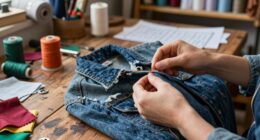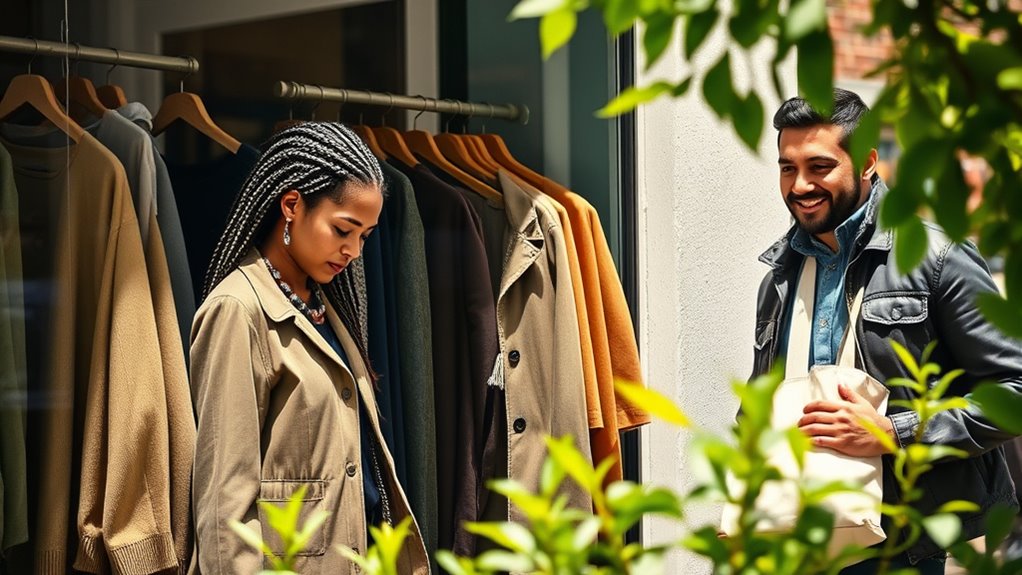

As a consumer, you’re increasingly embracing sustainable fashion as it becomes a mainstream choice. You’re paying attention to ethical sourcing, choosing brands that prioritize transparency and fair wages. Eco-friendly materials like organic cotton and recycled fabrics are now widely available, making responsible choices easier. Your focus on investing in quality pieces helps reduce waste and supports a more sustainable industry. If you want to discover how this shift impacts your style and habits, there’s more to explore below.
Key Takeaways
- Consumers increasingly prioritize eco-friendly materials and ethical sourcing when selecting fashion brands.
- Shift towards buying higher-quality, durable pieces reduces fast fashion consumption and waste.
- Transparency from brands about supply chains and sustainability practices influences consumer trust and choices.
- Mainstream adoption of sustainable fashion promotes responsible consumption and supports industry-wide change.
- Awareness of environmental and social impacts drives consumers to make more mindful, eco-conscious purchasing decisions.
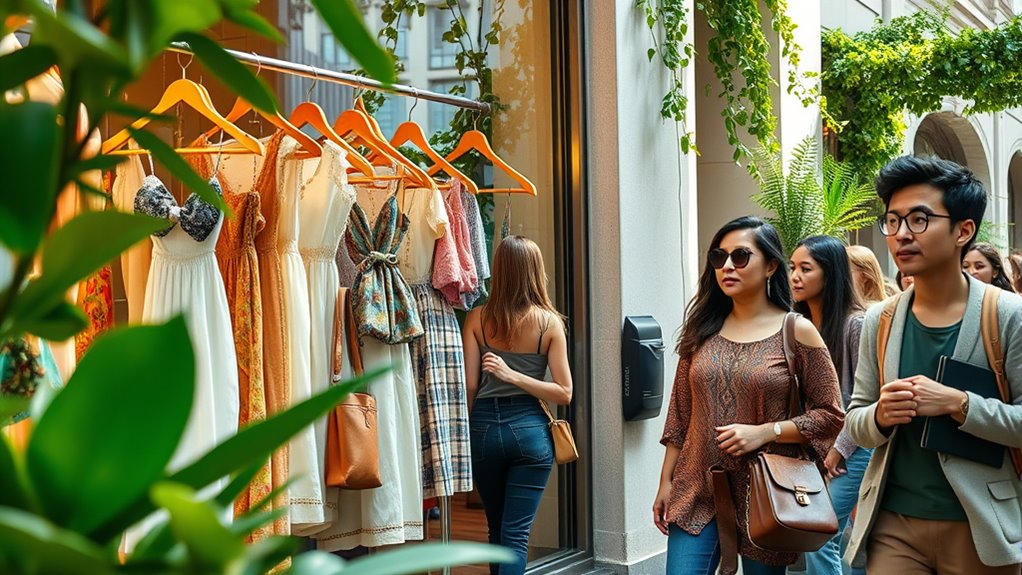
In recent years, sustainable fashion has shifted from a niche movement to a mainstream trend, transforming the way consumers and brands approach clothing. You’re now more aware of how your choices impact the planet, and this awareness influences your purchasing decisions. Brands that prioritize ethical sourcing ensure that the materials used are obtained responsibly, respecting workers’ rights and reducing environmental harm. When you buy from these companies, you’re supporting fair labor practices and contributing to a more equitable fashion industry. Eco-friendly materials like organic cotton, hemp, and recycled fabrics are now widely available, making it easier for you to choose sustainably produced clothing without sacrificing style or quality.
Sustainable fashion now makes eco-friendly style responsible and accessible for everyone.
As a conscious shopper, you’re increasingly seeking out brands that transparently share their sourcing practices. You want to know that your clothes aren’t just trendy but are also made with integrity. Ethical sourcing goes beyond just the end product; it involves scrutinizing the entire supply chain. This means ensuring that farmers and workers are paid fairly, that environmentally harmful chemicals are avoided, and that the production process minimizes waste and pollution. When you select brands that prioritize ethical sourcing, you’re actively advocating for a fairer and more sustainable industry.
Eco-friendly materials are playing a significant role in this shift. You’re noticing more labels touting fabrics that are biodegradable, renewable, or recycled. Choosing clothing made from eco-friendly materials reduces your carbon footprint and lessens reliance on non-renewable resources. For example, opting for organic cotton means fewer pesticides and chemicals, which benefits both the environment and the farm workers. Recycled polyester, derived from plastic bottles, keeps waste out of landfills while creating durable fabrics for your wardrobe. These innovations make it possible for you to dress stylishly while supporting environmentally responsible practices.
The movement toward sustainable fashion also encourages you to buy less but better. Instead of fast fashion’s disposable mentality, you’re investing in high-quality pieces designed to last longer. This shift reduces waste and the demand for quick, cheap manufacturing. You’re more mindful of how your clothing choices affect the planet and the people involved in making your garments. As more brands adopt transparent sourcing and eco-friendly materials, you’re empowered to make decisions that align with your values, helping to shape a more sustainable and ethical fashion industry. Additionally, understanding the importance of running dry can help you recognize signs of fatigue and maintain your energy levels, supporting your overall wellness as you make mindful buying choices.

Organic Cotton Everyday Drawstring Pant
Elastic waistband with metal tipped braided drawstring
As an affiliate, we earn on qualifying purchases.
As an affiliate, we earn on qualifying purchases.
Frequently Asked Questions
How Do Sustainable Fashion Brands Ensure Ethical Sourcing?
Sustainable fashion brands guarantee ethical sourcing by prioritizing ethical labor practices and fair trade certifications. You can look for brands that openly share their supply chain details and work directly with suppliers who follow fair wages and safe working conditions. They often conduct regular audits, partner with fair trade organizations, and choose eco-friendly materials, so you know your purchase supports ethical labor and sustainable practices.
What Certifications Verify Sustainable Clothing Claims?
Think of certifications as your compass in a sea of greenwashing tactics. You can trust labels like GOTS, Fair Trade, and OEKO-TEX to verify sustainable clothing claims. Yet, certification challenges remain, making it tricky to spot genuine eco-friendly brands. To navigate these waters, look for transparent processes and credible seals, knowing you’re championing authentic sustainability rather than falling prey to deceptive tactics.
How Can Consumers Identify Genuinely Eco-Friendly Products?
You can identify genuinely eco-friendly products by paying attention to eco labeling practices, which provide clear information about sustainability efforts. Look for trusted certifications and read labels carefully. Additionally, participate in consumer awareness campaigns to stay informed about sustainable fashion. Staying educated helps you recognize authentic eco-friendly products, ensuring your choices support environmental and social responsibility. Always question vague claims and research brands committed to transparency and sustainability.
What Are the Economic Impacts of Sustainable Fashion?
You’ll see that sustainable fashion boosts market growth by attracting eco-conscious consumers, leading to increased sales. It also encourages brands to focus on cost reduction through eco-friendly materials and efficient processes, which can lower prices over time. As demand rises, economies of scale improve, creating more affordable options. Overall, sustainable fashion positively impacts the economy while promoting environmentally responsible practices, benefiting both consumers and the industry.
How Does Sustainable Fashion Influence Global Supply Chains?
Think of global supply chains like a spider’s web, where each thread influences the others. Sustainable fashion prompts you to demand ethical materials and transparency, driving technological innovations that reshape sourcing and manufacturing. As your consumer behavior shifts toward eco-friendly choices, brands adapt by sourcing responsibly and reducing waste. This ripple effect strengthens supply chain resilience, making global fashion more sustainable and responsive to environmental and social needs.
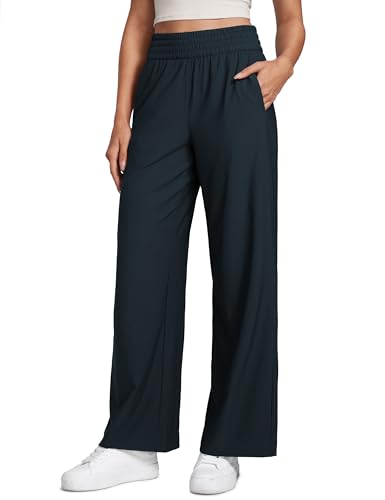
CRZ YOGA Lightweight Drapey Wide Leg Casual Pants for Women 30" – Flowy Travel Work Loose Fit Summer True Navy Medium
Designed for casual
As an affiliate, we earn on qualifying purchases.
As an affiliate, we earn on qualifying purchases.
Conclusion
As you embrace sustainable fashion, you become part of a larger cycle—like a seed taking root and blossoming into change. Every choice you make is a drop in the ocean, fueling a wave of awareness and responsibility. The fabric of your decisions weaves a future where style and sustainability intertwine, creating a tapestry of hope. In your hands, the thread of progress tightens, shaping a world where fashion and nature walk hand in hand toward tomorrow.

The Ethical Fashion Business Blueprint: How to Build & Scale a Sustainable Brand from Concept to Customer: A Guide for Aspiring Entrepreneurs & … Successful Fashion Brand (Fashion Metaverse)
As an affiliate, we earn on qualifying purchases.
As an affiliate, we earn on qualifying purchases.
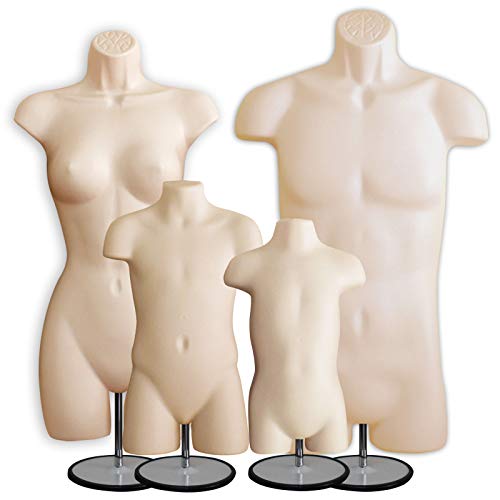
DisplayTown Flesh 4 Mannequin Forms – Male Female Child & Toddler Hip Long Torso Hanging Mannequin Set Hollow Back Plastic Body Forms, S-M Size (Long Set w/ 4 Metal Stand)
Realistic Torso Design: Accurately proportioned for displaying a wide range of clothing, from casual wear to formal attire.
As an affiliate, we earn on qualifying purchases.
As an affiliate, we earn on qualifying purchases.