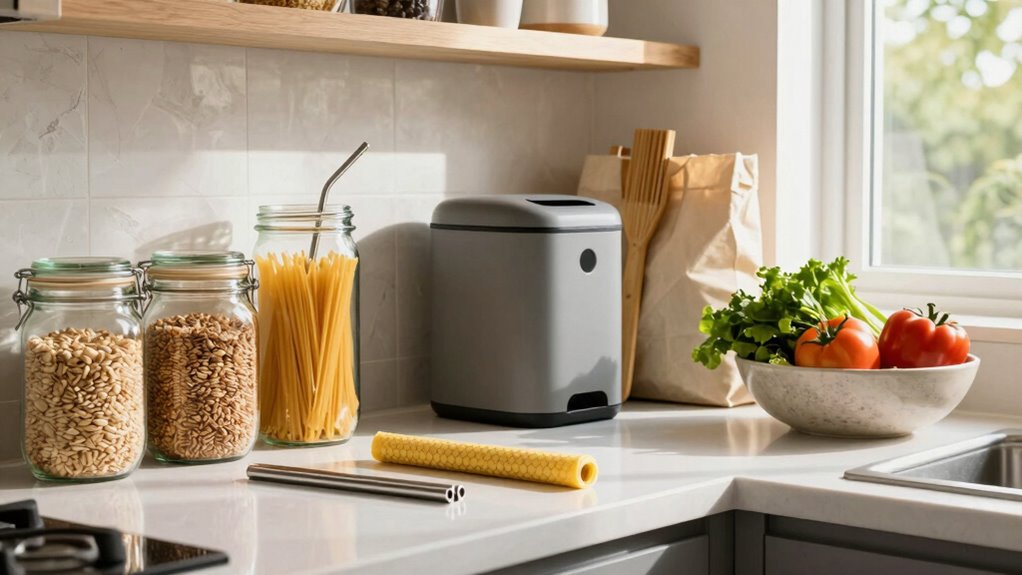

To reduce plastic use in your kitchen, switch to glass or BPA-free containers for storing food, and use biodegradable wraps like beeswax or cotton instead of plastic wrap. Opt for reusable items like metal or glass straws, cloth produce bags, and refillable water bottles. Support eco-friendly kitchen tools made from sustainable materials, and make small habits that prevent waste. Keep exploring sustainable solutions to create a greener, more eco-conscious kitchen environment.
Key Takeaways
- Switch to reusable glass or BPA-free plastic containers for storing leftovers and produce.
- Use biodegradable wraps like beeswax or plant-based coverings instead of plastic cling film.
- Replace plastic straws with metal or glass alternatives and carry refillable water bottles.
- Bring cloth or mesh produce bags to eliminate single-use plastic produce packaging.
- Support eco-friendly kitchen products made from sustainable, biodegradable materials to reduce overall plastic waste.

Reducing plastic use in the kitchen is essential for protecting the environment and creating a healthier home. Every plastic item you replace with more sustainable alternatives makes a significant difference. One of the most practical ways to do this is by switching to reusable storage options. Instead of relying on single-use plastic bags or containers, invest in sturdy, washable containers made from glass or BPA-free plastic. These can hold everything from leftovers to fresh produce and are designed to last for years, reducing waste and saving money in the long run. Reusable storage not only cuts down on the amount of plastic you throw away, but it also keeps your food fresher and eliminates the need for disposable wraps.
Switch to reusable glass or BPA-free containers to cut waste and keep your food fresher longer.
Speaking of wraps, biodegradable wraps are another game-changer. Unlike traditional plastic wrap, which often ends up in landfills and takes centuries to decompose, biodegradable wraps break down much faster and pose less harm to the environment. These wraps are typically made from natural materials like beeswax, cotton, or plant-based polymers, and they work just as well for covering bowls or wrapping sandwiches. Using biodegradable wraps helps you cut back on single-use plastics while still keeping your food protected. Over time, you’ll find that these alternatives are just as convenient, and you’ll appreciate how much less plastic waste you generate.
In addition to reusable storage and biodegradable wraps, you can also make other simple changes in your kitchen. For example, switch to metal or glass straws instead of plastic ones, and opt for refillable water bottles to stay hydrated. When shopping, bring your own cloth bags and avoid plastic produce bags by using mesh or cloth produce bags instead. These small adjustments add up and significantly diminish your plastic footprint. You might also consider using silicone lids or covers instead of cling film, which are durable and easy to clean. Incorporating biodegradable materials into your kitchen routine not only reduces waste but also supports environmentally friendly manufacturing practices. Incorporating more sustainable materials can also inspire you to explore other eco-friendly kitchen products and habits. Additionally, choosing products made from eco-friendly materials often means supporting companies committed to reducing their environmental impact. Making these choices can also help motivate broader community efforts to reduce plastic waste.
Adopting these habits takes a little effort at first, but soon they become second nature. Not only will you be reducing the amount of plastic waste that ends up in landfills or oceans, but you’ll also be setting a positive example for others. Your commitment to sustainable kitchen habits encourages friends and family to also make eco-friendly choices. Over time, these small changes contribute to a cleaner environment and a healthier home, proving that you don’t need to sacrifice convenience for sustainability. The more you embrace reusable storage and biodegradable wraps, the easier it becomes to live a plastic-free lifestyle in your kitchen.
reusable glass food storage containers
As an affiliate, we earn on qualifying purchases.
As an affiliate, we earn on qualifying purchases.
Frequently Asked Questions
How Can I Recycle Plastic Kitchen Items Effectively?
To recycle plastic kitchen items effectively, start by cleaning them thoroughly to remove food residues. Then, sort your plastic waste according to local recycling guidelines, placing recyclable items in designated recycling bins. Check the recycling symbols on your plastics to guarantee they’re accepted. Avoid contamination by keeping plastics dry and separated. This way, you help reduce plastic waste and ensure your plastics are properly processed for reuse.
Are There Eco-Friendly Alternatives for Plastic Wrap?
Imagine wrapping leftovers with a vibrant, reusable cloth or beeswax wrap, replacing the dull cling film. Eco-friendly food wraps, like beeswax or silicone alternatives, offer sustainable options to protect your food without plastic. Alternatives to cling film are not only eco-friendly but also breathable, keeping produce fresh longer. Embrace these eco-conscious choices to cut down plastic waste and add a touch of natural charm to your kitchen routine.
What Are the Safest Reusable Storage Options?
You should opt for silicone containers and glass storage options, as they are among the safest reusable choices. Silicone containers are flexible, durable, and heat-resistant, making them perfect for everyday use. Glass storage is non-toxic, doesn’t stain or retain odors, and is easy to clean. Both options reduce plastic waste and keep your food safe. Switching to these alternatives helps you embrace a more eco-friendly and healthier kitchen routine.
How Do I Reduce Plastic in My Grocery Shopping?
To reduce plastic in your grocery shopping, start by choosing bulk shopping options for grains, nuts, and snacks, which cuts down on packaging. Bring your own reusable bags and opt for compostable bags when needed. Focus on shopping at stores that support minimal packaging or offer refill stations. This way, you cut down on single-use plastics, making your shopping more eco-friendly and sustainable.
Can Plastic Utensils Be Replaced With Sustainable Choices?
Like the phoenix rising from ashes, you can replace plastic utensils with sustainable choices. Switch to biodegradable utensils for single-use needs, or opt for stainless steel cutlery for everyday use. These alternatives reduce plastic waste and are durable, stylish, and eco-friendly. By making this switch, you’ll minimize your environmental impact and enjoy functional, reusable options that stand the test of time.
As an affiliate, we earn on qualifying purchases.
Conclusion
By choosing reusable containers and ditching single-use plastics, you create a cleaner, greener kitchen. It’s like swapping clutter for clarity, waste for worth. While plastic bags and wrap may seem small, together they add up to a big impact. Your simple choices can reduce pollution and protect the environment, proving that even in the kitchen, small steps lead to big change. Embrace these habits, and watch your space—and the planet—thrive.
As an affiliate, we earn on qualifying purchases.
As an affiliate, we earn on qualifying purchases.