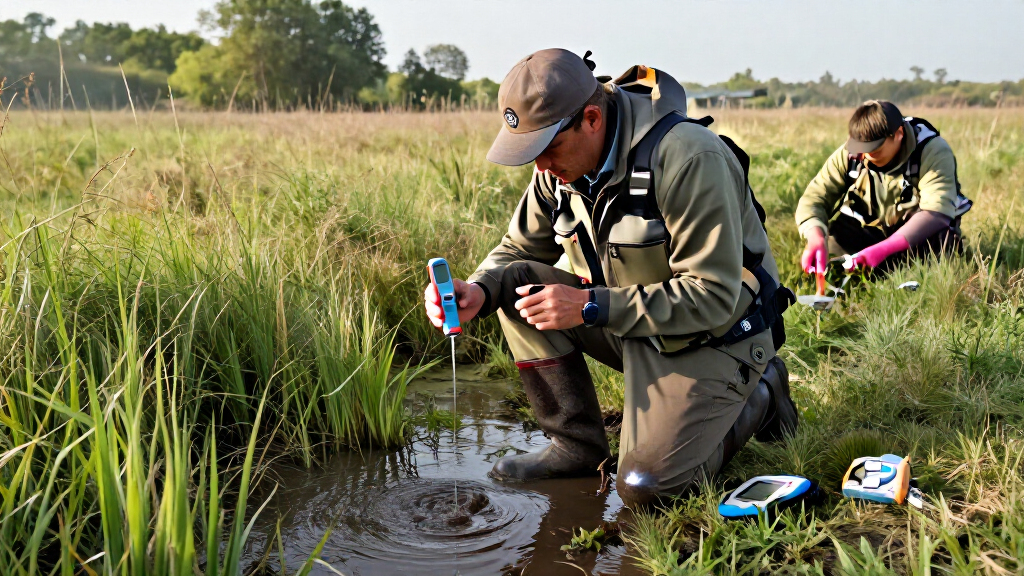

This checklist is for students, educators, and field researchers choosing tools for hands-on observation and data collection. It covers several kinds of fieldwork, from examining small specimens to monitoring weather, water, plants, and wildlife.

Prime made for students and young adults
- Fast, free delivery for dorm and study essentials
- Prime Video and Amazon Music included
- Member-only deals
The sections follow the six requested tool slots. Where a product was provided, the guidance is centered on that named pick; where no product was supplied, the section offers selection advice without naming a replacement.
Start with the task and the conditions in which you will work. Use each section’s checklist to compare the tool’s fit for your fieldwork, then confirm that its requirements and included components match your plan before buying.
Digital Handheld Microscope
A handheld microscope can make close-up observation more accessible during field activities, especially when learners need to examine a specimen without moving it to a classroom bench. The right choice depends on what you will inspect and how you will record observations. Consider the working distance, viewing method, and whether the microscope is comfortable to hold steady while focusing.
A common mistake is choosing based only on a stated magnification range. High magnification can be difficult to use if the image is dim, the field of view is narrow, or the focus is hard to control. Check how the device connects to the phone, tablet, or computer you plan to use, and whether the operating system and any required software are compatible. For group work, think about whether the display can be shared easily and whether saved images can be transferred for later study.
Also consider power and handling: how it is charged or powered, how long it can be used between charges if specified, and whether the body and controls suit your field conditions. Match the device to the size and movement of your specimens, and check what accessories are included rather than assuming a stand, lighting, or storage case comes with it.
What to look for:
- A usable focus range and working distance for your specimens
- Clear viewing on the phone, tablet, or computer you will use
- Confirmed operating system and connection compatibility
- A steady grip or support option for focused observation
- Power method, included accessories, and storage needs
Pocket Weather Meter
The Kestrel 5700 Ballistics Weather Meter is the named pick for this slot. A pocket weather meter can help organize environmental observations in the field, but the product name alone does not establish which measurements, features, or accessories are included. Before choosing it, compare the manufacturer’s current specifications with the weather variables your project needs to record.
A frequent buying mistake is assuming that a tool intended for one use automatically suits every field study. Confirm the measurement functions, units, operating range, data display, and any recording or transfer options against your research protocol. If observations need to be compared across a class or team, agree on units and recording conventions in advance. Check whether the meter’s controls and display are practical with the gloves, lighting, and conditions expected during use.
Consider field readiness as well as features: verify the power source, stated operating limits, care instructions, and any included case or accessories. If you will pair the meter with other equipment or an app, confirm compatibility directly rather than inferring it from the product name. Keep a consistent location and method for readings so that collected data can be interpreted alongside the rest of the project.
What to look for:
- Verified measurement functions that match the study protocol
- Units and operating limits suitable for expected conditions
- A readable display and manageable controls in the field
- Confirmed data recording or transfer options, if needed
- Power requirements, care guidance, and included accessories
Kestrel 5700 Ballistics Weather Meter

The Kestrel 5700 Ballistics Weather Meter provides accurate environmental measurements with a high-contrast, sunlight-readable display. It features a built-in ballistics calculator, data logging, and sensors for pressure, humidity, and temperature, all housed in a waterproof, drop-tested design.
Pros:
- Durable, waterproof design suitable for outdoor use
- Multiple sensors provide comprehensive environmental data
- Built-in ballistics calculator enhances shooting accuracy
- Data logging feature allows for trend analysis
Cons:
- Complex interface may require a learning curve
- Relatively high price for casual users
Best for: Field teams whose required weather measurements match the verified specifications
Not ideal for: Buyers seeking functions they have not confirmed for this model
Bottom line: Check the current specifications against your measurement plan before selecting the Kestrel 5700.
Water Quality Test Kit
The named pick is Advanced Home Water Test Kit | EPA Certified Drinking Water Labs | Tes. Its title references a home water test kit and drinking water labs, but does not identify the full test panel or explain the sampling process. For a field or education project, first decide which water questions you need to answer and confirm that the kit’s documented analytes cover them.
A common mistake is treating a test kit as a universal water assessment. Different projects may require different parameters, collection procedures, or follow-up testing. Read the instructions for sample collection, storage, shipping, and result interpretation before ordering. Confirm whether the kit is intended for the water source and purpose you have in mind, and whether the results are delivered in a format that supports your comparison or reporting needs. Do not infer certifications, scope, or performance details beyond what the provider documents.
For shared fieldwork, plan who will collect samples and how labels, dates, and locations will be recorded. Check sample handling requirements, turnaround expectations if stated, and any additional materials or steps that are not included. If your project has a required method or reporting standard, verify that the kit’s instructions align with it before collecting samples.
What to look for:
- A documented test panel that covers the project’s target parameters
- Clear collection, labeling, storage, and shipping instructions
- Suitability for the intended water source and use
- Result format and interpretation guidance for your needs
- Any required materials, handling steps, or method alignment
Advanced Home Water Test Kit | EPA Certified Drinking Water Labs | Tests for 116

This comprehensive water test kit is suitable for any home water source, including wells and city supplies. It tests for 116 analytes such as heavy metals, bacteria, minerals, and contaminants, providing detailed lab reports with health and taste assessments.
Pros:
- Comprehensive testing for a wide range of contaminants
- Fast and accurate lab results within 5 days
- Includes professional support and educational reports
Cons:
- Requires mailing samples to a lab, which may delay results
- Cost may be high for some users
- Not a quick at-home testing solution
Best for: Projects whose target parameters and sampling plan match the kit documentation
Not ideal for: Users who need a confirmed analyte panel but cannot find one
Bottom line: Confirm the included tests and sample process before relying on this kit for a study.
Botanical Field Press
A botanical field press helps organize plant specimens for later study, so the useful choice is the one that fits your collection method and teaching goals. Consider the specimen size you expect, how many samples you need to handle at once, and whether the press will travel in a pack or remain at a field station. If learners will share it, make sure its setup is manageable for the group.
A common mistake is focusing on the frame alone and overlooking paper, straps, ventilation, or replacement materials. Check exactly what is included and whether the design supports the drying approach you intend to use. Large or delicate samples may need a different arrangement than small leaves, and a press that is awkward to carry can become a burden during longer walks. Confirm dimensions and weight from the listing, and compare them with the way your team transports field supplies.
Plan for collection and documentation together: specimen labels, location notes, and any required permissions or collection rules belong in the workflow. Verify how the press closes and whether its materials are appropriate for repeated handling. If you expect frequent use, look for clear care guidance and access to compatible replacement components, rather than assuming they will be readily available.
What to look for:
- Dimensions suited to the plant material you expect to collect
- Included paper, straps, and other required components
- A carrying format that fits your field route and pack
- A setup process learners can follow consistently
- Care guidance and availability of compatible replacements
Wildlife Trail Camera
The named pick is TACTACAM Reveal X Gen 3.0 Cellular Trail Camera (2-Pack) with Microfib. Because the product name indicates a two-camera package and cellular functionality, check the listing for the precise included items and the conditions required to use those features. A wildlife camera is most useful when its placement and monitoring plan fit the site and research question.
A common mistake is assuming that cellular operation means the camera will communicate from any location. Confirm network coverage for the planned placement and review the provider’s requirements for service, setup, and data access. Check the camera’s documented detection and capture settings against the wildlife or activity you hope to observe. Consider whether two cameras suit your study design, and how you will keep their locations, dates, and settings organized for comparison.
Review power and storage needs before deployment, including the stated battery type, recording options, and any required memory or accessories. Understand the mounting approach and whether it suits the trees or supports available at the site. Follow local rules and site guidance for camera placement, privacy, and wildlife monitoring. Build in a plan to retrieve or review data and maintain the equipment without disrupting the study.
What to look for:
- Confirmed cellular coverage and service requirements at the site
- Documented detection and capture settings for the study
- Included items in the two-camera package
- Power, storage, and data access requirements
- Mounting, retrieval, and site placement considerations
TACTACAM Reveal X Gen 3.0 Cellular Trail Camera (2-Pack) with Microfiber Cleanin

The Tactacam Reveal X 3.0 is a multi-carrier cellular trail camera that delivers HD photos and 1080P video directly to your smartphone via the REVEAL app. It features low-glow IR flash, built-in storage, a pre-installed antenna, built-in GPS, 3-shot burst mode, and fast trigger speed.
Pros:
- Multi-carrier support provides flexibility in choosing a cellular provider
- Built-in storage means no SD card is required
- Quick, beginner-friendly setup with preactivated SIM card
- Low-glow IR flash is virtually undetectable to humans and animals
Cons:
- Requires a cellular plan/subscription for full functionality
- Solar panel for extended battery life sold separately
- Only 1080P video resolution (not 4K)
Best for: Wildlife studies where cellular access and a two-camera setup fit the site
Not ideal for: Remote placements without confirmed network access
Bottom line: Verify coverage, package contents, and power and data needs before deploying these cameras.
Portable GPS Receiver
A portable GPS receiver can support field navigation and location recording, but the right fit depends on whether your project needs route finding, waypoint logging, mapping, or another documented function. Start with the location workflow: decide how coordinates will be collected, recorded, shared, and used after the field session. Then compare candidate receivers against that workflow.
A common mistake is assuming that every receiver stores or exports locations in the same way. Check supported coordinate formats, mapping capabilities, data transfer methods, and compatibility with the software or records your team already uses. If observations must be revisited, consider how clearly the device lets users save and name waypoints. Confirm the intended operating conditions and any stated limitations, and plan a backup method for essential locations.
Think about usability outdoors as well as navigation functions. Check display readability, button operation, power source, and whether the device can be carried securely during the route. If multiple people will collect data, establish a shared coordinate format and naming convention before heading out. Review what is included and whether maps, cables, or other accessories are needed for your intended use.
What to look for:
- Functions that match navigation or location-logging needs
- Supported coordinate formats and data export options
- Compatibility with existing mapping or record systems
- Readable display, manageable controls, and secure carrying
- Power needs, included accessories, and a backup location plan
Set your buying order by fieldwork dependency: first identify the tools required for safe, reliable data collection, then prioritize the sections tied to your immediate project. Confirm compatibility, consumables, power, and any site or sampling requirements before adding optional capabilities.
Good field tools support careful observation and consistent records. Use the checklists to compare candidates against your real conditions, and choose equipment your group can operate confidently. A clear method and well-matched tools make the work easier to repeat and share.
Halloween Picks
halloween
As an affiliate, we earn on qualifying purchases.