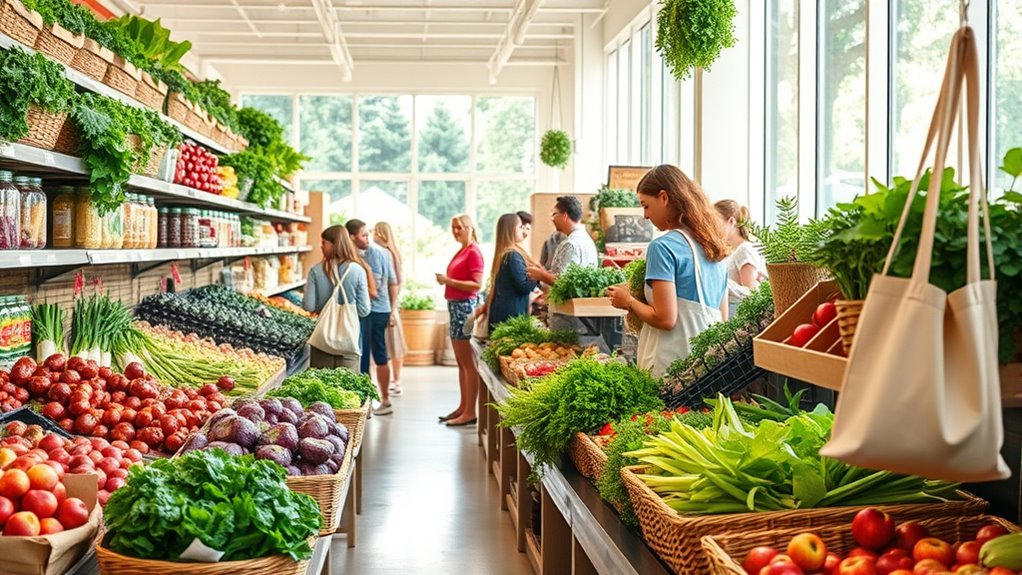

To shop plastic-free in 2025, start by bringing your own reusable containers, jars, and cloth bags to stores. Opt for bulk buying whenever possible, filling your containers directly at bulk stations. Ask store staff to package items in your containers and skip pre-packaged produce. Focus on avoiding plastic trays and foam containers for perishables. Small, consistent efforts will markedly cut plastic waste, and if you keep exploring, you’ll discover even more sustainable shopping tips.
Key Takeaways
- Bring reusable containers, jars, and produce bags to avoid plastic packaging and reduce waste.
- Purchase in bulk from stores or co-ops to minimize packaging and leftovers.
- Ask stores if they can package items directly into your reusable containers or jars.
- Choose plastic-free alternatives like fresh produce without plastic wrap and avoid foam or tray packaging.
- Incorporate sustainable habits gradually, carrying reusable supplies and practicing mindful shopping for long-term impact.
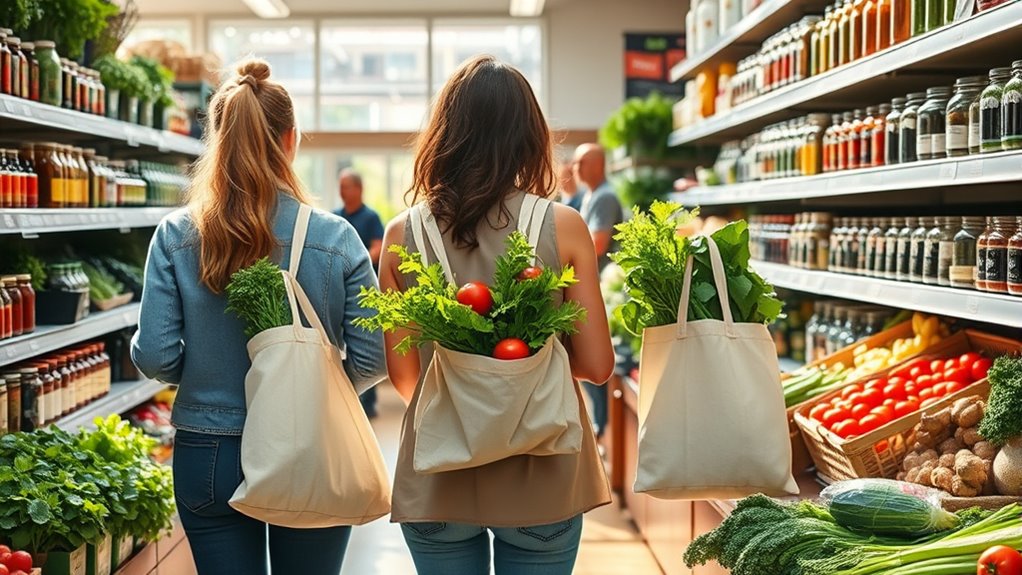
Shopping for groceries can have a bigger environmental impact than you might think, but small changes can make a substantial difference. One of the easiest ways to reduce waste is by bringing your own reusable containers. Instead of accepting pre-packaged items wrapped in plastic, you can pack your produce, grains, or snacks in containers you own. Not only does this cut down on single-use plastics, but it also encourages mindful shopping. Many stores now welcome reusable containers, making it easier than ever to avoid unnecessary packaging. Additionally, opting for bulk buying helps you minimize waste. When you buy in bulk, you purchase only what you need, reducing excess packaging and leftovers that might go to waste. Bring your own cloth bags or jars to fill up with dry goods, nuts, spices, or even liquids like oils or sauces. This approach lessens your reliance on plastic bags and containers often used for small quantities.
You can also plan your shopping trips around what’s available in bulk. Check with your local grocery store or co-op beforehand to see if they offer bulk sections, and bring your own containers to fill. This not only saves money but also considerably cuts down on packaging waste. Make it a habit to carry a set of reusable containers and jars in your bag or car, so you’re always prepared when you go shopping. When choosing produce, skip the plastic wrap or bags, and instead, bring your own reusable produce bags. These are lightweight, washable, and sturdy, making them an excellent alternative to single-use plastic produce bags. For dairy or meat products, look for stores that allow you to bring your own containers and ask if they can package your items directly into your containers. This way, you avoid the typical plastic-wrapped trays and foam containers.
Transitioning to plastic-free shopping doesn’t happen overnight, but incorporating reusable containers and bulk buying into your routine can create a lasting impact. These small adjustments reduce your plastic footprint and promote more sustainable consumption. Over time, you’ll find that these habits not only benefit the environment but also encourage you to be more intentional with your purchases. Plus, many stores appreciate customers who bring their own containers, and some even offer discounts or incentives. By making these simple changes, you’re contributing to a healthier planet, one grocery trip at a time. Remember, every plastic-free choice adds up, and your efforts can inspire others to follow suit. Implementing space and organization techniques in your shopping habits can further streamline your process and reduce clutter, making it easier to maintain these sustainable practices.
Top picks for "greener grocery shopp"
Open Amazon search results for this keyword.
As an affiliate, we earn on qualifying purchases.
Frequently Asked Questions
How Can I Find Local Stores Offering Plastic-Free Options?
You can find local stores offering plastic-free options by visiting farmers’ markets and asking vendors about their packaging practices. Look for stores that promote bulk buying, which often encourages minimal packaging. Check online directories or social media groups dedicated to sustainable shopping in your area. Additionally, explore community-supported agriculture (CSA) programs to support local farmers and reduce plastic waste, making your shopping more eco-friendly.
Are There Affordable Alternatives to Plastic Packaging?
You can find affordable alternatives to plastic packaging by choosing products with biodegradable wrapping or packaging made from compostable materials. Opt for bulk shopping options at local stores, which often use minimal or no plastic packaging, allowing you to buy only what you need and reduce waste. These options are not only budget-friendly but also help you lower your environmental impact while maintaining a sustainable shopping routine.
How Do I Store Fresh Produce Without Plastic?
To store fresh produce without plastic, focus on eco-friendly storage options that promote food preservation. Use cloth produce bags or wrap items in beeswax wraps to keep them fresh naturally. Glass containers with breathable lids are great for storing cut fruits and vegetables. You can also utilize reusable silicone bags for snacks. These methods help you avoid plastic while maintaining ideal freshness, making your grocery routine more sustainable and eco-conscious.
What Are the Best Reusable Containers for Grocery Shopping?
You should choose reusable bag options made from eco-friendly container materials like cotton, jute, or recycled fabric for grocery shopping. These options are durable, lightweight, and help reduce plastic waste. Look for containers made from stainless steel, glass, or BPA-free silicone, which are safe, long-lasting, and eco-conscious. Switching to these reusable options makes your shopping more sustainable and keeps your groceries fresh without relying on plastic.
How Can I Encourage Others to Shop Plastic-Free?
You can encourage others to shop plastic-free by raising community awareness through social media campaigns and local events. Share your success stories, tips, and eco-friendly shopping habits to inspire others. Organize group activities like plastic-free grocery challenges or workshops. By actively engaging your community and highlighting the benefits, you motivate others to adopt sustainable practices, creating a ripple effect toward a greener, plastic-free future.
Conclusion
By choosing to shop plastic-free, you’re making a positive impact on the environment and your health. Every small step counts, and together, these choices can lead to a greener future. Remember, “Take care of the Earth, and she’ll take care of you.” Staying committed to sustainable habits now ensures a healthier planet for generations to come. So, keep aiming, because even tiny changes can make a big difference.