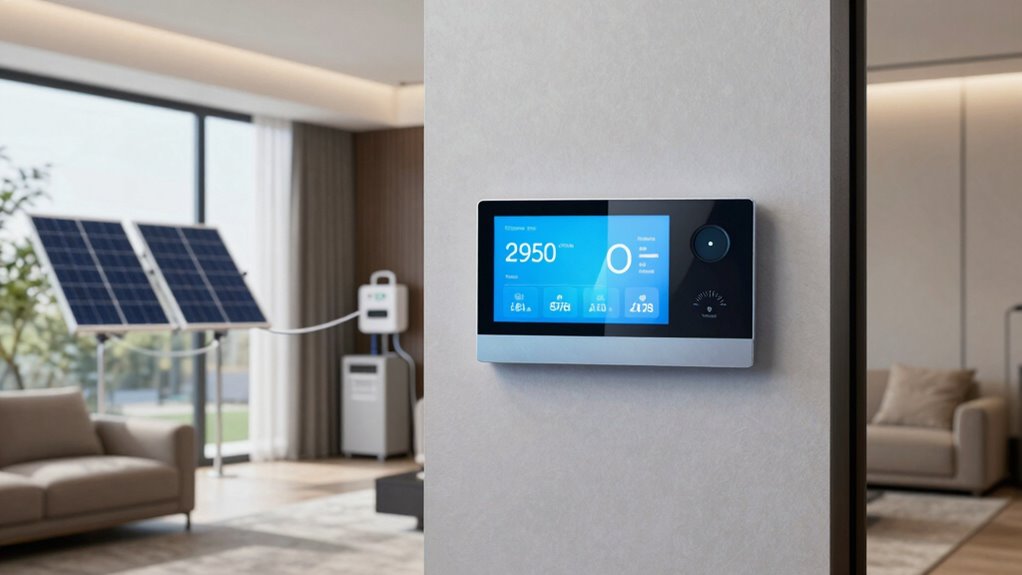

Smart home energy systems work together by collecting data from your energy meters, sensors, and weather forecasts to make real-time decisions. They coordinate devices via a central platform, managed through your smartphone or home hub, to optimize energy use based on habits, weather, and pricing. These systems communicate seamlessly, sharing information to enhance efficiency and sustainability. As they learn your routines, they become smarter—discover more ways they can improve your home’s energy management as you explore further.

Prime made for students and young adults
- Fast, free delivery for dorm and study essentials
- Prime Video and Amazon Music included
- Member-only deals
Key Takeaways
- Data from meters, weather, and sensors enables real-time energy management and prioritized solar usage.
- Centralized platforms coordinate devices via apps or hubs for seamless control and automation.
- User preferences and system learning optimize energy use and provide maintenance alerts.
- Interconnected devices communicate and share data for cohesive, efficient home ecosystem operation.
- Overall, these integrations maximize savings, promote sustainability, and adapt to user habits.

As you interact with your smart home, you’ll notice how the system gathers data from various sources—like your energy meters, weather forecasts, and occupancy sensors. This information helps the system make real-time decisions about how to allocate energy most effectively. For example, if your system detects that sunlight is abundant, it might prioritize solar energy for your needs or adjust the operation of certain appliances to times when energy is cheaper. This continuous flow of data and commands makes your home’s energy use more intelligent and responsive.
Smart home systems analyze data from sensors and weather forecasts to optimize energy use and boost efficiency.
The core of how these systems work together lies in their ability to integrate diverse devices through a centralized platform, often managed via a smartphone app or a home hub. This integration guarantees that your smart thermostat doesn’t just control temperature but does so based on your daily patterns, external weather conditions, and energy pricing. Likewise, your smart lights and appliances can be scheduled or adjusted automatically to avoid peak energy times, which helps you save money while reducing your carbon footprint. Additionally, the ability to share data across devices enhances the system’s overall efficiency and responsiveness.
You play an essential role in this ecosystem by setting preferences and monitoring your system’s performance. As your system learns your habits, it becomes more efficient at managing your energy consumption without sacrificing comfort. It also alerts you to potential issues or opportunities to improve efficiency, such as suggesting when to run appliances or reminding you to turn off unused devices. The integration of these features not only simplifies your daily routines but also maximizes energy savings and enhances sustainability.
In addition, system integration allows for seamless communication among devices, ensuring that your entire smart home ecosystem functions cohesively. This interconnectedness is supported by data sharing across devices, which enables smarter decision-making and more precise control. Moreover, advancements in machine learning are increasingly allowing these systems to adapt to your evolving habits and optimize energy use further. The integration of these features not only simplifies your daily routines but also maximizes energy savings and enhances sustainability.
In essence, smart home energy systems work together through sophisticated system integration, combining data and control across all connected devices. This synergy ensures that your home consumes energy more wisely, reduces waste, and adapts to your lifestyle. By harnessing the power of interconnected technology, you create a smarter, greener home that benefits both your wallet and the environment.
smart home energy management system
As an affiliate, we earn on qualifying purchases.
As an affiliate, we earn on qualifying purchases.
Frequently Asked Questions
How Secure Are Smart Home Energy Systems From Hacking?
Smart home energy systems face cybersecurity risks, but you can boost their security by using strong passwords and keeping software updated. While these systems help with energy efficiency, data privacy remains a concern, so check how your provider handles your information. Staying vigilant and following best security practices minimizes hacking risks, ensuring your smart home remains safe and your data stays private.
Can I Upgrade Individual Components Over Time?
Yes, you can upgrade individual components over time. In fact, about 60% of smart home owners find upgrading parts easier than replacing entire systems. When doing so, make sure component compatibility to avoid issues. Many smart energy systems are designed with upgrade options in mind, allowing you to add or replace devices like thermostats, panels, or sensors individually, helping you adapt your setup as technology advances without a complete overhaul.
Do These Systems Work During Power Outages?
Yes, smart home energy systems can work during power outages if you have a battery backup installed. This backup provides power during outages, allowing your system to continue functioning and helping with power restoration once utility power is back. Keep in mind, not all components may be supported by backup power, so check your system’s specifications to guarantee essential parts stay operational during outages.
How Much Can I Save on Energy Bills?
They say “a penny saved is a penny earned,” and smart home energy systems can help you save considerably. By optimizing energy consumption through automated controls and real-time monitoring, you could reduce your energy bills by 10-30%. Conducting a thorough cost analysis reveals your savings potential, making these systems a smart investment. Over time, they pay for themselves by lowering your energy costs and increasing efficiency.
Are Smart Home Energy Systems Compatible With All Appliances?
Smart home energy systems aren’t compatible with all appliances, but many are designed for broad appliance compatibility. You’ll want to check each device’s system integration capabilities before connecting. Modern systems often support popular appliances through smart plugs or dedicated hubs, making it easier to manage energy use. Keep in mind, some older appliances might not fully integrate, so compatibility varies depending on your setup and the specific devices involved.
smart thermostat with solar integration
As an affiliate, we earn on qualifying purchases.
As an affiliate, we earn on qualifying purchases.
Conclusion
Imagine a home where all your energy devices work seamlessly together, optimizing efficiency and saving you money. With smart home energy systems, this isn’t just a dream—it’s your reality. You might wonder, isn’t it amazing how technology can make life simpler and more sustainable? By integrating these systems, you’re not just upgrading your home; you’re taking a step toward a smarter, greener future. Isn’t that a future worth embracing?
As an affiliate, we earn on qualifying purchases.
As an affiliate, we earn on qualifying purchases.
Halloween Picks
halloween
As an affiliate, we earn on qualifying purchases.