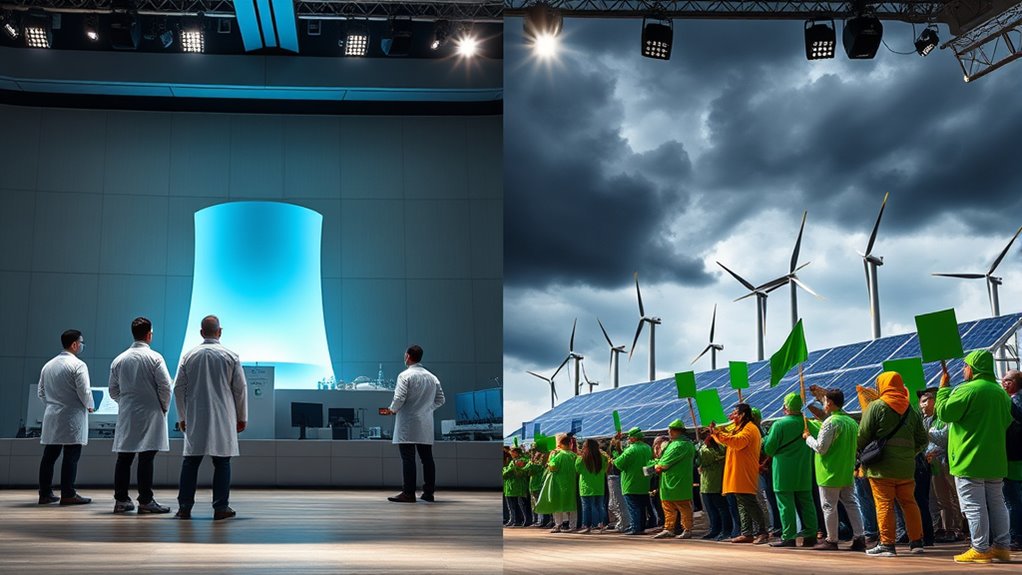

By 2025, your view of nuclear energy hinges on balancing its low-carbon benefits against safety and waste risks. Advances like passive cooling and containment improve safety, but accidents remain possible, and waste storage challenges persist. While nuclear offers reliable power, concerns about environmental and security hazards influence its future role. If you want to understand how ongoing innovations and regulations shape this debate, you’ll find key insights ahead.

Prime made for students and young adults
- Fast, free delivery for dorm and study essentials
- Prime Video and Amazon Music included
- Member-only deals
Key Takeaways
- Advances in safety technology and passive cooling aim to make nuclear energy safer by 2025, reducing accident risks.
- Managing long-term nuclear waste remains a critical challenge, impacting public perception and environmental safety.
- Nuclear energy offers low emissions and high efficiency, making it a potential sustainable solution amid climate concerns.
- Strict regulation and international cooperation are essential to mitigate safety and waste management risks effectively.
- The debate continues on whether nuclear is a necessary clean energy source or a risky, potentially hazardous industry.

Safety concerns remain at the forefront of public debate. Despite advancements in reactor design, accidents like Chernobyl and Fukushima have left lasting impressions. You might wonder if today’s technology can truly prevent such catastrophes. Modern nuclear plants incorporate robust safety measures, including passive cooling systems and containment structures designed to withstand natural disasters and human error. However, the risk of unforeseen events can never be entirely eliminated. This constant threat prompts questions about whether the potential consequences of a nuclear accident outweigh the benefits of clean energy. If an accident occurs, the fallout isn’t just environmental; it’s also social and economic, affecting millions of lives and leaving communities grappling with long-term health and safety concerns. Safety measures and technological innovations are continually evolving to mitigate these risks, but the challenge remains significant. Waste management is another critical issue. You need to consider where and how nuclear waste is stored. Spent fuel remains radioactive for thousands of years, requiring secure, long-term disposal methods. Currently, many countries struggle with establishing permanent repositories, leading to the accumulation of waste at reactor sites. The risk of leaks or accidents during transportation and storage adds to your concerns. While technology has improved, the challenge of safely isolating this waste from the environment persists. Without effective solutions, the accumulation of nuclear waste could become a significant barrier to expanding nuclear energy. You might ask whether future innovations will solve these issues or if they will continue to pose environmental and security risks.
Safety concerns persist despite improvements, as accidents like Chernobyl and Fukushima highlight ongoing risks and long-term impacts.
Despite these concerns, nuclear energy offers undeniable advantages — low emissions, high efficiency, and consistent power generation. As you weigh its potential, it’s important to recognize that safety and waste management are pivotal factors. Addressing these challenges requires ongoing innovation, strict regulation, and international cooperation. Whether nuclear becomes a green savior or remains a necessary evil depends on your confidence in our ability to mitigate these risks. By 2025, the debate will likely intensify, shaping the future of energy and the planet’s sustainability.
Popular right now

Dyson Ball Animal 2 Plus Corded Vacuum

KitchenAid Artisan 5-Quart Tilt-Head Stand Mixer, Almond Cream

De’Longhi Classic Matte Black Espresso Machine with Milk Frother
As an affiliate, we earn on qualifying purchases.
Frequently Asked Questions
How Does Nuclear Waste Disposal Impact Future Generations?
You should consider how nuclear waste disposal affects future generations by understanding radioactive contamination risks. Proper long-term storage of nuclear waste is vital to prevent contamination of water, soil, and air. If not managed carefully, radioactive materials could pose health hazards for decades or even centuries. Your choices today about waste management directly influence the safety and well-being of those who come after you, making responsible disposal essential.
What Are the Latest Advancements in Nuclear Reactor Safety?
You should know that the latest advancements in nuclear reactor safety focus on advanced safety systems and passive cooling technology. These innovations automatically respond to emergencies, reducing human error and preventing accidents. Passive cooling relies on natural processes like convection, eliminating the need for active systems that can fail. Together, these improvements make reactors safer, more reliable, and better equipped to protect both workers and the environment.
Can Nuclear Energy Be Made Completely Renewable?
You can’t make nuclear energy entirely renewable yet, but fusion technology offers promise for a cleaner future. Fusion could provide abundant, low-waste energy, reducing reliance on traditional nuclear fission. To truly become renewable, nuclear must seamlessly integrate with renewable sources like wind and solar. While we’re not there yet, advancements in fusion and renewable integration could eventually make nuclear a sustainable, low-impact energy option.
How Does Public Opinion Influence Nuclear Policy Decisions?
Public perception plays a vital role in shaping nuclear policy decisions. When the public views nuclear energy as safe and environmentally friendly, policymakers feel more confident supporting it. Conversely, concerns about safety and waste can lead to restrictions or bans. Your opinions and activism influence policy influence, prompting governments to prioritize safety measures or invest in alternative energy sources. Ultimately, public perception directly impacts the future of nuclear energy policies.
What Are the Economic Costs of Transitioning Away From Nuclear Power?
Imagine it’s 1920, and you’re witnessing the shift from coal to oil—similar to moving away from nuclear. Switching from nuclear power brings an economic burden, including high costs for building renewables and grid updates. You might face job losses in nuclear sectors, which fuels economic uncertainty. While the move aims for cleaner energy, these financial and employment impacts challenge policymakers to balance progress with economic stability.
Conclusion
As you stand at this crossroads, remember that nuclear energy is like a double-edged sword—powerful yet dangerous. It’s a flickering flame that could light the way to a greener future or burn the bridges to safety. Your choices now shape the energy landscape of 2025. Will you embrace the bright promise or tread carefully around its shadows? The future’s spark is in your hands—choose wisely, and let hope be your guiding star.