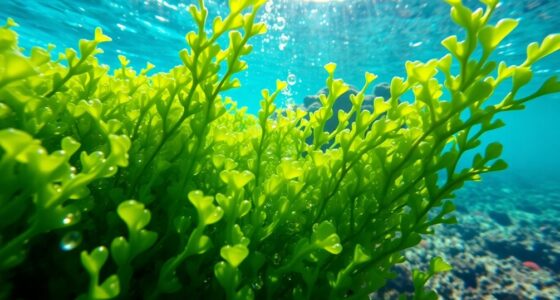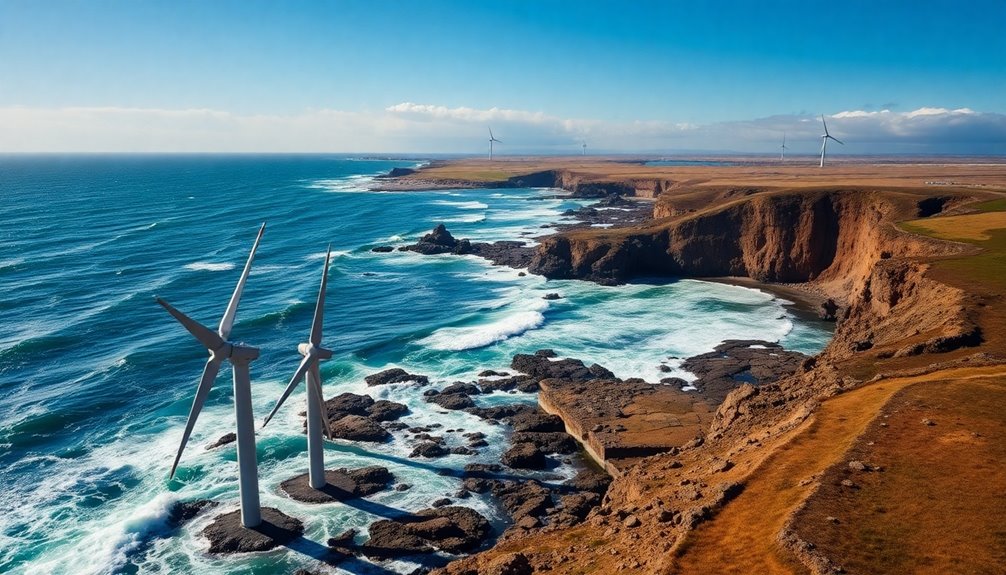

If you're looking for the top places worldwide to harness ocean energy, you've got exciting options. Florida and South Africa stand out, while the coastlines of Eastern and Southeastern Africa, including Somalia and Kenya, show great promise. North America's regions from Florida to North Carolina also have high potential. However, challenges exist, particularly in deep waters. Want to discover more about the benefits and challenges of these regions?

Prime made for students and young adults
- Fast, free delivery for dorm and study essentials
- Prime Video and Amazon Music included
- Member-only deals
Key Takeaways
- Florida and South Africa are among the top global locations for harnessing ocean energy due to their high power densities.
- Eastern and Southeastern Africa's coastlines, particularly Somalia, Kenya, Tanzania, and Madagascar, show significant potential for ocean energy projects.
- North America's regions from Florida to North Carolina are also identified as rich in ocean energy resources.
- High power densities in these areas make them ideal for sustainable energy generation from ocean currents, waves, and tides.
- Seasonal variations in power density, especially in southern and northern hemispheres, inform optimal energy production strategies.
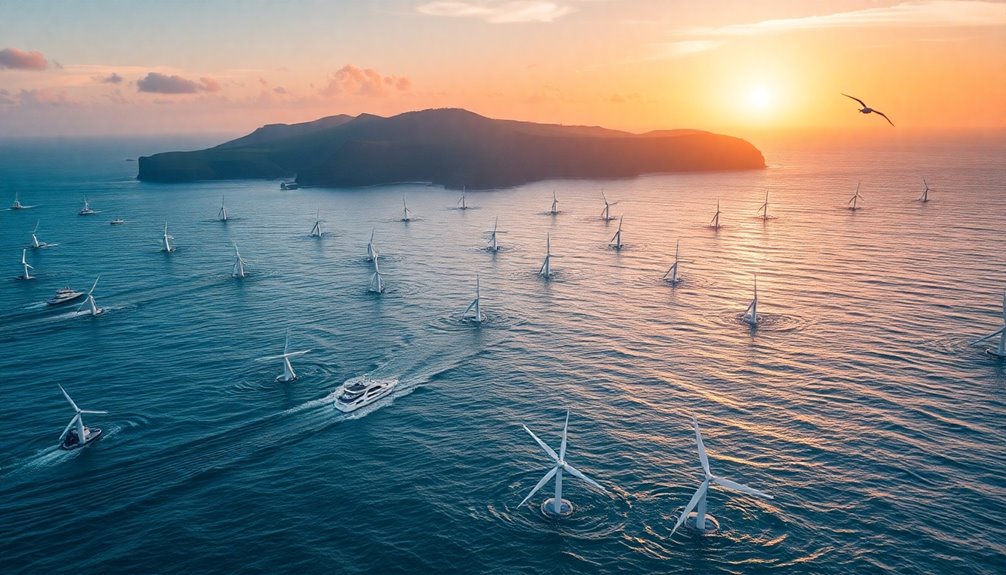
As the world seeks cleaner energy sources, harnessing ocean energy presents an exciting opportunity for sustainable power generation. The oceans, covering over 70% of Earth's surface, offer immense potential through ocean currents, waves, and tidal energy. These renewable sources are promising and environmentally sustainable, although they're still in early development compared to wind and solar power.
Top locations for harnessing ocean energy include regions like Florida and South Africa, which boast high power densities, making them ideal for energy generation. The coastlines of Eastern and Southeastern Africa, particularly Somalia, Kenya, Tanzania, and Madagascar, also present excellent opportunities. In North America, areas stretching from Florida to North Carolina are similarly rich in potential.
Regions like Florida and South Africa, along with Eastern Africa's coastlines, hold great promise for ocean energy generation.
The relatively shallow waters in these regions allow for easier energy extraction, yet some areas, such as Brazil and further along the South African coast, face challenges due to limited data availability. Identification of feasible locations for ocean current energy projects is crucial for maximizing this potential.
Technological challenges remain significant. Deep waters, over 1,000 meters, complicate turbine installation and maintenance, requiring advanced mooring systems designed for these high-depth environments. Complex flow patterns in regions like South Africa and Japan increase the difficulty in adapting technology to specific ocean conditions.
You'll find that the costs associated with deep-water installations can be quite high, which adds another layer of complexity to this endeavor.
Seasonal variations in power density are crucial to consider, too. In the Northern Hemisphere, higher power densities tend to occur from June to August, while South Africa sees its peak from December to February. Understanding these seasonal patterns can help align energy production with periods of high electricity demand, enhancing the integration of ocean energy into the broader energy mix.
As you explore the potential of ocean energy, keep in mind the environmental implications. While it offers sustainable power, marine ecosystems could be affected, making it essential to develop strategies that minimize impact and ensure the protection of biodiversity.
As an affiliate, we earn on qualifying purchases.
Frequently Asked Questions
What Technologies Are Used to Harness Ocean Energy?
To harness ocean energy, you'll find a variety of technologies in use.
Tidal turbines capture kinetic energy from currents, while tidal barrages build dams to store tidal energy.
Wave energy is harnessed using point absorbers and oscillating water columns.
Ocean Thermal Energy Conversion (OTEC) systems exploit temperature differences.
Additionally, salinity gradient technologies like reverse electrolysis plants utilize the differences between seawater and freshwater, maximizing energy efficiency from the ocean's natural resources.
How Does Ocean Energy Impact Marine Ecosystems?
So, you think harnessing ocean energy is just a breezy swim? Well, not quite! It can disrupt marine ecosystems in surprising ways.
You might see collisions with turbines, noise pollution driving fish to therapy, and altered habitats that leave critters confused.
Plus, chemical spills could turn the ocean into a not-so-fun science experiment.
It's crucial to consider these impacts and implement sustainable practices to keep our oceans thriving while we ride the energy wave!
What Are the Costs Associated With Ocean Energy Projects?
When you consider ocean energy projects, costs can vary widely.
For wave energy, you're looking at an initial LCOE between $120 and $470 per MWh, while tidal energy ranges from $130 to $280.
As the industry scales up, there's potential for significant cost reductions—up to 75% for wave energy.
How Does Ocean Energy Compare to Other Renewable Sources?
Like the fabled tale of Icarus, ocean energy soars with potential but faces challenges that keep it grounded.
Compared to solar and wind, ocean energy's costs and infrastructure complexity can hinder its growth. While solar and wind technologies thrive and scale rapidly, ocean energy is still in its infancy, requiring more research and investment.
However, its predictability and vast untapped potential promise a bright future for this emerging renewable source.
What Countries Are Leading in Ocean Energy Research and Development?
You'll find that countries like the United Kingdom, China, and Australia are leading the charge in ocean energy research and development.
The UK excels in tidal energy thanks to strong government backing, while China's rapidly increasing investments focus on large-scale advancements.
Australia's supportive policies foster wave energy technologies.
Portugal also plays a key role in Europe, leveraging favorable conditions to enhance its ocean energy capabilities.
These nations are paving the way for future innovations.
marine current energy generators
As an affiliate, we earn on qualifying purchases.
As an affiliate, we earn on qualifying purchases.
Conclusion
In conclusion, tapping into ocean energy isn't just a dream; it's becoming a reality. Did you know that the ocean has the potential to produce over 20,000 terawatt-hours of energy each year? That's enough to power the entire world's electricity needs for nearly two years! By focusing on the top locations identified for harnessing this energy, we can significantly reduce our reliance on fossil fuels and pave the way for a sustainable future.
As an affiliate, we earn on qualifying purchases.
As an affiliate, we earn on qualifying purchases.
Halloween Picks
halloween
As an affiliate, we earn on qualifying purchases.