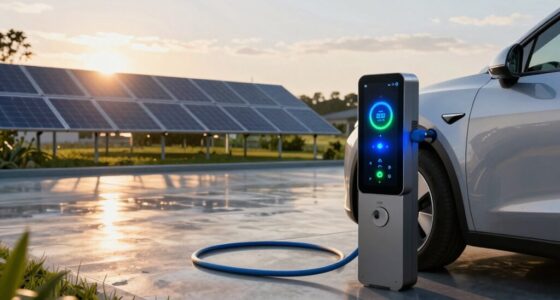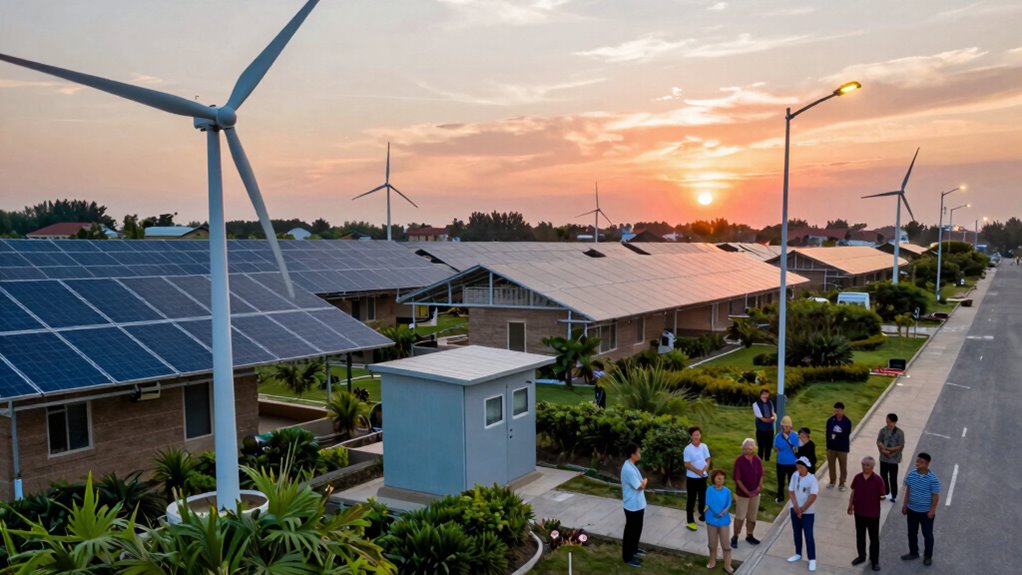

Microgrids support resilient communities by allowing you to operate independently during power outages, ensuring critical services like hospitals and emergency shelters stay powered. They help increase your energy independence by generating and storing local renewable energy, reducing reliance on external sources. With advanced technology, microgrids quickly adapt to disruptions, boosting overall stability. Plus, they encourage community involvement and self-sufficiency. Keep exploring to see how these innovations can strengthen your community’s resilience even further.

Prime made for students and young adults
- Fast, free delivery for dorm and study essentials
- Prime Video and Amazon Music included
- Member-only deals
Key Takeaways
- Microgrids operate independently during outages, ensuring continuous power for critical community functions.
- They enhance energy security by generating and storing local renewable energy, reducing reliance on external sources.
- Advanced energy management and storage technologies enable rapid adaptation to disruptions and prolonged outages.
- Community engagement in microgrid projects fosters local resilience and promotes self-sufficiency.
- Integration with broader systems and innovative solutions creates adaptable, resilient energy networks aligned with emerging risks.
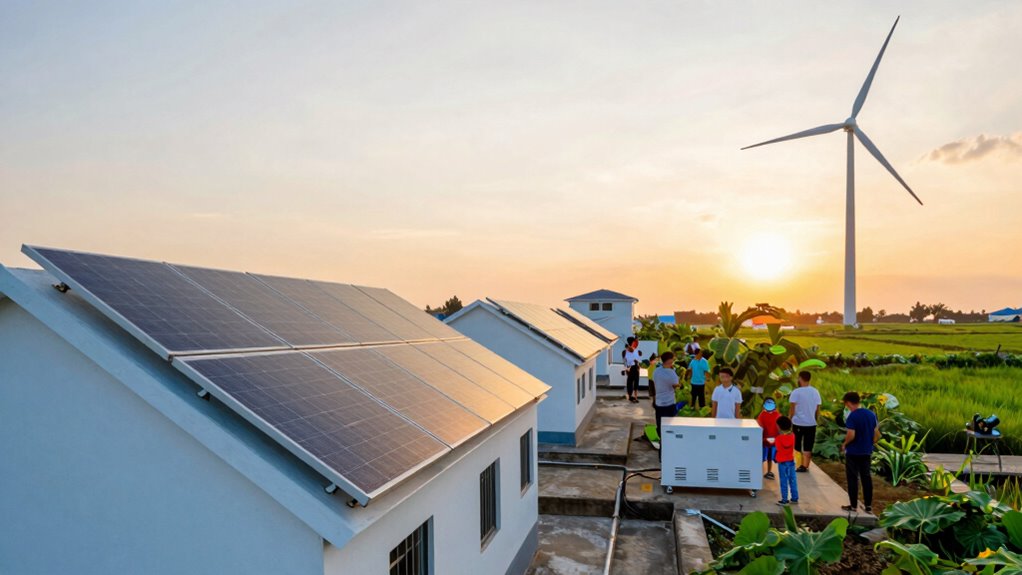
In today’s increasingly unpredictable climate, resilient communities are essential for ensuring safety and stability during disruptions. Microgrids play a crucial role in this effort by providing reliable, localized power sources that bolster community resilience. When disaster strikes—whether a storm, wildfire, or grid failure—microgrids can operate independently from the main power grid, enabling your community to maintain critical functions. This independence from the larger grid enhances disaster preparedness, ensuring that essential services like hospitals, emergency shelters, and communications remain operational even when the main grid goes down.
Having a microgrid means you’re better equipped to achieve energy independence. Instead of relying solely on centralized power plants and long-distance transmission, your community can generate and store energy locally through renewable sources like solar or wind, paired with advanced storage solutions. This setup reduces vulnerability to external disruptions, such as fuel shortages or grid outages, giving you greater control over your energy supply. Energy independence isn’t just about cost savings; it’s about security and resilience during crises. When your community can produce its own power, you’re less susceptible to external shocks and market fluctuations, allowing for more stable living conditions during turbulent times.
Achieve energy independence with local renewable sources and storage, boosting security and resilience during crises.
Microgrids also enhance your community’s disaster preparedness by enabling quicker recovery. When the main grid fails, a microgrid can seamlessly switch to island mode, keeping critical infrastructure running. This rapid response minimizes downtime and helps prevent secondary crises, such as health emergencies or communication breakdowns. Additionally, microgrids can be integrated with emergency management plans, ensuring that resources are allocated efficiently and that power can be prioritized for emergency response facilities. This capability supports a coordinated, effective response during disasters, saving lives and reducing damage. Incorporating advanced energy management systems into microgrids can further optimize their performance during crises. Understanding how distributed energy resources work together is key to creating resilient energy systems that adapt swiftly to disruptions. Moreover, ongoing innovations in energy storage technologies are critical for maintaining supply stability during extended outages.
Furthermore, microgrids foster community engagement and self-sufficiency. When residents and local governments invest in these systems, they become active participants in their own resilience. They can tailor energy solutions to meet specific needs, incorporate renewable sources to reduce carbon footprints, and develop local energy markets. This collective effort builds stronger community bonds and creates a shared sense of responsibility for disaster preparedness and energy independence. Additionally, educating community members about microgrid technology enhances overall resilience and ensures that everyone understands how to respond during emergencies. Ultimately, microgrids empower you to take control of your community’s energy future, making it more resilient, adaptable, and prepared for whatever challenges come your way.
By integrating microgrids with broader technology reviews and innovative solutions, communities can stay ahead of emerging risks and leverage the latest advancements for enhanced resilience.
Popular right now

Dyson Ball Animal 2 Plus Corded Vacuum

KitchenAid Artisan 5-Quart Tilt-Head Stand Mixer, Almond Cream

De’Longhi Classic Matte Black Espresso Machine with Milk Frother
As an affiliate, we earn on qualifying purchases.
Frequently Asked Questions
How Do Microgrids Integrate With Existing Power Infrastructure?
You integrate microgrids with existing power infrastructure by connecting them through advanced control systems that enable seamless communication. This supports renewable integration and enhances grid modernization efforts, allowing microgrids to operate independently or alongside the main grid. You can switch between modes effortlessly, ensuring reliable power during outages and optimizing energy use. This integration boosts resilience, stabilizes supply, and promotes cleaner energy adoption within your community.
What Are the Initial Costs of Implementing a Microgrid?
Did you know that initial microgrid costs can range from $1,000 to $5,000 per kilowatt? You should perform a thorough cost analysis to understand expenses, which typically include equipment, installation, and integration. Funding strategies, such as grants, public-private partnerships, and utility incentives, can markedly offset these costs. By exploring these options early, you can make a smarter investment and guarantee your community’s energy resilience.
Can Microgrids Operate Independently During Outages?
Yes, microgrids can operate independently during outages thanks to their islanding capability. This feature allows you to disconnect from the main grid and provide emergency power to your community or facility. When outages occur, your microgrid switches seamlessly to island mode, ensuring continuous electricity supply. This independence enhances resilience, helping your community stay functional and safe even when the larger grid fails.
How Do Microgrids Impact Local Energy Prices?
Microgrids can lower local energy prices by boosting energy independence and reducing reliance on the main grid. When you have a microgrid, you gain control over your energy supply, often using renewable sources, which can cut costs. This community empowerment leads to more stable rates, especially during outages or high demand periods. As a result, your community benefits from more affordable, reliable energy and increased resilience in challenging times.
What Are Common Challenges in Microgrid Deployment?
You’ll face challenges like community engagement, where gaining local support can be tough, and regulatory barriers that complicate approvals and funding. Steering through these hurdles requires transparent communication and collaboration with residents. Additionally, understanding local policies helps avoid delays. You must also manage costs, technical complexities, and infrastructure upgrades. Overcoming these challenges is key to successfully deploying microgrids that enhance community resilience and energy independence.
Conclusion
By now, you see how microgrids act like sturdy bridges, connecting communities to reliable power even during disruptions. They empower you to take control of your energy, making your community more resilient and prepared for anything. Just as a lighthouse guides ships safely through storms, microgrids illuminate a path toward a resilient future. Embracing this technology means you’re not just watching the storm pass—you’re staying steady and strong through it.