
Green data centers cut energy waste by using renewable sources like solar and wind to power their operations. They also innovate with cooling techniques such as free cooling, liquid cooling, and natural ventilation, which markedly reduce energy consumption. Smart management systems and real-time monitoring help target cooling precisely, preventing unnecessary use. Technologies like heat recovery reuse waste heat, boosting efficiency further. Keep exploring to discover more ways these centers are making digital infrastructure more sustainable.

Prime made for students and young adults
- Fast, free delivery for dorm and study essentials
- Prime Video and Amazon Music included
- Member-only deals
Key Takeaways
- Adoption of renewable energy sources decreases reliance on fossil fuels and reduces greenhouse gas emissions.
- Innovative cooling techniques like free cooling and liquid cooling improve energy efficiency.
- Real-time monitoring and targeted cooling optimize resource use and prevent energy waste.
- Locating data centers in cooler climates and using natural ventilation reduce cooling energy needs.
- Waste heat recovery systems capture and reuse heat, enhancing overall energy utilization.
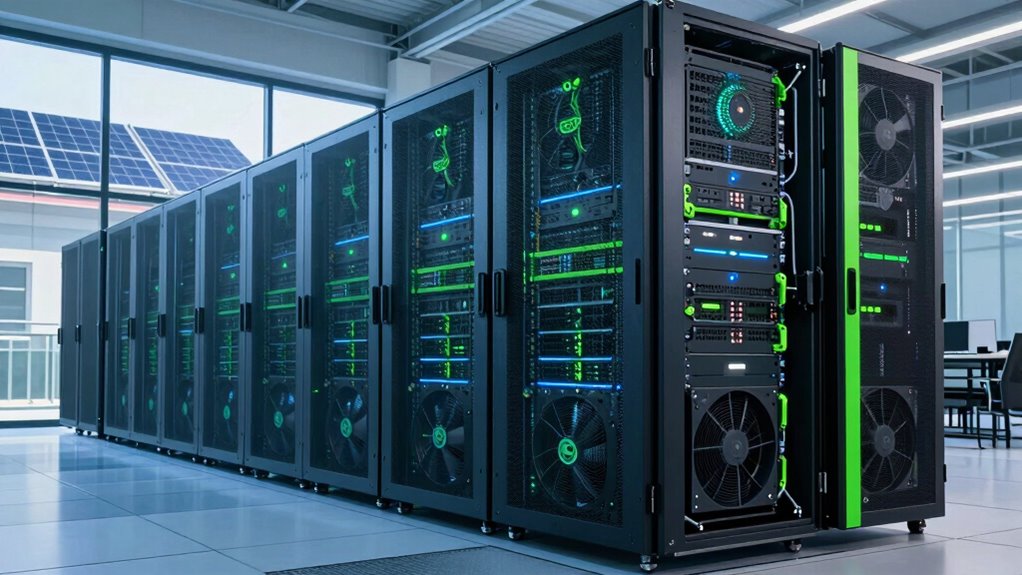
Have you ever wondered how data centers can become more environmentally friendly while maintaining their efficiency? The answer lies in the innovative ways they’re adopting renewable energy sources and implementing cooling innovations. These efforts are transforming data centers from energy-intensive giants into sustainable operations that minimize environmental impact. By harnessing renewable energy like solar, wind, or hydro power, data centers reduce reliance on fossil fuels and cut down greenhouse gas emissions. Many facilities now source their electricity directly from renewable providers or invest in on-site solar panels and wind turbines. This shift not only decreases their carbon footprint but also offers more predictable energy costs, making operations more sustainable and economically viable.
Data centers are adopting renewable energy and cooling innovations to become more sustainable and efficient.
Cooling innovations play a vital role in reducing energy waste within data centers. Traditional cooling systems consume a significant portion of a data center’s energy, often accounting for up to 40% of total usage. To address this, operators are adopting advanced cooling techniques that are more efficient and environmentally friendly. For instance, free cooling utilizes outside air when conditions permit, drastically lowering energy consumption compared to conventional air conditioning. Liquid cooling systems, which circulate chilled water or other coolants directly to hardware components, also improve efficiency by removing heat more effectively. Additionally, some data centers are locating their facilities in cooler climates or designing them with natural ventilation, reducing the need for mechanical cooling altogether. Implementing these cooling strategies not only reduces energy waste but also extends the lifespan of hardware by maintaining optimal operating temperatures. Moreover, integrating renewable energy sources into their power supply helps further decrease environmental impact. Incorporating smart energy management systems enables data centers to optimize the use of both cooling and power resources, further enhancing sustainability efforts. Furthermore, the adoption of energy-efficient hardware reduces overall energy consumption, making operations more sustainable.
These cooling innovations are complemented by smarter management systems that monitor temperature levels in real time, enabling precise control and preventing overcooling. This targeted approach guarantees energy isn’t wasted on unnecessary cooling efforts, optimizing overall efficiency. Additionally, data centers are exploring innovative architectures like modular and containerized designs that enhance airflow and reduce cooling demands. Heat recovery systems are also gaining traction; they capture waste heat generated during operation and repurpose it for other uses, such as heating nearby buildings or contributing to district heating networks. In fact, some data centers are now integrating waste heat recovery into their infrastructure to maximize energy efficiency even further.
Together, renewable energy and cooling innovations are forming the backbone of green data centers. They allow these facilities to operate with considerably less energy waste while maintaining the high levels of performance required by modern digital services. As technology advances, expect to see even more integrated solutions that leverage artificial intelligence and automation to optimize energy use further. By embracing these strategies, you’re contributing to a more sustainable digital future where data centers are not only powerful but also environmentally responsible.
solar powered data center cooling system
As an affiliate, we earn on qualifying purchases.
As an affiliate, we earn on qualifying purchases.
Frequently Asked Questions
How Do Green Data Centers Impact Overall Operational Costs?
Green data centers substantially lower your overall operational costs by harnessing renewable energy sources, which are often cheaper in the long run. You’ll see cost reductions through decreased energy bills and less reliance on traditional power grids. Additionally, energy-efficient technologies and sustainable practices reduce maintenance expenses. These savings can be reinvested into your business, making your operations more profitable while supporting environmental sustainability.
What Are the Main Challenges in Implementing Green Technologies?
You face challenges like securing enough renewable energy, steering through complex policy incentives, and managing high initial costs. You must balance upfront investments with long-term gains, adapt to evolving regulations, and guarantee reliable energy sources. These hurdles can slow your shift to greener technologies, demanding strategic planning, persistent effort, and collaboration with policymakers. Overcoming these obstacles is essential to fully realize the environmental and economic benefits of green data centers.
How Do Green Data Centers Handle Cooling Efficiency?
Green data centers handle cooling efficiency through advanced thermal management techniques and renewable cooling methods. You’ll find them using liquid cooling systems and hot aisle/cold aisle containment to maximize airflow and reduce energy consumption. They also utilize renewable cooling sources like evaporative cooling and free air cooling, which harness natural environmental conditions. These strategies minimize energy waste, keep equipment at ideal temperatures, and promote sustainability in data center operations.
Are Green Data Centers Suitable for All Types of Businesses?
Green data centers are suitable for most businesses because they prioritize renewable sources and power management strategies. They reduce energy waste, lowering operational costs and environmental impact. Smaller companies benefit from scalable solutions, while larger ones can leverage advanced energy-efficient technologies. Overall, adopting green data centers helps your business become more sustainable, saves money long-term, and aligns with growing eco-conscious consumer demands.
What Future Innovations Could Enhance Energy Efficiency Further?
You’ll see future innovations like integrating more renewable energy sources and advancing smart automation, which could cut energy use by up to 50%. These techs will optimize cooling and power management, reducing waste even further. By embracing renewable energy and smarter automation, data centers can operate more sustainably, lower costs, and minimize environmental impact, making them more efficient and resilient for the future.
liquid cooling system for servers
As an affiliate, we earn on qualifying purchases.
As an affiliate, we earn on qualifying purchases.
Conclusion
So, next time you marvel at a sleek, eco-friendly data center, remember: it’s not just about saving the planet, but also about saving a few bucks—and maybe impressing your friends with your “green” tech knowledge. Who knew that reducing energy waste could be so fashionable? Turns out, going green isn’t just trendy; it’s a clever way to outsmart Mother Nature while keeping your servers happy. Now, isn’t that a win-win?
energy-efficient data center hardware
As an affiliate, we earn on qualifying purchases.
As an affiliate, we earn on qualifying purchases.
As an affiliate, we earn on qualifying purchases.
Halloween Picks
halloween
As an affiliate, we earn on qualifying purchases.