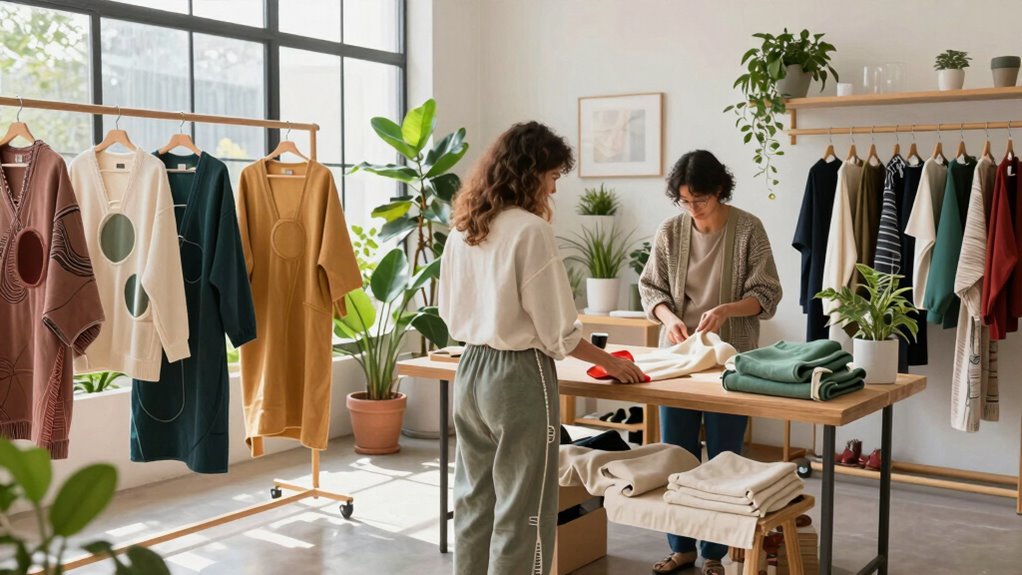

Circular design in apparel is revolutionizing the fashion industry by turning waste into valuable resources and prioritizing sustainability. You can participate in initiatives that collect old garments, helping create closed-loop systems that minimize landfill waste. Brands now focus on durable, repairable materials and eco-friendly designs that extend clothing life. By choosing sustainable options, you support a responsible, eco-conscious fashion future. If you keep exploring, you’ll discover how these innovative practices are shaping a more sustainable industry for everyone.
Key Takeaways
- Increasing adoption of recycling programs transforms old garments into new products, promoting a closed-loop system.
- Sustainable materials and durable designs extend clothing lifespan, reducing waste and minimizing reliance on virgin resources.
- Consumer awareness and participation drive demand for eco-friendly brands practicing circular fashion principles.
- Brands incorporate repair services and modular designs to enhance garment longevity and support sustainability.
- Circular design emphasizes style with purpose, fostering industry-wide shifts away from fast fashion’s disposable culture.
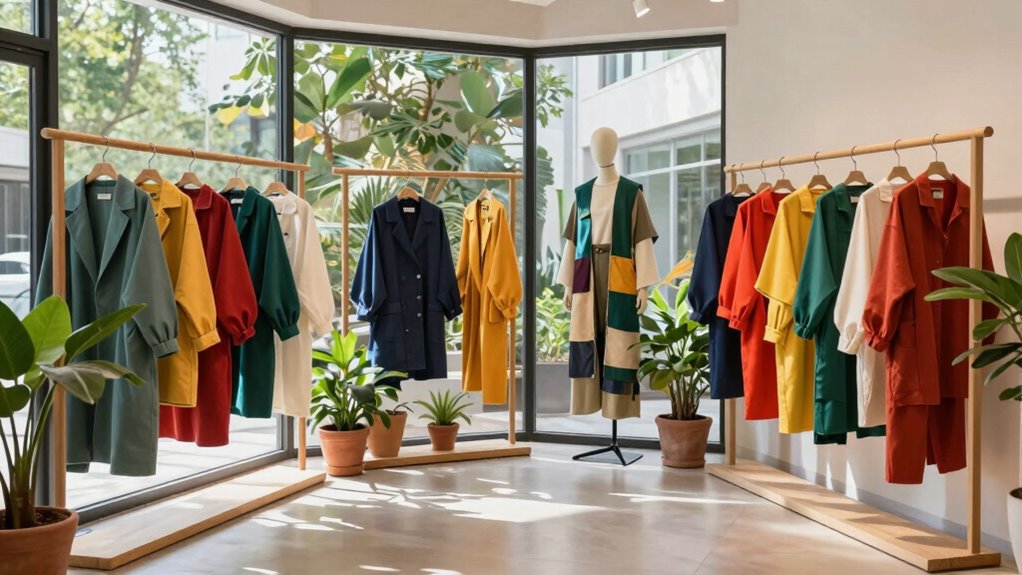
Recycling initiatives are fundamental to the circular design movement. Many companies now implement programs where old garments are collected, broken down, and transformed into new products. This process not only minimizes waste but also keeps valuable materials in circulation longer. You might notice brands offering incentives for returning worn-out or unwanted clothes, knowing these items can be recycled into new textiles or accessories. Recycling initiatives foster a closed-loop system where waste becomes a resource, reducing the need for virgin materials and decreasing landfill contributions. By participating in such programs, you’re actively contributing to a more sustainable fashion ecosystem.
Additionally, the integration of sustainable materials in apparel design plays a crucial role in reducing environmental impact throughout the product lifecycle. The rise of circular design also means that garments are built for durability and ease of repair, extending their lifecycle. Instead of fast fashion’s disposable mentality, you’ll find clothing designed with longevity in mind, often using high-quality sustainable materials that withstand wear over time. When clothing can be repaired or refurbished, it reduces the cycle of constant consumption. Many brands now offer repair services or modular designs that allow you to replace only parts of a garment rather than discarding the entire piece. This approach not only benefits the environment but also helps you get more value out of your wardrobe. Incorporating recycling initiatives and durable materials can also influence the overall lifecycle of garments, making them more aligned with eco-friendly practices. Understanding material recyclability is essential for consumers to make informed choices that foster circularity.
Furthermore, understanding material recyclability can help consumers make informed choices that support circularity. As the industry moves toward circularity, you’re encouraged to be more mindful of your fashion choices. Opting for brands that emphasize sustainable materials and participate in recycling initiatives makes a difference. Your purchasing decisions can influence industry standards, encouraging more companies to adopt eco-conscious practices. Embracing circular design in apparel means embracing a future where fashion is not just about style but also about responsibility—where every piece has a purpose beyond its initial use, contributing to a healthier planet.

Koobay 17" Eco-Friendly Cardboard Hangers for Adult Clothes – 50 Pack of Durable, Recyclable Paper Coat Hangers – Perfect for Storage and Drying of Men's and Women's Clothing
- Eco-Friendly Material: Made from 100% recycled cardboard
- Strong and Durable: Supports a wide range of clothing types
- Space-Saving Design: Ultra-slim at 0.4cm thick, 43cm long
As an affiliate, we earn on qualifying purchases.
As an affiliate, we earn on qualifying purchases.
Frequently Asked Questions
How Does Circular Design Impact Garment Durability?
Circular design improves garment durability by focusing on design longevity and using recycling processes that extend a product’s life. When you choose circularly designed apparel, you’re selecting clothes made to withstand wear and tear, which encourages you to keep and reuse items longer. Recycling processes help maintain quality even after multiple cycles, ensuring your garments stay durable and functional, reducing waste and promoting sustainability in your wardrobe.
What Materials Are Most Sustainable for Circular Apparel?
Think of sustainable materials as the heroes of circular apparel. Recycled fibers, like polyester from plastic bottles, reduce waste and conserve resources, making them ideal. Biodegradable textiles, such as organic cotton and hemp, break down naturally without harming the environment. By choosing these materials, you support a cycle of renewal, ensuring clothing remains eco-friendly from production to disposal. Your choices help create a truly circular fashion ecosystem.
How Do Brands Finance Circular Design Initiatives?
You can finance circular design initiatives by engaging in supply chain restructuring to reduce costs and improve sustainability, which attracts eco-conscious investors. Additionally, brands often collaborate with other companies or organizations, sharing resources and expertise, to fund these projects. Securing grants or government subsidies targeted at sustainable innovation also plays an essential role. These strategies help you implement circular practices effectively while maintaining financial viability.
What Consumer Behaviors Support Circular Fashion?
You can support circular fashion by staying informed through consumer education, understanding how your choices impact the environment. When you look for purchasing incentives like discounts for recycling or swapping clothes, you actively promote sustainability. Remember, “A little knowledge is a dangerous thing,” so staying educated encourages responsible buying. Your commitment to reuse, recycle, and buy consciously helps foster a circular economy and drives brands to adopt eco-friendly practices.
Are There Regulatory Policies Promoting Circular Design?
Regulatory policies actively promote circular design through incentives and all-encompassing policy frameworks. You’ll find governments offering regulatory incentives like tax breaks or grants to brands adopting sustainable practices. Policy frameworks are evolving to set standards for recyclability, durability, and eco-friendly materials, encouraging designers and manufacturers to embrace circular principles. These policies aim to foster innovation, reduce waste, and create a sustainable apparel industry, making it easier for you to support brands committed to circular fashion.
As an affiliate, we earn on qualifying purchases.
Conclusion
As you embrace circular design in apparel, remember that the fashion industry generates over 92 million tons of waste annually. By choosing sustainable options and supporting brands committed to circular principles, you’re helping to reduce this massive environmental impact. Every small step counts—whether it’s recycling, upcycling, or buying timeless pieces. Together, we can create a more sustainable future for fashion, proving that style and sustainability can go hand in hand.
As an affiliate, we earn on qualifying purchases.

Build Your Sustainable Fashion Brand: A Guided Workbook to Plan, Design & Launch Your Eco-Friendly Fashion Brand: A printable workbook for ethical fashion designers, students, and entrepreneurs
As an affiliate, we earn on qualifying purchases.
As an affiliate, we earn on qualifying purchases.