

For families seeking Diwali astronomy books for kids, my best overall pick is Twinkling in the Night Sky: Vedic Astronomy for Kids, Book 1, which directly connects the night sky with Vedic themes. A Child’s Introduction to the Night Sky stands out for practical sky-finding, while Stars and Planets: Gods in the Sky offers a mythology-led route into celestial topics. The main tradeoff is choosing between books centered on Diwali and its traditions, stories that link Indian culture with stars, and broader astronomy guides that build stargazing skills. Some titles are better for reading together; others suit independent learning or activities. Read on for my full breakdown of which kind of book fits each young reader.

Prime made for students and young adults
- Fast, free delivery for dorm and study essentials
- Prime Video and Amazon Music included
- Member-only deals
Key Takeaways
- Twinkling in the Night Sky is the clearest match for readers seeking a direct Vedic astronomy connection, while the broader sky guides focus more on astronomy skills.
- Stars and Planets: Gods in the Sky and the Vedic Astronomy series connect cultural stories with celestial subjects; the Diwali storybooks focus on festival traditions instead.
- A Child’s Introduction to the Night Sky and Constellations for Kids are better fits for children who want to identify what they see overhead than for a Diwali-specific story session.
- Astronomy Activity Book for Kids prioritizes hands-on learning, while the picture books and festival stories offer a more read-aloud-friendly approach.
- The list includes different formats and languages: the six-book Saur Mandal set is in Hindi, making language fit a key choice rather than a minor detail.
| Stars and Planets: Gods in the Sky (Penguin Petit) |  | Best for Mythology-Linked Sky Learning | Title: Stars and Planets: Gods in the Sky | Imprint: Penguin Petit | Primary subjects: Stars, planets, and gods in the sky | VIEW LATEST PRICE | See Our Full Breakdown |
| Twinkling in the Night Sky: Vedic Astronomy for Kids, Book 1 |  | Best for Starting a Vedic Astronomy Series | Series: Vedic Astronomy for Kids | Book number: 1 | Subject: Vedic astronomy | VIEW LATEST PRICE | See Our Full Breakdown |
| Diwali Stories for Kids: Magical Tales Celebrating the Festival of Lights |  | Best for Festival Storytime | Format: Book | Theme: Diwali and Hindu folklore | Audience: Children | VIEW LATEST PRICE | See Our Full Breakdown |
| Encyclopedia: Saur Mandal (Set of 6 Books) — Solar System for Children in Hindi |  | Best for Hindi-Language Solar-System Reading | Set size: 6 books | Language: Hindi | Topic: Solar system | VIEW LATEST PRICE | See Our Full Breakdown |
| Arundhati: The Star of Loyalty (Vedic Astronomy for Kids, Book 5) |  | Best for a Star-and-Story Series Follow-Up | Series: Vedic Astronomy for Kids | Book number: 5 | Subject: Arundhati and loyalty | VIEW LATEST PRICE | See Our Full Breakdown |
| Let’s Celebrate 5 Days of Diwali! (Maya & Neel’s India Adventure Series, Book 1) |  | Best for Connecting Diwali to Family Traditions | Series: Maya & Neel’s India Adventure | Series book: Book 1 | Topic: Diwali | VIEW LATEST PRICE | See Our Full Breakdown |
| The Curious Kid’s Book About Diwali: A Fun and Educational Picture Book |  | Best Diwali Picture-Book Introduction | Topic: Diwali | Also known as: Festival of Lights | Format: Picture book | VIEW LATEST PRICE | See Our Full Breakdown |
| Binny’s Diwali | 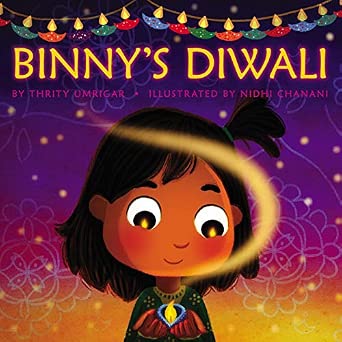 | Best for a Story-Led Diwali Read-Aloud | Topic indicated by title: Diwali | Named subject: Binny | Product description: Not provided | VIEW LATEST PRICE | See Our Full Breakdown |
| A Child’s Introduction to the Night Sky: The Story of the Stars, Planets, and Constellations—and How to Find Them |  | Best Overall for Actual Stargazing | Audience: Children | Topic: Night sky | Subjects: Stars, planets, and constellations | VIEW LATEST PRICE | See Our Full Breakdown |
| Dhruva: The Little Star Who Points the Way (Vedic Astronomy for Kids, Book 3) |  | Best for Vedic Astronomy Connections | Series: Vedic Astronomy for Kids | Series book: Book 3 | Featured subject: Dhruva | VIEW LATEST PRICE | See Our Full Breakdown |
| Astronomy Activity Book for Kids: 100+ Fun Ways to Learn About Space and Stargazing |  | Best for Hands-On Learners | Format: Activity book | Activity count: 100+ | Audience: Kids | VIEW LATEST PRICE | See Our Full Breakdown |
| Constellations for Kids: A Fun Guide to Stars, the Solar System, and Stargazing |  | Best for a First Night-Sky Introduction | Format: Children’s guide | Audience: Kids | Topics: Constellations, stars, and the solar system | VIEW LATEST PRICE | See Our Full Breakdown |
| Diwali astronomy books for kid | Audience | Format | ASIN |
|---|---|---|---|
| Stars and Planets: Gods in the | — | — | B072KQ3F7D |
| Twinkling in the Night Sky: Ve | Children | — | B0GCW5JY38 |
| Diwali Stories for Kids: Magic | Children | Book | B0HH4JDZKQ |
| Encyclopedia: Saur Mandal | Children | Encyclopedia set | 9353768446 |
| Arundhati: The Star of Loyalty | Children | — | B0HP8PS6TJ |
| Let’s Celebrate 5 Days of Diwa | Children | Not specified | — |
| The Curious Kid’s Book About D | Children | Picture book | — |
| Binny’s Diwali | Not specified | Not specified | — |
| A Child’s Introduction to the | Children | Not specified | — |
| Dhruva: The Little Star Who Po | Kids | Not specified | — |
| Astronomy Activity Book for Ki | Kids | Activity book | 0593435486 |
| Constellations for Kids: A Fun | Kids | Children’s guide | B0C1226CGF |
More Details on Our Top Picks
Stars and Planets: Gods in the Sky (Penguin Petit)
Stars and Planets: Gods in the Sky is the most direct fit here for families seeking a bridge between celestial subjects and Hindu cultural storytelling. Its title signals a connection between gods and objects in the sky, making it a possible conversation starter during Diwali, when lights and the night sky are part of the occasion. The available product information, however, gives no age range, illustrations, learning approach, or topic coverage, so I would not choose it as a stand-alone guide to identifying planets or constellations. Compared with A Child’s Introduction to the Night Sky, which is explicitly framed as a practical night-sky introduction, this is the more mythology-oriented choice. That distinction is its appeal and its limitation: families wanting clear astronomy instruction should pair it with a more explicitly educational sky guide.
Pros:- The title directly connects stars and planets with gods in the sky
- Its subject can support culturally grounded Diwali conversations
- Penguin Petit is identified as the imprint
- Offers a different angle from books focused on practical sky identification
Cons:- No description is available to confirm the book’s scope or teaching approach
- The age range, format, and illustration details are not provided
- The available information does not establish how much astronomy instruction it contains
Best for: Families looking for a culturally rooted starting point for conversations about gods, stars, and planets around Diwali
Not ideal for: Children who need a clearly described, step-by-step guide to astronomy or practical stargazing
- Title:Stars and Planets: Gods in the Sky
- Imprint:Penguin Petit
- Primary subjects:Stars, planets, and gods in the sky
- Product type:Book
- ASIN:B072KQ3F7D
- Age range:Not specified in the provided product data
Our verdict“Choose this for a mythology-linked introduction to celestial themes, but pair it with a practical astronomy guide if sky learning is the main goal.”
Twinkling in the Night Sky: Vedic Astronomy for Kids, Book 1
Twinkling in the Night Sky has the clearest role for families who want to begin with a dedicated children’s series about Vedic astronomy: it is identified as Book 1, rather than a later installment such as Arundhati: The Star of Loyalty. That order may help readers choose a natural entry point, though the product data does not confirm whether the books must be read sequentially. The description identifies its subject area but gives no details about particular celestial topics, illustrations, age suitability, or activities. Compared with Stars and Planets: Gods in the Sky, this title makes its Vedic astronomy focus explicit, while offering less information about its content. I would favor it for families interested in exploring that tradition through a series, not for readers who need a confirmed stargazing manual or a detailed account of what each chapter teaches.
Pros:- Explicitly introduces Vedic astronomy for children
- Book 1 designation gives it a clear starting-point role
- Series framing may help families find related titles
- Its focus is more specifically identified than that of some broadly titled options
Cons:- The available description gives no details about specific astronomy topics
- Age range, illustrations, and format are not provided
- The product data does not clarify whether reading the series in order is necessary
Best for: Families seeking an entry point to a children’s series specifically labeled as Vedic astronomy
Not ideal for: Buyers who need confirmed chapter topics, hands-on activities, or practical instructions for finding objects in the sky
- Series:Vedic Astronomy for Kids
- Book number:1
- Subject:Vedic astronomy
- Audience:Children
- Title:Twinkling in the Night Sky
- ASIN:B0GCW5JY38
Our verdict“Pick this as a possible first step into the Vedic Astronomy for Kids series, while choosing a more fully described guide for practical sky learning.”
Diwali Stories for Kids: Magical Tales Celebrating the Festival of Lights
Diwali Stories for Kids is the strongest choice in this group for festival context, not astronomy instruction. Its collection of magical tales rooted in Hindu folklore gives families a way to make a Diwali reading session about the festival’s stories and spirit. That can complement a night-sky book, but the description does not identify stars, planets, or stargazing as subjects. Compared with Twinkling in the Night Sky, which is explicitly about Vedic astronomy, this book offers the more direct celebration of Diwali and the weaker astronomy connection. I would include it in a Diwali-themed reading stack when folklore matters as much as science; I would skip it if the brief is specifically to teach children about celestial objects. The available details also do not identify its age range, illustrations, or story count.
Pros:- Directly celebrates Diwali and the Festival of Lights
- Stories are described as rooted in Hindu folklore
- Designed for children
- Can provide cultural context alongside a separate astronomy title
Cons:- The description does not identify astronomy as a subject
- No age range, story count, or illustration details are provided
- It cannot replace a book focused on planets, stars, or stargazing
Best for: Families choosing a Diwali read-aloud centered on Hindu folklore and the festival’s meaning
Not ideal for: Readers shopping specifically for astronomy lessons, celestial facts, or guided stargazing
- Format:Book
- Theme:Diwali and Hindu folklore
- Audience:Children
- Content type:Collection of magical stories
- Festival focus:Diwali, the Festival of Lights
- ASIN:B0HH4JDZKQ
Our verdict“Choose this for Diwali folklore and family storytime, not as the astronomy-teaching title in a child’s reading stack.”
Encyclopedia: Saur Mandal (Set of 6 Books) — Solar System for Children in Hindi
Encyclopedia: Saur Mandal stands apart through its two concrete distinctions: it is a six-book set and its solar-system subject is presented in Hindi. For households that want children to explore planets and related topics in Hindi, that language fit may matter more than a single-volume, English-language option such as A Child’s Introduction to the Night Sky. The set’s scope could also suit families who prefer several books over one broad introduction, but the source gives no contents list, reading level, or account of how the six books divide the material. It is an astronomy-focused pick rather than a Diwali folklore book, so its festival fit is through night-sky learning, not seasonal stories. I would choose it when Hindi and solar-system coverage are priorities, and hesitate if the child needs a clearly described beginner path.
Pros:- Focuses on the solar system
- Written for children
- Hindi-language content suits Hindi-reading households
- Six books offer a set format rather than a single volume
Cons:- The available data does not explain how the six books divide their topics
- No reading level, illustration style, or chapter details are provided
- The description does not indicate Diwali stories or a festival-specific connection
Best for: Hindi-speaking families seeking a multi-book introduction to the solar system for children
Not ideal for: Buyers who need an English-language book, a verified age level, or a detailed contents list before choosing
- Set size:6 books
- Language:Hindi
- Topic:Solar system
- Audience:Children
- Format:Encyclopedia set
- ASIN:9353768446
Our verdict“Choose this set for Hindi-language solar-system reading, but seek more content details if you need a defined beginner sequence.”
Arundhati: The Star of Loyalty (Vedic Astronomy for Kids, Book 5)
Arundhati: The Star of Loyalty pairs a named star with a character-centered theme, giving it a more specific hook than the broad introduction signaled by Twinkling in the Night Sky. Its placement as Book 5 makes it read like a later series selection, so I would favor it for a child already interested in Vedic Astronomy for Kids or for a family drawn to the loyalty theme. The available information does not say whether it stands alone, what astronomy concepts it explains, or how the story presents Arundhati. That uncertainty matters for new readers: Book 1 is the safer series entry point based on numbering alone. Compared with the Hindi solar-system set, this is narrower and more story-led by its title, while the set promises broader solar-system subject matter. Choose it for its focused theme, not as a confirmed full astronomy course.
Pros:- Connects the subject of Arundhati with a memorable loyalty theme
- Part of a children’s Vedic astronomy series
- Its specific title offers a distinct focus from a general night-sky introduction
Cons:- Book 5 numbering may make it less obvious as a first series choice
- The source does not describe its astronomy lessons or story structure
- Age range, format, and illustration details are not provided
Best for: Children already exploring the Vedic Astronomy for Kids series who are drawn to a story about Arundhati and loyalty
Not ideal for: First-time astronomy readers who want a broad, clearly described introduction or confirmed standalone content
- Series:Vedic Astronomy for Kids
- Book number:5
- Subject:Arundhati and loyalty
- Audience:Children
- Title:Arundhati: The Star of Loyalty
- ASIN:B0HP8PS6TJ
Our verdict“Choose this as a focused series follow-up for children interested in Arundhati and loyalty, rather than as a first, broad astronomy guide.”
Let’s Celebrate 5 Days of Diwali! (Maya & Neel’s India Adventure Series, Book 1)
This is a Diwali celebration book, not an astronomy guide. Its five-day focus may help children see the festival as a sequence of traditions rather than a single evening, giving families a natural starting point for a conversation about lamps, nightfall, and the sky. Compared with A Child’s Introduction to the Night Sky, it offers cultural context instead of practical guidance on finding stars and planets. That makes it a better companion for a Diwali-themed reading session than a stand-alone choice for astronomy learning. The listing identifies it as Book 1 in the Maya & Neel’s India Adventure series, which may appeal to readers who want a continuing story world. The tradeoff is clear: the supplied details do not establish astronomy content, age range, illustrations, or specific activities.
Pros:- Centers its subject on Diwali and its five-day celebration
- Places the book in the Maya & Neel’s India Adventure series
- Can provide cultural context alongside astronomy-focused reading
Cons:- The available product details do not confirm any astronomy content
- No age range, format details, or hands-on activities are specified
Best for: Families seeking a child-friendly introduction to Diwali’s five-day celebration to pair with a separate stargazing guide.
Not ideal for: Buyers looking for factual astronomy, constellation-finding instructions, or confirmed night-sky activities within the book.
- Series:Maya & Neel’s India Adventure
- Series book:Book 1
- Topic:Diwali
- Celebration span:Five days
- Audience:Children
- Format:Not specified
Our verdict“Choose this for a Diwali-centered family reading session, but pair it with a true sky guide if astronomy learning is the priority.”
The Curious Kid’s Book About Diwali: A Fun and Educational Picture Book
A picture-book format makes this the most straightforward Diwali introduction among these picks, especially for a child who is more likely to engage with a visual read-aloud than a reference guide. Its stated aim is to make learning about the Festival of Lights fun and educational, but the supplied information does not say that it teaches astronomy. That distinction matters: A Child’s Introduction to the Night Sky is the stronger choice for identifying stars, planets, and constellations, while this title is centered on Diwali itself. I would choose it to establish festival context before a family looks at the night sky together. The tradeoff is limited detail in the listing: no specific traditions, age guidance, or astronomy activities are confirmed, so buyers seeking a structured sky lesson should look elsewhere.
Pros:- Introduces children to Diwali
- Uses a picture-book format suited to shared reading
- Is described as both fun and educational
Cons:- The available description does not confirm astronomy topics or activities
- No specific age range or coverage of festival traditions is provided
Best for: Parents and educators who want a picture-book introduction to Diwali for children who benefit from visual, read-aloud learning.
Not ideal for: Families prioritizing constellation identification, planet facts, or a book with confirmed astronomy instruction.
- Topic:Diwali
- Also known as:Festival of Lights
- Format:Picture book
- Audience:Children
- Stated approach:Fun and educational
- Astronomy content:Not specified
Our verdict“Pick this for an accessible Diwali picture-book introduction, not as a substitute for a night-sky guide.”
Binny’s Diwali
Binny’s Diwali is the most story-oriented option here based on its title, making it a possible fit for families who would rather introduce the festival through a character-led book than a teaching guide. The available product information provides no description, so I can’t verify its plot, age suitability, format, or the traditions it covers. That uncertainty separates it from The Curious Kid’s Book About Diwali, which is explicitly described as an educational picture book, and from A Child’s Introduction to the Night Sky, whose astronomy scope is stated. For a Diwali astronomy roundup, this title works only as a cultural or narrative companion unless a fuller listing confirms sky-related material. Its main tradeoff is the evidence gap: buyers have less information to judge what a child will learn before choosing it.
Pros:- The title directly signals a Diwali focus
- A story-led approach may suit children who prefer narrative to reference material
- Could complement a separate astronomy guide such as A Child’s Introduction to the Night Sky
Cons:- No product description was supplied to verify plot or educational content
- Astronomy coverage, age range, and format are not specified
- The available details make comparison with more clearly described titles difficult
Best for: Readers who want a Diwali-titled story to share with children and are comfortable checking a fuller edition description before buying.
Not ideal for: Buyers who need confirmed astronomy instruction, a clear age fit, or specific details about the story and its content.
- Topic indicated by title:Diwali
- Named subject:Binny
- Product description:Not provided
- Format:Not specified
- Audience:Not specified
- Astronomy content:Not specified
Our verdict“Consider it as a possible Diwali story companion, but verify the contents before choosing it for astronomy learning.”
A Child’s Introduction to the Night Sky: The Story of the Stars, Planets, and Constellations—and How to Find Them
This is the clearest astronomy choice in the group: it introduces stars, planets, and constellations, then goes beyond explanation by helping children find them in the sky. That practical element makes it more useful for a family stepping outside after Diwali festivities than the festival-focused Let’s Celebrate 5 Days of Diwali!, whose supplied details don’t confirm astronomy instruction. Its scope also differs from Dhruva: The Little Star Who Points the Way, which is specifically framed around Vedic astronomy and a named figure. Choose this guide when broad, actionable night-sky learning matters more than festival storytelling or a particular cultural astronomy tradition. The tradeoff is that its stated focus is general astronomy, not Diwali; the available details also don’t confirm activity formats, age range, or how much guidance a beginner receives.
Pros:- Covers stars, planets, and constellations
- Includes guidance on finding objects in the night sky
- Offers broader practical astronomy than the Diwali-centered titles in this roundup
Cons:- The supplied description does not connect its content to Diwali
- No age range, activity list, or level of detail is specified
Best for: Families with school-age children who want to learn basic sky objects and try finding them during evening stargazing.
Not ideal for: Buyers seeking a Diwali story, festival traditions, or astronomy specifically presented through Vedic tradition.
- Audience:Children
- Topic:Night sky
- Subjects:Stars, planets, and constellations
- Practical guidance:How to find objects in the night sky
- Diwali content:Not specified
- Format:Not specified
Our verdict“Choose this for hands-on, general night-sky learning, and pair it with a Diwali book for festival context.”
Dhruva: The Little Star Who Points the Way (Vedic Astronomy for Kids, Book 3)
Dhruva offers the most specific cultural astronomy angle among these five books: its description names Vedic astronomy and centers the story on Dhruva. That makes it a more focused companion to Diwali than A Child’s Introduction to the Night Sky, which covers general sky objects and finding them, but the broader guide is the safer pick for practical stargazing. This title is Book 3 in the Vedic Astronomy for Kids series, so it may suit a child already following that sequence; the listing does not establish whether it works independently. Its tradeoff is scope: the available description gives no details on constellation-finding, specific astronomy concepts, or a Diwali connection. I would choose it for a culturally framed astronomy story, not as the roundup’s all-purpose sky reference.
Pros:- Introduces children to Vedic astronomy
- Centers the book on Dhruva, identified in the title as a star
- Belongs to a series for young readers
Cons:- The listing does not confirm how to identify stars or other objects in the sky
- No direct Diwali connection or independent-reading guidance is specified
- As Book 3, it may be less straightforward for readers who prefer to start a series at the beginning
Best for: Families interested in introducing children to Vedic astronomy through a story about Dhruva, especially readers already exploring the series.
Not ideal for: Beginners who need confirmed practical stargazing instructions, a general astronomy overview, or explicit Diwali coverage.
- Series:Vedic Astronomy for Kids
- Series book:Book 3
- Featured subject:Dhruva
- Topic:Vedic astronomy
- Audience:Kids
- Format:Not specified
Our verdict“Choose this for a story-based Vedic astronomy perspective, but select A Child’s Introduction to the Night Sky for broader stargazing guidance.”
Astronomy Activity Book for Kids: 100+ Fun Ways to Learn About Space and Stargazing
For a Diwali evening that inspires more than a quick look at the stars, this book’s 100+ activities give children a hands-on route into space and stargazing. Its activity-first focus sets it apart from Constellations for Kids, which is framed as an introduction to astronomy topics rather than a large collection of activities. That makes this the stronger fit for kids who enjoy doing as well as reading, though the available product details do not identify the activities or their difficulty. I’d choose it for families who want plenty of ways to extend a night-sky outing, but not for buyers seeking a clearly described guide to constellations or a specifically Diwali-themed book. The large activity count is appealing, yet the limited content information makes it harder to judge how well each activity suits a child’s age or needs.
Pros:- Offers more than 100 activities for varied hands-on learning.
- Covers both space and stargazing.
- Activity-led format can complement an outdoor night-sky outing.
Cons:- Available product details do not describe the activities or their difficulty.
- The provided information does not establish a Diwali-specific theme.
- The activity count alone does not show how much guidance or background explanation each activity includes.
Best for: Families looking for a space-and-stargazing activity book to give curious children plenty of ways to learn beyond a single reading.
Not ideal for: Buyers who need a detailed contents list, age guidance, or a book explicitly centered on Diwali traditions and astronomy.
- Format:Activity book
- Activity count:100+
- Audience:Kids
- Topics:Space and stargazing
- ASIN:0593435486
- Specific activity details:Not provided
Our verdict“Choose this for a child who prefers doing activities alongside learning about space, but look elsewhere if you need clear activity details or a Diwali-focused story.”
Constellations for Kids: A Fun Guide to Stars, the Solar System, and Stargazing
This is the more direct pick for children starting with the night sky: it introduces constellations, stars, and the solar system while encouraging stargazing. For a Diwali celebration that includes looking upward together, that broad subject mix offers a simple way to connect curiosity about the sky with basic astronomy. Compared with Astronomy Activity Book for Kids, this book is presented as a guide rather than a collection of 100+ activities, so it may suit readers who want an introductory overview more than a task-led experience. The tradeoff is that the supplied details do not specify age range, depth, illustrations, or practical sky-finding instructions. I’d pick it for a child who wants to learn what they’re looking at, but skip it if you need a detailed observing manual or a book with a confirmed Diwali connection.
Pros:- Introduces several core astronomy topics in one book.
- Connects learning with curiosity about the night sky.
- Guide format offers a contrast to activity-led options.
Cons:- Available details do not state the depth or structure of the explanations.
- No age range or reading-level information is provided.
- The supplied description does not confirm practical constellation-finding instructions or a Diwali theme.
Best for: Young readers beginning to learn about stars, constellations, the solar system, and stargazing with an adult.
Not ideal for: Families seeking a hands-on activity collection, specific observing instructions, or a book explicitly tied to Diwali.
- Format:Children’s guide
- Audience:Kids
- Topics:Constellations, stars, and the solar system
- Stargazing focus:Encourages night-sky exploration
- Age range:Not provided
- ASIN:B0C1226CGF
Our verdict“Choose this as an introductory astronomy guide for a child curious about the night sky, rather than for a family seeking a large activity collection.”

How We Picked
I compared these books by how well they serve the combined purpose behind this search: helping children connect Diwali, Indian cultural stories, or the festival’s night-sky imagery with age-appropriate learning. I gave more weight to titles that make a clear connection between astronomy and cultural context, then considered whether the book offers accessible explanations, useful illustrations or activities, and a format suited to its likely reader. I also distinguished books about Diwali celebrations from books that teach astronomy without a festival focus.
The ranking reflects that distinction rather than treating every title as interchangeable. The Vedic astronomy books and Stars and Planets: Gods in the Sky lead for cultural and celestial overlap; practical sky guides and the activity book rank higher for learning by doing. Diwali storybooks remain worthwhile for festival reading, but they are less direct choices for astronomy. I also factored in series positioning, Hindi-language content, and the difference between a single picture book and a multi-book set, while avoiding claims about specific features not established by the titles.
| Diwali astronomy books for kid | Audience | Format |
|---|---|---|
| Stars and Planets: Gods in the | — | — |
| Twinkling in the Night Sky: Ve | Children | — |
| Diwali Stories for Kids: Magic | Children | Book |
| Encyclopedia: Saur Mandal | Children | Encyclopedia set |
| Arundhati: The Star of Loyalty | Children | — |
| Let’s Celebrate 5 Days of Diwa | Children | Not specified |
| The Curious Kid’s Book About D | Children | Picture book |
| Binny’s Diwali | Not specified | Not specified |
| A Child’s Introduction to the | Children | Not specified |
| Dhruva: The Little Star Who Po | Kids | Not specified |
| Astronomy Activity Book for Ki | Kids | Activity book |
| Constellations for Kids: A Fun | Kids | Children’s guide |
Factors to Consider When Choosing Diwali Astronomy Books For Kids
Before choosing, decide whether you want a book that teaches astronomy, shares Diwali traditions, or bridges the two. Those aims overlap, but a festival story is not automatically a sky guide, and an astronomy reference may not mention Diwali at all. These checks can help you match the book to the occasion and the child.
Choose the cultural connection you actually want
“Diwali astronomy” can mean several things: stories that connect stars with Indian traditions, astronomy shared during the festival, or a Diwali story purchased alongside a general sky guide. Decide which meaning matters most before comparing titles. A Vedic astronomy story may offer more cultural and celestial overlap than a book about the festival’s customs, while a general constellation guide may be more useful for outdoor observation. A common mismatch is expecting every Diwali picture book to teach planets or stars. If the book is a gift, think about whether the child will enjoy mythology, festival celebrations, or factual sky topics on an ordinary day too.
Match the format to how the child likes to learn
Some children prefer a story they can hear at bedtime; others want to flip through facts, follow a sequence, or complete activities. A narrative can make cultural ideas approachable, but it may not provide step-by-step stargazing instruction. Activity books invite participation, though they ask for more attention and may work best with an adult nearby. Illustrated guides can support browsing, but a dense reference format may be a poor fit for a child who wants a quick read-aloud. Ask whether the book is for a one-time festival moment or a resource the child can return to throughout the year. That answer can matter more than choosing the broadest subject coverage.
Separate sky knowledge from sky-finding skills
A book can explain stars and planets without teaching a child how to locate them outdoors. If your aim is a family stargazing session, look for practical directions, recognizable patterns, and guidance suited to observing from your location. A story about a star can spark curiosity, but it may not replace a field guide. Conversely, a sky-finding guide may offer little connection to Diwali’s cultural meaning. One frequent mistake is buying an astronomy title for a child who mainly wants a story about the holiday. Pick the main outcome first, then treat the other one as a bonus.
Check language and reading support
Language affects whether a child can read independently, share the book with family, or follow along during a read-aloud. The Saur Mandal set is explicitly in Hindi, a useful distinction for households seeking Hindi-language material. For other titles, check the edition and language before ordering rather than assuming it from a series name or subject. Also think about who will read with the child: a more advanced astronomy book may work well with an adult even if it is not an easy solo read. A younger reader may get more from a simple narrative than from a larger volume with many topics. Matching reading support to the child can prevent a well-intended gift from sitting unused.
Decide whether a set or a single title makes more sense
A set can offer more material and let a child explore a subject over time, but it is a larger commitment than a single book. A one-book purchase is easier when you know the child’s interests are narrow or the book is meant for a specific celebration. Before choosing a set, consider whether the child enjoys reading across multiple volumes and whether the subject will hold attention beyond Diwali. More pages do not automatically mean a better fit; a focused picture book can be the more useful choice for a short family read. For ongoing learning, pair a cultural story with an astronomy guide rather than expecting one title to meet every need.
Frequently Asked Questions
Are Diwali storybooks a good choice if my child specifically wants to learn about stars?
They can introduce the festival and its stories, but a Diwali-focused title is not necessarily an astronomy lesson. For star or planet learning, look for an explicit connection to celestial topics or pair a festival story with a sky guide. In this roundup, the Vedic astronomy titles and Stars and Planets: Gods in the Sky are more aligned with cultural and celestial themes. General Diwali books can still be a meaningful read-aloud, especially when the goal is festival context. Choose based on whether astronomy is the main purpose or an added interest.
Should I choose a Vedic astronomy story or a practical stargazing guide?
Choose a Vedic astronomy story if cultural narratives are likely to keep your child engaged with the subject. Choose a practical guide if the main goal is learning about constellations, planets, or observing the sky. The two approaches serve different purposes, so one does not fully replace the other. A child who enjoys both could read a story first and use a guide when looking outdoors. If you are unsure, start with the format the child already enjoys—stories, facts, or activities.
Can one book work for both Diwali reading and year-round astronomy learning?
Some titles make a stronger bridge between cultural stories and celestial topics, while broad astronomy guides are more useful beyond the festival. Twinkling in the Night Sky is a direct choice for a Vedic astronomy connection, whereas A Child’s Introduction to the Night Sky emphasizes the wider sky. A Diwali storybook may be more tied to holiday reading and less suited to ongoing astronomy study. Consider whether the child will want to revisit the subject in other seasons. If both goals matter equally, two complementary books can be a better fit than expecting one title to cover everything.
Is the Hindi Saur Mandal set a better buy than a single English astronomy book?
That depends on the language the child can read or enjoys hearing and whether a set fits your intended use. Saur Mandal is identified as a six-book solar-system set in Hindi, which makes it a distinct option for Hindi-language learning. A single English guide may be easier for a child who reads primarily in English or wants a focused introduction. Compare the language and format before weighing the number of books. The set is not automatically the better choice just because it contains multiple volumes.
What should I pick for a child who loses interest in books without activities?
Start with an activity-centered option such as Astronomy Activity Book for Kids, which is framed around hands-on learning. A practical sky guide may also hold attention if the child can use it alongside real observations. Story-led Vedic astronomy books can work for children who enjoy narratives, but they may not provide the same activity-first experience. Check whether an adult can join in, since shared activities can help a child stay engaged. If Diwali content is also a priority, pair an activity book with a short festival story rather than assuming one title will meet both needs.
Conclusion
For the strongest blend of cultural context and astronomy, I recommend Twinkling in the Night Sky: Vedic Astronomy for Kids, Book 1 as the best overall match for this roundup. For a more focused value pick, Stars and Planets: Gods in the Sky offers another mythology-and-sky route without requiring a multi-book set. A true premium choice depends on what you mean by premium: choose the Saur Mandal six-book set for Hindi-language solar-system reading, not simply for having more volumes. For beginners who need approachable sky knowledge, start with A Child’s Introduction to the Night Sky; for hands-on learners, pick Astronomy Activity Book for Kids. If the child mainly wants Diwali celebrations and stories, choose one of the festival-focused books, such as Let’s Celebrate 5 Days of Diwali! or Binny’s Diwali, and add an astronomy title only if stargazing is part of the plan.