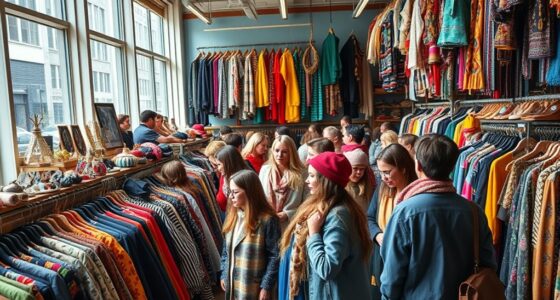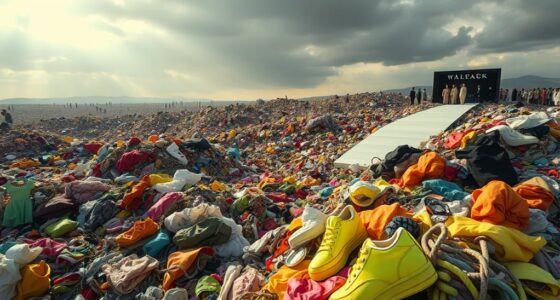
Fashion overproduction remains a major issue because brands focus on quick turnover and constantly launching new styles, encouraging mass waste. They often prioritize quantity over quality, leading to mountains of unsold and discarded garments that harm the environment. Unsustainable materials and fast fashion trends just fuel the cycle of overproduction and pollution. If you want to understand how you can make a difference and what sustainable changes are possible, there’s more to discover here.

Prime made for students and young adults
- Fast, free delivery for dorm and study essentials
- Prime Video and Amazon Music included
- Member-only deals
Key Takeaways
- Rapid fashion cycles encourage quick production and disposal, leading to excessive waste and environmental harm.
- Market pressures prompt brands to overproduce styles that quickly go out of fashion.
- Use of unsustainable synthetic materials fuels overproduction and environmental pollution.
- Industry focus on quantity over quality results in high unsold inventory and waste.
- Consumer demand for low prices and new trends sustains overproduction and fast fashion practices.

Fashion overproduction has become a pressing issue as brands prioritize rapid turnover to meet consumer demand, often at the expense of sustainability. This relentless cycle leads to mountains of unused garments, many of which end up in landfills, contributing to environmental degradation. You might not realize it, but the fast-paced nature of the industry pushes companies to mass-produce clothing with little regard for the long-term impact. To keep costs low and profit margins high, many brands turn to inexpensive, unsustainable materials, further fueling waste and pollution. The overemphasis on quantity over quality encourages consumers to buy more than they need, creating a culture of disposability that’s hard to break.
One key reason overproduction persists is the industry’s focus on quick fashion trends. Retailers chase after the latest styles, often copying runway looks and releasing collections at breakneck speeds. This pressure to constantly produce new designs leads to overstocked inventories that many brands can’t sell before styles go out of fashion. To mitigate losses, companies may destroy unsold stock or discard it improperly, adding to the environmental toll. Meanwhile, consumers are enticed by low prices and frequent new arrivals, reinforcing the cycle of overconsumption. You may not think about it, but your desire for fast, affordable fashion is part of a larger system that promotes overproduction. Additionally, the use of unsustainable materials by many brands exacerbates environmental damage, making the problem even more complex. Choosing sustainable materials can help lessen the industry’s environmental impact and shift the focus toward more eco-friendly practices.
Addressing this issue requires a shift towards sustainable materials and ethical manufacturing practices. When brands prioritize sustainable materials, they reduce reliance on environmentally damaging resources like synthetic fibers derived from fossil fuels. Instead, they opt for eco-friendly options such as organic cotton, hemp, or recycled fabrics, which lessen the industry’s environmental footprint. Ethical manufacturing also plays a crucial role; it ensures that workers are paid fair wages and work in safe conditions, which is often overlooked in mass production. When companies commit to ethical manufacturing, they’re less likely to produce excess garments irresponsibly or dispose of surplus waste improperly.
Ultimately, breaking free from the cycle of overproduction demands conscious consumer choices and industry accountability. By supporting brands that focus on sustainable materials and ethical manufacturing, you help drive change. When you buy smarter—favoring quality over quantity and avoiding impulsive purchases—you contribute to reducing waste and encouraging brands to produce responsibly. The fight against overproduction is complex, but your awareness and actions can make a difference in creating a more sustainable future for fashion.
As an affiliate, we earn on qualifying purchases.
Frequently Asked Questions
How Does Fast Fashion Influence Consumer Behavior?
Fast fashion influences your consumer habits by encouraging you to buy more clothes at a rapid pace, often driven by constantly changing trends. It promotes a mindset of disposability, making you less likely to value quality or longevity. As a result, you may develop habits of frequent purchasing, quick disposal, and a desire for the latest styles, all of which contribute to overproduction and environmental waste.
What Are the Environmental Impacts of Overproduction?
Imagine you’re in a Victorian factory, overwhelmed by textile waste and water pollution. Overproduction harms the environment by generating massive textile waste that ends up in landfills, and water pollution from dyeing processes contaminates ecosystems. You contribute to this cycle when brands produce more than needed, wasting resources and polluting water sources. Reducing overproduction helps preserve our planet’s health and minimizes these destructive environmental impacts.
Who Is Responsible for Addressing Overproduction?
You play a vital role in addressing overproduction by advocating for corporate accountability and supporting policy reform. Companies must take responsibility for sustainable practices, but consumers can push for transparency and eco-friendly initiatives. By choosing ethical brands and demanding stricter regulations, you help drive change. Your awareness and actions directly influence industry standards, encouraging brands to reduce excess production and minimize environmental harm.
How Can Consumers Reduce Fashion Waste?
You can cut down on fashion waste by embracing sustainable choices. Did you know that over 92 million tons of clothing are discarded annually? To make a difference, consider clothing donation to give garments a second life. Also, explore upcycling techniques to transform old clothes into new, stylish pieces. These simple actions reduce waste, extend your wardrobe’s lifespan, and help combat overproduction’s environmental impact.
Are There Sustainable Alternatives to Overproduction?
Yes, sustainable materials and a circular economy offer alternatives. You can support brands using eco-friendly fabrics like organic cotton or recycled fibers. Look for companies embracing circular economy principles, such as recycling garments into new clothing or designing for durability and reuse. By choosing these options, you help reduce overproduction, lessen environmental impact, and promote a more sustainable fashion industry. Your choices can make a significant difference in combating overproduction.
As an affiliate, we earn on qualifying purchases.
Conclusion
Just as Icarus flew too close to the sun, overshooting our limits with fashion’s endless cycle, you have the power to choose differently. By questioning what’s behind those shiny new trends and embracing mindful consumption, you can help prevent fashion’s wings from melting. Remember, true style isn’t about excess but about meaning. Like the phoenix rising from its ashes, your conscious choices can ignite a more sustainable and stylish future for all.
As an affiliate, we earn on qualifying purchases.
As an affiliate, we earn on qualifying purchases.
Fall Picks
fall essentials
As an affiliate, we earn on qualifying purchases.