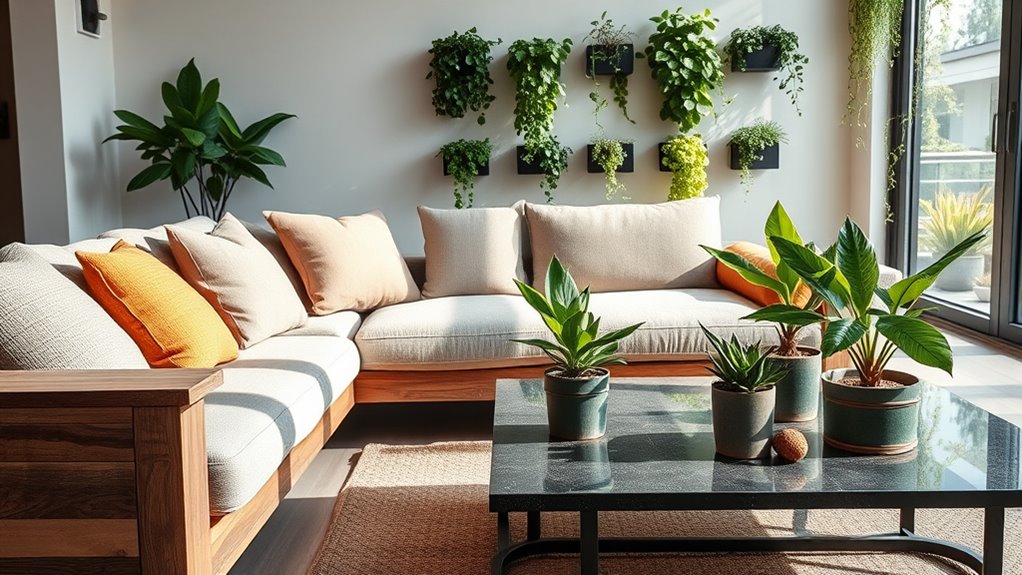

Choosing eco-friendly furniture made from sustainable materials helps you reduce your environmental impact while creating a healthier, stylish home. Recycled wood, bamboo, cork, and recycled metals are excellent options that lower deforestation and conserve resources. Natural finishes like oils, waxes, and water-based lacquers also minimize indoor pollutants. By opting for these eco-conscious choices, you support responsible manufacturing and add unique character to your space. Keep exploring to discover how these materials can transform your home sustainably.
Key Takeaways
- Recycled wood reduces demand for virgin timber, helping prevent deforestation and promoting sustainable forest management.
- Natural, biodegradable finishes like plant-based oils and waxes minimize indoor VOC emissions and environmental impact.
- Materials such as bamboo, cork, and recycled metals offer eco-friendly alternatives that conserve resources and lower carbon footprints.
- Choosing furniture with sustainable finishes and materials supports healthier indoor air quality and environmentally responsible practices.
- Eco-friendly furniture combines durability, unique character, and sustainability, contributing to both home aesthetics and environmental preservation.
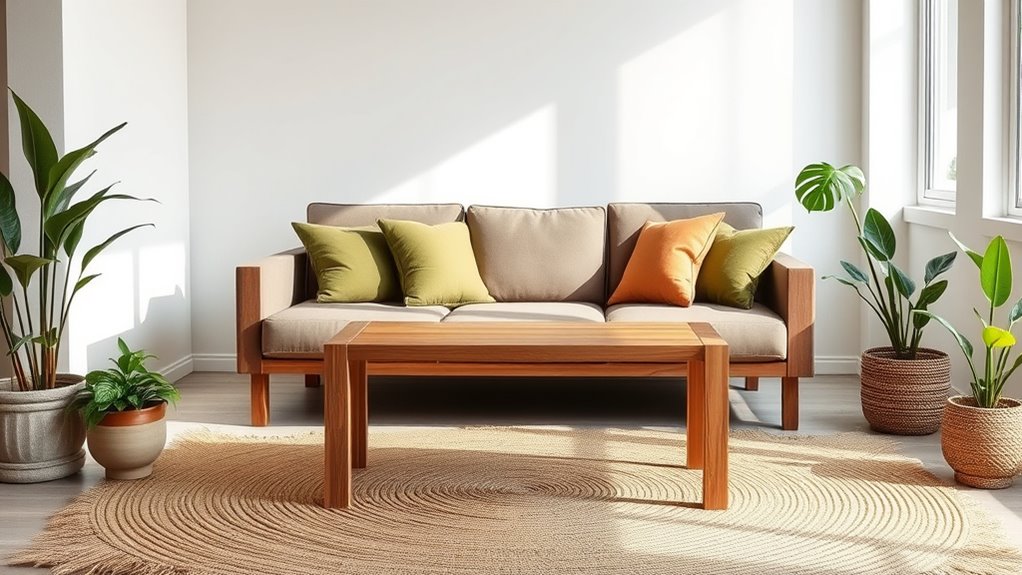
Have you ever wondered how your furniture choices impact the environment? Every piece you bring into your home has a story, from how it’s made to what happens after you’re done with it. Choosing eco-friendly furniture isn’t just about style; it’s about making mindful decisions that support sustainability. One key aspect is opting for materials like recycled wood. Instead of harvesting new timber, recycled wood uses salvaged or reclaimed wood from old furniture, barns, or shipping pallets. This approach reduces the demand for virgin timber, helping preserve forests and cut down on deforestation. Recycled wood also adds character and uniqueness to your furniture, often showcasing a weathered, rustic look that can’t be replicated with new materials. It’s a smart choice that combines durability with environmental responsibility.
Another important factor is the finishes used on eco-friendly furniture. Conventional finishes often contain harmful chemicals like volatile organic compounds (VOCs), which can off-gas into your home and contribute to air pollution. To combat this, look for furniture with biodegradable finishes. These finishes are made from natural, plant-based ingredients that break down safely over time, minimizing environmental impact. Biodegradable finishes also help maintain good indoor air quality, making your home healthier for you and your family. Many manufacturers now offer options like natural oils, waxes, or water-based lacquers that are free from toxic chemicals. When you choose furniture with biodegradable finishes, you’re not only supporting sustainable practices but also ensuring that your living space remains safe and non-toxic.
In addition, some eco-friendly furniture incorporates sustainable materials like bamboo, cork, or recycled metals, further reducing environmental impact. By selecting furniture made from recycled wood and finished with biodegradable products, you’re making a conscious effort to reduce waste and pollution. These choices help lower your carbon footprint, conserve natural resources, and promote ethical manufacturing processes. It’s a simple step that aligns your home with eco-friendly principles without sacrificing style or comfort. Plus, furniture crafted from recycled materials often features a unique, handcrafted appeal, adding character and charm to your space. When you opt for biodegradable finishes, you’re also supporting innovations in green chemistry that prioritize health and environmental safety.
In the end, being mindful of your furniture’s materials and finishes means you’re contributing to a healthier planet while creating a cozy, stylish home. Small changes like choosing recycled wood and biodegradable finishes can have a big ripple effect, encouraging more sustainable practices in the furniture industry. So, next time you’re shopping for new pieces, consider how these eco-friendly options can make a difference—not just in your home, but for the environment as a whole.

Novilla Queen Size Mattress, 12 inch Gel Memory Foam Mattress for a Cool Sleep & Pressure Relief, Medium Firm Feel with Motion Isolating, Bliss
General Note: Please allow 24 - 72 hours for your Mattress to regain its full shape. Any memory...
As an affiliate, we earn on qualifying purchases.
Frequently Asked Questions
Are Eco-Friendly Furniture Options More Cost-Effective Long-Term?
Yes, eco-friendly furniture options can be more cost-effective long-term. While the initial cost might be higher, you’ll benefit from cost savings through durability and lower maintenance needs. Plus, you reduce environmental impact by choosing sustainable materials, which often last longer and are better for the planet. Over time, these benefits add up, making eco-friendly furniture a smart investment that saves you money and helps the environment.
How Can I Verify if Furniture Is Truly Sustainable?
You can verify if furniture is truly sustainable by checking for certification standards like FSC or Greenguard, which ensure eco-friendly practices. Additionally, ask about material sourcing—look for furniture made from responsibly harvested or recycled materials. Don’t hesitate to request transparency from manufacturers about their supply chains. This way, you make certain your furniture aligns with genuine sustainability principles and reduces environmental impact.
What Are the Maintenance Needs of Eco-Friendly Furniture?
You should regularly follow cleaning routines suited for eco-friendly furniture, like gentle wiping with a damp cloth and avoiding harsh chemicals. To keep it in top shape, watch for repair requirements such as loose joints or scratches, and address them promptly with eco-friendly repair products. Proper maintenance not only preserves its sustainability but also extends its lifespan, ensuring your eco-friendly furniture remains beautiful and functional for years.
Do Eco-Friendly Materials Affect Furniture Durability?
Eco-friendly materials can affect furniture durability, but many are designed for long-lasting material longevity. While some sustainable options may seem less durable initially, choosing high-quality, responsibly sourced materials guarantees your furniture withstands daily wear. Plus, eco-friendly materials often have a lower environmental impact, making your choice beneficial for the planet. With proper care, eco-friendly furniture can be just as durable as traditional pieces, providing lasting value while supporting sustainability.
Can Eco-Friendly Furniture Be Customized Easily?
Sure, eco-friendly furniture can be customized easily—who knew sustainability meant endless design options? You’ll love the modification flexibility, letting you tweak pieces to fit your style perfectly. It’s almost ironic how choosing eco-friendly materials opens up more possibilities, not fewer. So, go ahead, customize with confidence, knowing your sustainable furniture can adapt as your tastes evolve, all while making a positive impact.

Awara Natural Hybrid Full Mattress 10 Inch - Certified Organic Natural Latex - Sustainable New Zealand Wool - Fiberglass-Free - 365-Night Trial
365-NIGHT HOME TRIAL & LIFETIME WARRANTY - Our industry-leading trial period and warranty starts the day your Awara...
As an affiliate, we earn on qualifying purchases.
Conclusion
By choosing eco-friendly furniture, you’re making a positive impact on the environment while enhancing your home’s style. Imagine replacing your old dining table with a handcrafted piece made from reclaimed wood—beautiful, durable, and sustainable. Not only will you enjoy a unique piece, but you’ll also contribute to reducing waste and conserving resources. Every small choice counts, so embrace eco-friendly options and transform your space into a greener, more stylish sanctuary.
Awara Natural Hybrid Queen Mattress 10 Inch - Certified Organic Natural Latex - Sustainable New Zealand Wool - Fiberglass-Free - 365-Night Trial
365-NIGHT HOME TRIAL & LIFETIME WARRANTY - Our industry-leading trial period and warranty starts the day your Awara...
As an affiliate, we earn on qualifying purchases.
![Zinus 12 Inch Queen Green Tea Memory Foam Mattress [New Version], Fiberglass Free, Medium Firm Feel, Zoned Pressure Relief, Certified Safe Foams & Fabric, Mattress in A Box](https://m.media-amazon.com/images/I/41r5AOFPG0L._SL500_.jpg)
Zinus 12 Inch Queen Green Tea Memory Foam Mattress [New Version], Fiberglass Free, Medium Firm Feel, Zoned Pressure Relief, Certified Safe Foams & Fabric, Mattress in A Box
ZINUS GREEN TEA MEMORY FOAM – Patented zoned pressure relief, medium firm feel, breathable knitted cover, and a...
As an affiliate, we earn on qualifying purchases.