
TL;DR
Japan’s Hayabusa2 spacecraft is set to conduct a flyby of the Torifune asteroid. This event is part of its broader mission to analyze near-Earth objects and gather data for future space exploration. The flyby is scheduled for the upcoming weeks, with scientific observations expected to provide new insights.
Japan’s Hayabusa2 spacecraft is preparing to perform a flyby of the Torifune asteroid, marking a significant milestone in its ongoing mission to explore near-Earth objects (NEOs). This flyby is confirmed to occur in the coming weeks, with scientists expecting to collect valuable data about the asteroid’s composition and orbit.
The Japan Aerospace Exploration Agency (JAXA) announced that Hayabusa2 will approach the Torifune asteroid at a close distance for scientific observations. The spacecraft, which previously returned samples from the asteroid Ryugu, is now focused on studying Torifune, a small NEO that orbits close to Earth. The flyby will involve high-resolution imaging and spectroscopic measurements, aiming to better understand the asteroid’s physical and chemical properties.
Officials from JAXA confirmed that the flyby is part of the agency’s broader efforts to gather data on NEOs, which pose potential impact risks and are considered valuable for future resource utilization. The event is scheduled for a specific date in the coming weeks, though the exact timing depends on orbital calculations and mission planning. The spacecraft’s onboard instruments are fully operational, and mission teams are finalizing the approach trajectory.
There is no indication that the flyby will involve any landing or sample collection; rather, it is a close observational pass designed to maximize scientific return. The data collected will contribute to ongoing research on asteroid composition and dynamics, with potential implications for planetary defense and space resource development.
Why the Torifune Flyby Is a Key Mission Milestone
The upcoming flyby of the Torifune asteroid by Hayabusa2 is significant because it enhances our understanding of near-Earth objects that could impact Earth. It also demonstrates Japan’s advancing capabilities in space exploration and asteroid research. The data gathered could inform future planetary defense strategies and support potential asteroid mining initiatives, making this event relevant for both scientific and practical reasons.

Gskyer Telescope, Telescopes for Adults, 80mm AZ Space Astronomical Refractor Telescope Kids, Adults Astronomy, German Technology Scope
- High-Quality Refracting Optics: 80mm aperture with 400mm focal length
- Versatile Magnification Options: Includes 16X, 40X, 80X eyepieces and 3X Barlow lens
- Easy Object Location: 6*30 finder scope with mounting bracket and erect-image diagonal
As an affiliate, we earn on qualifying purchases.
As an affiliate, we earn on qualifying purchases.
Background on Hayabusa2 and Its Mission to Study NEOs
Launched in December 2014, Hayabusa2 was designed to study the asteroid Ryugu and return samples to Earth, which it successfully accomplished in 2020. Since then, the spacecraft has been repurposed for further missions, including the upcoming flyby of Torifune. NEOs like Torifune are objects that come close to Earth’s orbit and are of interest due to potential impact risks and scientific value. Japan’s space agency, JAXA, has prioritized asteroid exploration as part of its broader space exploration objectives, emphasizing planetary defense and resource utilization.
The spacecraft’s previous missions have provided valuable insights into asteroid composition, and this upcoming flyby continues Japan’s leadership in this field. The Torifune asteroid, a small NEO, was selected because of its orbit and scientific interest, offering an opportunity to observe a different class of asteroid than Ryugu.
“The upcoming flyby of Torifune will allow us to gather critical data on a near-Earth asteroid that has not been extensively studied before.”
— JAXA spokesperson

Celestron Cometron 7x50mm Astronomy Binoculars
- Ease of Use for Beginners: Simple and affordable for new astronomers
- 7x Magnification: Wide field of view for expansive sky viewing
- Large 50mm Objectives: Gather more light for brighter images
As an affiliate, we earn on qualifying purchases.
As an affiliate, we earn on qualifying purchases.
Remaining Questions About the Torifune Flyby
Details about the exact timing of the flyby, including the precise date and distance of closest approach, are still being finalized by mission planners. It is also unclear how much new data will be obtained, as the success of observations depends on spacecraft performance and orbital conditions. Additionally, the potential for unexpected technical issues or changes in schedule has not been ruled out, as with any space mission.
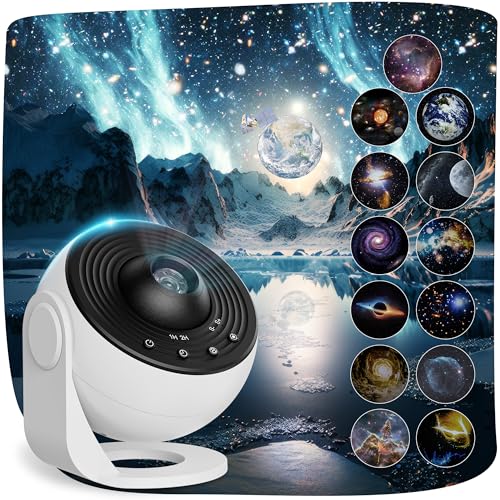
Galaxy Projector Night Light, 13-in-1 Star Projector for Bedroom, White
- 13 Space Scenes Included: Explore 13 celestial projections with brief descriptions
- Large Coverage Area: Projects up to 754 sq ft from 16.4 ft away
- Adjustable Focus: Sharpens images with a top focus knob
As an affiliate, we earn on qualifying purchases.
As an affiliate, we earn on qualifying purchases.
Next Steps After the Flyby Event
Following the flyby, JAXA will analyze the data collected by Hayabusa2’s instruments. The agency plans to publish initial findings within months, contributing to ongoing research on NEOs. The spacecraft is also expected to remain active for further observation missions or to prepare for its next operational phase, depending on mission priorities and technical status.

Space Telescope Building Set with Lights 995PCS Space Exploration Model Kit, Solar System Telescope Building Toy for Adults & Teens, STEM Science Gift for Space Lovers Age 8+
- Design: Steampunk telescope-inspired design with gears
- Mechanical System: Interactive gear-driven linkage for movement
- Lighting: Built-in LED lights for illumination
As an affiliate, we earn on qualifying purchases.
As an affiliate, we earn on qualifying purchases.
Key Questions
What is the purpose of Hayabusa2’s flyby of Torifune?
The flyby aims to collect high-resolution images and spectroscopic data to study the asteroid’s physical and chemical properties, enhancing scientific understanding of near-Earth objects.
When is the flyby scheduled to occur?
The exact date has not been publicly confirmed but is expected within the upcoming weeks, depending on orbital calculations and mission planning.
Will Hayabusa2 land on the asteroid or collect samples during this flyby?
No, the event is solely a close observational pass; no landing or sample collection is planned for this phase.
What are the scientific benefits of studying Torifune?
Studying Torifune will improve understanding of asteroid composition, orbit dynamics, and potential impact risks, which are important for planetary defense and future resource utilization.
What happens after the flyby?
JAXA will analyze the collected data and publish findings. The spacecraft may continue with additional observation missions or prepare for future activities based on mission results.
Source: hn