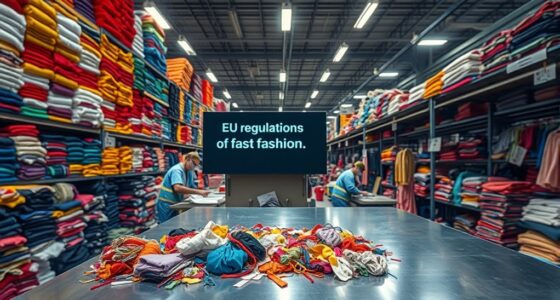

Many fashion brands are committed to reaching net-zero carbon emissions by 2030, aiming to reduce their environmental impact considerably. They’re investing in sustainable fabrics, improving supply chain transparency, and adopting innovative technologies to track and lower emissions. By supporting these brands, you can play a part in driving industry change toward sustainability. If you want to learn more about how these efforts are shaping a greener future, keep exploring these initiatives.
Key Takeaways
- Many fashion brands are committing to achieve net-zero emissions by 2030 through sustainable practices.
- These brands are investing in innovative technologies to enhance supply chain transparency and reduce carbon footprints.
- Adoption of sustainable fabrics and material innovations helps lower resource use and greenhouse gas emissions.
- Industry initiatives promote accountability and partnerships focused on sustainable practices and net-zero goals.
- Consumer support for eco-conscious brands accelerates industry-wide efforts toward a more sustainable fashion future.

The fashion industry considerably contributes to global carbon emissions, making it one of the largest polluters worldwide. As a conscious consumer, you might wonder how brands are addressing this environmental impact and what steps they’re taking toward sustainability. One major focus is on adopting sustainable fabrics—materials that reduce reliance on traditional, resource-intensive textiles. These include organic cotton, hemp, Tencel, and recycled fibers, which help lower water consumption, chemical usage, and greenhouse gas emissions. When brands prioritize sustainable fabrics, they’re actively reducing their overall carbon footprint and moving closer to their net-zero goals.
Another critical element in this shift is supply chain transparency. You may not realize how complex and opaque many fashion supply chains are, often involving multiple countries and numerous intermediaries. However, brands committed to sustainability are increasingly making efforts to trace their supply chains from raw material sourcing to finished products. This transparency allows you, as a consumer, to see exactly where and how your clothes are made. It also encourages brands to enforce stricter environmental standards and fair labor practices, ensuring that every step in the process minimizes environmental harm. Transparency helps identify areas where emissions can be cut, such as reducing transportation distances or switching to renewable energy sources in factories. Additionally, innovations like sustainable fabrics are crucial in lowering the industry’s overall environmental impact.
Supply chain transparency helps reduce emissions by enforcing environmental standards and pinpointing areas for sustainable improvements.
By focusing on sustainable fabrics and supply chain transparency, brands are not only reducing their carbon footprint but also building trust with environmentally conscious consumers like you. You can support companies that openly share their sustainability strategies and progress, knowing that your purchasing decisions contribute to a more sustainable fashion industry. Many brands are investing in innovative technology and partnerships to improve their supply chain visibility, which in turn promotes accountability and continuous improvement. As a result, you’re empowered to make informed choices that align with your values.
While the journey toward net-zero emissions by 2030 is ambitious, these initiatives demonstrate real progress. Sustainable fabrics reduce emissions at the source, and transparent supply chains ensure accountability for environmental impact throughout the production process. Your role as a consumer becomes even more crucial when you choose to support brands that prioritize these practices. Every purchase becomes a statement against fast fashion’s environmental toll, encouraging the industry to adopt more sustainable, responsible practices. Ultimately, reducing the fashion carbon footprint is a collective effort, and by paying attention to these key areas, you help drive meaningful change in an industry that’s long needed to transform.
Frequently Asked Questions
How Do Brands Measure Their Overall Carbon Footprint Accurately?
You can measure your overall carbon footprint accurately by conducting thorough supply chain assessments and applying robust carbon accounting methods. Track emissions from raw material sourcing to manufacturing, transportation, and retail. Use standardized tools and data collection processes to guarantee consistency. Regularly update your data, identify emission hotspots, and set reduction targets. This approach helps you understand your true impact and progress toward your net-zero goals effectively.
What Are the Biggest Challenges in Achieving Net-Zero Fashion?
You face major challenges in achieving net-zero fashion, especially with supply chain complexities that make it hard to track and reduce emissions consistently. Additionally, consumer awareness plays a vital role; if customers don’t prioritize sustainability, brands may struggle to justify costly changes. Balancing operational adjustments with shifting consumer expectations and managing complex global supply chains makes reaching net-zero a difficult, ongoing process.
How Does Consumer Behavior Impact Brands’ Sustainability Goals?
Your choices greatly impact brands’ sustainability goals. When you prioritize conscious consumer awareness, you push brands to produce eco-friendly options. Your purchasing decisions can propel brands toward net-zero targets or perpetuate pollution. By opting for sustainable styles and supporting responsible brands, you drive demand for greener practices. Your mindful movements motivate brands to innovate, invest, and implement impactful initiatives, helping transform the fashion industry’s future into a more sustainable, stylish, and socially responsible landscape.
Are There Specific Regions Leading in Sustainable Fashion Initiatives?
You’ll notice regional leadership varies in sustainable fashion initiatives due to geographic trends. Europe, especially Scandinavia, leads with innovative eco-friendly practices and strict regulations. North America shows strong momentum, driven by consumer demand and corporate commitments. Asia, particularly Japan and South Korea, is rapidly adopting sustainable practices, while Africa and Latin America are emerging markets with growing eco-conscious efforts. Your choices can support these regions’ progress toward more sustainable fashion.
What Technological Innovations Are Helping Reduce Fashion-Related Emissions?
You might think change takes forever, but tech innovations are speeding things up. You can now choose sustainable fabrics made from recycled materials and eco-friendly dyes that cut emissions considerably. These advancements reduce water and energy use, making fashion greener. By embracing these innovations, you help lower your carbon footprint and support brands committed to sustainability. Together, you’re part of a movement toward a cleaner, healthier planet.
Conclusion
As you watch brands chase net-zero goals, remember they’re planting seeds in the earth’s garden. Every step toward sustainability is like tending a fragile sapling, promising a greener future. Your choices, like sunlight and water, nourish this growth. Together, we can be the wind guiding these efforts, helping them flourish. Keep your eye on the horizon—because in this shared journey, every small action blooms into a forest of change.