TL;DR
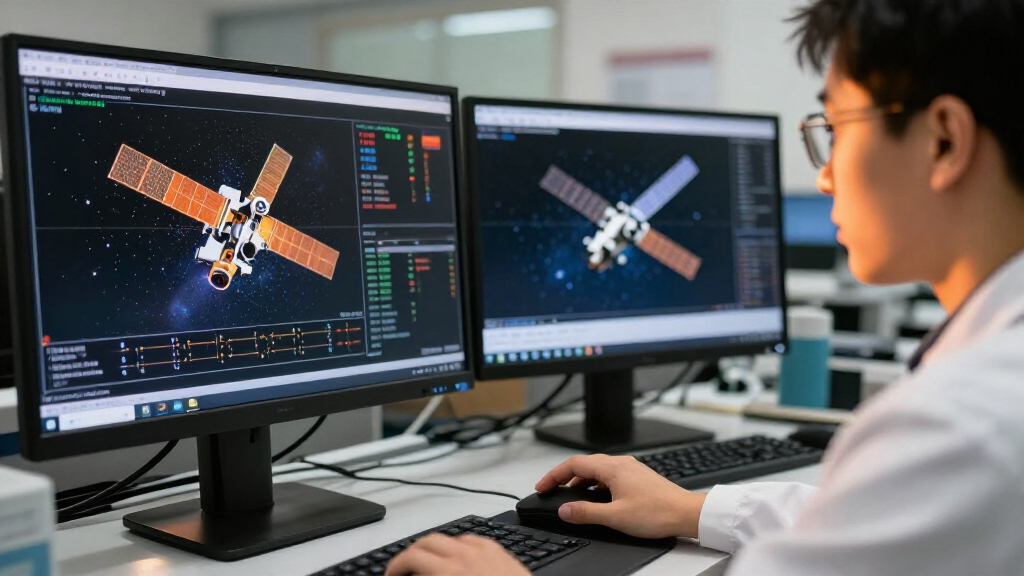
NASA’s Neil Gehrels Swift Observatory ended science operations after atmospheric drag at its low altitude prevented it from steadily pointing its telescopes. Its final observation was Oct. 20, and re-entry is expected in the coming weeks; the mission leaves a public archive of nearly 22 years of data and research output cited in about 7,000 papers.
NASA has ended science operations of the Neil Gehrels Swift Observatory after the spacecraft descended to less than 171 miles (275 kilometers) above Earth, where atmospheric drag prevents its telescopes from holding steady on astronomical targets. Swift made its final observation on Oct. 20 and is expected to re-enter the atmosphere in the coming weeks, closing a mission that lasted more than a decade beyond its planned two-year primary phase.

Prime made for students and young adults
- Fast, free delivery for dorm and study essentials
- Prime Video and Amazon Music included
- Member-only deals
NASA said the spacecraft’s low altitude and increased atmospheric drag made it unable to steadily gaze at targets, ending its science mission. The agency has not described the end as a result of a specific instrument failure. Re-entry is expected in the coming weeks, but NASA’s announcement did not give a precise date. Swift launched on Nov. 20, 2004, began work the following month, and was renamed in 2018 to honor its first principal investigator, Neil Gehrels, after his death.
The observatory was built to detect gamma-ray bursts, rapidly determine their locations, alert other observatories and turn its own telescopes toward them before their afterglows faded. NASA says this sequence typically took about one minute. Swift’s record includes observations of more than 2,000 gamma-ray bursts and more than 1,400 supernova explosions, as well as studies of stars disrupted by black holes, active galaxies, asteroids and comets. NASA also credits Swift data with contributions to about 7,000 published scientific papers.
The mission’s legacy will continue through its archive, which NASA says contains nearly 22 years of brightness measurements, multiwavelength spectra and more than 1.5 million images from the Ultraviolet/Optical Telescope. The publicly available dataset totals approximately 12 terabytes. NASA says the data will remain available for researchers, although the announcement does not quantify how many future studies it may support.
Swift’s Data Outlasts Its Spacecraft
Swift’s end removes a space-based observatory that could respond quickly to short-lived cosmic events. That capability mattered because a burst can fade before a conventional observing schedule can be arranged. Swift combined detection, location, rapid repositioning and observations across different wavelengths, allowing researchers to study events while they were still visible.
The loss is particularly relevant to work on gamma-ray bursts, including short bursts that peak in less than two seconds. NASA reports that Swift’s archive and published research will continue to serve the scientific community, but stored observations cannot fully replace a telescope able to turn toward a new event as it happens. NASA says it is examining how existing space telescopes and other capabilities could support rapid responses in a post-Swift period.
Popular right now

Dyson Gen5 Outsize Cordless Vacuum

Dyson Cyclone V10 Origin Cordless Vacuum

KitchenAid Artisan 5-Quart Tilt-Head Stand Mixer, White
As an affiliate, we earn on qualifying purchases.
From Burst Alerts to Long-Term Archive
Swift was designed as a multiwavelength observatory with aligned X-ray and optical/ultraviolet telescopes. Its flexible operations also allowed researchers to request target-of-opportunity observations, sometimes commanded from the ground within minutes, and to schedule monitoring of selected sources. NASA says the system could plan as many as 75 independent targets per day.
A notable early result came in May 2005, when Swift observed GRB 050509B, a short gamma-ray burst lasting 0.03 seconds. NASA says Swift detected 11 X-ray photons from its afterglow. The observations helped support models linking short gamma-ray bursts to mergers of neutron stars. In 2018, the mission was renamed for Gehrels, who led it as its first principal investigator.
The spacecraft’s scientific run extended well beyond the two-year primary mission described by NASA. The agency has said its observations contributed to a broad range of astrophysics, while the accumulated archive now provides a record of changing cosmic sources across nearly two decades.
“The unique speed of response of the Swift hardware, the extraordinary success of the rapid mission operations, and the closely knit teamwork of the Swift Flight and Science Operations teams placed Swift at the crossroads of burgeoning areas of research.”
— John Nousek, Swift operations director and professor at Penn State
Re-Entry Timing and Replacement Capacity
NASA has not specified the date Swift will re-enter Earth’s atmosphere, only that it is expected to happen in the coming weeks. The agency’s announcement also does not give a projected location or describe what, if anything, will remain of the spacecraft after re-entry.
NASA says it is exploring ways to use and augment its existing space-telescope fleet, alongside fast-to-orbit commercial capabilities and proposed innovative missions, to respond to cosmic events. The announcement does not identify a confirmed replacement observatory, a launch schedule or the level of rapid-response coverage those options could provide. The scale of any gap in observing capability is therefore not yet clear.
NASA Plans for Rapid Follow-Up
NASA says it will continue prioritizing options for rapid-response observations and use current missions to help fill the gap in the meantime. That work includes exploring how existing space telescopes could be used or augmented, as well as other capabilities described by the agency. NASA has not announced a successor mission or a timetable for a replacement.
Researchers can continue using Swift’s publicly available archive, including its images, spectra and brightness measurements. The next near-term development is the spacecraft’s expected atmospheric re-entry; NASA has not provided a more specific forecast. The archive is likely to remain the immediate source of Swift observations for new analysis, while plans for future real-time follow-up remain under development.
Key Questions
Why did NASA end Swift’s science mission?
NASA said Swift had descended below 171 miles (275 kilometers) in altitude, where increased atmospheric drag prevented its telescopes from steadily pointing at astronomical targets.
When did Swift make its final observation?
NASA said Swift conducted its final observation on Oct. 20. The source announcement does not specify the year in its text.
What did Swift study?
The observatory studied more than 2,000 gamma-ray bursts and more than 1,400 supernova explosions, along with black-hole disruptions of stars, active galaxies, asteroids and comets.
Can scientists still use Swift’s observations?
Yes. NASA says Swift’s approximately 12-terabyte archive is publicly available and includes nearly 22 years of measurements, spectra and more than 1.5 million ultraviolet/optical images.
Will another mission replace Swift?
NASA says it is exploring ways to support rapid observations using existing space telescopes and other capabilities. It has not announced a confirmed successor mission or replacement schedule.
Source: primary