TL;DR

Prime made for students and young adults
- Fast, free delivery for dorm and study essentials
- Prime Video and Amazon Music included
- Member-only deals
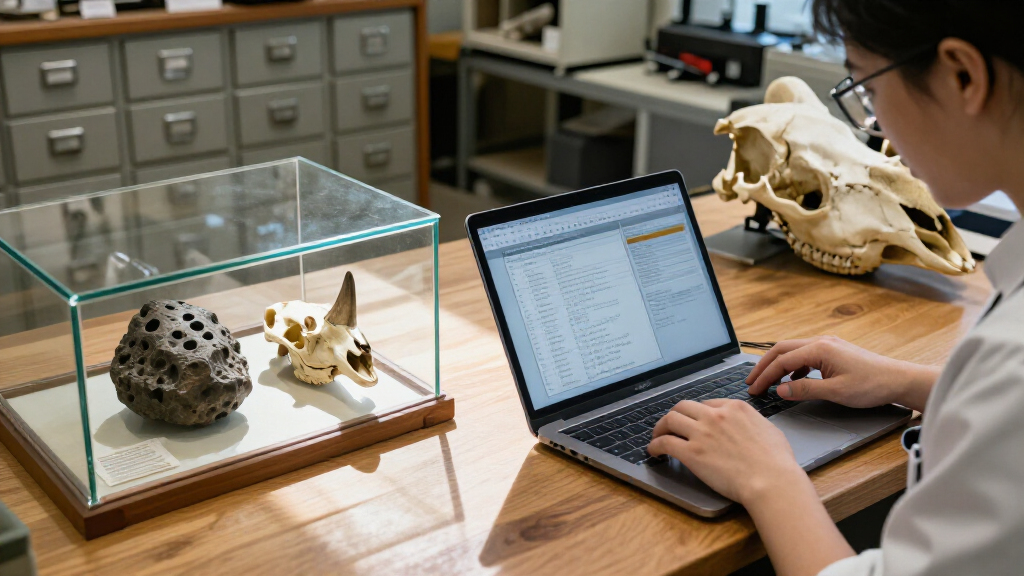
Software engineer Jesse Waites says an AI-assisted search of historical archives surfaced a forgotten meteorite report, records of three rhinoceroses and possible unrecorded volcanic eruptions. The finds are leads grounded in archival documents, but their significance still requires specialist review and verification against existing research.
Software engineer Jesse Waites says an AI-assisted search across millions of digitized historical records surfaced a forgotten meteorite report, documents concerning three rhinoceroses, and possible accounts of volcanic eruptions missing from modern records. The findings are research leads identified in archival material, not a claim that each has already been independently confirmed as a new historical discovery.
Waites describes building a research pipeline after reading historian Benjamin Breen’s account of finding a 1615 Dutch East India Company ship journal that mentions sailors catching dodos and tortoises on Mauritius. Breen’s example showed how a new historical reference could remain buried in a large digitized collection. Waites aimed to extend that approach by searching several questions at once, including animal records, meteorite falls and a major eruption reported in 1808.
The project used searchable text from 4.35 million pages of Dutch East India Company records, along with digitized Dutch and American newspapers and some ship logbooks. Waites says his system converted 5.7 million passages from the company archive into meaning-based representations, allowing searches to find relevant passages even when old spelling or transcription errors defeated ordinary keyword searches.
According to Waites, a low-cost model screened large batches of results for narrow questions, such as whether a passage referred to a wild animal and where it was located. A more capable model then examined selected passages, translated them and extracted dates and places. Waites says he checked promising material against scans of the original pages and compared possible findings with specialist catalogues before presenting them as candidates. The published account describes the meteorite, rhino and eruption leads, but the supplied material does not include enough underlying document detail to independently evaluate each one.
AI Can Surface Archival Leads
The report illustrates how AI may help researchers handle collections that are too large to inspect page by page. Waites estimates that reading the Dutch East India Company archive manually at two minutes per page would take about 70 years on a standard weekday schedule; he says his initial machine processing took 12 hours. These figures describe his estimate and his run, not a general measure of what AI can do across all archives.
The potential value is not that a model can settle historical questions on its own. It is that a search system can reduce the number of passages a person must inspect, including passages missed by searches for modern spellings. That could help historians locate records about species, disasters or events that have not been incorporated into reference works. Each promising result still needs to be checked against its original document and the relevant specialist literature.
Waites also describes the workflow as a combination of human direction and automated screening. He says he selected the questions, designed the filtering approach, reviewed the strongest candidates and checked the source scans. The account therefore presents AI as a tool for prioritizing evidence, rather than as an independent authority on what the evidence proves.
As an affiliate, we earn on qualifying purchases.
From Dodo Record to Wider Search
The immediate inspiration was a post by historian Benjamin Breen, published on October 1, 2026, according to Waites. Breen reported finding a 1615 ship’s journal in Dutch East India Company records that describes sailors catching dodos and tortoises on Mauritius. The company operated from 1602 until its dissolution in 1799, leaving extensive administrative records that are now being digitized and transcribed through the GLOBALISE project.
Waites, who identifies himself as a software engineer rather than a historian, used that example to test whether similar searches could find evidence relevant to other open questions. Historical handwriting, inconsistent spelling and errors in text recognition complicate searches. His approach used semantic search to locate passages by likely meaning, followed by successive machine and human checks. He says the records were not treated as verified simply because an AI system returned them.
“Adding even one new data point to a couple of niche fields felt like a small but worthwhile contribution to make.”
— Jesse Waites, describing the project’s purpose
As an affiliate, we earn on qualifying purchases.
Which Finds Will Hold Up?
The available account does not provide complete citations, transcriptions or images for the meteorite and rhinoceros documents, nor enough detail to assess the proposed eruption reports. It is therefore not possible from this material alone to determine whether the records are genuinely absent from specialist catalogues, whether their interpretations are disputed, or whether they will change established accounts.
Waites says he checked original scans and consulted relevant catalogues, but that description is not the same as independent scholarly review. The source material also does not specify whether specialists have evaluated the leads, whether the documents will be published with full archival references, or how many candidate results were rejected during screening. Those details matter because machine transcription and translation can introduce errors, while a historical document may be ambiguous or refer to an event already known under another description.
digital historical record database
As an affiliate, we earn on qualifying purchases.
As an affiliate, we earn on qualifying purchases.
Independent Checks and Citations
The next step is for the candidate findings to be presented with archival references, original-page images and enough transcription and translation detail for other researchers to check them. Specialists in meteorites, historical zoology and volcanology can then assess whether each passage is new, correctly interpreted and relevant to the existing record.
Waites’ account presents the work as an ongoing contribution rather than a completed reassessment of all three fields. Until the documents and interpretations receive further scrutiny, the meteorite, rhino and eruption results should be understood as AI-assisted archival leads. The broader question—how reliably this workflow can find useful evidence across other collections—will depend on repeatable searches and independent verification.
scientific research archive access
As an affiliate, we earn on qualifying purchases.
As an affiliate, we earn on qualifying purchases.
Key Questions
What did the AI-assisted search find?
Jesse Waites reports finding a forgotten meteorite report, documents concerning three rhinoceroses and possible records of volcanic eruptions absent from modern accounts. The source material presents these as candidate findings requiring scrutiny, not as independently established conclusions.
Which historical archive did the project search?
The main collection was the digitized Dutch East India Company archive, whose transcriptions cover 4.35 million pages, according to Waites. He also used Dutch and American newspaper collections and some ship logbooks.
How did the system handle old spelling and transcription errors?
Waites says it used meaning-based search across passages rather than relying only on exact keywords. A fast model screened results, and a larger model reviewed selected passages before Waites checked promising material against scans of original pages.
Have historians confirmed the reported discoveries?
The supplied account does not establish that independent specialists have confirmed the findings. Waites says he checked original scans and specialist catalogues, but the leads still need to be evaluated using full citations and the relevant expertise.
Source: hn
Halloween Picks
halloween
As an affiliate, we earn on qualifying purchases.