TL;DR

Prime made for students and young adults
- Fast, free delivery for dorm and study essentials
- Prime Video and Amazon Music included
- Member-only deals
NASA’s KREPE-3 experiment sent 12 small instrumented capsules aboard a departing Cygnus cargo spacecraft to test thermal protection materials and designs during atmospheric re-entry. The capsules are intended to transmit measurements to researchers, but the source report does not provide results from the flight.
NASA and its partners have sent 12 experimental re-entry capsules back toward Earth aboard a departing Cygnus cargo spacecraft, using the vehicle’s planned atmospheric disposal to test heat shield materials and designs. The Kentucky Reentry Probe Experiment, or KREPE-3, is intended to collect temperature, pressure, motion, magnetic-field and light measurements that could inform thermal protection for future spacecraft.
The capsules traveled inside the Cygnus XL spacecraft after astronauts loaded the cargo vehicle with station waste and activated the experiments before departure. NASA says the spacecraft is expected to break apart harmlessly along its planned route through Earth’s atmosphere. During that sequence, the capsules are designed to eject and gather data as they encounter re-entry conditions. Satellite signals are intended to send the measurements to researchers in real time.
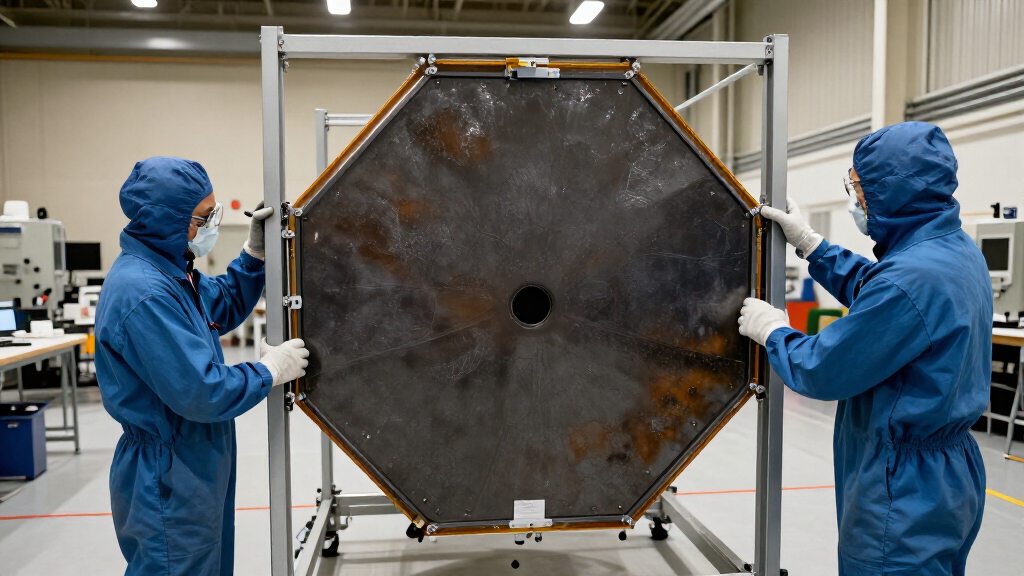
KREPE-3 carries a mix of established and experimental thermal protection. Among the technologies are ceramic tile material of the kind used on the space shuttle, a 3D-printed heat shield developed through a NASA Johnson Space Center and Oak Ridge National Laboratory project, and flexible carbon-and-phenolic fiber coverings called MERINO. NASA Ames contributed two capsules carrying MERINO materials, which are made from layers stitched together. The agency describes them as potentially faster and less expensive to produce than traditional protective materials.
Other capsules test shapes and systems as well as materials. A dual-cone vehicle combines a tungsten tip, layered heat-resistant materials and a MERINO-covered rear cone to provide data for checking computer models. Another capsule resembles the aeroshell shape planned for NASA’s Dragonfly mission to Titan and is intended to test its dynamic stability. A separate experiment tests an umbrella-like deployable heat shield, designed to increase surface area and slow descent. Additional partners, including researchers at the University of Stuttgart, are testing materials and a heat-flux sensor.
Flight Data for Future Heat Shields
Heat shields protect spacecraft and their contents from the intense heating and forces of atmospheric entry. Measurements from flight tests can help engineers judge how candidate materials and designs behave in conditions that are difficult to reproduce fully on the ground. KREPE-3’s value is that it combines several experiments on a vehicle already returning to Earth, rather than requiring a dedicated spacecraft for each test.
The results could help researchers refine thermal protection for future missions, including systems intended for Moon and Mars exploration. NASA notes that Mars’s thinner atmosphere can produce lower heat loads during entry than Earth’s, which may allow lighter protection in some mission designs. The experiment also tests configurations relevant to other destinations and uses, including the Titan-bound Dragonfly aeroshell and deployable shields for payloads that may be too large to fit inside a rocket’s standard launch envelope.
Those potential benefits are not yet demonstrated outcomes. The experiment is designed to provide evidence for evaluating materials, shapes, sensors and computer models. Whether any tested component is suitable for an operational mission will depend on the data and further engineering review.
Popular right now

Bose QuietComfort Wireless Noise Cancelling Headphones, Sandstone

De'Longhi Magnifica Evo Fully Automatic Espresso Machine with Manual Milk Frother, Silver

Samsung 85-Inch QN70H Neo QLED 4K Smart TV (2026)
As an affiliate, we earn on qualifying purchases.
A Third Kentucky Re-entry Test
KREPE-3 is the third experiment in the Kentucky Reentry Probe Experiment series. NASA describes the effort as a collaboration involving the University of Kentucky, the state of Kentucky, NASA’s Established Program to Stimulate Competitive Research, multiple NASA centers, and federal and commercial partners. University of Kentucky students designed the small capsules, which carry instruments for recording conditions during flight.
The approach uses the end of a cargo spacecraft’s mission to gather research data during its return. NASA says the Cygnus spacecraft’s planned atmospheric breakup provides the opportunity for the capsules to be released and tested. The probe experiment therefore relies on a spacecraft already scheduled to return, while placing its own instruments inside the vehicle for the final part of that journey.
The payload is not limited to a single heat shield concept. It includes materials with flight heritage, newer manufacturing approaches and experimental configurations. That range allows researchers to compare different approaches under the same broad return mission, though each capsule’s measurements will reflect its own design and exposure.
Flight Results Are Still Pending
The NASA report describes the experiment and its planned measurements, but does not say when the capsules completed re-entry, whether all 12 were recovered or transmitted data, or what the measurements showed. It also gives no quantitative findings on temperatures, material performance or sensor operation. The account should therefore be read as a report on a test mission, not confirmation that any new heat shield has passed qualification.
It is also unclear from the report how researchers will compare the capsules’ results, when a full analysis will be published, or which technologies might advance to later tests. A promising material or configuration still needs evaluation against mission-specific requirements before it could be selected for a crewed or robotic spacecraft.
Researchers Must Analyze Capsule Data
The immediate next step is for researchers to receive and analyze the capsules’ measurements, if transmissions are successful. NASA and its partners can then compare recorded conditions with expectations from laboratory testing and computer models. The source report does not give a schedule for a results release or identify a specific decision that will follow from the experiment.
Any candidate material or design that performs well would require additional assessment before operational use. That could include further testing and engineering work to establish how it responds across the conditions of a particular mission. For now, KREPE-3’s confirmed development is the flight of a varied set of experiments; their performance and eventual role in future missions remain to be established.
Key Questions
What is NASA’s KREPE-3 experiment?
KREPE-3 is the third Kentucky Reentry Probe Experiment. It sent 12 instrumented capsules aboard a Cygnus cargo spacecraft to collect measurements during its return through Earth’s atmosphere.
What will the capsules measure?
The capsules carry sensors designed to record temperature, pressure, motion, magnetic field and light. The data are intended to help researchers study how different heat shield materials and shapes behave during re-entry.
Did NASA report that a new heat shield has passed its test?
No. The source report describes the experiment and the technologies carried, but provides no test results or qualification decision. It does not establish that any capsule or material completed its test successfully.
Which technologies are being tested?
The payload includes familiar ceramic tile, a 3D-printed heat shield, flexible MERINO coverings, a dual-cone design, a capsule shaped like the planned Dragonfly aeroshell and an umbrella-like deployable heat shield. The capsules also carry sensors and materials from domestic and international partners.
When will NASA publish the results?
The NASA report does not state a date for a results release. Timing and findings remain unreported; researchers will need to analyze the measurements before the experiment’s performance can be assessed.
Source: primary