
For most students, I’d start with the EVOTECH SCIENTIFIC 17-Inch Human Torso Anatomy Model: its 16 removable parts make it a versatile choice for studying major organs and their positions. The Learning Resources Anatomy Models Bundle Set stands out for learners who want several model types, while the Life-Size Human Skeleton Model with Rolling Stand suits lessons focused on bones and whole-body structure. The main tradeoffs are breadth versus depth, tabletop size versus life-size visibility, and removable detail versus simple setup. A model packed with parts may support more hands-on study but take longer to organize and reassemble. Read on for the full comparison and guidance on choosing an anatomy model that fits your student’s level, space, and study goals.

Prime made for students and young adults
- Fast, free delivery for dorm and study essentials
- Prime Video and Amazon Music included
- Member-only deals
Key Takeaways
- The 17-inch EVOTECH SCIENTIFIC torso is the strongest all-around starting point in this lineup because it balances a manageable tabletop footprint with 16 removable parts.
- The 33.4-inch SFXYJ torso offers more removable parts and a larger display than the compact torsos, but its size may be a poor match for limited desks or frequent storage.
- The Learning Resources bundle and EVOTECH SCIENTIFIC multi-model sets prioritize topic variety, while a dedicated heart or skull model gives more focused study of one structure.
- The life-size skeleton on a rolling stand serves whole-body bone study better than tabletop skeletons, but takes more room and is less convenient to pack away.
- A model’s piece count alone does not tell you how useful it will be: labels, visibility, assembly demands, stability, and fit with the student’s lessons also matter.
| EVOTECH SCIENTIFIC 17-Inch Human Torso Anatomy Model, 16 Removable Parts |  | Best Overall Torso Model | Height: 17 inches | Removable parts: 16 | Material: Non-toxic PVC | VIEW LATEST PRICE | See Our Full Breakdown |
| Learning Resources Anatomy Models Bundle Set |  | Best for Broad Beginner Study | Included models: Heart, brain, body, and skeleton | Material: Plastic | Recommended age: 5 years and up | VIEW LATEST PRICE | See Our Full Breakdown |
| Merinden 11-Inch Human Torso Anatomy Model, 15-Piece |  | Best Compact Study Model | Height: 11 inches | Pieces: 15 | Included structures: Torso, 2-part brain, heart, esophagus and aorta, 4-part lungs, skull | VIEW LATEST PRICE | See Our Full Breakdown |
| EVOTECH SCIENTIFIC Half-Size Human Muscle and Organ Model, 27 Parts |  | Best for Muscles and Surface Anatomy | Scale: Half-size | Parts: 27 | Material: Non-toxic PVC | VIEW LATEST PRICE | See Our Full Breakdown |
| Life-Size Human Skeleton Model with Rolling Stand and 3 Posters |  | Best for Skeletal Anatomy | Height: 70.8 inches | Material: Polyvinyl chloride (PVC) | Bone count: 206 articulated bones | VIEW LATEST PRICE | See Our Full Breakdown |
| 17-Inch Human Skeleton Model with Movable Arms and Legs |  | Best Compact Skeleton for Basic Study | Height: 17.7 inches | Base dimensions: 4.75 x 4.75 inches | Weight: 1.1 pounds | VIEW LATEST PRICE | See Our Full Breakdown |
| EVOTECH SCIENTIFIC Human Anatomy Model Set with Skeleton, Heart, Skull, Brain, and Anatomical Cubes |  | Best Multi-Model Learning Set | Model count: 5 | Skeleton height: 17.7 inches | Torso height: 11 inches | VIEW LATEST PRICE | See Our Full Breakdown |
| EVOTECH SCIENTIFIC 15-Piece Human Torso Anatomy Model, 11-Inch |  | Best for Removable-Organ Practice | Brand: EVOTECH SCIENTIFIC | Model: Human Body Model | Height: 11 inches | VIEW LATEST PRICE | See Our Full Breakdown |
| Human Anatomy Study Cube |  | Best Pocket-Size Revision Aid | Brand: Kits of Medicine | Dimensions: 7 × 7 × 7 cm | Weight: 100 g | VIEW LATEST PRICE | See Our Full Breakdown |
| Life-Size Human Heart Model with 48 Numbered Structures |  | Best for Focused Heart Anatomy Study | Brand: WLLFS | Model number: xz-01 | Material: PVC | VIEW LATEST PRICE | See Our Full Breakdown |
| EVOTECH SCIENTIFIC Human Anatomy Model Set with Body, Skeleton, Heart, and Half-Size Skull |  | Best Multi-System Study Set | Models included: Human body, skeleton, heart, and half-size skull with brain | Set size: 4 models | Skeleton height: About 17.7 inches | VIEW LATEST PRICE | See Our Full Breakdown |
| SFXYJ 33.4-Inch Human Torso Anatomy Model, 32 Removable Parts |  | Best for Hands-On Torso Study | Height: 33.4 inches | Dimensions: 30 L x 9 W inches | Weight: 22 pounds | VIEW LATEST PRICE | See Our Full Breakdown |
| NLShan 17.7-Inch Human Skeleton Anatomy Model with Movable Joints and Stand | 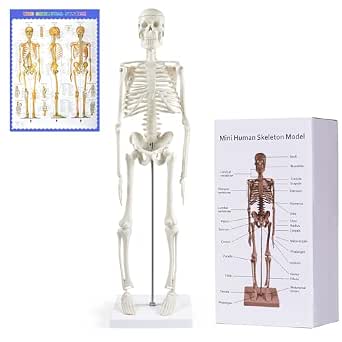 | Best Compact Skeleton for Joint Study | Height: 17.7 inches | Material: PVC | Weight: 1.08 pounds | VIEW LATEST PRICE | See Our Full Breakdown |
| 15-Piece Color-Coded Human Anatomy Skull Model |  | Best for Learning Skull Bones | Brand: NEW HORIZON | Model: Anatomy Exploded Skull Model | Number of pieces: 15 | VIEW LATEST PRICE | See Our Full Breakdown |
| Be Amazing! Toys Interactive Human Body Anatomy Model, 60 Pieces |  | Best for Younger Beginners | Brand: Be Amazing! Toys | Model: Science to the Max Interactive Human Body | Height: 14 inches | VIEW LATEST PRICE | See Our Full Breakdown |
| anatomy models for student | Material | Height |
|---|---|---|
| EVOTECH SCIENTIFIC 17-Inch Hum | Non-toxic PVC | 17 inches |
| Learning Resources Anatomy Mod | Plastic | — |
| Merinden 11-Inch Human Torso A | — | 11 inches |
| EVOTECH SCIENTIFIC Half-Size H | Non-toxic PVC | — |
| Life-Size Human Skeleton Model | Polyvinyl chloride (PVC) | 70.8 inches |
| 17-Inch Human Skeleton Model w | — | 17.7 inches |
| EVOTECH SCIENTIFIC Human Anato | — | — |
| EVOTECH SCIENTIFIC 15-Piece Hu | Non-toxic PVC | 11 inches |
| Human Anatomy Study Cube | Plastic | — |
| Life-Size Human Heart Model wi | PVC | — |
| EVOTECH SCIENTIFIC Human Anato | Plastic | — |
| SFXYJ 33.4-Inch Human Torso An | PVC plastic | 33.4 inches |
| NLShan 17.7-Inch Human Skeleto | PVC | 17.7 inches |
| 15-Piece Color-Coded Human Ana | PVC | — |
| Be Amazing! Toys Interactive H | — | 14 inches |
More Details on Our Top Picks
EVOTECH SCIENTIFIC 17-Inch Human Torso Anatomy Model, 16 Removable Parts
For students who want a hands-on view of several organs without giving a full-size model most of their desk, this 17-inch torso offers a useful middle ground. Its 16 removable parts let learners examine and replace organs, including reproductive parts, while the hand-painted details make structures easier to distinguish during individual study. Compared with the Merinden 11-Inch Human Torso Anatomy Model, this option is larger and should be easier to see during a small-group lesson; Merinden is the more compact choice for tight workspaces. The wooden base supports display, and the included brochure adds a study reference. The tradeoff is that small pieces need careful handling, and this torso focuses on internal anatomy rather than offering the separate heart, brain, and skeleton models found in the Learning Resources Anatomy Models Bundle Set.
Pros:- Sixteen removable parts support hands-on identification of internal anatomy.
- At 17 inches, it offers more viewing area than the Merinden 11-inch torso while remaining desk-sized.
- Hand-painted details and the included educational brochure support visual review.
- Oak wood base provides a stable display platform.
Cons:- Small organ pieces can be misplaced and require supervision around young children.
- Covers the torso rather than offering the separate skeletal, heart, and brain models included in the Learning Resources bundle.
Best for: High-school or nursing students who want a desk-sized torso with removable organs for focused anatomy study.
Not ideal for: Students seeking several separate body-system models or a large figure visible across a full classroom; this is a single torso with small components.
- Height:17 inches
- Removable parts:16
- Material:Non-toxic PVC
- Base:Oak wood
- Item weight:5.02 pounds
- Package dimensions:18.11 x 8.66 x 5.94 inches
- Included accessory:Educational brochure
Our verdict“Choose this model for a balanced, hands-on torso study aid that fits a desk and offers more viewing room than a compact 11-inch alternative.”
Learning Resources Anatomy Models Bundle Set
Rather than concentrating on one detailed figure, this bundle gives new learners four entry points: the heart, brain, body, and skeleton. Each model assembles and separates, so students can handle the parts as they learn how structures fit together; the illustrated guide supplies facts to pair with that activity. Compared with the EVOTECH SCIENTIFIC 17-Inch Human Torso Anatomy Model, this set covers more kinds of anatomy but provides less emphasis on a single torso’s removable organs. Its age recommendation of 5 years and up makes it a natural fit for home learning and introductory classroom stations, though younger students may need help with assembly. The plastic models and stands are practical for repeated handling, but buyers seeking a highly detailed, larger-scale demonstration model may prefer the half-size EVOTECH muscle and organ figure.
Pros:- Four models introduce the heart, brain, body, and skeleton in one set.
- Assemble-and-disassemble construction gives learners a practical way to explore model parts.
- Display stands and an illustrated guide support organized study and reference.
- Recommended for ages 5 and up, making it suitable for introductory learning.
Cons:- Younger children may need adult help to assemble the models.
- The set does not provide the larger, more detailed torso focus of the EVOTECH 17-inch model.
- No manufacturer warranty is listed.
Best for: Parents, homeschoolers, and elementary educators introducing body systems through several small, hands-on models.
Not ideal for: Advanced students who need a large, detailed model for close study or demonstrations; this bundle is designed as a broad introduction.
- Included models:Heart, brain, body, and skeleton
- Material:Plastic
- Recommended age:5 years and up
- Display accessories:Display stands
- Study material:Illustrated assembly guide with educational facts
- Model number:LER3338
- Brand:Learning Resources
Our verdict“Pick this bundle for young or beginning students who benefit from exploring several body systems instead of studying one detailed torso.”
Merinden 11-Inch Human Torso Anatomy Model, 15-Piece
The Merinden’s main advantage is its compact 11-inch format: it can sit on a crowded desk or travel between study spaces more easily than the 17-inch EVOTECH torso. Its 15 detachable pieces include structures such as the brain, heart, esophagus, aorta, and four-part lungs, giving students a hands-on way to review major torso anatomy. A colorful manual and stable base make it useful for individual practice or a close-up demonstration. The smaller scale is also its central compromise: compared with the EVOTECH SCIENTIFIC 17-Inch Human Torso Anatomy Model, details may be harder for a group to see, and the description names fewer removable components. Students who need a larger display figure or a model emphasizing muscles and surface anatomy may be better served by the half-size EVOTECH muscle and organ model.
Pros:- Compact 11-inch size fits smaller study areas and is easier to move than the 17-inch EVOTECH torso.
- Fifteen pieces include removable brain, heart, esophagus, aorta, and lung sections.
- Colorful educational manual supports independent review.
- Stable base helps keep the model upright for study or close-range demonstrations.
Cons:- Small scale can make details difficult to see during group instruction.
- The listed structures offer less breadth than the EVOTECH 17-inch torso’s 16 removable parts.
- Does not provide the muscular detail of the half-size EVOTECH muscle and organ model.
Best for: Students with limited desk space who want a portable torso model for individual review of major organs and structures.
Not ideal for: Teachers presenting to larger groups or students who need a bigger model with more visible details; its 11-inch height limits viewing distance.
- Height:11 inches
- Pieces:15
- Included structures:Torso, 2-part brain, heart, esophagus and aorta, 4-part lungs, skull
- Package dimensions:12.05 x 5.43 x 4.88 inches
- Item weight:2.07 pounds
- Base:Stable base
- Included study material:Colorful educational manual
- Manufacturer:Merinden
Our verdict“Choose the Merinden when desk space and portability matter more than visibility for group teaching.”
EVOTECH SCIENTIFIC Half-Size Human Muscle and Organ Model, 27 Parts
Students studying how muscles relate to organs get more from this half-size, 27-part figure than from a conventional torso model. Its removable muscles and organs support comparison between body systems, while painted muscles, tendons, and insertion points offer detail absent from the EVOTECH SCIENTIFIC 17-Inch Human Torso Anatomy Model. That makes it a stronger fit for physiology, fitness, and anatomy lessons that include muscular structure, not just organ placement. The larger figure should also be easier to use in demonstrations than the compact Merinden 11-Inch Human Torso. The tradeoff is physical: at 13.87 pounds and with package dimensions over 32 inches long, it needs a dedicated spot and is less convenient to carry. Assembly adds another step before study can begin.
Pros:- Twenty-seven removable parts cover muscles and organs for broader hands-on study.
- Painted muscles, tendons, and insertion points add surface-anatomy detail missing from standard torso models.
- Half-size scale offers greater visibility than the Merinden 11-inch model.
- Includes an educational brochure and a mounting base.
Cons:- At 13.87 pounds, it is less practical to move than smaller torso models.
- Large package dimensions require more storage and display space.
- Assembly is required before use.
Best for: Anatomy, physiology, or fitness students who need to study muscle placement alongside removable internal organs.
Not ideal for: Students with limited storage or those who need a lightweight model to carry between classes; this large, heavy figure takes space and requires assembly.
- Scale:Half-size
- Parts:27
- Material:Non-toxic PVC
- Weight:13.87 pounds
- Package dimensions:32.7 x 10.5 x 7 inches
- Included components:Muscular figure, removable organs and muscles, educational brochure
- Base:Mounted on a base
Our verdict“Select this model for detailed muscle-and-organ study if you have room for a heavier, larger figure.”
Life-Size Human Skeleton Model with Rolling Stand and 3 Posters
When skeletal structure is the main subject, this 70.8-inch model with 206 articulated bones offers a scale and joint movement that smaller torso models cannot match. The movable joints and detachable head give students a way to examine the skeleton as a connected system, while the five-wheel stand makes repositioning easier around a classroom. The included posters add reference material, though they do not replace a guide focused on bone identification. Compared with the Learning Resources Anatomy Models Bundle Set, this is a more lifelike, dedicated skeleton rather than a collection spanning four body systems. Its scale also creates the clearest drawback: it needs substantial storage space, weighs 22 pounds, and requires assembly. Students needing removable organs or muscle detail should choose one of the EVOTECH torso models instead.
Pros:- Life-size 70.8-inch height supports study of skeletal proportions and structure.
- 206 articulated bones and movable joints allow students to examine connections and movement.
- Five-wheel rolling stand helps reposition the model.
- Three included posters provide supplementary visual references.
Cons:- Large size requires substantial storage and display space.
- At 22 pounds, it is heavier to handle than desk-sized anatomy models.
- Assembly is required, and the model does not cover removable organs or muscles.
Best for: Secondary or college anatomy students and teachers who need a full-size, movable skeleton for skeletal-system study.
Not ideal for: Learners in small rooms or those prioritizing organ and muscle study; its full height takes storage space and it focuses on bones.
- Height:70.8 inches
- Material:Polyvinyl chloride (PVC)
- Bone count:206 articulated bones
- Stand:Rolling stand with five wheels
- Included:Three posters
- Weight:22 pounds
- Head:Detachable
- Joints:Movable
Our verdict“Choose this full-size skeleton for dedicated skeletal lessons, but select a torso model if your coursework centers on organs or muscles.”
17-Inch Human Skeleton Model with Movable Arms and Legs
For students who need a skeleton they can keep on a crowded desk, this 17.7-inch model offers a useful scale without taking over the study space. Its movable arms and legs help illustrate basic joint movement, while the removable skull cap and movable jaw give learners a closer look at the head. Compared with the larger EVOTECH SCIENTIFIC Human Anatomy Model Set, it is a simpler, more focused choice rather than a collection for studying several body systems. That smaller scope is also its main limitation: the supplied description identifies basic spine, rib, and skull details, not extensive anatomical labeling. The jaw moves but does not detach, so students seeking a detailed skull study model should look elsewhere. I’d choose it for introductory skeleton work and skip it for advanced coursework.
Pros:- Compact 17.7-inch height fits smaller study spaces.
- Movable arms and legs help demonstrate basic joint motion.
- Removable skull cap and movable jaw add hands-on head study.
- Lightweight build is easy to reposition between study and display.
Cons:- Anatomical detail is basic, limiting its value for advanced study.
- The jaw moves but does not detach from the model.
Best for: Students with limited desk or shelf space who want a movable skeleton for introductory bone and joint study.
Not ideal for: Students who need labeled, fine-grained skeletal anatomy or a detachable jaw for detailed skull study.
- Height:17.7 inches
- Base dimensions:4.75 x 4.75 inches
- Weight:1.1 pounds
- Movable parts:Arms, legs, and jaw
- Removable part:Skull cap
- Model number:X-1
- Manufacturer:Fivtyily
Our verdict“Choose this compact skeleton for basic bone and movement lessons; pick a more detailed model for advanced anatomy study.”
EVOTECH SCIENTIFIC Human Anatomy Model Set with Skeleton, Heart, Skull, Brain, and Anatomical Cubes
This set suits students who learn by switching between body systems rather than relying on one large model. Its five separate 3D models cover the skeleton, heart, skull and brain, with anatomical cubes adding another hands-on format. The included guides and carrying case make it more ready for organized study or transport than the single-purpose 17-Inch Human Skeleton Model with Movable Arms and Legs. Its models are intentionally smaller than full-size teaching equipment, though, so tiny features may be harder to inspect during a group demonstration. At 5.28 pounds, the whole set is portable but not especially light for daily travel. Product details also list differing base materials, which leaves some uncertainty about construction. I’d favor it for students who want varied visual aids; those focused on one system may get more depth from a dedicated model.
Pros:- Five different models support study across multiple anatomy topics.
- Anatomy brochure, skeleton chart, and manuals provide reference material.
- Carrying case helps keep the collection together for transport and storage.
- Hand-painted models offer visual detail in a compact format.
Cons:- Smaller scale can make features harder to see in group instruction.
- At 5.28 pounds, the complete set is less convenient for frequent carrying.
- Listed descriptions differ on base materials.
Best for: Students who want a portable, guided study collection covering several anatomy topics at home or in a small group.
Not ideal for: Learners who need full-size classroom visibility or a single model with extensive detail in one body system.
- Model count:5
- Skeleton height:17.7 inches
- Torso height:11 inches
- Heart height:8 inches, including base
- Skull with brain size:3.5 inches; half-size
- Anatomical cube size:2.76 inches
- Package dimensions:12.01 x 8.07 x 6.69 inches
- Item weight:5.28 pounds
- Included:Carrying case, anatomy brochure, skeleton chart, heart and skull manuals
Our verdict“Pick this set for broad, portable anatomy practice with guides, but choose a larger dedicated model when viewing detail matters most.”
EVOTECH SCIENTIFIC 15-Piece Human Torso Anatomy Model, 11-Inch
For students learning where organs sit in the torso, the standout here is not its size but its 15 removable pieces. Taking the organs out and returning them to place turns a static display into a practical placement exercise. The 11-inch scale is easier to fit on a desk than a full-size torso, while the wooden base and brochure make it a more complete study aid than the compact Human Anatomy Study Cube. Compared with that cube, this model concentrates on the torso and gives students physical parts to handle instead of fold-out reference information. The tradeoff is that the pieces are small, and the 14-and-up age recommendation reflects a real concern for younger children. Some manual assembly is also required. I’d choose it for organ-placement practice, not for students who need a larger classroom demonstration model.
Pros:- Fifteen removable pieces support hands-on organ identification and placement.
- Hand-painted parts distinguish anatomical structures visually.
- Compact 11-inch size suits a desk or limited storage space.
- Wooden base and educational brochure add display stability and study context.
Cons:- Small removable organs may pose a choking hazard to young children.
- Manual assembly is required.
- The compact scale offers less visibility for group demonstrations than a larger torso.
Best for: Secondary-school and introductory college students who want hands-on practice identifying and placing major torso organs.
Not ideal for: Young children or students who need a large, easy-to-see torso model for teaching a group.
- Brand:EVOTECH SCIENTIFIC
- Model:Human Body Model
- Height:11 inches
- Removable pieces:15
- Material:Non-toxic PVC
- Base:Oak wooden base
- Age recommendation:14 years and up
- Assembly:Manual
Our verdict“Choose this torso for interactive organ-placement practice if students are old enough to handle its small pieces safely.”
Human Anatomy Study Cube
This foldable cube is a reference aid, not a substitute for a three-dimensional body model. At 7 cm across, it can sit in a bag or on a small desk, and its panels cover nine body parts and systems, including the brain, heart, lungs, and digestive system. That makes it a handy prompt for quick revision or topic recall. Compared with the EVOTECH SCIENTIFIC 15-Piece Human Torso Anatomy Model, the cube covers a broader set of topics in less space, but it cannot offer the same tactile practice with removable organs. Its small surface also limits how much information can be shown at once, and the product data gives no detailed account of the depth of its explanations. I’d use it alongside a larger model or textbook, rather than as a student’s only anatomy resource.
Pros:- Covers nine body parts and systems in a compact reference format.
- Foldable design makes revision more interactive than a flat card.
- Light 100-gram weight is easy to carry.
- Small footprint suits tight study spaces.
Cons:- The 7 cm size limits visible detail and reading space.
- Plastic cube provides no removable anatomical structures for hands-on study.
Best for: Students who want a lightweight, portable visual prompt for reviewing several anatomy topics between classes.
Not ideal for: Learners who need tactile model work, large diagrams, or detailed instruction in a particular body system.
- Brand:Kits of Medicine
- Dimensions:7 × 7 × 7 cm
- Weight:100 g
- Material:Plastic
- Color:White
- Body parts and systems:9
- Age range:Adult
- Units per package:1
Our verdict“Use this cube as a portable revision prompt, not as a replacement for a detailed torso or organ model.”
Life-Size Human Heart Model with 48 Numbered Structures
Students concentrating on cardiac anatomy will get more focused study value here than from the multi-topic EVOTECH SCIENTIFIC Human Anatomy Model Set. This two-part heart model identifies 48 numbered structures, and its hidden magnets let learners open and reassemble it without dealing with a complicated fastening system. The included study guide supports structure identification, making the model useful for independent review as well as classroom demonstration. Its listed dimensions are 4.33 x 4.33 x 8.27 inches, while the description calls it life-size and the specs say 1X enlarged; buyers should note that the scale wording is not fully consistent. It is also a narrow specialist tool, unlike a torso model that shows organ placement across the body. I’d choose it for heart-focused study, but not as a broad anatomy resource.
Pros:- Forty-eight numbered structures support focused identification practice.
- Two-part magnetic construction allows straightforward assembly and disassembly.
- Included study guide provides a reference for the numbered features.
- PVC construction is specified for repeated handling and display.
Cons:- Focuses on the heart rather than broader body-system study.
- Scale description is inconsistent between the life-size claim and 1X enlarged specification.
- No specific material or durability testing details are provided.
Best for: Students studying cardiac structures who want a detachable model with numbered features and a guide for identification.
Not ideal for: Students seeking a general anatomy model that covers multiple organs or shows the heart in relation to the full body.
- Brand:WLLFS
- Model number:xz-01
- Material:PVC
- Anatomical structures:48 numbered structures
- Design:Two-part detachable model with hidden magnets
- Included:Study guide/manual
- Size description:Life-size; listed as 1X enlarged
- Dimensions:4.33 x 4.33 x 8.27 inches
Our verdict“Choose this model for detailed heart structure review, and pair it with a torso model for whole-body context.”
EVOTECH SCIENTIFIC Human Anatomy Model Set with Body, Skeleton, Heart, and Half-Size Skull
For students who need more than a single body region, this four-model set spans the torso, skeleton, heart, and skull with brain. That range makes it a more varied study station than the NLShan 17.7-Inch Human Skeleton, which focuses on bones and movement. The included guides and manuals give learners a starting point for identifying structures across the models, while the carrying case helps keep the pieces together between study sessions.
The tradeoff is scale: the 11-inch torso and especially the 3.5-inch skull offer less visibility than a full-size torso such as the SFXYJ 33.4-inch model. I’d choose this set for individual study or a compact home learning space, not for showing fine details to a large classroom. Its hand-painted finish also suits display, though the plastic models are not a substitute for larger demonstration equipment.
Pros:- Four models cover the body, skeleton, heart, and skull with brain
- Illustrated guides and model-specific manuals support independent study
- Carrying case keeps the compact set together for storage
- Hand-painted models can also serve as display pieces
Cons:- Small dimensions limit visibility of fine anatomical details
- The 3.5-inch skull is especially small for group demonstrations
Best for: Students aged 14 and up who want a portable collection for introductory study of several body systems at home or in a small study group.
Not ideal for: Instructors who need large, highly visible structures for classroom demonstrations, or students who want extensive removable torso parts.
- Models included:Human body, skeleton, heart, and half-size skull with brain
- Set size:4 models
- Skeleton height:About 17.7 inches
- Torso height:11 inches
- Heart height:About 8 inches including base
- Skull size:About 3.5 inches
- Material:Plastic
- Age range:14 years and up
- Included learning materials:Anatomy brochure, skeleton chart, heart manual, and skull with brain manual
Our verdict“Choose this set if you want several compact models and learning guides in one portable collection, rather than one large, detailed torso.”
SFXYJ 33.4-Inch Human Torso Anatomy Model, 32 Removable Parts
The SFXYJ is the lineup’s clearest choice for students who need a torso large enough to work with repeatedly: its 33.4-inch height and 32 removable parts make organ placement and internal relationships easier to explore than on the 11-inch torso in the EVOTECH SCIENTIFIC four-model set. Its interchangeable male and female genital parts also broaden the anatomy covered, a feature absent from the smaller, multi-model collection.
That scale comes with practical costs. At 22 pounds, this is a stationary study aid rather than a model to carry between rooms, and the product description notes that assembly may challenge children. The included manual is useful, but this model is less suited to younger students or compact desks than the smaller Be Amazing! Toys 14-inch model. Choose it for detailed torso sessions, not portability or quick setup.
Pros:- Large 33.4-inch format gives torso structures more working visibility
- 32 removable parts support hands-on placement and identification
- Interchangeable male and female genital parts extend the anatomy covered
- PVC construction includes some flexible pieces and a product manual
Cons:- At 22 pounds, it is difficult to move regularly
- Assembly may be challenging for children
- Its large footprint is less practical for small study spaces
Best for: Teen students, tutors, and classroom users who want a large torso with many removable structures and both male and female anatomical features.
Not ideal for: Younger children, students with limited desk or storage space, and anyone who needs a lightweight model to move frequently.
- Height:33.4 inches
- Dimensions:30 L x 9 W inches
- Weight:22 pounds
- Removable parts:32
- Material:PVC plastic
- Gender features:Interchangeable male and female genital parts
- Included:Product manual
- Age range:Teen
Our verdict“Pick this model for substantial, hands-on torso study when size and removable parts matter more than portability.”
NLShan 17.7-Inch Human Skeleton Anatomy Model with Movable Joints and Stand
This compact skeleton earns its place by letting students explore joint movement without taking over a desk. Movable joints, a removable skull, and an opening jaw give it more interaction than a fixed display model; the included stand and metal support bar keep it upright for reference, while the study poster adds a basic learning aid. Compared with the EVOTECH SCIENTIFIC four-model set, this pick gives more focused attention to skeletal structure and articulation, but it does not add a heart or torso for broader system study.
Its 17.7-inch height makes it easier to store than a life-size skeleton, though that compact scale also limits how clearly small features show from across a room. The product data does not list a carrying case, so I’d treat it as a desk or shelf model rather than a travel-ready kit. It suits individual learners more than large-group demonstrations.
Pros:- Movable joints make basic articulation easier to study
- Removable skull and opening jaw reveal additional structure
- Stand and metal support bar provide an upright display setup
- Study poster adds a visual learning reference
Cons:- Compact size limits visibility of fine details in group settings
- No carrying case is listed for protecting or transporting the model
Best for: Students studying bones and basic joint motion who need a small, stand-mounted skeleton for a desk, shelf, or personal study area.
Not ideal for: Teachers needing a highly visible classroom skeleton or students seeking a multi-system set with organs and detailed written guides.
- Height:17.7 inches
- Material:PVC
- Weight:1.08 pounds
- Model number:X-4
- Articulation:Movable joints
- Skull features:Removable skull with opening jaw
- Included accessories:Display stand, metal support bar, and study poster
- Base dimensions:4.75 x 4.75 inches
Our verdict“Choose this model for compact, focused study of skeletal structure and movement, rather than broad anatomy coverage or classroom-scale visibility.”
15-Piece Color-Coded Human Anatomy Skull Model
Students who need to identify individual skull bones may get more from this 15-piece color-coded model than from the small skull included in the EVOTECH SCIENTIFIC four-model set. Its detachable design separates bones for inspection and reassembly, while structures such as the nasal cavity, eye sockets, mandible, and hyoid make the model useful for focused skull study. The illustrated guide adds prompts and anatomy information, giving learners more direction than a display-only skull.
The miniature scale is the main compromise: it travels easily, but details may be hard to see during a group demonstration. Reassembling multiple pieces can also slow down quick review compared with the NLShan articulated skeleton, which is ready to use as a whole-body reference. I’d favor this pick for one-on-one study of skull anatomy, not as a general-purpose anatomy model or a large classroom visual.
Pros:- 15 detachable, color-coded bones support identification and reassembly
- Includes the mandible and hyoid among its skull structures
- Illustrated guide provides anatomy information and study questions
- Miniature format is easy to carry and store
Cons:- Small scale makes details difficult to see from a distance
- Multiple pieces require time and care to reassemble
Best for: Students learning cranial bones and skull landmarks who want a portable model they can take apart and reassemble.
Not ideal for: Teachers presenting to a large group or students who want a whole-body model rather than a focused skull study aid.
- Brand:NEW HORIZON
- Model:Anatomy Exploded Skull Model
- Number of pieces:15
- Material:PVC
- Weight:0.3 kg
- Scale:Miniature
- Features:Detachable, reassemblable, color-coded bones
- Included components:Skull model, illustrated guide, and connectors
Our verdict“Choose this compact skull if bone-by-bone identification is your priority and you do not need a model for large-group viewing.”
Be Amazing! Toys Interactive Human Body Anatomy Model, 60 Pieces
For younger learners, this model turns anatomy into a build-and-explore activity: the 14-inch articulated body includes removable bones, muscles, and squishy organs, plus activity cards to guide learning. Its age range of 8–14 makes it a more approachable starting point than the SFXYJ 33.4-inch torso, which is heavier and described as potentially challenging for children to assemble. The Be Amazing! model also covers more than bones alone, giving beginners a tactile introduction to several body structures.
The tradeoff is scale and scope: at 14 inches, it is less suited to detailed demonstrations than the larger SFXYJ torso, and its activity-card format is aimed at younger students rather than advanced coursework. The product data does not list a separate instruction manual or carrying case. I’d choose it for guided, hands-on learning at home, not as a high-detail reference model for older students.
Pros:- 60 pieces offer hands-on assembly and exploration
- Removable bones, muscles, and organs introduce multiple body structures
- Articulated design can be posed for interactive learning
- Illustrated activity cards provide guided learning prompts
Cons:- 14-inch height limits visibility of small details
- Activity-card approach may be too basic for advanced anatomy study
- Product data does not list a carrying case or separate manual
Best for: Children ages 8–14 who learn through assembling, posing, and handling basic bones, muscles, and organs.
Not ideal for: Older students seeking fine anatomical detail, a large classroom demonstration model, or a set with a listed manual and carrying case.
- Brand:Be Amazing! Toys
- Model:Science to the Max Interactive Human Body
- Height:14 inches
- Pieces:60
- Age range:8–14 years
- Model features:Articulated skeleton with removable muscles and organs
- Included components:Transparent stand and activity cards
Our verdict“Pick this model for younger students who benefit from hands-on activities, but choose a larger torso for detailed study or classroom demonstrations.”

How We Picked
I ranked these anatomy models for students by how well they support common learning tasks: identifying structures, seeing how parts relate, and revisiting material through hands-on study. I compared scope, scale, removable components, specialized detail, and the practical implications of stands, storage, and assembly. I also distinguished broad introductory models from focused aids such as the heart, skull, skeleton, and study cube; a narrower model can be a better choice when it matches a specific course goal.
The order favors useful coverage and student-friendly handling over piece count alone. A versatile torso ranks ahead of a specialized model for general study, while focused or larger models rise for learners with a clear need for them. Bundles can cover more topics, but they may take more space and offer less depth on any single structure. Product details supplied for this roundup do not establish comparative material quality, classroom durability, or labeling accuracy, so I avoid treating those as proven advantages.
| anatomy models for student | Material |
|---|---|
| EVOTECH SCIENTIFIC 17-Inch Hum | Non-toxic PVC |
| Learning Resources Anatomy Mod | Plastic |
| Merinden 11-Inch Human Torso A | — |
| EVOTECH SCIENTIFIC Half-Size H | Non-toxic PVC |
| Life-Size Human Skeleton Model | Polyvinyl chloride (PVC) |
| 17-Inch Human Skeleton Model w | — |
| EVOTECH SCIENTIFIC Human Anato | — |
| EVOTECH SCIENTIFIC 15-Piece Hu | Non-toxic PVC |
| Human Anatomy Study Cube | Plastic |
| Life-Size Human Heart Model wi | PVC |
| EVOTECH SCIENTIFIC Human Anato | Plastic |
| SFXYJ 33.4-Inch Human Torso An | PVC plastic |
| NLShan 17.7-Inch Human Skeleto | PVC |
| 15-Piece Color-Coded Human Ana | PVC |
| Be Amazing! Toys Interactive H | — |
Factors to Consider When Choosing Anatomy Models For Students
Before choosing, match the model to the student’s actual lessons and study habits. A large parts count or realistic scale can look appealing but may matter less than clear identification, manageable setup, and a place to store the model between study sessions.
Match the model’s scope to the course
Start with the topics the student needs to identify repeatedly, rather than choosing the broadest-looking set. A torso can link organs to their positions, while a skeleton, heart, or skull supports more focused study. Students taking introductory courses may benefit from a general model before adding specialized aids. A common mistake is buying a topic-specific model because it has many details, even when the course emphasizes whole-body relationships. If lessons span several systems, a bundle may be useful, but check whether its models add distinct learning value or simply repeat introductory material.
Choose scale for visibility and storage
Scale changes how a model works in a study space. A compact torso is easier to put on a desk or store between sessions, while a larger torso or life-size skeleton can make structures easier to see during group study. The tradeoff is not just floor or shelf space: larger models can be harder to move, and small models may be difficult to inspect closely without placing them near the learner. Measure the intended storage area and consider who needs to view the model. Buying the largest option without a display plan can turn a useful teaching aid into a storage problem.
Look past removable-part counts
Removable parts make it possible to practice identifying structures and seeing what lies beneath or beside them. Yet each additional piece can add handling, sorting, and reassembly, which may interrupt short study sessions. Ask whether the student will actively take the model apart or mainly use it for visual reference. Smaller children may prefer fewer, more manageable pieces, while students who study anatomy hands-on may welcome added components. Check how the pieces are identified and whether the model’s organization fits the learner’s level; a high count by itself does not guarantee a clearer lesson.
Decide between breadth and depth
A multi-model set can expose students to several parts of anatomy in one purchase, while a dedicated model can give one topic more attention. Breadth is helpful for a beginner or a shared learning space, especially when the course has not yet narrowed to a particular system. Depth makes more sense when a student needs repeated practice with one structure, such as the heart or skull. Avoid assuming a bundle will replace every specialized aid: a set covering several areas may not provide the same level of focus as a dedicated model. Let the syllabus and planned use decide which tradeoff is worthwhile.
Account for setup, stability, and shared use
A model used for demonstrations has different demands from one kept on a personal desk. Stands and rolling bases can help display larger figures, but they also require clear space and a stable place to park the model. Models with movable joints or multiple detachable parts invite interaction, which makes assembly and storage worth checking before purchase. For classroom sharing, favor a design students can handle without making setup a lengthy part of every lesson. If the model will mostly stay in one place, display size may matter more than portability; for a student who moves between rooms, simpler handling may matter more.
Frequently Asked Questions
Should I choose a torso model or a skeleton model for a first anatomy course?
Choose based on the course’s first learning goals. A torso is a stronger starting point when lessons focus on internal organs and where they sit in the body. A skeleton makes more sense when bones, joints, and overall skeletal structure lead the syllabus. If the course covers both, a broad bundle can provide variety, but it may take more storage and setup than one model. Check the lesson plan before treating either type as a substitute for the other.
Is a model with more removable parts always better for studying?
No. More removable parts can create more opportunities to handle and identify anatomy, but they also add pieces to organize and put back in place. A student who studies independently in short sessions may use a simpler model more often. A learner who benefits from disassembly and hands-on review may prefer a model with more components. Think about the student’s age, patience, and available storage, not just the number of pieces listed.
When does a life-size anatomy model make sense for a student?
A life-size model can help when several students need to view the same structure or when a course emphasizes full-body proportions. It is less practical when the student has limited room or needs to carry the model between study locations. Before choosing one, check the intended display area and where it will be stored when not in use. A smaller tabletop model may be easier to revisit regularly, even if it is less visible from across a room.
Is a general anatomy bundle a better buy than one specialized model?
A bundle is a sensible choice when the student needs exposure to several topics and will use the different pieces. A focused model is usually a closer match when an assignment or course centers on one structure, such as the heart or skull. Bundles can take up more room, and multiple models do not automatically provide more detail on the topic that matters most. Compare the included model types with the student’s current lessons before deciding. If the need is narrow, a dedicated aid may be easier to use and store.
What should I check before buying an anatomy model for a younger student?
Look at how large the model is, how many parts need handling, and whether the child has room to assemble and store it. A complex model may support more involved exploration but can frustrate a learner who is still building familiarity with basic structures. Consider whether the product’s listed components and level of detail fit the child’s current lessons rather than choosing by piece count. For shared use, think about whether parts can be kept together between sessions. An age-appropriate, manageable model is more likely to become a regular study aid than one that is difficult to set up.
Conclusion
For general student use, I recommend the EVOTECH SCIENTIFIC 17-Inch Human Torso as the best overall choice for its mix of tabletop scale and removable anatomy. The Merinden 11-Inch Torso or EVOTECH SCIENTIFIC 15-Piece 11-Inch Torso are sensible value picks for buyers who want a compact torso format; compare their listed details and choose the one that best fits the student’s needs. For a broader introduction, the Learning Resources Anatomy Models Bundle Set is my pick for beginners who want variety. The SFXYJ 33.4-Inch Torso is the premium-style option for buyers who prioritize a larger display and more removable parts, provided they have room for it. Choose the life-size skeleton for group study of bones, the 48-structure heart for focused cardiac lessons, or the color-coded skull for skull study. The right choice is the model that suits the student’s lessons and will be practical to use and store.
Halloween Picks

Spirit Halloween 54-Inch Sitting Scarecrow Animatronic

Panefright Halloween Window Projector – Scary Projector for Spooky Decor

Thuodo 8 FT Tall Halloween Inflatable Three-Headed Dragon with LEDs
As an affiliate, we earn on qualifying purchases.