TL;DR
Threlmark’s approach centers on disk as the authoritative source, making apps faster, more reliable, and offline-capable. This design simplifies sync and enhances data durability, changing how we build multi-device tools.
Imagine a project management tool that works perfectly offline, updates instantly, and never loses your work — even if your internet drops out. That’s the power of a local-first architecture, where your disk isn’t just a storage space, but the contract that defines how your data lives and breathes.
In this article, you’ll see how Threlmark’s simple yet radical decision — making disk the source of truth — shifts every aspect of system design. It’s a pattern that boosts reliability, speeds up workflows, and lets you collaborate across devices without fuss. Ready to see what’s possible when your data lives directly on your disk? Let’s dive in.
Disk is the contract: inside a local-first roadmap hub
A Next.js app on top of plain JSON files — no database, no cloud, no accounts. The key decision: the on-disk layout IS the API. Everything else cascades from taking that seriously.
There is no server-of-record — the files are the record
The UI and any external tool reach the same files through the same discipline. The data root defaults to ~/.threlmark — home-based, because it’s a shared hub every one of your apps points at.
Inspectable
Every artifact is a file you can cat, diff, grep, commit.
Portable · no lock-in
Back up with cp, sync with Dropbox / git, migrate trivially.
Interoperable
Any tool in any language joins by reading / writing files.
Restartable
No in-memory state to lose — stateless over the files.
Two disciplined patterns instead of a database
“Just use files” is easy to get wrong. These two patterns — ported from a battle-tested sibling app — are what make file-based state sound rather than reckless.
Atomic writes
Write to a temp file in the same dir, then rename() over the target. Rename is atomic on one filesystem — a crash mid-write leaves the complete old file or the complete new one, never a half.
The board heals itself
A single roadmap.json array races when two tools write at once. One file per card makes writes collision-free. Lane order lives in board.json and reconciles on read.
board.json. It writes an item file — the board fixes itself on Threlmark’s next read. Unknown keys are preserved, so the contract is forward-compatible.The numbers can’t drift from the files
Anything computable from item state is computed — so the displayed numbers can never disagree with the underlying JSON. Priority is the clearest example: it’s calculated on read, never persisted.
priority — computed on read
Impact weighted heaviest; effort the only axis that subtracts. Reused verbatim from the original tool, so imported cards rank identically.
A handoff is a first-class flow event
The genuinely 2026-shaped part: most building is done by AI agents, so Threlmark closes the loop. Watch a card go from ranked to Done without anyone dragging it.
Handoff → report → self-move
The brief carries a reporting protocol. The agent reports through REST or the filesystem — and a done report moves the card itself.
POST /api/projects/:id/
items/:itemId/report
Direct call. Applied immediately.
drop reports/<file>.json
→ ingested on read
Robust even if the server’s down at finish time.
A small formula, and an honest hosting caveat
Because items are globally addressable (<projectId>/<itemId>), the Portfolio ranks everything together by a status-weighted score — finishing beats starting, blockers get a boost.
Portfolio ranking — status-weighted
In-flight work floats to the top; bottlenecks cost the most, so blockers get nudged up.
Static read-only demo
Seeded data, writes to localStorage. Try-before-you-clone.
Personal Node instance
Password-gated, persistent backed-up THRELMARK_DATA_DIR.
Multi-tenant SaaS
Add accounts + per-tenant isolation. A separate build.
src/lib/*/store.ts is the natural seam — the same boundary that keeps the local tool simple is the one you’d extend for multi-tenancy. The architecture doesn’t fight that future; it just doesn’t pay for it until you need it.
Key Takeaways
- Treat disk as the single, authoritative source of truth to simplify data management and improve reliability.
- Use a file-per-item approach to prevent race conditions and enable seamless concurrency.
- Atomic file writes and tolerant merging protect data integrity and support forward compatibility.
- Local-first design boosts app speed, offline resilience, and user trust by minimizing network dependence.
- Sync and conflict resolution become straightforward when data lives directly on disk, not in a remote database.
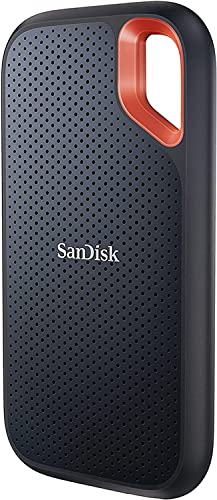
SANDISK 2TB Extreme Portable SSD (Old Model) – Up to 1050MB/s, USB-C, USB 3.2 Gen 2, IP65 Water and Dust Resistance, Updated Firmware – External Solid State Drive – SDSSDE61-2T00-G25
- High-speed NVMe Performance: Up to 1050MB/s read, 1000MB/s write
- Durable and Water-resistant: IP65 rated, 3-meter drop protection
- Portable and Secure: Includes carabiner loop for attachment
As an affiliate, we earn on qualifying purchases.
As an affiliate, we earn on qualifying purchases.
Why Making Disk the Contract Changes Everything
In most apps, data lives in the cloud or in a database — a separate, often remote, system. Threlmark flips that script. It treats disk as the single source of truth, meaning your files are the real record. This approach makes your app more resilient, faster, and easier to work with offline.
Take a typical project tool. When it relies on a server, you’re waiting for network responses. But with Threlmark, you just read or write a file. No waiting, no errors if offline. It’s instant. Plus, because everything is just files, other tools can join in — no lock-in, no complicated integrations.
For example, when you update a task, it’s just a file change. The system automatically handles conflicts by merging changes or alerting you. This simple design impacts everything from concurrency to collaboration.
![MixPad Multitrack Recording Software for Sound Mixing and Music Production Free [Mac Download]](https://m.media-amazon.com/images/I/51kaO82jYOL._SL500_.jpg)
MixPad Multitrack Recording Software for Sound Mixing and Music Production Free [Mac Download]
- Multi-track audio mixing: Mix audio, music, and voice tracks
- Simultaneous recording: Record multiple tracks at once
- Advanced editing tools: Split, trim, join, and more
As an affiliate, we earn on qualifying purchases.
As an affiliate, we earn on qualifying purchases.
How Threlmark’s File Layout Acts Like a Contract
Threlmark’s file structure isn’t a random folder full of JSON files. It’s a carefully designed contract that anyone can follow. The root contains a manifest and dependency graph, then each project has its own folder with metadata, lane order, and one file per card. External suggestions or AI reports go into dedicated folders.
Here’s why this matters:
| Property | What It Means |
|---|---|
| Inspectability | Every file can be `cat`ed or `diff`ed, making it transparent and easy to debug. |
| Portability | Copy or sync the folder anywhere. No vendor lock-in or complex migration. |
| Interoperability | Any tool can join by reading or writing files, regardless of language or platform. |
| Restartability | Because the state lives on disk, the app can restart at any time without losing data. |
For example, if you copy your `~/.threlmark` folder to another machine, your entire project state comes with it. No database, no special setup. It’s a simple, robust contract.

Zenkaelum Magnetic Grinder Wheel Holder, Angle Grinder Disc Organizer
- Magnetic Disc Organizer: Holds grinder wheels and cutting discs
- Strong Magnetic Base: Attaches securely to metal surfaces
- Multi-Disc Storage: Stores multiple grinder wheels
As an affiliate, we earn on qualifying purchases.
As an affiliate, we earn on qualifying purchases.
Making File-Based State Safe and Reliable
Using files as the primary data store sounds risky — but Threlmark makes it safe with two patterns: atomic writes and tolerant merging. Atomic writes mean you write to a temp file, then rename it. This prevents partial updates, even if your system crashes mid-write. It’s like changing a page in a book only after the entire page is ready.
For example, updating a task involves writing a new JSON file in a temporary location, then moving it over the old one. The process is quick and atomic, so data never gets corrupted.
The second pattern, read-merge-write, helps keep data consistent. When updating, Threlmark reads the current file, merges in new info, preserves timestamps and IDs, and writes back. It also ignores unknown fields, so tools can evolve without breaking existing files.

eufy Security eufyCam S330 (eufyCam 3) 4-Cam Kit, Security Camera Outdoor Wireless, 4K with Integrated Solar Panel, Face Recognition AI, Expandable Local Storage, Spotlight, No Monthly Fee
- Night Vision with 4K Clarity: Superior low-light color surveillance
- AI Intruder Detection: Identifies friends and strangers accurately
- Local Storage with Encryption: Expandable up to 16TB, secure data
As an affiliate, we earn on qualifying purchases.
As an affiliate, we earn on qualifying purchases.
Why One File Per Item Beats a Big JSON Array
Instead of storing all tasks in one huge `roadmap.json`, Threlmark uses a separate file for each item. This makes concurrent updates safe and simple. No more race conditions or clobbering each other’s changes. Learn more about how this pattern scales.
Suppose two devices update different tasks at the same time. With one file per item, they both write their changes independently. When the system reads the files, it reconciles the current state, avoiding conflicts. This pattern scales well, especially as projects grow.
Plus, the system self-heals: if a task disappears from the main list but still exists as a file, it can be re-integrated seamlessly.
How Threlmark Supports Multi-Device Collaboration
Threlmark’s local-first design makes it easy to sync across devices. Because the core data lives on disk, just copying the folder or using sync tools like Dropbox or Syncthing keeps everything in sync. This approach simplifies multi-device collaboration.
Imagine working on your laptop at home, then opening your tablet at a coffee shop. The files are the same, instantly. When you make a change on one device, the other sees it almost immediately after sync.
And if two devices edit the same task differently? Threlmark’s merge logic detects conflicts and prompts you to resolve them, preventing data loss and chaos.

Real-World Benefits: Speed, Offline, and Trust
With Threlmark, your workflow accelerates. No waiting for server responses. You see updates instantly because they’re just files on disk. Plus, you can work offline without losing any functionality. Discover more about reliable offline workflows.
For example, a designer sketching ideas on a plane can keep adding tasks or moving cards. When back online, just sync — no data loss or surprises.
This approach also builds trust. Your data isn’t stored in some cloud where you depend on a third party. It’s on your disk, safe and under your control. You can back it up, move it, or share it with confidence.
The Tradeoffs and Challenges to Consider
Of course, this isn’t perfect. Managing conflicts and ensuring sync accuracy can get tricky, especially with multiple devices. Handling corruption or disk failures requires backups and recovery plans.
For example, if your disk gets corrupted, restoring from backups or version control is essential. And conflicts may need manual resolution, which can slow down workflows.
Deciding whether disk as the contract fits your project depends on your needs for collaboration, scale, and reliability. But the benefits in speed and offline capability make it worth considering.
Frequently Asked Questions
What does ‘disk is the contract’ really mean?
It means your app treats local disk storage as the primary source of truth, with all data stored in files that are read, written, and merged directly. This makes the system more resilient, offline-capable, and simple to reason about.How does Threlmark handle conflicts when multiple devices edit the same data?
Threlmark uses a read-merge-write cycle and conflict detection. When conflicts happen, it prompts you to resolve them, ensuring no data is lost or overwritten unexpectedly.Can this architecture work with large projects or teams?
Yes, but you’ll want to implement additional syncing and conflict-resolution strategies. The file-per-item approach scales well, and tools like Dropbox or Syncthing help keep data consistent across devices.What are the main challenges with a disk-as-contract system?
Managing sync conflicts, handling disk corruption, and ensuring reliable backups can be tricky. Planning for these issues is vital to keep data safe and workflows smooth.Is local-first just for personal projects or also for team collaboration?
It’s suitable for both. When combined with proper sync tools, local-first apps support multi-device collaboration without relying on a central server, making teamwork faster and more reliable.Conclusion
Choosing to make disk the contract transforms the way you build and think about apps. It’s about trusting your local device to hold the real data, making everything faster, safer, and more flexible.
When you see your data as files, you realize that simplicity and resilience go hand in hand. That small shift unlocks powerful new workflows and collaboration models. So, ask yourself: what if your app’s true contract was just a file? The results might surprise you.