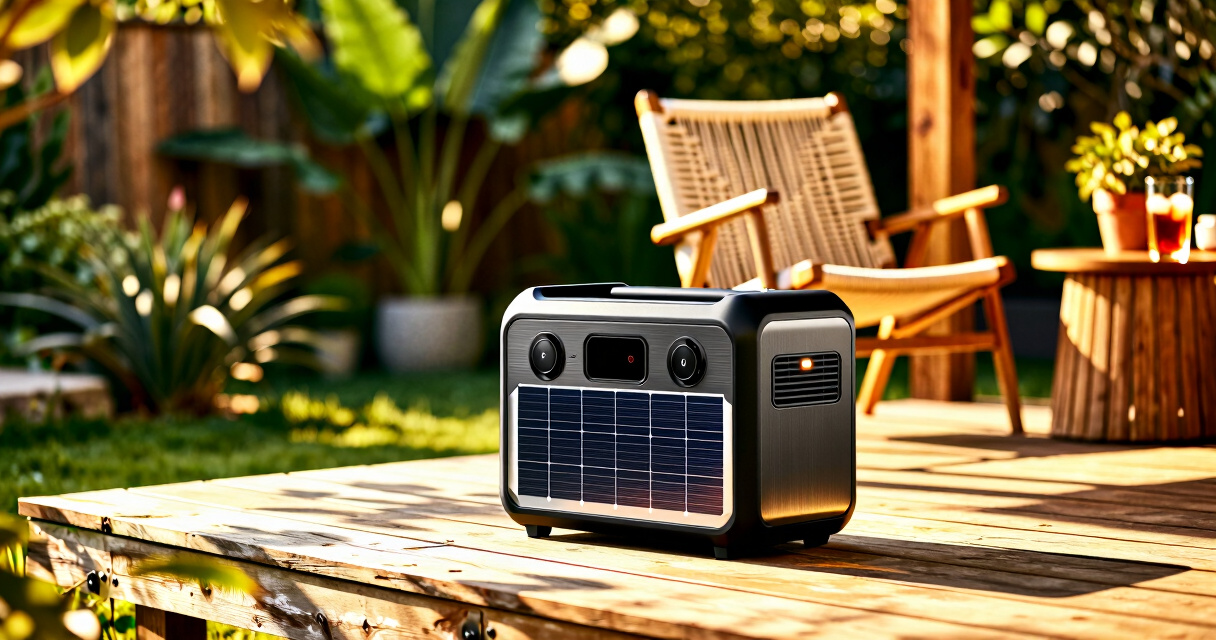

Solar generators are essential for anyone seeking portable, eco-friendly power during outdoor adventures, emergencies, or off-grid living. The best models balance capacity, portability, and charging speed, but tradeoffs often involve size, price, or flexibility. The Jackery Explorer 1000 V2 stands out for its high capacity and fast charging, while the Anker SOLIX C1000 offers impressive battery longevity with LiFePO4 technology. Smaller, budget-friendly options like the 300W Solar Generator are perfect for light use but lack long-term power. Continue reading for a detailed comparison and help narrowing down your ideal solar generator.
Key Takeaways
- High-capacity models like the Jackery Explorer 1000 V2 provide more power but come at a higher price and size.
- LiFePO4 battery technology in the Anker SOLIX C1000 extends lifespan and safety compared to traditional lithium-ion batteries.
- Portable, lightweight units such as the 300W Solar Generator are best suited for minimal power needs and quick trips.
- Solar panel compatibility varies, so choosing a generator with flexible panel options enhances versatility.
- The tradeoff between capacity, portability, and price is central — buyers need to prioritize based on their primary use case.




More Details on Our Top Picks
Jackery Explorer 300 Portable Power Station, 293Wh Lithium Battery, Solar Generator for Camping and Outdoors
The Jackery Explorer 300 stands out as a versatile, lightweight option ideal for campers and outdoor enthusiasts. Its 293Wh capacity and 300W continuous output are sufficient for small devices and essential appliances, especially when paired with solar panels like the SolarSaga 100. Compared with larger units like the Jackery HomePower 3600 Plus, it offers less capacity but excels in portability and ease of use. The fast recharge time—80% in just 2 hours—ensures minimal downtime, but the absence of a solar panel included adds to the initial setup cost. Its array of output ports makes it adaptable for multiple devices, yet it’s not suited for high-power appliances or extended power needs. This pick makes the most sense for casual campers, outdoor travelers, or emergency kits where size and weight matter most.Pros:- Fast recharge time (80% in 2 hours)
- Multiple device charging options
- Lightweight and portable design
- Compatible with solar panels for eco-friendly power
Cons:- Solar panel not included, increasing total cost
- Limited to 300W output, not suitable for high-power devices
- Battery capacity may be insufficient for extended power needs
Best for: Outdoor enthusiasts and campers needing a portable, reliable power source for small devices
Not ideal for: Home backup or powering high-wattage appliances, due to its modest capacity and 300W limit
- Wattage:300 watts
- Battery Capacity:293Wh
- Weight:7.1 pounds
- Output Ports:2 AC outlets, 1 USB-C PD 60W, 1 USB-A, 1 fast charge 3.0, 1 DC car port
- Recharge Time:2 hours (80% via wall outlet)
- Supported Solar Panel:Yes, SolarSaga 100 compatible
Bottom line: This is best suited for outdoor users needing a compact, quick-charging power station for small devices.
Jackery HomePower 3600 Plus Portable Power Station with 2x 200W Solar Panels
The Jackery HomePower 3600 Plus offers substantial capacity and high power output, making it a prime choice for home backup or emergency situations. Its 3584Wh capacity and 3600W continuous output surpass the smaller Explorer 300, and the ability to expand to 21kWh provides peace of mind for prolonged outages. Unlike the Explorer 300, it features multiple charging methods, including hybrid AC+DC, and is designed with portability in mind thanks to wheels and a telescopic handle—though it remains heavier, which may challenge frequent transport. Its high safety standards and long lifespan—up to 6,000 cycles—add to its appeal for continuous use. However, the solar panels are shipped separately, and its higher price point may deter casual users. This model makes the most sense for homeowners seeking reliable, scalable power for extended outages or large appliances.Pros:- High power output suitable for home appliances
- Expandable capacity up to 21kWh
- Multiple charging options including solar and hybrid
- Durable with a long lifespan of 6,000 cycles
Cons:- Solar panels are sold separately
- Relatively heavy despite mobility features
- Higher cost compared to smaller portable units
Best for: Homeowners or small business owners requiring reliable, expandable backup power
Not ideal for: Occasional outdoor adventurers or lightweight travelers needing portability above all
- Power Output:3600W (7200W in parallel)
- Capacity:3584Wh, expandable to 21kWh
- Voltage:120V & 240V in parallel
- Charging Time:AC in 2.5 hours, Solar in 4 hours, Hybrid in 2 hours
- Lifespan:6,000 cycles
- Weight:Lightweight with wheels and telescopic handle
Bottom line: This is the ideal choice for users needing scalable, long-term backup power for home or business use.
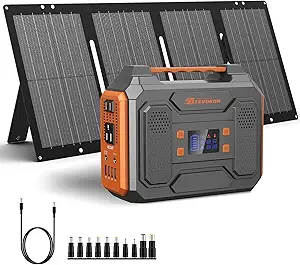
Portable Solar Generator 300W with 60W Foldable Solar Panel, 280Wh Battery, USB, DC, AC Outlets, and SOS Light
This compact solar generator offers a solid 280Wh capacity paired with a 60W foldable solar panel, making it ideal for quick, portable power in outdoor settings. Its high 20.5% conversion efficiency and multiple outlets—including USB-C, quick charge USB, AC, and DC—provide flexible device charging options. The built-in SOS light and protective features enhance safety during emergencies. Compared to the Explorer 300, this unit is smaller and easier to carry, but it’s limited to devices under 300W, restricting use with larger appliances. Its performance may decline if not charged regularly or used in poor sunlight. This model suits outdoor enthusiasts or emergency prep for small device charging.Pros:- High solar conversion efficiency of 20.5%
- Multiple charging outlets including USB-C and quick charge USB
- Built-in SOS flashlight and safety protections
- Portable with included solar panel kit
Cons:- Limited to devices under 300W, restricting larger appliances
- Junction box not waterproof, requiring dry conditions
- Performance may decline if not regularly charged
Best for: Campers, hikers, or emergency preparedness kit users needing a portable, multi-outlet power source
Not ideal for: Powering larger appliances or running high-wattage home devices, due to its 300W limit
- Power:300W
- Battery Capacity:280Wh
- Solar Panel:60W foldable monocrystalline
- Outlets:2 AC, 1 DC, 4 USB (including quick charge USB and USB-C)
- Protection Features:Short circuit, over-current, over-voltage, overload, overheating
- Conversion Efficiency:20.5%
Bottom line: This is a practical choice for outdoor users needing portable, versatile power for small devices and emergencies.
Jackery HomePower 3000 Portable Power Station with 2x 200W Solar Panels, 3600W Output, 3072Wh Battery, Emergency & Home Backup
The Jackery HomePower 3000 stands out for its massive 3072Wh LiFePO4 battery, making it ideal for reliable home backup and extended off-grid use. Its 3600W continuous output easily powers multiple appliances simultaneously, surpassing smaller units like the Jackery Explorer 300 in capacity and versatility. Compared to the Anker SOLIX C1000 Gen 2, this model offers a longer lifespan with 4,000 cycles and a seamless UPS switch, crucial during power outages. A key tradeoff is its weight—nearly 60 pounds—making portability more challenging, especially without the included wheels or handles. Additionally, the solar panels are sold separately, adding to initial costs. This pick makes the most sense for homeowners seeking a high-capacity, dependable backup with fast recharging options.
Pros:- Enormous 3072Wh capacity for extended power supply
- Fast recharge via AC, solar, or car in under 10 hours
- Seamless UPS switch for critical devices
- Long cycle life of 4,000 cycles
Cons:- Heavy weight limits portability and ease of transport
- Solar panels ship separately, increasing initial setup complexity and cost
Best for: Homeowners needing a robust, long-lasting backup system for emergencies or off-grid living
Not ideal for: Individuals seeking a lightweight, portable solution for frequent outdoor use or travel
- Capacity:3072Wh
- Max Output:3600W (7200W surge)
- Battery Type:LiFePO4
- Charge Time (AC/DC):1.7 hours
- Charge Time (solar):Up to 80% in 9 hours with 2x200W panels
- Weight:59.52 pounds
Bottom line: This model suits serious home and off-grid users who prioritize capacity and reliability over portability.
Anker SOLIX C1000 Gen 2 Portable Power Station, 2000W (Peak 3000W), 1024Wh LiFePO4 Battery, Solar Generator
The Anker SOLIX C1000 Gen 2 is tailored for those who need quick recharging and high power output in a portable package. Its 1024Wh battery, combined with a 2000W continuous and 3000W peak output, makes it capable of running multiple devices or small appliances. Unlike the Jackery Solar Generator 1000 V2, which offers similar capacity but slower recharge times, the SOLIX’s 49-minute AC recharge and 1.8-hour solar recharge stand out for emergency or outdoor use. Its lightweight design and 4,000-cycle LiFePO4 battery enhance portability and longevity. The main tradeoff is the higher price, which might be prohibitive for casual users or those on a tight budget. It’s best suited for users who value speed and versatility in a manageable size.
Pros:- Fast recharge in just 49 minutes
- High 2000W continuous power for multiple devices
- Lightweight, portable, and durable design
- Long cycle life of over 4,000 cycles
Cons:- Higher purchase price compared to lower-capacity models
- Requires specific solar input setup, limiting flexibility
Best for: Campers, emergency prep enthusiasts, and off-grid users needing quick recharging and reliable power
Not ideal for: Budget-conscious buyers or those needing larger capacity for extended outages
- Battery Capacity:1024Wh
- Power Output:2000W (3000W peak)
- Recharging Time:49 minutes (AC), 1.8 hours (solar)
- Battery Type:LiFePO4
- Cycle Life:4,000 cycles
- Weight:Approximately 14% lighter than similar models
Bottom line: This unit excels for users who prioritize rapid recharging and portability without sacrificing significant power capacity.
Anker SOLIX C1000 Gen 2 Portable Power Station with 200W Solar Panel
The Anker SOLIX C1000 Gen 2 with 200W Solar Panel is designed for those who need a compact, durable power source for outdoor activities. Its 1024Wh LiFePO4 battery offers ample capacity for most outdoor camping or emergency needs, and a 200W solar panel enables quick recharging in sunny conditions. Compared with the Jackery Solar Generator 1000 V2, this combo emphasizes portability and ruggedness, with an IP67 waterproof rating and lighter weight, perfect for hiking or remote locations. The main tradeoff is that it requires two separate packages—power station and solar panel—which complicates setup and increases initial cost. Nonetheless, it provides a dependable, weatherproof solution for off-grid power.
Pros:- Fast recharge via solar or AC in under 2 hours
- Compact, lightweight, and waterproof design
- Long-lasting battery with over 4,000 cycles
- Rugged IP67 waterproof rating
Cons:- Requires purchasing solar panel separately, adding to cost
- Setup is less integrated compared to all-in-one units
Best for: Hikers, backpackers, and outdoor enthusiasts needing a lightweight, weatherproof power source
Not ideal for: Home users who require higher capacity or integrated all-in-one solutions
- Battery Capacity:1024Wh
- Max Output:2000W
- Peak Power:3,000W
- Recharging Time (solar):1.8 hours
- Recharging Time (AC):49 minutes
- Waterproof Rating:IP67
Bottom line: This model is best for outdoor adventurers seeking a tough, portable power source that can handle weather and rough handling.
Jackery Solar Generator 1000 V2 with 200W Solar Panel, Portable Power Station with 1070Wh Capacity and Fast Charging
The Jackery Solar Generator 1000 V2 is well-suited for outdoor users who need a balance of capacity and portability. Its 1070Wh LiFePO4 battery offers enough power for most outdoor appliances, while its 1500W AC output handles multiple devices simultaneously. Compared to the Anker SOLIX, it is slightly heavier but more streamlined for backpacking or frequent travel. Its fast charging—just one hour—gives it an edge in quick setup scenarios. However, it ships with the solar panel separately, requiring additional purchase and setup, which may be inconvenient for casual users. This generator makes a compelling choice for outdoor enthusiasts who prioritize ease of transport and rapid charging.
Pros:- Powerful 1500W AC output for multiple appliances
- Fast recharge within 1 hour using fast-charging tech
- Lightweight at 23.8 lbs and portable with foldable handle
- Long lifespan with over 4,000 cycles
Cons:- Solar panel and generator are shipped separately, complicating setup
- Limited to specific shipping addresses, such as PO boxes
Best for: Outdoor explorers and emergency preppers who need a portable, high-power solution with fast recharge
Not ideal for: Users seeking a fully integrated system or larger capacity for extended outages
- Capacity:1070Wh
- AC Output:1500W
- Surge Peak:3000W
- Charging Time:1 hour (fast charge)
- Battery Type:LiFePO4
- Weight:23.8 lbs
Bottom line: This generator suits outdoor users who want quick recharging, portability, and reliable power for outdoor or emergency needs.
How We Picked
Our evaluation focused on key factors that matter most to buyers: power capacity, recharge speed, portability, battery longevity, and overall build quality. We prioritized products with reliable solar input options, ease of use, and good value for their price point. The ranking reflects a balance between performance and practicality, highlighting options suitable for different use cases—from emergency backup to outdoor adventures. Products with proven durability and positive user feedback also influenced the order, ensuring recommendations are grounded in real-world utility.
Factors to Consider When Choosing Solar Generators
Choosing a solar generator involves weighing several factors to match your specific needs. Understanding capacity, solar compatibility, and portability helps avoid common pitfalls like overbuying or selecting an ill-suited size. A well-chosen generator can provide reliable power for years, but sacrificing on quality or features can lead to frustration. Here are key considerations to guide your decision:
Capacity and Power Output
The capacity, measured in watt-hours (Wh), determines how long your generator can run devices before needing a recharge. If you plan to power larger appliances or multiple devices, prioritize higher-capacity models like the Jackery Explorer 1000 V2. For lighter needs, smaller units suffice. Also, check the continuous and peak power ratings to ensure your devices are compatible, especially for high-startup-load appliances like refrigerators or power tools.
Solar Panel Compatibility and Charging Speed
Not all generators work seamlessly with all solar panels. Look for models with versatile input options or those that support standard solar panel connectors. Also, consider the charging time—faster recharge via solar is convenient, but it often requires higher wattage panels. Balancing panel size, portability, and your typical sunlight exposure is key to maintaining a reliable power source during extended use.
Portability and Size
If you need a generator for camping or outdoor trips, size and weight become critical. Compact models like the 300W Solar Generator are easier to carry but usually offer less capacity. Conversely, larger units with bigger batteries and multiple outlets tend to be bulkier and heavier, making them better suited for vehicle-based use or home backup. Think about how you’ll transport and store your generator to pick the right form factor.
Battery Technology and Longevity
Battery chemistry impacts lifespan and safety. LiFePO4 batteries, used in models like the Anker SOLIX, offer longer cycle life and improved thermal stability compared to traditional lithium-ion batteries. Investing in a more durable battery can justify higher upfront costs through extended usability and lower replacement frequency. Consider your expected usage duration and how often you’ll need to recharge or replace the unit over years.
Price and Value
Price varies widely across models, often reflecting capacity, features, and build quality. Cheaper options might be suitable for light, temporary use, but they may lack durability or capacity. Premium models with advanced features deliver better performance and longevity but come at a higher cost. Evaluate your budget against your power needs and frequency of use to find a model that offers the best value without unnecessary extras.
Frequently Asked Questions
Can I run my refrigerator with a portable solar generator?
Running a refrigerator depends on the generator’s continuous power output and capacity. Most small models can’t handle the startup surge of larger fridges, but high-capacity units like the Jackery Explorer 1000 V2 are capable of powering common household refrigerators for several hours. Always check the appliance’s wattage and compare it to the generator’s specifications, and consider a unit with a high surge capacity if you need to power appliances with motor starts.
How long does it take to recharge a solar generator fully?
The recharge time depends on the solar input wattage and the generator’s capacity. Smaller portable units might recharge in 4-8 hours with optimal sunlight, while larger systems like the Jackery HomePower 3600 Plus may take a day or more. Using multiple solar panels can significantly reduce recharge times, but it requires compatible inputs and space. Keep in mind that cloudy weather or shading can extend recharge times beyond the rated estimates.
Are lithium-ion batteries safe for long-term use?
Modern lithium-ion batteries are generally safe when used within their specified limits, but they can degrade over time, especially with frequent deep discharges or high temperatures. Batteries with LiFePO4 chemistry, like those in some high-end models, offer enhanced safety, longer cycle life, and thermal stability. Proper usage, storage, and avoiding extreme conditions help maximize safety and longevity for your solar generator’s batteries.
What should I consider when choosing between portable and home backup solar generators?
For home backup, larger capacity units with higher watt-hour ratings and multiple outlets are preferable, as they can sustain essential devices for longer periods. Portability becomes less critical here, so size and weight are secondary to capacity and power output. Conversely, portable models are designed for ease of transport and quick deployment, making them ideal for outdoor trips or emergency kits. Assess where you’ll use the generator most often to choose the right balance of size, capacity, and features.
Is it worth investing in expandable solar generator systems?
Expandable systems allow you to add extra batteries or panels, increasing capacity and runtime as your needs grow. They are especially valuable for long-term off-grid living or extensive outdoor setups where power demands may increase over time. However, they often come at a higher initial cost and require compatible components. If you anticipate expanding your power needs, investing in a modular system can provide flexibility and better long-term value.
Conclusion
For general outdoor use and emergency preparedness, the Jackery Explorer 1000 V2 offers a balanced mix of capacity, speed, and portability, making it the best overall choice. Budget-conscious buyers or light users will appreciate the 300W Solar Generator for its simplicity and affordability. Those seeking long-term durability should consider the Anker SOLIX C1000 with LiFePO4 batteries. Beginners or infrequent users might prefer smaller, easy-to-use models, while serious outdoor enthusiasts and off-grid dwellers should prioritize higher-capacity, expandable systems. Ultimately, matching your specific power needs and budget will lead to the right choice.