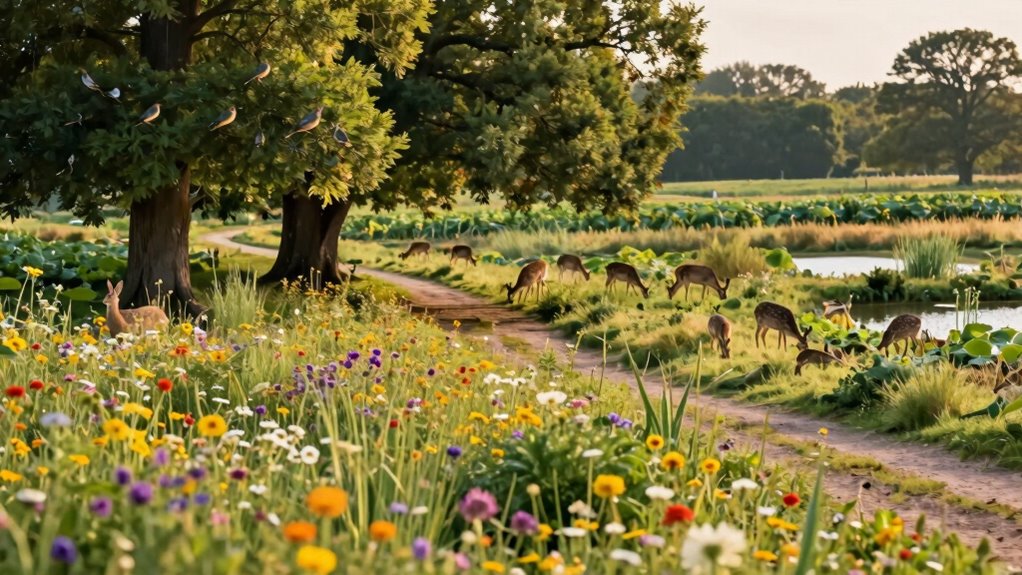
Wildlife-friendly farming supports conservation by creating habitats that shelter native species, boost biodiversity, and restore ecosystems. You help protect pollinators, beneficial insects, and wildlife by reducing chemicals, planting native vegetation, and restoring habitats like hedgerows and wetlands. These practices also enhance soil health, water retention, and farm resilience against climate impacts. Continuing with these approaches allows you to sustain productive land while contributing to long-term ecosystem health—discover how these methods can benefit your farm and the environment.
Key Takeaways
- Wildlife-friendly farming creates habitats that support diverse species, promoting biodiversity conservation on agricultural lands.
- It reduces chemical pesticide use, protecting beneficial insects and non-target species critical for ecosystem health.
- Habitat restoration efforts, like hedgerows and wetlands, provide shelter and food for wildlife, enhancing conservation efforts.
- Natural pest control and ecosystem resilience techniques decrease reliance on harmful chemicals, benefiting local ecosystems.
- Integrating wildlife habitats into farms helps buffer against climate impacts, supporting broader conservation and climate adaptation goals.
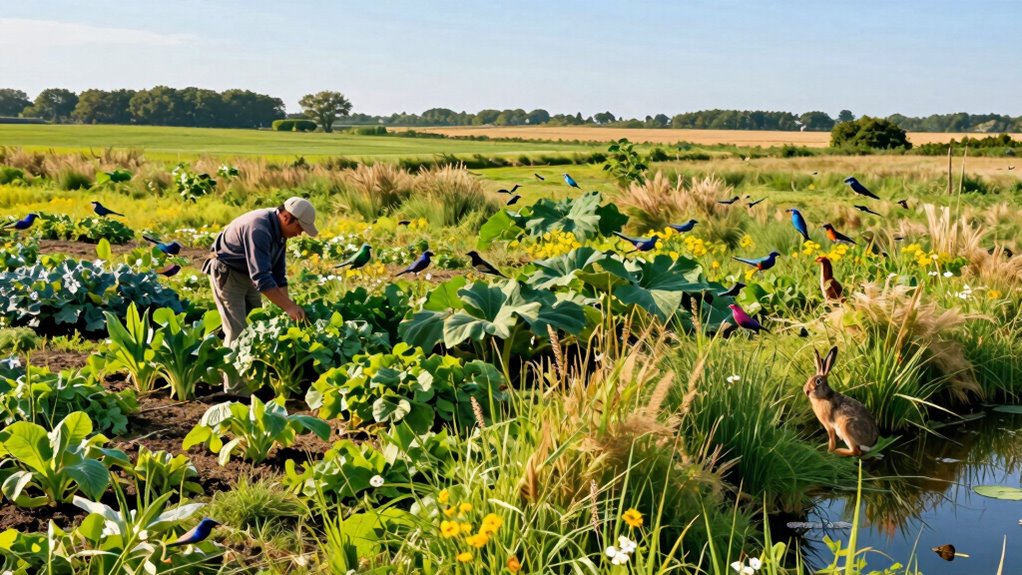
Have you ever wondered how farming can coexist with thriving wildlife populations? It’s a question many farmers and conservationists are asking as they seek sustainable ways to protect nature while maintaining productive lands. One effective approach is wildlife-friendly farming, which emphasizes practices that support local ecosystems. By reducing the use of harmful chemicals and restoring natural habitats, you can create a landscape that benefits both your crops and the native species that rely on the land. This approach doesn’t mean sacrificing yields; instead, it fosters a balanced environment where agriculture and wildlife thrive side by side.
Pesticide reduction is a key element of wildlife-friendly farming. When you cut back on chemical pesticides, you lower the risk of contaminating soil, water, and non-target species. Pesticides often harm beneficial insects like pollinators, which are essential for crop production, as well as numerous other wildlife species that depend on healthy habitats. By adopting integrated pest management or organic practices, you minimize chemical use and protect these essential populations. This creates a safer, more resilient ecosystem where natural pest control mechanisms can operate effectively, reducing your reliance on harmful chemicals and supporting biodiversity. Implementing these practices can also lead to long-term cost savings and environmental benefits. Incorporating natural pest control strategies further enhances the health of your farm ecosystem. Additionally, fostering healthy habitats can attract beneficial species that naturally reduce pest populations, promoting a more balanced ecosystem.
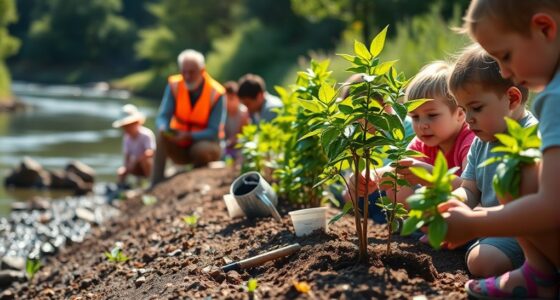
Habitat restoration is equally important. Restoring natural habitats on your farmland—such as planting hedgerows, maintaining wetlands, or leaving patches of native vegetation—provides critical shelter and food sources for wildlife. These restored areas become refuges for birds, insects, and small mammals, helping to maintain healthy populations that can also benefit your farm. For example, pollinators like bees and butterflies flourish in diverse habitats, which can lead to better crop pollination and increased yields. Additionally, habitat restoration can improve soil health, control erosion, and enhance water retention, all of which contribute to a more sustainable farming system. Supporting biodiversity through habitat restoration enhances overall farm resilience and ecosystem health. Moreover, integrating restoration techniques can increase the resilience of farmland against climate change impacts. Creating a mosaic of habitats on your land can also serve as a buffer against extreme weather events, safeguarding your crops and wildlife alike.
wildlife-friendly farming habitat restoration kit
As an affiliate, we earn on qualifying purchases.
As an affiliate, we earn on qualifying purchases.
Frequently Asked Questions
How Do Farmers Implement Wildlife-Friendly Practices Effectively?
You implement wildlife-friendly practices effectively by focusing on habitat restoration, such as planting native species and creating buffer zones, which attract beneficial insects and birds. Use integrated pest management to reduce chemical use and minimize impacts on wildlife. Additionally, maintaining hedgerows and cover crops provides shelter, fostering biodiversity. Consistent monitoring and adjusting your practices guarantee the balance between farming productivity and conservation goals, making your farm a haven for wildlife.
What Are the Economic Benefits of Wildlife-Friendly Farming?
Like the wise farmer in Aesop’s fable, you reap what you sow. Wildlife-friendly farming offers economic incentives, boosting your income through premium market opportunities for organic and sustainably produced goods. By embracing these practices, you can reduce costs related to pesticides and fertilizers, attract eco-conscious consumers, and potentially access grants or subsidies. This approach not only benefits the environment but also enhances your farm’s profitability and resilience.
How Does Wildlife-Friendly Farming Impact Crop Yields?
Wildlife-friendly farming can boost your crop yields by enhancing biodiversity benefits, which create a healthier ecosystem. The increased biodiversity attracts natural pest control agents like birds and beneficial insects, reducing your reliance on chemical pesticides. This sustainable approach helps maintain soil health and balances pest populations, leading to more resilient crops. Ultimately, supporting wildlife in your farming practices results in higher, more stable yields while promoting environmental conservation.
Are There Specific Regions Where Wildlife-Friendly Farming Is More Successful?
You’ll find wildlife-friendly farming thrives best in regions with rich biodiversity and adaptable climates. These areas naturally support diverse species, making conservation efforts more successful. In such regions, the balance between agriculture and nature sustains local ecosystems and boosts resilience against climate change. While success varies, understanding regional biodiversity and climate adaptability helps farmers implement practices that not only safeguard wildlife but also guarantee productive, sustainable farming for the future.
How Can Consumers Support Wildlife-Friendly Farming Initiatives?
You can support wildlife-friendly farming initiatives by choosing products from farms that prioritize conservation efforts. Look for labels indicating the presence of wildlife corridors and pollinator habitats, which help protect biodiversity. You can also advocate for policies supporting sustainable farming practices and participate in community programs that promote habitat preservation. Your purchasing choices and active engagement help encourage farmers to implement practices that benefit wildlife and promote long-term conservation.
organic pest control products for farms
As an affiliate, we earn on qualifying purchases.
As an affiliate, we earn on qualifying purchases.
Conclusion
By adopting wildlife-friendly farming practices, you prove that conservation and productivity can go hand in hand. It’s tempting to think that farming and wildlife conservation are worlds apart, but evidence shows they’re interconnected. When you support habitats and sustainable methods, you’re not just protecting nature—you’re ensuring a healthier future for yourself and generations to come. So, trust the science and embrace farming that nurtures wildlife; it’s a powerful way to make a real difference.
native plant seeds for hedgerows
As an affiliate, we earn on qualifying purchases.
As an affiliate, we earn on qualifying purchases.
wetland restoration tools for agriculture
As an affiliate, we earn on qualifying purchases.
As an affiliate, we earn on qualifying purchases.