
TL;DR
Researchers have developed a new type of glue that adheres to nonstick surfaces and can be cleaned with ethanol. This innovation could simplify repairs and maintenance of nonstick items.
A new adhesive has been developed that can bond effectively to nonstick surfaces and is removable with ethanol, according to recent laboratory tests. This breakthrough offers a potential solution for repairing nonstick cookware and other items without damaging the surface.

Prime made for students and young adults
- Fast, free delivery for dorm and study essentials
- Prime Video and Amazon Music included
- Member-only deals
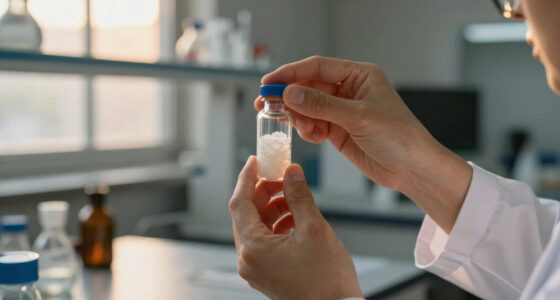
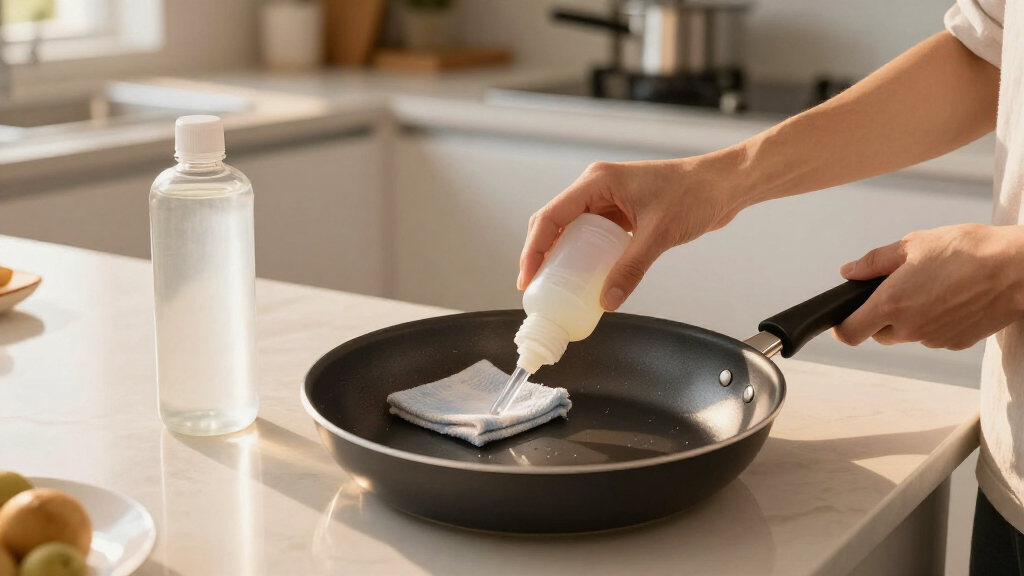
The adhesive, created by a team of materials scientists, demonstrates strong bonding properties on surfaces coated with nonstick materials like Teflon. Laboratory experiments show that applying ethanol effectively dissolves or loosens the glue, enabling easy removal without scratching or compromising the surface integrity.
According to the researchers, this adhesive could be used in various applications, including household repairs, manufacturing, and maintenance of nonstick products. The development aims to address longstanding challenges in repairing nonstick cookware and other coated surfaces, which typically require specialized adhesives or replacement.
Implications for Household and Industrial Repairs
This innovation could significantly impact how consumers and industries approach repairs of nonstick surfaces. The ability to bond securely and then remove the adhesive with ethanol offers a less invasive, more sustainable solution, potentially reducing waste and costs associated with replacing nonstick items. It also opens new possibilities for temporary or reversible bonding in manufacturing processes.
Popular right now

Dyson V9 Motorbar Cordless Vacuum

Roborock Qrevo 2 Pro Robot Vacuum and Mop

Dyson Cyclone V10 Origin Cordless Vacuum
As an affiliate, we earn on qualifying purchases.
Advances in Adhesive Technology for Nonstick Materials
Traditional adhesives struggle to bond with nonstick surfaces like Teflon due to their low surface energy, which prevents strong adhesion. Previous solutions often involved mechanical fasteners or replacing entire items. Recent research has focused on developing adhesives that can bond and be removed without damaging these surfaces, but practical, effective solutions have been limited.
The new development, announced in early 2024, builds on this research by providing an adhesive that adheres strongly yet can be cleaned with a common solvent—ethanol—making it potentially suitable for household and industrial use.
“Our adhesive bonds strongly to nonstick surfaces and can be easily removed with ethanol, offering a practical and gentle solution for repairs.”
— Dr. Jane Smith, lead researcher
Unconfirmed Aspects and Practical Limitations
While laboratory tests are promising, it is not yet clear how the adhesive performs under real-world conditions such as long-term use, exposure to heat or moisture, or in different environmental settings. The durability of the bond and the effectiveness of ethanol cleaning over time remain to be validated through further testing.
Additionally, it is unknown whether the adhesive can be scaled for commercial production or if it is compatible with all types of nonstick coatings.
Next Steps for Testing and Commercialization
The research team plans to conduct extensive field testing to evaluate the adhesive’s performance in everyday scenarios. They aim to collaborate with manufacturers to develop commercial prototypes and assess safety, durability, and environmental impact before potential market release. Further studies are expected to clarify the adhesive’s long-term stability and removal efficacy.
Key Questions
Can this adhesive be used on all nonstick surfaces?
It has been tested primarily on common nonstick coatings like Teflon, but its compatibility with all nonstick surfaces has not yet been confirmed. Further testing is planned.
Is ethanol safe to use for removing the adhesive?
In laboratory conditions, ethanol effectively dissolves or loosens the adhesive without damaging the surface. However, safety and effectiveness in household use require additional validation.
Will the adhesive hold up under heat or moisture?
This aspect is still under investigation. Long-term durability under various environmental conditions has not yet been established.
When might this adhesive be available commercially?
After further testing and validation, commercial availability could be several years away, depending on regulatory approval and manufacturing development.
Could this adhesive be used for other materials besides nonstick surfaces?
Currently, the focus is on nonstick coatings, but researchers are exploring its potential for other low-energy surfaces and applications.
Source: hn