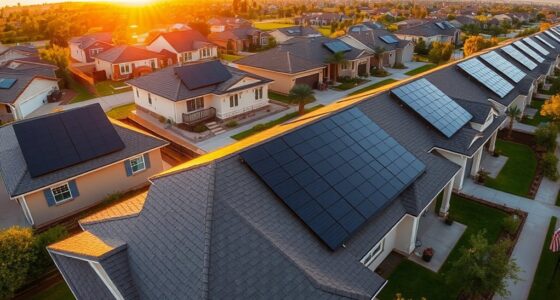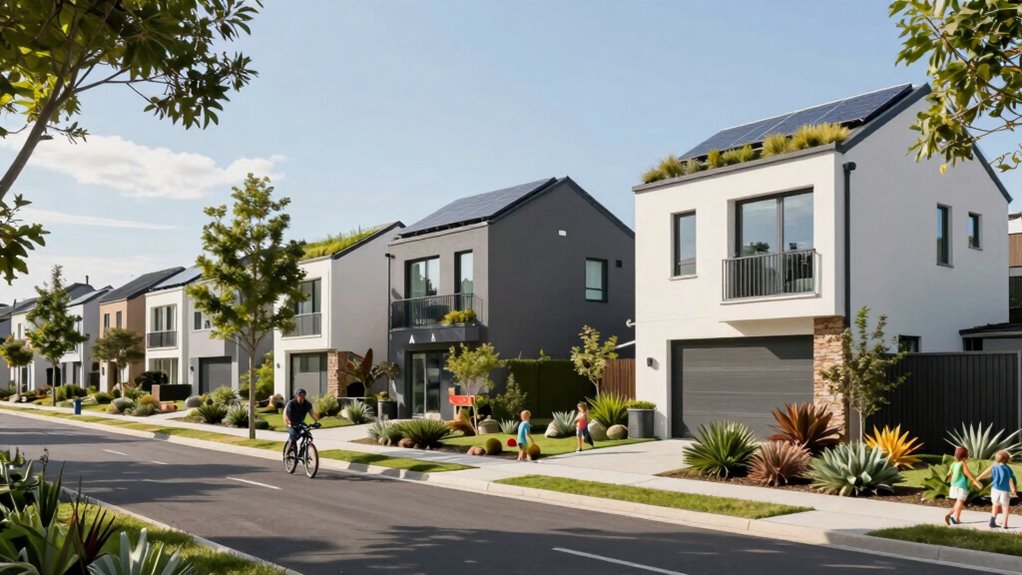
New housing trends like urban infill and modular construction boost sustainability by reducing environmental impact. Urban infill developments make better use of existing spaces, stopping unnecessary sprawl and preserving green areas. Modular building techniques cut waste, speed up construction, and lower emissions. These approaches promote eco-friendly, efficient communities that rely less on cars and conserve resources. If you want to see how these innovations shape greener neighborhoods, there’s more to discover below.
Key Takeaways
- New housing trends prioritize eco-friendly materials and energy-efficient designs, reducing environmental impacts.
- Urban infill development minimizes sprawl, conserving green spaces and natural landscapes.
- Modular construction accelerates building processes, lowers waste, and decreases resource consumption.
- Sustainable housing promotes walkable communities, reducing reliance on cars and lowering carbon emissions.
- Overall, these trends drive the industry toward environmentally conscious practices and resilient neighborhoods.

As housing trends evolve, sustainability has become a vital factor shaping new developments and renovations. You’re likely noticing that more projects focus on reducing environmental impact while maximizing efficiency. Two key trends driving this shift are urban infill and modular construction. Urban infill involves developing vacant or underused parcels within existing urban areas, rather than expanding outward into undeveloped land. This approach minimizes sprawl, preserves green spaces, and makes better use of existing infrastructure, reducing the need for new roads, utilities, and other resources. When you opt for urban infill projects, you’re contributing to smarter land use that diminishes your carbon footprint and promotes a more sustainable cityscape.
Urban infill promotes smarter land use, reduces sprawl, and helps create more sustainable, green communities.
Modular construction complements this trend by enabling faster, more efficient building processes that generate less waste. Instead of traditional on-site building methods, modular construction involves prefabricating sections of a building in a factory setting, then transporting and assembling them on-site. This method not only cuts construction time but also reduces material waste, energy consumption, and disruption to surrounding communities. When you choose modular homes or renovations, you’re embracing a sustainable approach that conserves resources and lowers emissions associated with lengthy construction projects. Additionally, innovations in building techniques are continually improving the sustainability and efficiency of modular methods. Incorporating eco-friendly materials into these techniques further enhances their environmental benefits.
Both trends are reshaping how you think about sustainable living. Urban infill ensures you’re making the most of limited space, which helps protect natural landscapes and reduces the environmental costs of suburban expansion. It also encourages diverse, walkable communities, decreasing reliance on cars and lowering overall emissions. Furthermore, the integration of sustainable materials into construction practices enhances the eco-friendliness of new developments. Meanwhile, modular construction allows you to enjoy a more eco-friendly building process, with less waste and a smaller carbon footprint. It’s especially appealing if you want a quick turnaround or need to adapt your home efficiently.
Together, urban infill and modular construction push the housing industry toward more environmentally conscious practices. They help you live in spaces that are not only functional and modern but also aligned with sustainability goals. By focusing on these trends, you’re supporting smarter land use, reducing resource consumption, and promoting greener communities. Additionally, incorporating innovative building techniques like modular construction can further enhance environmental benefits. As you consider new housing options or renovations, embracing these approaches means you’re contributing to a future where development is balanced with environmental preservation. This shift benefits everyone, including you, by creating healthier, more resilient neighborhoods that stand the test of time while minimizing ecological impact.

EMAGISPACE Patented ABS Interlocking Connecting Blocks, Wall Systems are Durable and Sustainable –Your New Wall System Will Assemble in Only 15-30 Minutes! – 105” L x 48” W x 96” H – Made in The USA
EASY ASSEMBLY – Emagispace uses a patented, kit-based building block technology to ship and set up modular walls…
As an affiliate, we earn on qualifying purchases.
As an affiliate, we earn on qualifying purchases.
Frequently Asked Questions
How Do Urban Infill Developments Impact Local Ecosystems?
Urban infill developments can disrupt local ecosystems and threaten urban biodiversity. You might notice that replacing green spaces with buildings reduces habitats for plants and animals, leading to ecosystem disruption. While these developments promote efficient land use, they often come at the cost of natural habitats. To minimize impact, you should consider incorporating green roofs, parks, or native plantings, helping preserve local ecosystems amid urban growth.
What Role Do Government Policies Play in Sustainable Housing Trends?
You see, government policies shape sustainable housing trends considerably. For instance, over 60% of new developments are influenced by renewable incentives, encouraging eco-friendly designs. Zoning regulations also steer construction, promoting density and reducing urban sprawl. These policies motivate builders and homeowners to prioritize sustainability, making eco-conscious choices easier. Your local government’s support can lead to smarter, greener housing options, ultimately transforming communities into healthier, more resilient places to live.
How Are Smart Home Technologies Influencing Energy Efficiency?
Smart home technologies, like smart thermostats, substantially boost your energy efficiency by optimizing heating and cooling based on your habits and preferences. They also facilitate renewable integration, allowing your home to better utilize solar or wind energy, reducing reliance on fossil fuels. By adopting these technologies, you actively lower your carbon footprint and contribute to a more sustainable future, making your home smarter and greener at the same time.
Are Tiny Homes a Viable Solution for Sustainable Urban Living?
Tiny homes are a viable solution for sustainable urban living because they offer affordable options and emphasize space optimization. You can reduce your environmental impact by choosing a tiny home, which requires fewer materials and energy to build and maintain. Plus, their compact design encourages efficient use of space and resource conservation, making them an attractive choice for eco-conscious individuals seeking a practical, sustainable lifestyle in urban environments.
How Does Construction Waste Management Affect Housing Sustainability?
Construction waste management plays a critical role in housing sustainability—you might not realize it, but it can make or break eco efforts. By prioritizing construction recycling and waste reduction, you help minimize landfill overload and resource depletion. This responsible approach conserves materials, reduces energy use, and lowers emissions. When you manage waste wisely, you’re actively shaping a greener future for housing, making sustainable living more achievable and impactful than ever before.

Infill: New Houses for Urban Sites
Used Book in Good Condition
As an affiliate, we earn on qualifying purchases.
As an affiliate, we earn on qualifying purchases.
Conclusion
As you embrace these new housing trends, remember they’re like the roots of a growing tree—anchoring sustainability into our communities. By choosing eco-friendly designs, smarter materials, and innovative technologies, you help shape a future where homes are both comfortable and kind to the planet. Your choices act as seeds for change, sprouting a greener, more resilient world. Together, you can turn the housing landscape into a flourishing forest of sustainable living.

Construction Materials, Methods, and Techniques: Building for a Sustainable Future
As an affiliate, we earn on qualifying purchases.
As an affiliate, we earn on qualifying purchases.
The Modular Home
Used Book in Good Condition
As an affiliate, we earn on qualifying purchases.
As an affiliate, we earn on qualifying purchases.