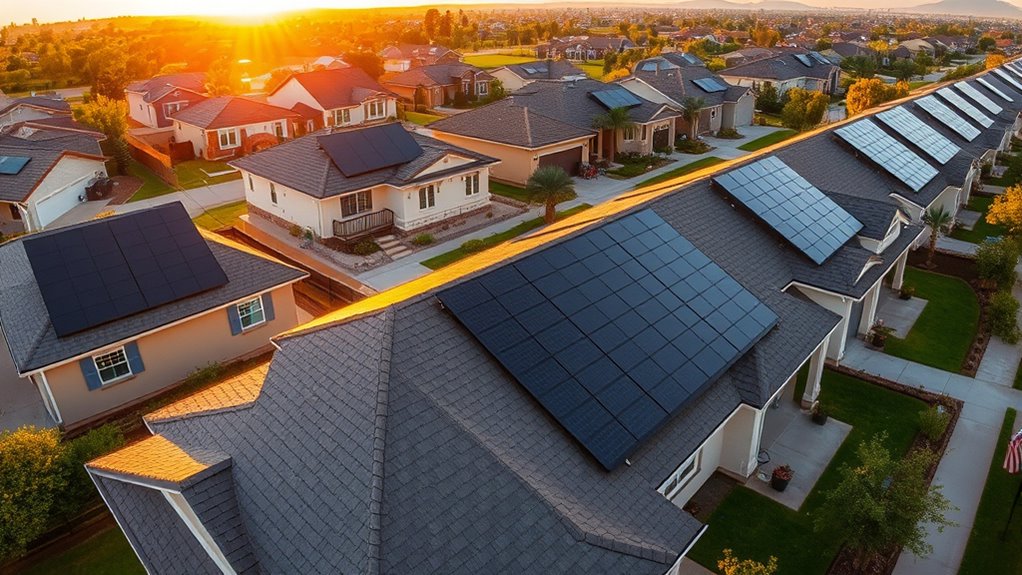

More homeowners are choosing rooftop solar systems to save money and help the environment. Solar panels let you generate your own electricity, lowering your energy bills, while batteries give you backup power and more control. Thanks to government incentives like tax credits and rebates, solar has become more affordable. To maximize your investment, it’s important to understand available programs and choose the right system. Keep exploring to discover how you can benefit from solar energy too.

Prime made for students and young adults
- Fast, free delivery for dorm and study essentials
- Prime Video and Amazon Music included
- Member-only deals
Key Takeaways
- Increasing homeowners adopt rooftop solar for environmental benefits and lower energy bills.
- Energy storage systems like batteries boost household energy independence and backup power.
- Government incentives and tax credits reduce upfront costs, encouraging solar adoption.
- Utility programs and net metering credits help offset energy costs and maximize investment returns.
- Technological advancements and policy support promote sustainable, greener energy solutions for homes.

As more homeowners recognize the environmental and financial benefits, solar homes are becoming increasingly common across the country. Installing rooftop solar panels allows you to generate your own electricity, reducing reliance on grid power and cutting down your energy bills. But to maximize these benefits, many homeowners are also investing in energy storage systems. Energy storage, such as batteries, enables you to store excess solar energy generated during the day for use at night or during cloudy days. This not only increases your energy independence but also provides backup power during outages, giving you peace of mind and greater control over your energy consumption.
Installing energy storage with solar panels boosts independence and provides backup power during outages.
You might wonder how to make your solar investment more affordable. That’s where policy incentives come into play. Government programs, tax credits, and rebates substantially lower the upfront costs of installing solar systems. For instance, the federal Investment Tax Credit (ITC) allows you to deduct a substantial percentage of your installation costs from your federal taxes, making solar more accessible. Many states and localities also offer additional incentives, like property tax exemptions or cash rebates, which further ease the financial burden. These policy incentives are designed to encourage homeowners like you to adopt renewable energy, making it easier to switch to solar without breaking the bank.
When you look into installing solar panels, understanding the available policy incentives is vital. They can dramatically shorten your payback period and improve your return on investment. Plus, some incentives are set to expire or change over time, so acting sooner guarantees you don’t miss out on the best deals. Many utility companies also offer special programs or net metering options, allowing you to earn credits for excess energy you send back to the grid. This can offset your energy costs even more and make your solar system more cost-effective in the long run.
In addition to the financial benefits, embracing energy storage and taking advantage of policy incentives align with a sustainable lifestyle. You reduce your carbon footprint and help move the country toward cleaner energy sources. As you consider making your home a solar one, it’s important to stay informed about new incentives and technological advancements. Working with experienced solar providers can help you navigate the process, from selecting the right energy storage system to maximizing available policy benefits. Incorporating proper system design can further optimize your energy production and savings. In doing so, you’re not only investing in your home’s future but also contributing to a greener, more resilient energy system for everyone.
Popular right now

Vitamix 5200 Blender with 64 oz Container, Black

Hisense E7 Cinema Series 55-Inch Hi-QLED Mini-LED 4K UHD Smart Fire TV

Bose QuietComfort Wireless Noise-Cancelling Headphones, Sandstone
As an affiliate, we earn on qualifying purchases.
Frequently Asked Questions
What Are the Long-Term Maintenance Costs for Rooftop Solar Panels?
Your long-term maintenance costs for rooftop solar panels are generally low. With proper care, you can expect minimal expenses, mainly involving routine maintenance schedules like cleaning panels and inspecting connections. Cost estimation suggests annual upkeep might be around $150 to $300. Regular inspections help identify issues early, ensuring your system performs efficiently and lasts for 25-30 years, making solar a cost-effective, sustainable energy choice over time.
How Does Solar Panel Efficiency Vary With Different Roof Types?
You might worry about how your roof type affects solar panel efficiency, but it varies with solar orientation and roof material. Flat roofs often need special mounting, while angled roofs with south-facing orientation maximize sunlight absorption. Metal or asphalt shingles generally support panels well, maintaining efficiency. By choosing the right placement and considering your roof’s material, you can optimize your solar system’s performance, saving you money and energy in the long run.
Are There Government Incentives for Installing Solar Homes?
Yes, you can benefit from government rebates and tax incentives when installing solar homes. These programs help lower your upfront costs and make solar energy more affordable. You should check your local and national programs, as they often offer substantial rebates or credits for installing solar panels. Taking advantage of these incentives can considerably speed up your return on investment and help you contribute to a greener environment.
What Are the Best Practices for Maximizing Solar Energy Capture?
To maximize solar energy capture, you should optimize tilt angles for your panels, ideally aligning them to your latitude for peak efficiency. Regularly check for shading and clear obstructions like trees or debris, as shading mitigation boosts output. Keep panels clean and free from dirt or snow, and consider using monitoring systems to track performance. These practices guarantee you harness the most energy from your rooftop solar system efficiently.
How Do Weather Conditions Affect Solar Panel Performance Over Time?
Weather variability definitely impacts your solar panel performance over time. Cloud cover, rain, snow, and fog reduce sunlight exposure, decreasing energy output. Climate impact can cause panels to degrade faster in harsh conditions or extreme temperatures. While panels are designed to withstand weather changes, consistent exposure to severe weather may lower their efficiency and lifespan. Regular maintenance and choosing high-quality panels help mitigate weather-related performance issues.
Conclusion
As you watch this solar revolution unfold, it’s clear that rooftop solar is more than just a trend—it’s a movement shaping the future. By harnessing the sun’s power today, you’re joining a legacy of innovators who understood the importance of sustainable energy long before the digital age. Embrace this change now, and remember, even in the age of smartphones, a solar-powered home remains a symbol of forward-thinking progress.