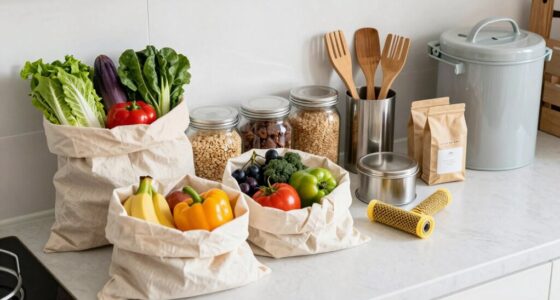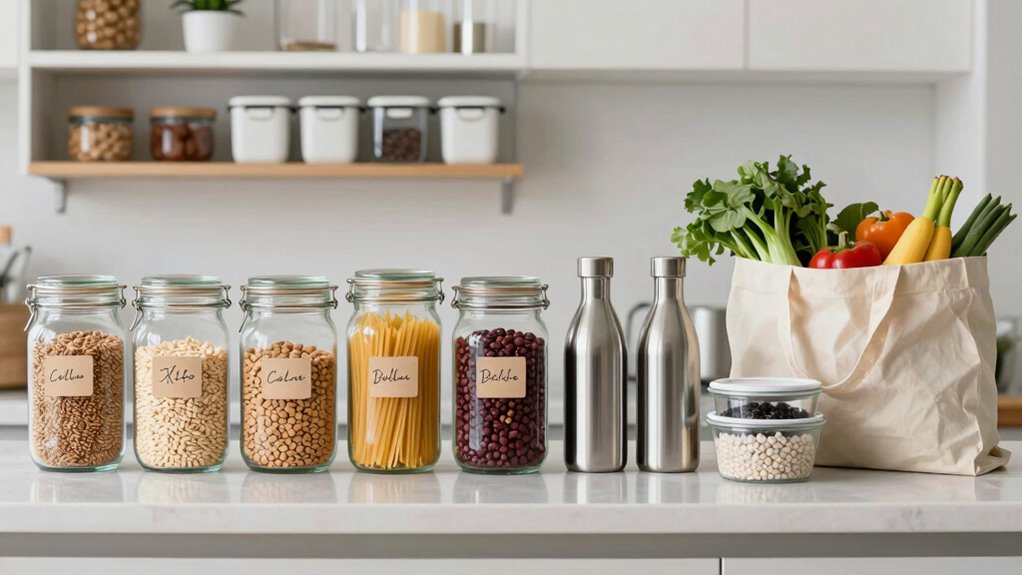

To build a refill-friendly household, start by replacing single-use plastics with reusable containers for your pantry and personal care items. Use bulk sections and refill stations to cut packaging waste, and bring your own bottles for refills. Organize your home with labeled, eco-friendly containers, and consider making DIY cleaning and personal care products to reduce packaging. Get everyone involved and foster a sustainable mindset; there’s more to discover to make lasting change.
Key Takeaways
- Stock a variety of reusable containers and jars for pantry items, cleaning supplies, and personal care products.
- Utilize store bulk sections and refill stations with personal bottles to minimize packaging waste.
- Create DIY cleaning and personal care products to reduce reliance on single-use packaging.
- Educate all household members about sustainable habits and involve them in waste reduction efforts.
- Develop organized storage systems and label containers for easy, eco-friendly household management.
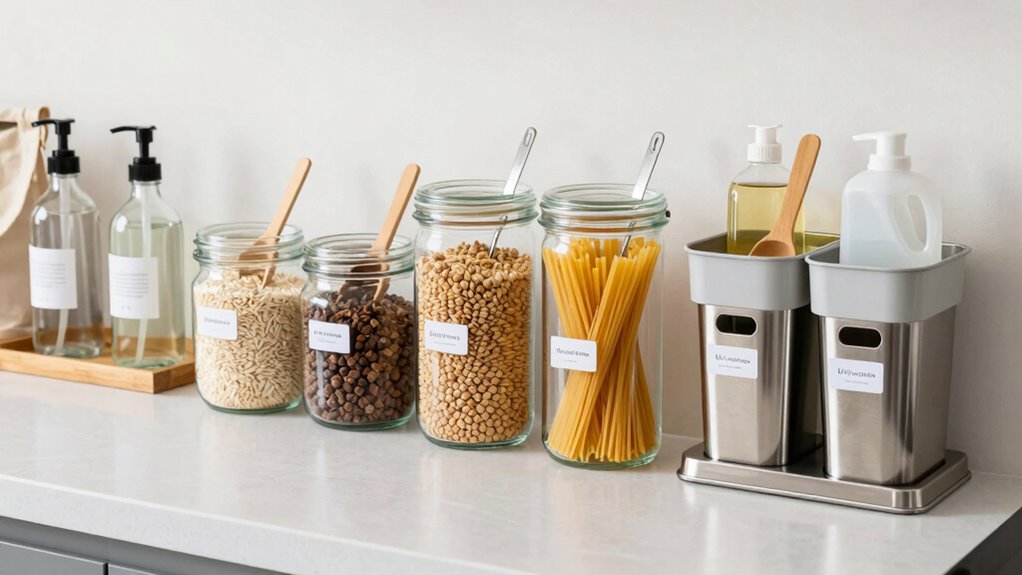
Creating a refill-friendly household is easier than you might think, and it’s a powerful way to reduce waste and save money. By making simple changes, you can cut down on plastic waste and develop sustainable habits that benefit both the environment and your wallet. The key is to focus on reducing reliance on single-use plastics and embracing reusable containers and materials whenever possible. Start by identifying the products in your home that generate the most plastic waste, like cleaning supplies, personal care items, or pantry staples. Once you recognize these, you can seek refillable options or bulk purchases that minimize packaging.
Transitioning to a refill-friendly household doesn’t mean sacrificing convenience. Many stores now offer bulk sections or refill stations for common household items like detergents, shampoo, or hand soap. Bringing your own bottles and containers allows you to refill directly at these stations, avoiding unnecessary packaging. Not only does this reduce plastic waste, but it also creates a more mindful shopping routine. Instead of grabbing multiple small bottles, you’ll carry one durable container that can be topped up repeatedly, turning your shopping trips into opportunities to practice sustainable habits.
Building a refill-friendly environment extends beyond shopping. You can stock your home with reusable jars, bottles, and containers for storing everything from pantry staples to personal care products. Label your containers clearly to keep things organized, and choose durable, eco-friendly materials like glass or stainless steel. This approach minimizes waste and encourages you to be more intentional about the products you use daily. Additionally, consider making your own cleaning solutions or personal care products. Doing so reduces packaging waste and gives you control over the ingredients, aligning with your goal to create a more sustainable household. Incorporating waste reduction strategies can help you stay on track and maximize your impact. Being aware of environmental impacts can further motivate you to adopt more refill-friendly habits. Developing a sustainable mindset can also inspire innovative ways to minimize waste in other areas of your life.
Another effective step is to educate everyone in your household about the importance of reducing plastic waste and developing sustainable habits. When everyone understands the benefits, it becomes easier to stick with refill routines and avoid disposable alternatives. Encourage family members or roommates to participate by creating a shared goal to lower household waste. This collective effort not only amplifies the positive impact but also fosters a sense of responsibility and teamwork.
Incorporating refill-friendly practices into your daily routine might take some initial effort, but it quickly becomes second nature. Over time, you’ll notice how much less plastic waste you produce and how much money you save by avoiding unnecessary packaging. Adopting sustainable living practices can further motivate you to maintain these habits and inspire others around you. By making these small but impactful changes, you’re helping to build a more sustainable household that values the environment and reduces its footprint, one refill at a time.

Rubbermaid Brilliance Tritan Plastic Food Storage Containers BPA Free Airtight Lids Ideal for Lunch Meal Prep & Leftovers Set of 5 (3.2 Cup)
100% Leak-proof: Guaranteed no-spill seal and secure latches
As an affiliate, we earn on qualifying purchases.
As an affiliate, we earn on qualifying purchases.
Frequently Asked Questions
How Do I Find Refillable Products for My Household?
To find refillable products, start by searching for eco-friendly packaging options online and at local stores. Look for brands that emphasize sustainability and offer refillable containers. Use bulk shopping tips to buy larger quantities of essentials, which often come in reusable or minimal packaging. Additionally, visit zero-waste shops or specialty stores that prioritize refill stations, making it easier to reduce waste and build a refill-friendly household.
Are Refill Stations Available in Local Stores?
Yes, many local stores now offer refill stations, making it easier for you to reduce waste and support eco-friendly packaging. These stations encourage sustainable consumer behavior by allowing you to refill containers instead of buying new ones. You’ll find refill stations for products like cleaning supplies, personal care, and even beverages. Check with your favorite stores or look for eco-conscious shops in your area to enjoy these convenient, environmentally friendly options.
What Are the Cost Differences Between Refillable and Disposable Products?
Think of refillable products as a long-term investment, like planting a tree, while disposables are quick to fall like leaves. Refillable items often cost more upfront but save money over time, reducing waste and environmental impact. Disposable products might seem cheaper initially, but they add up and strain recycling programs. Ultimately, choosing refills supports sustainability, saves money in the long run, and helps lessen environmental damage.
How Do I Store Refills to Keep Them Fresh?
You should store refills in eco-friendly packaging inside airtight storage containers to keep them fresh. Look for options like glass jars, stainless steel canisters, or BPA-free plastic containers that seal tightly. Keep them in a cool, dark place away from sunlight and moisture, which can degrade the contents. Proper storage not only maintains freshness but also reduces waste, supporting your goal of a refill-friendly, sustainable household.
Can I Refill Household Cleaning Products Safely at Home?
Yes, you can refill household cleaning products safely at home, turning your kitchen into a laboratory of eco-friendly packaging and DIY cleaning solutions. Think of it as nurturing a garden—carefully measure ingredients, label your bottles clearly, and store refills properly. Use reusable bottles to reduce waste, and always follow safe mixing practices. This way, you craft effective cleaners that protect your home and the planet, one refill at a time.

Eyesaline Emergency Eyewash Station Refill Bottles, 16 oz – 1/Pack of 4
Emergency Eye Relief: Sterile saline solution specifically formulated for immediate eye irrigation in emergency situations, providing quick and…
As an affiliate, we earn on qualifying purchases.
As an affiliate, we earn on qualifying purchases.
Conclusion
So, congratulations—you’re now officially a pioneer in the Refill Revolution. Who knew ditching single-use plastics could be this easy? Just imagine telling your grandkids about the days when “disposable” was a thing. Soon, you’ll be sipping from refillable bottles while the planet cheers—or at least stops crying. Keep up the good work, eco-warrior! Because if we don’t, future generations might just have to learn how to survive on plastic alone.

Hygea Natural Cleaning Supplies Kit All Purpose Cleaners, Citrus Degreaser, Floor and Tile Cleaner, Window, Glass and Mirror Cleaner- No Harsh Chemicals, Family safe – 4 Pack 24 oz Sprays
DEGREASER: The Citrus Sparkle non-toxic degreaser cleans up tough messes like grease, stains, and more with the incredible…
As an affiliate, we earn on qualifying purchases.
As an affiliate, we earn on qualifying purchases.

32oz – 4 Pack Glass Jars with Bamboo Lids, Glass Pantry Storage Containers with Airtight Lids, Round Air Tigh Food Storage Canisters for Cereal, Pasta, Flour, Sugar, Rice, Best for Kitchen Organizer
[ Premium Glass Storage Containers with Lids Set of 4 ]: Premium glass jars with bamboo lids set…
As an affiliate, we earn on qualifying purchases.
As an affiliate, we earn on qualifying purchases.