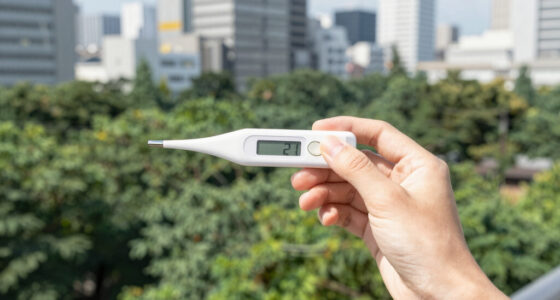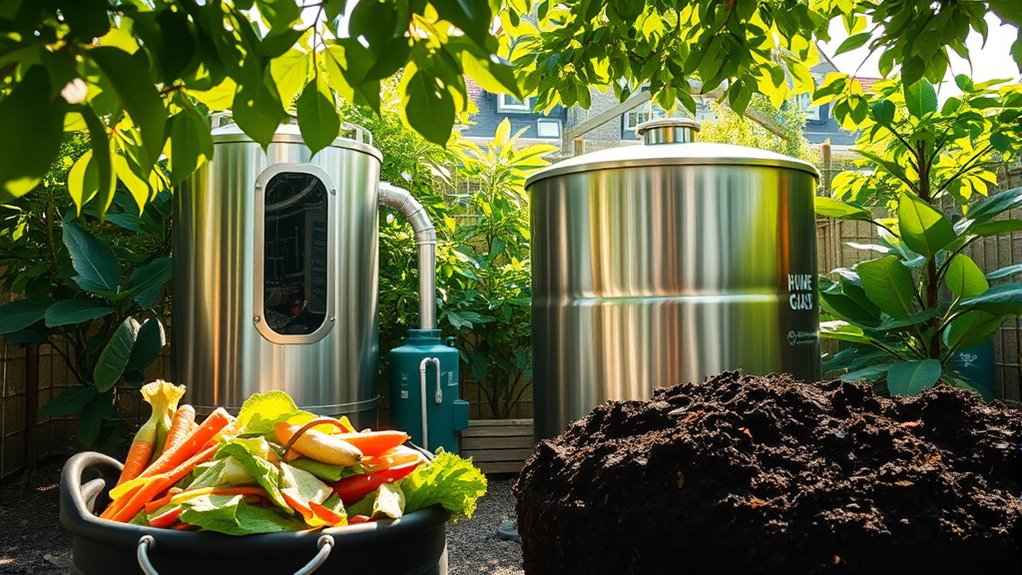

By setting up a home composter and biogas system, you can turn your food scraps into valuable resources like organic fertilizer and renewable energy. Composting enriches your garden and reduces landfill waste, while biogas captures gases to power your kitchen or heat your home. These eco-friendly solutions lower your carbon footprint and promote sustainable living. Keep exploring to discover how you can effectively implement these innovative systems in your household.
Key Takeaways
- Home composters convert food scraps into nutrient-rich compost, enriching soil and reducing waste sent to landfills.
- Biogas systems capture methane from organic waste, producing renewable energy for cooking and heating.
- Integrating composters and biogas units creates a sustainable, closed-loop waste management system at home.
- Modern composting technologies minimize odors and pests, making organic recycling hygienic and convenient.
- Using food waste for compost and biogas decreases reliance on fossil fuels and lowers household carbon footprints.
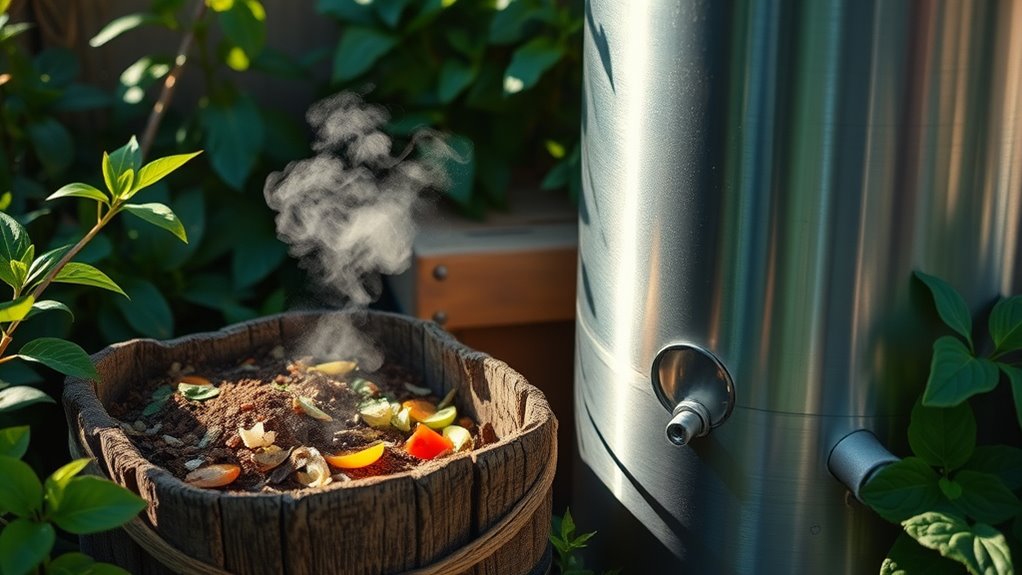
Have you ever considered turning your household waste into a valuable resource? By embracing organic recycling through home composters and biogas systems, you can reduce your environmental impact while generating sustainable energy. Instead of tossing food scraps into the trash, you can transform them into nutrient-rich compost or even biogas that powers your home. This process not only minimizes landfill waste but also supports eco-friendly practices that benefit the planet and your wallet.
Using a home composter allows you to convert kitchen scraps—fruit peels, vegetable leftovers, coffee grounds—into compost that enriches your garden soil. It’s a straightforward way to practice organic recycling, turning waste into a resource that enhances plant growth naturally. Composting also decreases methane emissions from organic waste decomposing in landfills, helping combat climate change. Plus, when you manage your compost properly, you avoid unpleasant odors and pests, making the process convenient and environmentally responsible.
Biogas systems take this concept a step further by capturing the gases produced during the natural breakdown of organic waste. When you set up a small-scale biogas digester at home, food waste and other biodegradable materials produce methane, which you can harness as a clean, renewable energy source. This biogas can be used for cooking, heating, or even generating electricity, providing a sustainable energy alternative. It’s a smart way to turn everyday food scraps into power, decreasing reliance on fossil fuels and lowering your carbon footprint.
Integrating both home composters and biogas units into your household routines empowers you to become more self-sufficient. These systems work together to close the loop on waste management, turning what would be garbage into valuable resources. Not only do you reduce waste sent to landfills, but you also create a cycle of reuse that benefits the environment. With a little effort, you can produce your own organic fertilizer and energy, making your household more sustainable and eco-conscious.
Adopting these practices also educates family members and neighbors about sustainable energy and environmental responsibility. It’s a simple, effective way to contribute to a healthier planet, inspiring others to follow suit. The initial setup might require some investment of time and resources, but the long-term benefits—cost savings, reduced waste, and a smaller carbon footprint—are well worth it. Home composters and biogas systems offer a practical, impactful way to turn everyday food waste into a powerful tool for sustainability, helping you live greener and more resourceful every day.
Furthermore, modern composting technologies are designed to minimize odors and pests, making the process even easier and more hygienic for households.

Utopia Kitchen Countertop Compost Bin 1.3 Gallon, Stainless Steel, Silver
- Capacity: 1.3 Gallon stainless steel bin
- Durability: Scratch, crack, and chip resistant
- Odor Control: Includes charcoal filters for smell
As an affiliate, we earn on qualifying purchases.
As an affiliate, we earn on qualifying purchases.
Frequently Asked Questions
What Types of Food Waste Are Unsuitable for Composting or Biogas?
You should avoid composting or biogas with food waste that includes dairy, meat, fats, and oils, as they can cause odors and pests. Additionally, avoid non-food items like plastics or metals. Proper food waste sorting helps, and using composting additives can speed up decomposition. Stay away from spoiled or moldy food, as it can disrupt the process and attract unwanted pests, making your compost or biogas less effective.
How Long Does It Take to Produce Usable Biogas From Food Waste?
Think of biogas production like brewing a fine tea—you’ll wait for the flavors to develop fully. Typically, it takes 2 to 4 weeks for food waste to produce usable biogas, depending on factors like biogas efficiency and composting durations. During this time, microbes break down organic matter, gradually releasing methane. Patience guarantees you get a good yield, making your effort worthwhile as the biogas builds up steadily.
Are There Health Risks Associated With Biogas Production at Home?
Yes, there are health risks associated with biogas production at home if you don’t follow proper biogas safety and health precautions. You might encounter leaks, which can cause gas inhalation or fire hazards, and exposure to ammonia or bacteria. To stay safe, guarantee your biogas system is well-maintained, use proper safety gear, and ventilate the area. Regularly check for leaks and keep a fire extinguisher nearby.
What Is the Cost Comparison Between Composting and Biogas Systems?
Cost comparisons clarify that composting costs are considerably lower than biogas systems. You’ll find composting offers cost efficiency with minimal initial investment, making it budget-friendly for most households. Biogas systems, however, demand a higher initial investment due to equipment and setup expenses, though they can save money long-term by generating fuel. Ultimately, your choice hinges on balancing the budget’s boundary with your desire for energy efficiency and environmental impact.
How Can I Safely Store or Transport Biogas Produced at Home?
To safely store biogas at home, you should use a proper biogas storage container designed to handle the gas pressure. Make sure to keep it in a well-ventilated area away from flames or heat sources. Always check for leaks with soapy water before handling, and wear protective gear during transportation. Follow safety precautions diligently to prevent accidents and guarantee safe storage and transport of your biogas.
small-scale biogas digester for home use
As an affiliate, we earn on qualifying purchases.
As an affiliate, we earn on qualifying purchases.
Conclusion
So, next time you toss food scraps into your trash, remember—you could be fueling your life instead of wasting it. Why settle for landfill chaos when you can turn your leftovers into energy? It’s almost like magic, except it’s science. Get a compost bin or biogas digester and start your journey from food waste to fuel—because who needs a landfill when you’ve got a little ingenuity and a dash of sarcasm?

Jobe's Organics Fast Acting Granular Fertilizer Compost Starter, Easy Plant Care Compost Accelerator, 4 lbs Bag
- Accelerates Composting: Speeds up outdoor composting process
- Nutrient-Rich Formula: Provides 4-4-2 NPK nutrients
- Organic and Chemical-Free: No synthetic chemicals, USDA OMRI listed
As an affiliate, we earn on qualifying purchases.
As an affiliate, we earn on qualifying purchases.
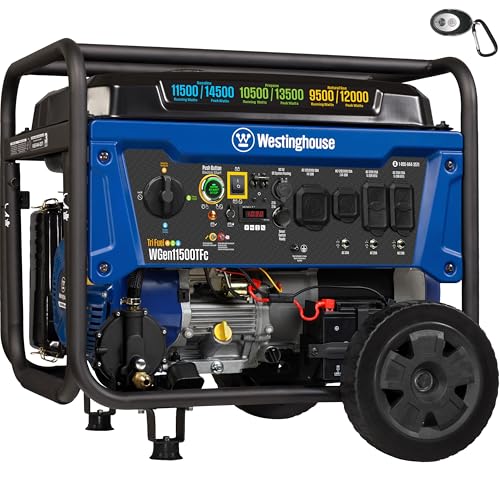
Westinghouse 14500 Peak Watt Tri-Fuel Home Backup Portable Generator, Remote Electric Start, Transfer Switch Ready, Gas, Propane, and Natural Gas Powered
- Backup power for large homes: Reliable large-home backup or portable power
- Peak and running wattage: 14500 peak / 11500 running watts (gas)
- Fuel options: Gasoline, propane, natural gas
As an affiliate, we earn on qualifying purchases.
As an affiliate, we earn on qualifying purchases.