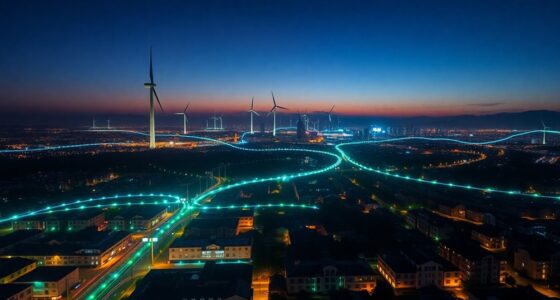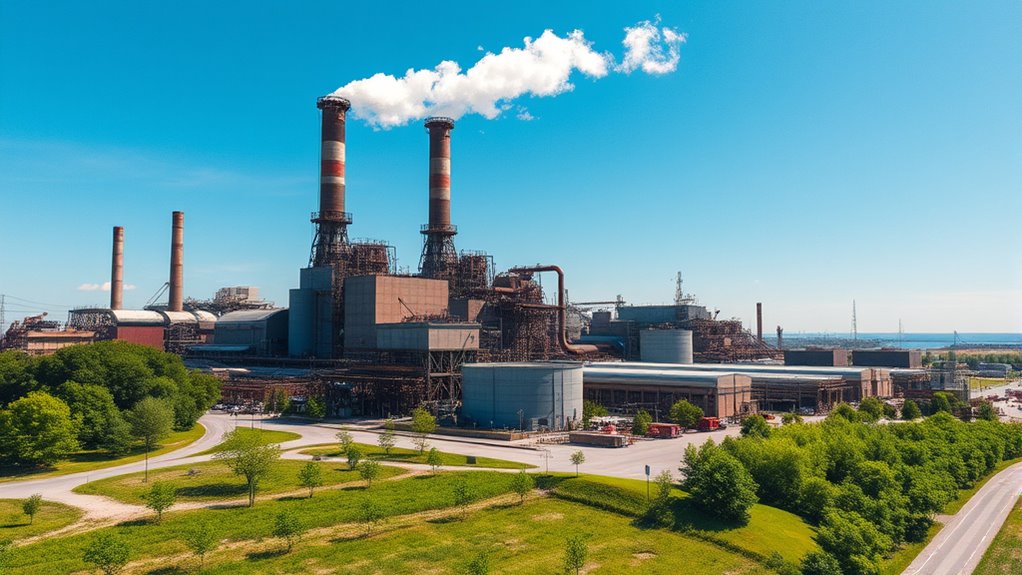
To clean up heavy industry, you can support innovations like green steel and cement, which use renewable energy sources like solar or wind to power their processes. Carbon capture technology plays a key role by trapping emissions that still occur, preventing them from reaching the atmosphere. Together, these approaches considerably reduce the environmental impact of industries like steel and cement. If you explore further, you’ll discover how these advancements are shaping a more sustainable future for heavy manufacturing.
Key Takeaways
- Green steel and cement are produced using renewable energy sources, reducing reliance on fossil fuels and lowering carbon emissions.
- Carbon capture technology traps CO₂ emissions during manufacturing, minimizing environmental impact of heavy industries.
- Combining renewable energy with carbon capture enables sustainable production of high-quality steel and cement.
- Innovations in green manufacturing improve efficiency and cost-effectiveness, promoting wider adoption of eco-friendly methods.
- Transitioning to green steel and cement significantly reduces global industrial carbon emissions and supports climate change mitigation efforts.
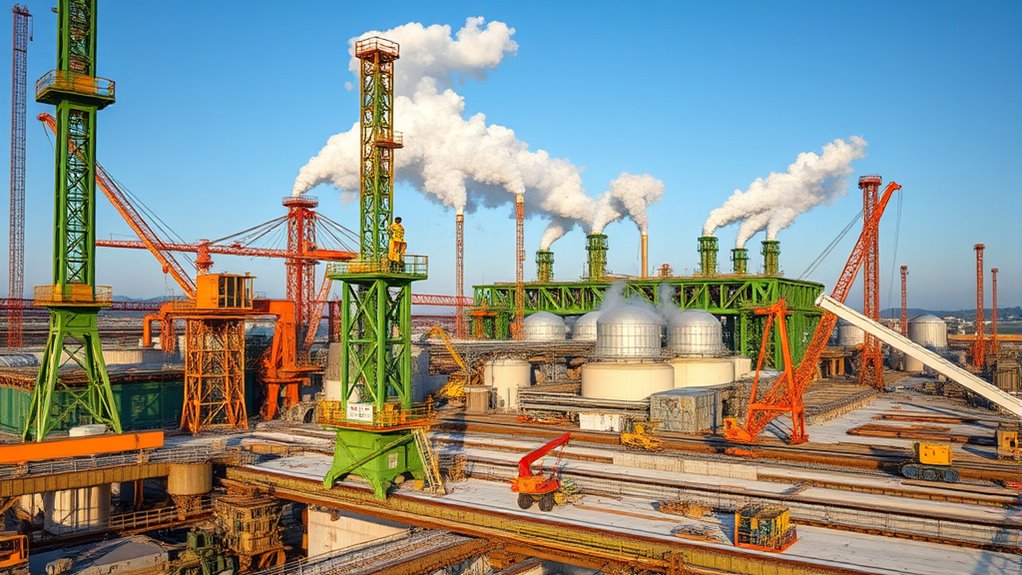
Have you ever wondered how we can restore environments damaged by heavy industry? It’s a pressing question, especially as industries like steel and cement production have long been major polluters. The good news is, new approaches are emerging that aim to make these sectors cleaner and more sustainable. One of the key strategies involves integrating renewable energy sources into industrial processes. Instead of relying on fossil fuels, factories are starting to harness solar, wind, or hydro power to generate the energy needed for production. This shift drastically cuts carbon emissions, helping reduce the industry’s carbon footprint. Using renewable energy not only lowers greenhouse gases but also decreases dependence on finite fossil fuel resources, making the process more sustainable over the long term.
Alongside renewable energy, carbon capture technology plays a crucial role in cleaning up heavy industry. Carbon capture involves trapping CO₂ emissions directly from factory emissions before they escape into the atmosphere. These captured emissions can then be stored underground or repurposed, preventing them from contributing to climate change. Implementing carbon capture in steel and cement manufacturing reduces their environmental impact substantially, especially since these industries are responsible for a large share of global CO₂ emissions. The process isn’t perfect yet, but advancements are making it more efficient and cost-effective. As a result, industries can continue producing essential materials while drastically lowering their climate impact.
Combining renewable energy and carbon capture creates a powerful synergy. For example, steel plants powered by renewable energy can operate with minimal fossil fuel dependency, while carbon capture technology ensures that any residual emissions are contained. This approach makes it feasible to produce high-quality steel and cement with a much lower environmental toll. Furthermore, innovations like green steel and cement are gaining traction, highlighting a shift toward more sustainable manufacturing practices. Governments, companies, and researchers are all investing heavily in these technologies, recognizing that clean alternatives are crucial for the planet’s future.
Frequently Asked Questions
What Are the Main Technologies Enabling Green Steel Production?
You can produce green steel mainly through hydrogen reduction and electrolysis processes. Hydrogen reduction replaces coal with green hydrogen, cutting emissions markedly. Electrolysis uses renewable energy to split water into hydrogen and oxygen, providing clean hydrogen for steelmaking. These technologies enable you to lower carbon footprints, make steel more sustainable, and shift to greener industry practices. By adopting them, you help reduce environmental impact and support a cleaner future.
How Do Green Cement Alternatives Compare in Cost to Traditional Options?
Think of green cement alternatives as seedlings trying to grow in a garden of tradition. Their cost comparison to traditional options often leans towards higher expenses now, but as production scales up, economic viability improves. While they may seem pricier today, the long-term savings from reduced emissions and regulatory compliance can make green options more sustainable financially. Embracing these options is like planting seeds for a cleaner, more resilient future.
Are Government Policies Supporting the Transition to Green Heavy Industry?
Yes, government policies actively support the shift to green heavy industry through policy incentives and regulatory frameworks. You’ll find that many governments offer tax breaks, grants, and subsidies to encourage sustainable practices. Additionally, strict regulations push industries to reduce emissions and adopt cleaner technologies. These measures make it easier for you to invest in greener options, ultimately accelerating the shift toward more sustainable steel and cement production.
What Are the Challenges in Scaling Green Steel and Cement Globally?
Oh, sure, scaling green steel and cement globally is a walk in the park—if that park’s filled with supply chain hurdles and skeptical markets! You’ll face hurdles like inconsistent supply chains, high costs, and resistance from industries stuck in old ways. Market acceptance remains tricky too, as stakeholders need convincing that eco-friendly options are both reliable and affordable. So, buckle up; transforming heavy industry isn’t for the faint-hearted.
How Will Green Industry Efforts Impact Employment in Heavy Industries?
Your efforts in green industry will lead to labor shifts, creating new jobs in clean technology and sustainable practices. As industries adopt greener methods, you’ll need to develop new skills, emphasizing training and education. While some traditional roles may decline, you’ll find opportunities in skilled positions related to renewable energy, automation, and environmental management. Overall, your focus on skill development will be key to adapting and thriving in this evolving job landscape.
Conclusion
As you push for greener steel and cement, remember you’re steering a massive ship through turbulent waters—each effort a crucial wave shaping a cleaner future. Your actions, like sparks igniting change, can transform heavy industry from a smoky beast into a shining beacon of sustainability. Keep steering with purpose, because every step you take helps carve a clearer path toward a healthier planet, turning the heavy weight of industry into a force for good.