For a low-waste countertop water filter, I would start with the GLACIER FRESH PC04 as the best overall fit for buyers who want a gravity-fed setup without powered dispensing. The Amwater 5-Stage stands out for its stated 8,000-gallon filter capacity, while the AquaTru Glass Carafe offers a compact reverse-osmosis format for buyers prioritizing filtration over simplicity. The main tradeoffs are filter life and replacement waste, countertop space, and whether you need reverse osmosis or prefer a simpler gravity or carbon system. Read on for how these 13 options differ and which type of household each suits.

Prime made for students and young adults
- Fast, free delivery for dorm and study essentials
- Prime Video and Amazon Music included
- Member-only deals
Key Takeaways
- GLACIER FRESH PC04 leads for a straightforward gravity-fed approach; it avoids the powered dispensing features found on several RO models.
- Amwater’s stated 8,000-gallon capacity makes it a standout for buyers focused on fewer filter changes, though capacity alone does not show which contaminants a filter reduces.
- Reverse osmosis dominates the feature-rich options, with models from AquaTru, Tanoxo, DREO, Purevua, and Bluevua adding different combinations of carafes, temperature controls, UV, and autofill pitchers.
- Purewell’s 0.01μm ultrafiltration model offers a middle path for shoppers seeking fine filtration in a gravity system without choosing an RO dispenser.
- Low waste depends on the whole routine: filter lifespan, replacement materials, electricity, water discarded during filtration, and whether the unit replaces bottled water all affect the result.
| GLACIER FRESH PC04 Gravity-Fed Countertop Water Filtration System |  | Best Low-Waste Gravity Pick | Capacity: 2.25 gallons | Material: Stainless steel | Technology: Elarisey electrosorption | VIEW ON AMAZON | See Our Full Breakdown |
| Waterdrop CT01 Countertop Water Filter System with Hot and Cold Water Dispenser |  | Best for No-Waste Convenience | Filtration: Six-stage activated carbon | Tank capacity: 1.32 gallons | Filter life: Six months | VIEW ON AMAZON | See Our Full Breakdown |
| Purewell 9-Stage Gravity Water Filter System with Water Level Window, 2.25 Gallon Countertop System (BO-FL-2.25G) |  | Best Long-Life Gravity Filter | Capacity: 2.25 gallons | Filtration stages: Nine | Filter life: Up to 1,000 gallons per filter; six months recommended | VIEW ON AMAZON | See Our Full Breakdown |
| AquaTru Glass Carafe Countertop Reverse Osmosis Water Filter System |  | Best Glass-Carafe RO Pick | Filtration: Four-stage reverse osmosis | Contaminants listed: 84, including PFOA, PFOS, lead, microplastics, fluoride, arsenic, and chromium-6 | Certification testing: NSF standards; tested by IAPMO | VIEW ON AMAZON | See Our Full Breakdown |
| Tanoxo Countertop Reverse Osmosis Water Filter System, 5-Stage RO Filtration with Instant Hot Water, 4 Temperature Settings, BPA-Free |  | Best Feature-Rich RO Dispenser | Filtration stages: Five, including UV LED purification | RO membrane precision: 0.0001μm | Contaminant removal claim: 99.99%, including PFAS, chlorine, fluoride, and heavy metals | VIEW ON AMAZON | See Our Full Breakdown |
| DREO Reverse Osmosis Countertop Water Filter System (RO 112, 3L) | 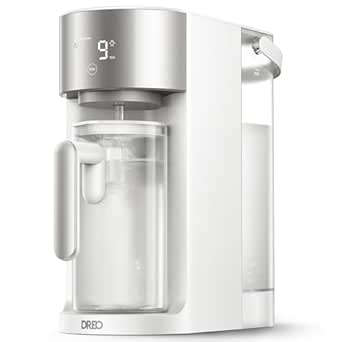 | Best for Low-Waste RO in a Small Household | Purification method: 7-in-1 reverse osmosis | Contaminant reduction claim: 99.9%, including PFOA, PFOS, chlorine, and fluoride | Testing: SGS tested to NSF/ANSI 58 standards | VIEW ON AMAZON | See Our Full Breakdown |
| Purevua PR1-A Countertop UV Reverse Osmosis Water Filter System |  | Best for Flexible Batch Sizes | Filtration: Six stages: PP, coconut-shell activated carbon, 0.0001 μm RO membrane, post-carbon, post-PP, and UV | Contaminant reduction claim: 99.99% of 1,000+ contaminants | Batch settings: 0.5, 1, or 2 L | VIEW ON AMAZON | See Our Full Breakdown |
| Bluevua RO100ROPOT-UV Countertop Reverse Osmosis Water Filter System with UV Light |  | Best for a Glass-Carafe Setup | Filtration: Six stages, including 0.0001 μm RO membrane, UV, and remineralization | Carafe: High-borosilicate glass | Capacity: 1,700 ml | VIEW ON AMAZON | See Our Full Breakdown |
| DREO Countertop Reverse Osmosis Water Filter with Two Autofill Pitchers |  | Best for Shared Pitcher Rotation | System type: Countertop reverse osmosis | Filtration: 7-in-1 | Contaminant reduction claim: 99.9%, including PFOA, PFOS, chlorine, and fluoride | VIEW ON AMAZON | See Our Full Breakdown |
| Amwater 5-Stage Countertop Water Filter, 8,000-Gallon Capacity |  | Best for Avoiding RO Wastewater | Filtration stages: Five | Filter type: Washable composite ceramic | Filter capacity: 8,000 gallons | VIEW ON AMAZON | See Our Full Breakdown |
| Purewell 3-Stage 0.01μm Ultra-Filtration Gravity Water Filter System |  | Best Low-Waste Gravity Pick | Capacity: 2.25 gallons | Filtration stages: 3 | Filter pore size: 0.01 microns | VIEW ON AMAZON | See Our Full Breakdown |
| AquaTru Classic Alkaline Countertop Reverse Osmosis Water Purifier |  | Best for Broad Contaminant Reduction | Filtration: Four-stage reverse osmosis | Contaminant reduction: Up to 84 contaminants | Tank capacity: 1 gallon | VIEW ON AMAZON | See Our Full Breakdown |
| HOMEWATER Countertop Water Filter System |  | Best for Measured, On-Demand Dispensing | Capacity: 1 gallon | Purification method: Activated carbon filtration | Power source: Corded electric | VIEW ON AMAZON | See Our Full Breakdown |
More Details on Our Top Picks
GLACIER FRESH PC04 Gravity-Fed Countertop Water Filtration System
The GLACIER FRESH PC04 suits households that want a large, non-electric reservoir and a simple gravity-fed routine. Its 2.25-gallon capacity serves up to four people, while stainless steel construction avoids relying on a disposable-bottle habit. Compared with the Purewell 9-Stage, it has a shorter stated cartridge life—up to 200 gallons versus 1,000 gallons per filter—but its electrosorption approach and less complex setup may appeal to buyers who want a straightforward system. The tradeoff is a three-month replacement recommendation, plus an initial two-gallon flush. It also takes up a substantial patch of counter space and depends on source-water conditions, so I would choose it for shared daily use rather than for a small kitchen or buyers seeking independently specified contaminant reduction.
Pros:- 2.25-gallon capacity is suited to shared household use
- Gravity-fed operation needs no electricity, plumbing, or tools
- Stainless steel body supports a reusable countertop setup
- Cartridge is rated for up to 200 gallons
Cons:- Recommended cartridge replacement every three months
- Requires flushing with two gallons before first use
- Performance may vary with source-water quality
Best for: Households of up to four who want a non-electric stainless steel gravity filter and can keep up with quarterly cartridge changes
Not ideal for: Small-kitchen owners or buyers who want a long stated filter life and detailed contaminant reduction figures
- Capacity:2.25 gallons
- Material:Stainless steel
- Technology:Elarisey electrosorption
- Power:Gravity-fed; no electricity
- Filter life:Up to 200 gallons; replace every three months
- Dimensions:14.25 x 13.58 x 16.14 inches
- Suggested household size:Up to four people
- Initial setup:Flush with two gallons before use
Our verdict“Choose the PC04 if you want a roomy, electricity-free household filter and accept more frequent cartridge changes.”
Waterdrop CT01 Countertop Water Filter System with Hot and Cold Water Dispenser
The Waterdrop CT01 puts instant hot and cold dispensing ahead of broad contaminant removal. Its six-stage activated-carbon filter is described as reducing chlorine, rust, and other impurities while retaining calcium and magnesium, and the system produces zero wastewater. That makes it a different kind of low-waste choice from the AquaTru Glass Carafe, which uses reverse osmosis for a wider stated contaminant list but requires a different filtration process. Five presets and adjustable temperatures can make frequent drinks easier to prepare; the child lock is useful in a family kitchen. The tradeoff is that the 1.32-gallon tank must be refilled by hand, and this is not an RO system that significantly lowers TDS. I would pick it for convenience and water-use priorities, not when reducing dissolved solids is the main goal.
Pros:- Produces zero wastewater according to product data
- Dispenses hot and cold water with five presets
- Retains beneficial calcium and magnesium minerals
- Child safety lock and six-month filter life
Cons:- Manual refilling is required for the 1.32-gallon tank
- Does not significantly lower TDS
- Needs an electrical outlet for dispensing functions
Best for: Tea, coffee, and family households seeking filtered hot and cold water without plumbing or RO wastewater
Not ideal for: Buyers focused on lowering TDS or seeking reverse-osmosis filtration for a broad stated contaminant list
- Filtration:Six-stage activated carbon
- Tank capacity:1.32 gallons
- Filter life:Six months
- Temperature range:113°F–203°F
- Presets:Hot, coffee, tea, formula, and cold
- Installation:Countertop; no plumbing required
- Dimensions:14.43 x 10.61 x 13.43 inches
- Supported TDS level:Up to 700 PPM
Our verdict“Choose the CT01 if convenient hot and cold filtered water with no wastewater matters more to you than lowering TDS.”
Purewell 9-Stage Gravity Water Filter System with Water Level Window, 2.25 Gallon Countertop System (BO-FL-2.25G)
Among the gravity-fed options here, the Purewell stands out for its long stated filter life and a specific fluoride-reduction claim. Its nine-stage process includes a 0.01μm hollow-fiber UF membrane, activated carbon, KDF, and fluoride-reduction material; the supplied data says it reduces up to 90% of fluoride. Each of its two filters is rated for up to 1,000 gallons, compared with the GLACIER FRESH PC04’s 200-gallon cartridge rating. A water-level window also makes it easier to see when the upper chamber needs filling. The tradeoffs are its 20-inch height, brand-specific replacement elements, and a reported leak risk if the upper chamber is filled while the lower one is full. It does not lower TDS, so I would choose it for gravity filtration and the stated fluoride claim, not dissolved-solids reduction.
Pros:- Two included filters are rated for up to 1,000 gallons each
- Nine-stage filtration includes a 0.01μm UF membrane
- Product data states up to 90% fluoride reduction
- Water-level window helps monitor the lower chamber
Cons:- Does not lower TDS
- Replacement filter elements are not compatible with other brands
- Can leak if the upper chamber is filled while the lower chamber is full
Best for: Households wanting gravity filtration, a visible water level, and a stated fluoride-reduction claim with longer-lasting filter elements
Not ideal for: Buyers who need lower TDS, universal replacement filters, or a shorter countertop unit
- Capacity:2.25 gallons
- Filtration stages:Nine
- Filter life:Up to 1,000 gallons per filter; six months recommended
- Fluoride reduction:Up to 90%
- Filtration components:Pre-filter mesh, PP cotton, fluoride-reduction material, activated carbon, KDF, silver ions, and 0.01μm hollow-fiber UF membrane
- Dimensions:8.8 x 8.8 x 20 inches
- Weight:7.7 pounds
- Material:Stainless steel and polypropylene
Our verdict“Choose the Purewell if you want a gravity-fed system with a long stated filter life and fluoride reduction, and have room for its height.”
AquaTru Glass Carafe Countertop Reverse Osmosis Water Filter System
The AquaTru Glass Carafe is the clearest fit here for buyers who want countertop reverse osmosis paired with a reusable glass serving vessel. Its four-stage system is listed as removing 84 contaminants, including PFAS, lead, microplastics, fluoride, and arsenic, and its NSF standards testing is attributed to IAPMO. The removable, lidded carafe gives it a more table-ready format than the Tanoxo, which adds hot-water dispensing and a portable pitcher. For a low-waste routine, glass avoids plastic contact with the stored water and the system can replace repeated single-use bottles. The tradeoff is that RO still requires manual tank filling and periodic filter replacements, and the unit occupies counter space. I would favor AquaTru when the glass carafe and stated contaminant coverage matter more than hot-water presets or a compact footprint.
Pros:- Four-stage RO system lists 84 contaminants removed
- IAPMO-tested to NSF standards, according to product data
- Removable glass carafe with lid avoids plastic contact for serving
- No plumbing or installation required
Cons:- Requires manual refilling of the tap-water tank
- Takes up counter space
- Replacement filters are an ongoing maintenance requirement
Best for: Buyers seeking countertop RO with a removable glass carafe and stated reduction of PFAS, lead, fluoride, and other contaminants
Not ideal for: People with limited counter space or those who want instant hot water and less manual refilling
- Filtration:Four-stage reverse osmosis
- Contaminants listed:84, including PFOA, PFOS, lead, microplastics, fluoride, arsenic, and chromium-6
- Certification testing:NSF standards; tested by IAPMO
- Pre/carbon filter life:Six months or 300 gallons
- Reverse-osmosis filter life:One year or 600 gallons
- VOC carbon filter life:One year or 300 gallons
- Carafe:Removable glass carafe with lid
- Warranty:One year
Our verdict“Choose AquaTru if a glass carafe and broad stated contaminant removal are your priorities in a countertop RO system.”
Tanoxo Countertop Reverse Osmosis Water Filter System, 5-Stage RO Filtration with Instant Hot Water, 4 Temperature Settings, BPA-Free
The Tanoxo combines countertop RO filtration with instant hot-water dispensing, making it the most appliance-like option in this group. Its five-stage setup includes a 0.0001μm membrane and UV LED purification; product data claims 99.99% contaminant removal, including PFAS, fluoride, and heavy metals. The 4:1 pure-to-drain ratio is a useful low-waste detail for an RO unit, while the 5.5-liter tank and 1.2-liter pitcher support serving and storage. Compared with the AquaTru Glass Carafe, Tanoxo adds four temperature settings and a TDS display, but its pitcher is BPA-free rather than glass. The tradeoff is a powered unit with a sizeable tank that still needs counter space and filter upkeep. I would choose it for households that will use the temperature presets, rather than buyers who want a simpler glass-carafe setup.
Pros:- Five-stage filtration includes a 0.0001μm RO membrane and UV LED
- Four preset temperatures for drinks and room-temperature water
- 4:1 pure-to-drain ratio is specified
- Display shows TDS levels and filter life
Cons:- Requires filter replacements over time
- Tank and dispenser take up counter space
- BPA-free pitcher is not glass
Best for: Households that want countertop RO, instant hot water, temperature presets, and a visible filter-life and TDS display
Not ideal for: Buyers preferring a glass carafe, minimal electronics, or a compact countertop footprint
- Filtration stages:Five, including UV LED purification
- RO membrane precision:0.0001μm
- Contaminant removal claim:99.99%, including PFAS, chlorine, fluoride, and heavy metals
- Temperature settings:Four: 113°F, 185°F, 197°F, and room temperature
- Pure-to-drain ratio:4:1
- Tank capacity:5.5 liters
- Pitcher capacity:1.2 liters
- Display:LED touchscreen with real-time TDS and filter life
Our verdict“Choose Tanoxo if you want RO water with instant hot dispensing and will make use of its temperature controls and display.”
DREO Reverse Osmosis Countertop Water Filter System (RO 112, 3L)
The DREO RO 112 pairs a compact footprint with a 3:1 pure-to-drain ratio, making it a strong fit for one or two people who want reverse osmosis without plumbing work. Its stated 3-liter tank and 1.1-liter pitcher suit modest daily use, while TDS and filter-life monitoring, auto-fill, and self-cleaning reduce routine upkeep. Compared with the DREO Countertop Reverse Osmosis Water Filter with Two Autofill Pitchers, this model has a clearer capacity and dimensions in the supplied details, but only one pitcher is specified. The tradeoffs are the small reservoir for shared or high-volume use and ongoing replacement filters. Its SGS testing to NSF/ANSI 58 is a useful data point, though this unit still sends some water to drain.
Pros:- 3:1 pure-to-drain ratio uses less feed water than the Bluevua RO100ROPOT-UV’s 2:1 ratio
- TDS and filter-life monitoring make maintenance easier to track
- Auto-fill and self-cleaning add hands-free convenience
- Compact 6.7-inch width and installation-free setup suit limited counter space
Cons:- The 3-liter tank may need frequent refilling in a busy household
- At 9.5 pounds, it is not especially light to move around
- Replacement filters add ongoing upkeep
Best for: One- or two-person households seeking a compact, installation-free RO system with a lower-waste ratio and simple maintenance reminders
Not ideal for: Larger households that draw filtered water throughout the day or buyers who want to avoid wastewater and replacement filters
- Purification method:7-in-1 reverse osmosis
- Contaminant reduction claim:99.9%, including PFOA, PFOS, chlorine, and fluoride
- Testing:SGS tested to NSF/ANSI 58 standards
- Tank and pitcher:3 L tank; 1.1 L pitcher
- Filter life:265 gallons (1,000 L)
- Pure-to-drain ratio:3:1
- Dimensions and weight:14.5 × 6.7 × 13.4 in; 9.5 lb
- Installation:Countertop; no installation required
Our verdict“Choose the DREO RO 112 for compact, lower-waste RO in a small household; skip it if you need a large reservoir or a wastewater-free filter.”
Purevua PR1-A Countertop UV Reverse Osmosis Water Filter System
The Purevua PR1-A suits households that want to make only as much filtered water as they need: its settings cover 0.5, 1, or 2 liters per cycle. The six-stage system adds UV treatment to reverse osmosis, and the heat-resistant borosilicate glass pitcher avoids serving water from a plastic carafe. Like the Bluevua RO100ROPOT-UV, it combines UV with countertop RO; Purevua’s stated 3:1 filtered-to-waste ratio uses less feed water than Bluevua’s 2:1 ratio. Its automated TDS detection, filter flushing, and alerts also give it more specified maintenance features than the Bluevua listing. The catch is space: it needs at least 18 inches of vertical clearance, and its motor hums during production. It still creates wastewater, so its lower-waste design does not eliminate it.
Pros:- Three batch settings help limit production to the amount needed
- 3:1 filtered-to-waste ratio is more water-efficient than the Bluevua RO100ROPOT-UV’s 2:1 ratio
- Borosilicate glass pitcher provides a non-plastic serving container
- TDS detection, filter flushing, and filter-life alerts support routine upkeep
Cons:- Requires at least 18 inches of vertical clearance
- Motor hum may be intrusive in quiet rooms
- RO filtration still sends water to waste
Best for: Apartment dwellers, office users, or RV owners who want UV plus RO and need to choose between small and full two-liter batches
Not ideal for: People with low cabinets or quiet kitchens, and buyers seeking a filter that produces no wastewater
- Filtration:Six stages: PP, coconut-shell activated carbon, 0.0001 μm RO membrane, post-carbon, post-PP, and UV
- Contaminant reduction claim:99.99% of 1,000+ contaminants
- Batch settings:0.5, 1, or 2 L
- Wastewater ratio:3:1 filtered-to-waste
- Filter life:CF filter: 6 months; RO filter: 12 months
- Pitcher:Heat-resistant high-borosilicate glass
- Dimensions and clearance:14.6 × 7 × 14.2 in; at least 18 in vertical clearance
- Testing and materials:SGS tested; FCC certified; NSF/ANSI/CAN 372 lead-free standard; BPA-free components
Our verdict“Pick the Purevua PR1-A if batch-size flexibility and a glass pitcher matter; choose a different system if cabinet clearance or operating noise is a concern.”
Bluevua RO100ROPOT-UV Countertop Reverse Osmosis Water Filter System with UV Light
The Bluevua RO100ROPOT-UV makes the most sense for buyers who prioritize a borosilicate glass carafe and a countertop RO setup with UV and remineralization. The 1.7-liter capacity is smaller than the Purevua PR1-A’s two-liter cycle, and its 2:1 pure-to-drain ratio uses more feed water per amount of filtered water than the Purevua’s 3:1 ratio. That gives the Purevua an advantage for water efficiency, while Bluevua’s stated power-saving standby mode is useful when the system sits idle between uses. The glass container offers a plastic-free serving option, but the unit itself weighs 17.8 pounds, so “portable” is best understood as installation-free rather than easy to move. Its 0.26-liter-per-minute maximum flow rate also favors planned batches over quick refills.
Pros:- Borosilicate glass carafe avoids a plastic serving vessel
- Six-stage filtration includes RO, UV, and remineralization
- Standby mode can reduce power use while idle
- Installation-free countertop design avoids plumbing changes
Cons:- 2:1 pure-to-drain ratio is less water-efficient than the Purevua PR1-A’s 3:1 ratio
- 17.8-pound weight makes it cumbersome to relocate
- Maximum flow rate of 0.26 L per minute means slower batch production
Best for: Buyers who want UV and remineralization with a glass carafe and can leave a heavier countertop unit in place
Not ideal for: People who need fast dispensing, move their filter often, or want the lower wastewater ratio offered by the Purevua PR1-A
- Filtration:Six stages, including 0.0001 μm RO membrane, UV, and remineralization
- Carafe:High-borosilicate glass
- Capacity:1,700 ml
- Filter life:12–24 months
- Maximum flow rate:0.26 L per minute
- Pure-to-drain ratio:2:1
- Dimensions and weight:10.9 × 15.4 × 14.3 in; 17.8 lb
- Power:Corded electric
- Maximum supported feed-water TDS:500 PPM
Our verdict“Choose Bluevua for a glass-carafe RO system with UV and remineralization if you have space to keep it in place and accept slower production.”
DREO Countertop Reverse Osmosis Water Filter with Two Autofill Pitchers
Two autofill pitchers are the defining advantage of this DREO: one can be ready to serve while the other is being filled, which suits a shared kitchen better than a single-pitcher setup such as the DREO RO 112. Both models state a 3:1 pure-to-drain ratio, seven-stage filtration, TDS monitoring, and self-cleaning, but the RO 112 listing provides tank capacity, dimensions, and a filter-life figure that are absent here. That missing detail makes it harder to plan for counter fit and ongoing filter changes. SGS testing is reported as meeting NSF/ANSI 58 standards, and the system requires no installation. However, its contaminant reduction claim does not answer how much water it produces per cycle, so high-volume households should check capacity before choosing it.
Pros:- Two autofill pitchers support a ready-to-serve rotation
- 3:1 pure-to-drain ratio matches the lower-waste ratio of the DREO RO 112
- TDS and filter-life monitoring plus self-cleaning simplify routine operation
- Install-free design works without countertop plumbing
Cons:- Provided product details do not specify pitcher or tank capacity
- Filter replacement interval and cost are not provided
- Dimensions and weight are not specified, making fit and portability difficult to judge
Best for: Couples or small shared households that value having two autofill pitchers ready without installing a plumbed system
Not ideal for: Buyers who need confirmed capacity, dimensions, filter replacement intervals, or a clear estimate of ongoing filter upkeep
- System type:Countertop reverse osmosis
- Filtration:7-in-1
- Contaminant reduction claim:99.9%, including PFOA, PFOS, chlorine, and fluoride
- Pure-to-drain ratio:3:1
- Pitchers:Two autofill pitchers
- Monitoring:TDS and filter life
- Cleaning:Self-cleaning
- Testing:SGS tested; reported to meet NSF/ANSI 58 standards
- Installation:Install-free countertop setup
Our verdict“Consider this DREO if two autofill pitchers suit your household, but favor the RO 112 when documented capacity and filter-life details matter.”
Amwater 5-Stage Countertop Water Filter, 8,000-Gallon Capacity
The Amwater 5-Stage takes a different approach to low-waste filtration: its washable ceramic element works without electricity and produces no wastewater. That makes it a practical alternative to the DREO and Bluevua RO systems, which send some water to drain. It also retains minerals, while reverse osmosis is the better fit for buyers specifically seeking broad dissolved-contaminant reduction. Amwater’s stated 8,000-gallon filter capacity and washable element point toward less frequent cartridge replacement, though the supplied details do not include independent filtration test results. It attaches to a compatible faucet, so setup is less flexible than the installation-free countertop RO models. The main decision is whether you value no wastewater and retained minerals more than RO’s stated contaminant removal claims.
Pros:- Produces no wastewater, unlike the DREO and Bluevua RO systems
- Washable composite ceramic element is reusable
- Does not require electricity
- Retains minerals such as calcium, magnesium, and potassium
Cons:- Requires a compatible faucet and may depend on adapters
- No independent filtration test results are provided
- Does not offer the specific RO contaminant reduction claims listed for the DREO and Purevua systems
Best for: Households, RV users, or office kitchens with a compatible faucet that want electricity-free filtration and no wastewater
Not ideal for: Buyers seeking reverse osmosis or independently documented performance against specific contaminants
- Filtration stages:Five
- Filter type:Washable composite ceramic
- Filter capacity:8,000 gallons
- Chlorine reduction claim:Up to 99%
- Minerals:Retains minerals including calcium, magnesium, and potassium
- Operating temperature:41–100°F (5–38°C)
- Operating pressure:0.2–0.4 MPa
- Installation and power:Twist-on faucet installation with adapters; no power required
Our verdict“Choose Amwater if avoiding wastewater and electricity matters more than reverse osmosis performance claims, and your faucet is compatible.”
Purewell 3-Stage 0.01μm Ultra-Filtration Gravity Water Filter System
Gravity operation makes this Purewell a low-waste fit for households that want filtered water without power or plumbing. Its three-stage system combines a 0.01-micron UF membrane, silver ion membrane, and activated carbon block; the stainless steel housing and two included filters give it a more durable, reusable setup than disposable-bottle water routines. Compared with the Purewell 9-Stage Gravity Water Filter, this model has fewer filtration stages, so buyers choosing between them should weigh the specified membrane and carbon setup against the other model’s additional stages.
The tradeoff is that gravity filtration takes space and patience: the stated flow rate is four gallons per hour, and the 2.25-gallon capacity may be more than a small household needs. It also does not lower TDS, and the top chamber can leak if it is overfilled while the bottom is full. Plan for filter replacements every six months.
Pros:- Gravity-fed design needs no electricity or plumbing
- 304 food-grade stainless steel housing with matching spigot and stand
- Three-stage filtration includes a 0.01-micron UF membrane
- Two included filters are rated for up to 6,000 gallons combined
Cons:- Does not lower total dissolved solids
- Filters should be replaced every six months
- Overfilling the upper chamber when the lower chamber is full can cause leaks
Best for: Households seeking a reusable, electricity-free countertop filter for everyday water and occasional outdoor use
Not ideal for: Buyers who need reduced TDS, a compact dispenser, or minimal upkeep, since this system is bulky and its filters have a six-month replacement schedule
- Capacity:2.25 gallons
- Filtration stages:3
- Filter pore size:0.01 microns
- Flow rate:4 gallons per hour
- Housing material:304 food-grade stainless steel
- Filter lifespan:3,000 gallons per filter; replace every 6 months
- Certifications:NSF/ANSI 42 and NSF/ANSI 372
- Power source:Gravity; no electricity required
Our verdict“Choose this Purewell if you want a durable, power-free countertop filter and can accommodate its size and scheduled filter changes.”
AquaTru Classic Alkaline Countertop Reverse Osmosis Water Purifier
For buyers who want reverse osmosis without plumbing, the AquaTru Classic brings a broad stated reduction range to a countertop unit. Its four-stage system is designed to reduce up to 84 contaminants, including lead, fluoride, microplastics, and PFOA/PFOS. That makes it a different kind of low-waste choice from the gravity-fed Purewell 3-Stage: AquaTru offers RO filtration in a self-contained setup, while Purewell operates without electricity and holds more water.
The one-gallon tank suits renters or smaller households better than a larger gravity reservoir, but it means more frequent refills for several people. Tool-free filter replacement helps with routine upkeep, though the stated filter lifespan ranges from six months to two years, so replacement timing varies. Its bottle-reduction claim may appeal to people replacing packaged water, but the unit still occupies counter space and depends on replacement filters. Choose it for the stated contaminant coverage, not for a power-free setup.
Pros:- Four-stage reverse osmosis is stated to reduce up to 84 contaminants
- No plumbing or permanent installation required
- Tool-free filter replacement
- One-gallon tank suits countertop use in smaller homes
Cons:- One-gallon capacity can mean frequent refills
- Requires countertop space
- Filter lifespan varies from six months to two years
Best for: Renters and small households seeking countertop reverse osmosis to reduce a broad range of listed contaminants without plumbing work
Not ideal for: Large households or buyers who want an electricity-free, higher-capacity gravity system, since this model has a one-gallon tank and needs countertop space
- Filtration:Four-stage reverse osmosis
- Contaminant reduction:Up to 84 contaminants
- Tank capacity:1 gallon
- Installation:Countertop; no plumbing required
- Filter replacement:Tool-free
- Filter lifespan:6 months to 2 years
- Bottle reduction claim:Filters can replace up to 4,500 plastic bottles
Our verdict“Pick the AquaTru Classic if broad stated contaminant reduction and countertop RO matter more to you than a larger reservoir or power-free filtration.”
HOMEWATER Countertop Water Filter System
The HOMEWATER is aimed at buyers who want portion-controlled dispensing alongside countertop filtration. Its electric dispenser offers 12-, 20-, and 32-ounce presets, while the modular one-gallon tank can sit on the left, right, or back to fit different counter layouts. The stated carbon filtration targets PFAS, lead, chlorine, VOCs, microplastics, pharmaceuticals, and other contaminants. Compared with the AquaTru Classic, this is an activated carbon dispenser rather than a four-stage reverse osmosis purifier, so the choice comes down to filtration method and the convenience of measured pours.
Its plug-and-play setup avoids plumbing, but the one-gallon tank needs regular refills, and the filter cycle is four months. That replacement schedule is shorter than the AquaTru’s stated six-month-to-two-year range. Corded power also makes it less flexible than the gravity-fed Purewell 3-Stage. The presets, reminder light, and adjustable drip tray suit a household that values tidy dispensing, but buyers wanting a non-electric or larger-capacity system should look elsewhere.
Pros:- Preset dispensing provides 12-, 20-, and 32-ounce portions
- Modular tank can be positioned on the left, right, or back
- No plumbing or installation required
- Filter reminder light and adjustable drip tray support routine use
Cons:- One-gallon tank requires frequent refills
- Filter replacement cycle is every four months
- Requires corded electricity
Best for: Households that want preset serving sizes, a configurable tank position, and countertop filtration without installation
Not ideal for: Buyers seeking gravity-only operation, a larger water reserve, or a longer filter cycle than four months
- Capacity:1 gallon
- Purification method:Activated carbon filtration
- Power source:Corded electric
- Filter life cycle:4 months
- Maximum flow rate:0.5 gpm
- Dimensions:11.25 × 10.63 × 15 inches
- Weight:2.5 lbs
- Installation type:Countertop; no installation required
- Tank positions:Left, right, or back
Our verdict“Choose HOMEWATER if measured pours and flexible counter placement are priorities and you are comfortable with frequent refills and filter changes.”

How We Picked
I compared these countertop systems through the lens of low-waste ownership: how often consumables may need replacement, whether the filtration method can create wastewater, and whether the system’s format can realistically replace bottled or delivered water. I also weighed usability factors that affect daily use, including capacity, dispensing style, portability, temperature options, and visible water levels. Product claims such as certifications and gallon capacity are useful only when matched to the buyer’s water concerns and the manufacturer’s replacement guidance.
The order favors practical balance: the GLACIER FRESH PC04 is the best overall starting point for a simple gravity-fed routine; Amwater earns a value-oriented distinction for its stated high capacity; and AquaTru’s glass carafe suits buyers who want a compact RO option. Other models rank by more specific needs, such as hot water, UV treatment, autofill pitchers, or a larger gravity reservoir. I treat those features as benefits only when they solve a real household need, since added complexity can mean more parts, power use, and upkeep.
Factors to Consider When Choosing Lowwaste Water Filters Countertop
Choosing a low-waste countertop filter starts with your water and your habits, rather than the longest feature list. I would check what needs reducing, how much filtered water the household uses, and what the filter replacement routine will look like over time.
Match the filtration method to your water concerns
Start with your local water report or a suitable water test, then identify the contaminants you want to reduce. Carbon filtration, ultrafiltration, and reverse osmosis do not perform the same job, so a method’s name alone cannot tell you whether it addresses your concern. Check the model’s documentation for named contaminants and the conditions behind each claim. A certification can help, but confirm that it covers the specific contaminant reduction you need. A common mistake is paying for RO when the concern could be handled by a simpler filter, or assuming a basic carbon unit covers contaminants it was never rated to address. Choose the lightest system that meets your verified needs.
Calculate waste across the replacement cycle
Filter lifespan matters because cartridges and membranes become recurring waste, but advertised capacity is only one part of the calculation. Check how often replacement is recommended, whether the interval depends on water quality or daily volume, and whether replacement components are sold separately. For RO systems, find out how much water is rejected during filtration and what the manufacturer says about that ratio under your conditions. Compare those figures with the bottled water or delivery packaging the system may replace. Do not assume a larger capacity automatically means less environmental impact; actual household use determines how quickly the filter reaches its limit. A unit that is easy to maintain on schedule can be a better fit than one with a high headline capacity but hard-to-source parts.
Choose a capacity that fits daily demand
Estimate how much filtered water your household drinks and uses for cooking on a typical day. A small carafe can suit one person or a compact kitchen, while a larger gravity reservoir may reduce refills for a family. Capacity also affects where the system can sit and how heavy it is when full. Think about refill frequency alongside the time needed to filter a batch; countertop systems do not all produce water at the same pace. Buying a unit that is much larger than your actual need can waste counter space and encourage water to sit unused. If usage varies, a pitcher or carafe format may be easier to manage than a fixed large reservoir.
Account for power, wastewater, and convenience
Powered dispensers can make filtered water easier to use, and hot-water settings may replace a separate kettle for some households. Those features also add electrical use and more components that may need cleaning or service. Gravity systems avoid powered dispensing and can be useful during outages, though they require manual refilling and may take up more vertical space. RO systems can be attractive when their filtration capabilities match your needs, but buyers should account for rejected water and the extra steps in maintaining a membrane-based system. Consider where the unit will plug in, drain, and sit before choosing an electric model. The lowest-waste choice is usually the one whose added convenience changes a real daily habit.
Check materials and replacement availability
Look beyond the outer housing to the parts that are replaced most often. Ask whether the unit uses cartridges, membranes, UV components, or other consumables, and whether those parts are easy to find from the manufacturer. Glass carafes and stainless steel reservoirs may appeal to buyers seeking durable contact surfaces, but they do not eliminate the need to replace filter media. Confirm cleaning instructions, since awkward-to-clean parts can lead people to replace equipment early or stop using it. Also check the footprint and height under nearby cabinets; a system that does not fit its intended spot is more likely to be abandoned. Long-term usefulness depends on repair and replacement access as much as on initial construction.
Treat convenience features as tradeoffs
Features such as UV treatment, multiple water temperatures, water-level windows, and autofill pitchers can solve specific household problems. They may also bring extra maintenance steps, energy use, or parts to replace. Decide which features would change how often you use the filter before treating them as advantages. For example, an autofill pitcher may help a busy household keep drinking water ready, while a temperature dispenser may matter more to people who regularly make tea or prepare warm drinks. Compare those needs with a simpler gravity system that has fewer powered functions. A good buying decision leaves out features that sound useful but would not affect your routine.
Frequently Asked Questions
Which countertop filter is likely to create the least waste?
There is no single answer without knowing how much water you use and what the system filters out. Gravity and carbon systems may avoid RO reject water, while RO units can provide a different level or range of filtration when that is what your water requires. Compare replacement intervals, cartridge materials, and water-use guidance for the specific model. Then weigh those recurring impacts against the bottles or delivery packaging you expect to stop buying. The lowest-waste choice is the model that meets your water needs and stays in use over time.
Should I choose reverse osmosis or a gravity filter?
Choose based on the contaminants you need to address, not on the assumption that one method is always better. RO may suit a buyer whose water concerns call for its filtration approach and who accepts electricity, maintenance, and potentially rejected water. Gravity systems are simpler to operate and do not rely on powered dispensing, though their performance depends on the specific filter and its documented claims. Review contaminant reduction information for each candidate and compare replacement needs. If your water report does not point to a need for RO, a simpler system may be easier to maintain.
Does a high gallon-capacity claim mean fewer replacements in my home?
It can indicate a longer rated service life, but your actual replacement schedule may differ with water quality, usage, and the manufacturer’s instructions. The Amwater model’s stated 8,000-gallon capacity is a notable claim in this group, yet buyers should check what conditions apply and which contaminants are addressed. Estimate your household’s daily use to translate capacity into a rough service period. Also confirm the replacement element remains available. A capacity figure is most useful when paired with clear maintenance guidance and accessible replacement parts.
Are UV and autofill features worth choosing for a low-waste setup?
They are worthwhile when they make the system more useful for your household, but they do not automatically reduce waste. UV adds a treatment feature that buyers should match to a specific need and maintain according to the product guidance. Autofill pitchers can reduce the friction of keeping water ready, which may help a busy household rely less on packaged drinks. Both features may add power use or components to maintain. Compare that added convenience with a simpler system and choose the one you are more likely to use consistently.
What should I verify before buying a countertop filter for a rental?
Check the footprint, height, plug requirements, and whether the unit needs a drain or any connection to plumbing. The listed countertop options are designed as countertop systems, but electric dispensers still need a convenient outlet and room for routine cleaning. A gravity model avoids powered operation, though it may need more vertical clearance and manual refilling. Confirm replacement filters are available without a subscription or permanent installation requirement. For a rental, portability and easy removal can matter as much as filtration performance.
Conclusion
For the best overall balance of low-waste simplicity and countertop use, I recommend the GLACIER FRESH PC04 gravity-fed system. Buyers seeking a best value angle should compare Amwater’s stated 8,000-gallon capacity with its replacement details and their own water needs. For a best premium compact RO setup, the AquaTru Glass Carafe is a focused choice; beginners who want a less complex routine can start with a gravity system such as GLACIER FRESH or a Purewell option. Choose Purewell’s ultrafiltration model if that method matches your water concerns, or look to powered RO models for needs such as hot dispensing, UV, or autofill. Before deciding, match documented contaminant claims and replacement guidance to your household’s water and usage.
Halloween Picks

12-Foot Inflatable Pumpkin Halloween Archway with LED Lights

10 ft Halloween Inflatable Archway with Built-in LEDs

Spirit Halloween 54-Inch Sitting Scarecrow Animatronic
As an affiliate, we earn on qualifying purchases.