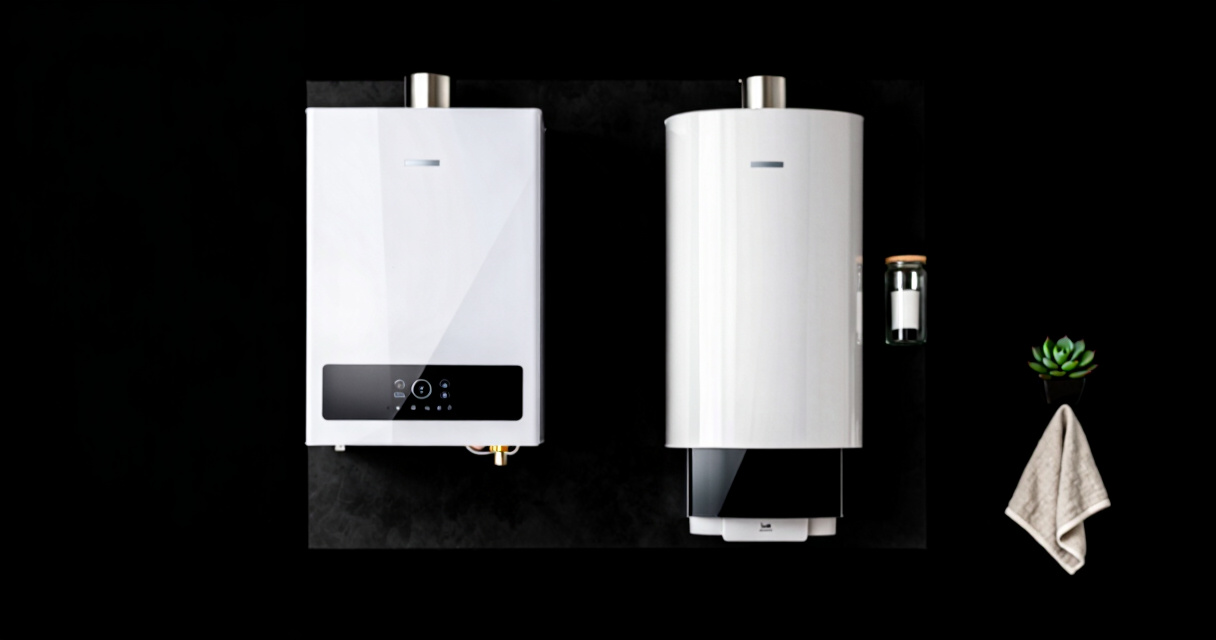

When searching for tankless water heaters, buyers face a choice between electric and gas models, each with distinct benefits and tradeoffs. The Rinnai RX199iN stands out as the best overall for its high flow rate and smart features, ideal for larger households or demanding setups. The Rheem RTEX-24 offers excellent value for electric options, balancing cost and performance. However, the main tradeoffs involve installation complexity, upfront costs, and whether the unit can handle your household’s hot water demand. Keep reading for a detailed breakdown of these models and what factors matter most in your decision.
Key Takeaways
- High flow rate models like the Rinnai RX199iN excel for larger households or high-demand applications.
- Electric models are budget-friendly but may struggle with simultaneous hot water needs in busy homes.
- Smart features and recirculation pumps add convenience but come with higher costs and complexity.
- Installation requirements vary significantly between electric and gas units, impacting overall costs.
- Choosing the right capacity and type depends heavily on household size, usage patterns, and local utility costs.



More Details on Our Top Picks
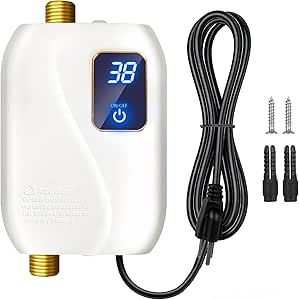
Tankless Electric Water Heater 110V, 3000W, Instant Under Sink Hot Water Heater with Digital Display
This compact electric heater stands out for offering near-instant hot water in a tiny footprint, making it ideal for under-sink use in kitchens or bathrooms. Compared with larger units like the Rheem RTEX-24, it delivers only very limited flow (0.3-0.5 GPM), which restricts its use to single fixtures or small-scale applications. Its lightweight, wall-mounted design simplifies installation for renters or those with limited space. The digital LED display and safety features like dry-burning protection add to its convenience, though proper vertical placement is essential to prevent malfunctions. This makes it perfect for quick, small-volume hot water needs but unsuitable for larger household demands.
Pros:- Instant hot water within seconds for small loads
- Compact, lightweight, and easy to mount
- Includes safety features like dry-burning protection
Cons:- Limited flow rate restricts use to small fixtures
- Requires vertical installation for proper operation
Best for: Small households or individuals needing instant hot water at a single fixture, especially in tight spaces or RVs.
Not ideal for: Whole-house heating or multiple fixtures simultaneously—its flow rate is too low for larger demands.
- Power Source:AC
- Wattage:3000 watts
- Voltage:110 Volts
- Maximum Temperature:131°F
- Maximum Pressure:1200 kPa
- Mount Type:Wall
- Special Features:Dry-burning protection, LED display, lightweight
Bottom line: This heater is best suited for those needing quick, small-volume hot water in tight spaces or mobile settings.
Rheem RTEX-24 24kW 240V Electric Tankless Water Heater, Gray
The Rheem RTEX-24 offers a substantial step up in capacity, making it suitable for providing hot water across multiple fixtures in a household. Unlike the smaller 110V model, it delivers continuous hot water thanks to its 24kW power output, but it demands a significant electrical setup—3 x 40 AMP double-pole breakers and a 200 AMP service are recommended. Its digital temperature control from 80-140°F ensures precise comfort, and its space-saving design fits well in utility rooms. Compared with similar models, its performance can vary depending on groundwater temperature, and installation complexity might require professional help. This makes it a good fit for homes with adequate electrical capacity needing reliable, on-demand hot water.
Pros:- Provides continuous hot water for multiple fixtures
- Adjustable digital temperature control
- Space-efficient design
Cons:- Requires significant electrical capacity and professional installation
- Performance can vary with groundwater temperature
Best for: Homeowners with sufficient electrical capacity seeking a reliable, whole-house hot water solution.
Not ideal for: Small apartments or homes with limited electrical service—installation could be prohibitively complex and expensive.
- Model:RTEX-24
- Power:24 kW
- Voltage:240V
- Electrical Requirements:3 x 40 AMP breakers, 200 AMP service
- Temperature Range:80-140°F
Bottom line: This heater is ideal for larger households with robust electrical systems needing dependable, on-demand hot water.
Rheem 240V Residential Tankless Water Heater RTEX-13, Gray
The Rheem RTEX-13 combines reliable on-demand hot water with precise digital temperature control, making it a solid choice for small to medium households. Its 13kW power and flow rate of up to 3.17 GPM suit homes that don’t have high simultaneous hot water demands. Its digital thermostat with +/- 1°F accuracy helps maintain consistent comfort, and the durable copper heating elements promise longevity. Compared to larger models like the RTEX-24, its lower power limits flow rate, which might not suffice for larger households. Installation is straightforward but often requires professional assistance due to its electrical and plumbing needs. This unit is well-suited for homes with moderate hot water needs and a compatible electrical setup.
Pros:- High efficiency at 99.8%
- Precise digital temperature control
- Durable copper heating elements
Cons:- Limited flow rate for larger households
- Requires 240V electrical supply and professional installation
Best for: Small to medium households with limited simultaneous hot water needs and existing 240V wiring.
Not ideal for: Large families or homes with high concurrent hot water demand—flow rate might fall short.
- Voltage:240V
- Model:RTEX-13
- Flow Rate:up to 3.17 GPM
- Power:13 kW
- Efficiency:99.8%
- Temperature Control:Digital +/- 1°F
Bottom line: This model works best for smaller households that value precise temperature control and energy efficiency without high flow demands.
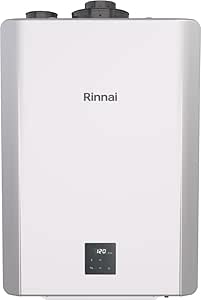
Rinnai RX199iN Condensing Smart Sense Tankless Water Heater, Indoor/Outdoor, Up to 11.1 GPM, 199,000 BTU
The Rinnai RX199iN stands out for its impressive combination of high flow rate and flexible installation options, making it suitable for both indoor and outdoor use. Compared with the Rinnai RXP199iN, it offers similar performance but lacks the built-in recirculation pump, which can be a drawback for those seeking instant hot water solutions. Its high energy efficiency (UEF .98) translates into lower operating costs, but the need for a venting cap outdoors and a separate Wi-Fi module adds complexity and expense. This model is ideal for larger households or homes needing versatile installation, yet the extra components may deter budget-conscious buyers.
Pros:- High flow rate of 11.1 GPM supports multiple fixtures simultaneously
- Energy-efficient UEF .98 reduces operational costs
- Versatile indoor or outdoor installation options
- Supports both natural gas and propane
Cons:- Wi-Fi control requires separate purchase, adding to total cost
- Venting cap needed for outdoor use complicates installation
- Professional installation recommended, increasing upfront costs
Best for: Homeowners requiring high capacity and flexible placement, especially in mixed indoor/outdoor environments
Not ideal for: Small apartments or budget-conscious users who prefer plug-and-play simplicity without additional modules
- Flow Rate:11.1 GPM
- BTU:199,000
- Fuel Type:Natural Gas or Propane
- Installation:Indoor or Outdoor
- Energy Efficiency:UEF .98
- Wi-Fi Connectivity:Optional (Control-R module sold separately)
Bottom line: This model suits those wanting a durable, flexible, and efficient water heater for demanding households willing to invest in installation complexity.
Titan Electric Tankless Water Heater
The Titan Electric Tankless Water Heater provides a straightforward electric alternative for on-demand hot water, especially suitable where gas is unavailable. Unlike the gas-powered Rinnai RX199iN, it operates solely on 220V and 54 amps, limiting its capacity but simplifying installation in existing electric systems. While compact and space-efficient, its limited flow rate makes it less suitable for larger households. It excels in small apartments or secondary locations, but those with high simultaneous hot water needs should look elsewhere.
Pros:- Compact size easily fits in tight spaces
- Energy-efficient electric operation
- Simple to operate with basic controls
- No venting or gas line needed
Cons:- Limited to 220V, restricting where it can be installed
- Not suitable for large households with high demand
- May require dedicated electric circuit, adding to installation costs
Best for: Single-family homes or apartments with limited hot water demand and access to 220V power
Not ideal for: Large households or homes with high simultaneous hot water needs, due to its limited flow capacity
- Voltage:220 V
- Max Amps:54
Bottom line: This pick makes the most sense for small-scale electric setups where space-saving and simplicity are priorities.
Rinnai RXP199iN Condensing Smart Sense Tankless Water Heater, Indoor/Outdoor, Up to 11.1 GPM, 199,000 BTU, with Recirculation Pump
The Rinnai RXP199iN distinguishes itself with smart recirculation technology that learns usage patterns, reducing wait times for hot water. Compared to the RX199iN, it includes an internal pump that improves efficiency for homes with frequent hot water needs, making it a prime choice for busy households. Its high efficiency (UEF .98) and compact size add to its appeal, but the need for a separate Wi-Fi module and venting cap for outdoor use may complicate setup. This model is best for those seeking convenience and advanced features in a space-saving package.
Pros:- Built-in smart recirculation learns usage patterns
- High energy efficiency (UEF .98)
- Compact size with internal pump for quick hot water
- Flexible indoor/outdoor installation
Cons:- Wi-Fi control requires an extra purchase
- Venting cap needed for outdoor installation
- More complex installation process
Best for: Tech-savvy homeowners seeking high efficiency and instant hot water, especially in larger households
Not ideal for: Users who prefer plug-and-play solutions without additional modules or complex installation
- Flow Rate:11.1 GPM
- BTU:199,000
- Gas Type:Natural Gas or Propane
- Efficiency:.98
- Installation:Indoor or Outdoor
- Recirculation:Smart-Circ with internal pump
Bottom line: This model works best for users prioritizing instant hot water and smart features, willing to handle extra setup steps.
Rheem 18kW 240V Tankless Electric Water Heater, Gray
The Rheem 18kW Electric Water Heater offers precise control with a digital thermostatic display, making it suitable for users who want accurate temperature management. Its flow rate of up to 4.4 GPM aligns with small household demands, but this limits its effectiveness for larger families. Compared to electric-only options like the Titan, it provides more user-friendly controls and a durable copper heating element, yet its requirement for 240V power can restrict placement options. It’s best for moderate demand homes with existing high-voltage capacity.
Pros:- Digital thermostatic control with LED display
- High flow rate for small to medium household needs
- Durable, field-serviceable copper elements
- Easy to install with threaded connections
Cons:- Requires 240V power, limiting flexibility
- Limited flow rate for large demand
- Not suitable for whole-home use in high-demand scenarios
Best for: Small households or secondary hot water sources where precise temperature control is valued
Not ideal for: Large families or homes with high simultaneous hot water demands, due to its limited flow rate
- Power:18kW
- Voltage:240V
- Flow Rate:up to 4.4 GPM
- Color:Gray
- Water Connection:3/4 inch NPT
Bottom line: This model suits users needing precise control and moderate flow capacity in an electric setup.
110V Tankless Electric Water Heater, 3000W, Instant On-Demand Hot Water with Digital Display
The 110V Tankless Electric Water Heater offers instant hot water for small fixtures, making it ideal for kitchens, RVs, or secondary bathrooms. Its 3000W power and digital display provide quick, precise temperature control, but its very limited flow rate of 0.3-0.5 GPM restricts its use to single fixtures, unlike larger models such as the Rheem 18kW. Compared to the electric Titan, it is more compact and easier to install, but it cannot handle shower demands or multiple outlets simultaneously. This heater is best suited for small-scale, point-of-use applications.
Pros:- Compact, wall-mounted design fits in tight spaces
- High thermal efficiency (98%)
- Multiple safety protections included
- Easy to install with standard connections
Cons:- Not suitable for shower use due to low flow rate
- Vertical mounting only, no horizontal option
- Limited to small fixtures or single outlet use
Best for: RVs, small sinks, or secondary bathroom fixtures requiring instant hot water with minimal space
Not ideal for: Whole-house or high-demand applications, due to its very limited flow capacity
- Power:3000W
- Voltage:110V
- Maximum Temperature:131°F
- Flow Rate:0.3-0.5 GPM
- Protection Features:Leakage, dry boil, waterproof (IPX4)
Bottom line: This unit works best for point-of-use hot water needs where space and instant delivery trump high flow capacity.

How We Picked
These products were selected based on a combination of performance, build quality, ease of installation, and value. Priority was given to units that can reliably deliver hot water at the required flow rates for typical household needs. We also considered user-friendly features like digital displays and smart controls, as well as long-term maintenance costs. The ranking reflects a balance between price, versatility, and overall reliability, ensuring options for different household sizes and budgets.Factors to Consider When Choosing Tankless Water Heaters
Choosing the right tankless water heater involves evaluating several key factors that impact performance, cost, and ease of use. Not all units are created equal, and understanding these considerations helps avoid common pitfalls like under-sizing or overpaying for features you won’t need. Here are the main factors to keep in mind:Size and Flow Rate
Matching the water heater’s capacity to your household’s hot water demand is critical. Measure your peak usage to select a unit with an appropriate flow rate, expressed in gallons per minute (GPM). Under-sizing leads to inadequate hot water, while over-sizing results in unnecessary expense and energy use. Larger households or homes with multiple bathrooms typically require higher GPM ratings, especially for gas units that can handle more simultaneous outlets.
Energy Source and Efficiency
Electric models tend to be more affordable and easier to install but may have limitations in handling high flow rates. Gas units often offer higher capacity and are better suited for larger households but require venting and more complex installation. Consider local utility costs and available energy sources—gas or electric—to determine which option minimizes ongoing expenses and installation hassle.
Installation and Space Requirements
Proper installation is vital for safety and performance. Electric units are generally smaller and easier to install in tight spaces, whereas gas models might need venting and clearance space. Evaluate your home’s existing infrastructure and potential retrofit costs. Remember, a unit that’s difficult to access or install may incur higher labor costs and complicate maintenance.
Smart Features and Controls
Modern tankless heaters often include digital displays, Wi-Fi connectivity, and recirculation pumps, which enhance convenience and energy efficiency. However, these features add to the unit’s purchase price and complexity. Decide if smart controls align with your lifestyle and whether you’re comfortable managing advanced systems or prefer straightforward operation.
Cost and Long-Term Value
Initial purchase price is only part of the equation. Consider installation costs, energy savings, and maintenance expenses over the unit’s lifespan. Sometimes paying more upfront for a higher-efficiency or larger-capacity model results in lower operating costs and fewer service calls. Balance your budget with your household’s hot water needs to find the best long-term value.
Frequently Asked Questions
Can a tankless water heater handle multiple outlets at once?
It depends on the unit’s flow rate capacity. Many models specify their maximum GPM, which determines how many fixtures or appliances they can serve simultaneously. For larger households with multiple bathrooms, selecting a unit with a higher flow rate is essential to avoid cold water surprises. Always match the unit’s capacity with your peak demand to ensure reliable performance across multiple outlets.
Is it better to get a gas or electric tankless water heater?
The choice hinges on your household’s size, existing infrastructure, and energy costs. Gas units typically provide higher flow rates and are better for larger households, but they require venting and more complex installation. Electric models are easier to install and suitable for smaller homes or point-of-use applications. Weigh these factors alongside your utility rates and space constraints to decide which aligns best with your needs.
How much does installation typically cost?
Installation costs vary widely based on unit type, complexity, and local labor rates. Electric models usually cost less to install, often between $500 and $1,500, while gas units can range from $1,500 to over $3,000 due to venting and gas line modifications. Planning for professional installation is crucial, as improper setup can lead to inefficiency or safety issues. Getting multiple quotes helps ensure a fair price and proper setup.
Are tankless water heaters more energy-efficient than traditional tank models?
Yes, tankless heaters generally consume less energy because they heat water on demand rather than maintaining a tank full of hot water constantly. This means lower standby heat losses and potentially reduced utility bills. However, efficiency also depends on correct sizing and usage habits. For households with consistent hot water needs, the energy savings can be significant over time.
What maintenance do tankless water heaters require?
Most units need periodic flushing to remove mineral buildup, especially in hard water areas. Regular filter checks and replacing anode rods (for gas models) also extend lifespan. Maintenance frequency depends on water quality and usage but typically involves annual or biannual service. Proper upkeep ensures consistent performance and prevents costly repairs down the line.
Conclusion
For households seeking a reliable, high-capacity system capable of handling multiple outlets, the Rinnai RX199iN makes an excellent premium choice. Budget-conscious buyers or small households will find the Rheem RTEX-24 and Rheem 18kW electric model to be solid value options. Beginners or those upgrading from traditional tank systems should consider models with straightforward controls and easy installation, like the electric units. For larger homes or demanding installations, investing in a gas model with smart features offers the best combination of performance and convenience. Tailor your choice to your household size, energy source, and long-term savings goals to find the best fit.