Portable power stations are essential for anyone needing reliable energy on the go, whether for camping, emergencies, or off-grid living. The Jackery Explorer 1000 v2 stands out as the best overall for its balanced capacity and fast charging. Meanwhile, the EcoFlow DELTA 2 offers higher capacity for extended use, and the Anker 737 Power Bank excels in compactness and device compatibility. The main challenge in choosing a power station is balancing capacity, portability, and price—more capacity usually means less portability, while smaller models may lack enough juice for larger appliances. Continue reading for a detailed breakdown of these options to find the best fit for your needs.
Key Takeaways
- Higher capacity power stations like the Jackery Explorer 2000 v2 are ideal for extended outages but are less portable.
- Compact chargers like the Anker 737 Power Bank suit travelers who need quick, portable device charging but can’t power larger appliances.
- LiFePO4 batteries in models like the Explorer 1000 v2 and EcoFlow DELTA 2 provide better longevity and safety over traditional lithium-ion units.
- Price often correlates with capacity and features; premium options deliver more power but at a higher cost.
- Versatility in ports and fast charging capabilities significantly enhance usability for different devices and scenarios.



More Details on Our Top Picks
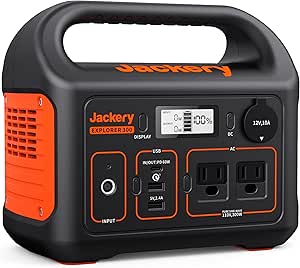
Jackery Explorer 300 Portable Power Station, 293Wh Lithium Battery, Solar Generator for Camping and Outdoors
The Jackery Explorer 300 stands out for its portability and quick recharging, making it ideal for campers and outdoor enthusiasts who need reliable power without extra weight. Compared with larger units like the Jackery Explorer 2000 v2, it offers less capacity but excels in ease of transport and setup, perfect for short trips. Its 293Wh battery and 300W maximum output are sufficient for small devices, though not for high-demand appliances. The ability to recharge via solar, wall, or car adds flexibility, but since the solar panel isn’t included, users will need to purchase that separately. The compact design at just 7.1 pounds makes it highly portable, yet the limited power output may restrict its use for larger devices or prolonged power needs. Overall, this pick makes the most sense for outdoor adventurers who prioritize lightweight gear and quick setup over high capacity and raw power.
Pros:- Lightweight and easily portable at just 7.1 pounds
- Fast recharging via wall, car, or solar (panel not included)
- Multiple charging options for versatility outdoors
- Compatible with solar panels for eco-friendly power
Cons:- Limited to 300W maximum output, restricting larger device use
- Battery capacity may not sustain high-power devices for long
Best for: Outdoor enthusiasts, campers, and emergency prep buyers needing portable, easy-to-carry power for low- to moderate-demand devices
Not ideal for: Users needing to power high-wattage appliances or run multiple devices for extended periods, as the capacity and output are limited
- Wattage:300 watts
- Battery Capacity:293Wh
- Weight:7.1 pounds
- Power Outlets:2 AC outlets, 1 USB-C PD port, 1 fast charge 3.0 port, 1 USB-A port, 1 DC car port
- Input/Output:USB-C PD In/Out
- Recharging Time:2 hours to 80% via wall outlet
Bottom line: This is an excellent choice for lightweight outdoor use where portability and quick recharge are priorities over high power capacity.
Anker 737 Power Bank, 140W Max 3-Port Laptop Portable Charger, 24,000mAh, Smart Display, Compatible with iPhone 16/15/14, Vision Pro, Samsung, MacBook, and More
The Anker 737 Power Bank provides a robust 24,000mAh capacity with 140W output, making it well-suited for travelers and mobile professionals who need to keep laptops and devices charged throughout the day. Unlike the Jackery Explorer 300, it’s designed for smaller, portable electronics and not meant for high-wattage appliances or outdoor power needs. Its smart display offers real-time monitoring, a feature absent in many competitor models, allowing users to optimize charging and avoid surprises. While its 22 oz weight adds some bulk, it remains highly portable for a device of this power. The need for a 140W charger and specific cables might limit convenience, but its rapid 52-minute recharge time and compatibility with various devices make it a practical choice for those who need quick juice on the fly. Overall, this makes the most sense for frequent travelers or remote workers wanting dependable, fast charging for laptops and smartphones.
Pros:- High-capacity 24,000mAh battery for multiple device charges
- Fast 140W Power Delivery for quick laptop recharging
- Smart digital display provides real-time power info
- Travel-friendly and TSA-approved
Cons:- Requires specific cables and a 140W charger for optimal use
- Relatively heavy at 22 oz for a portable device
Best for: Travelers, remote workers, and professionals who need high-capacity portable charging for laptops and multiple devices
Not ideal for: People seeking large power stations for home backup or outdoor camping, due to its limited wattage and number of ports
- Battery Capacity:24,000mAh
- Maximum Power Output:140W
- Number of Ports:3 USB-C, 1 USB-A
- Charging Technology:Power Delivery 3.1
- Recharging Time:52 minutes
- Dimensions:6.1 x 2.1 x 1.9 inches
Bottom line: This power bank excels for travelers needing fast, reliable portable charging for laptops and high-demand devices, though it isn’t suited for high-capacity outdoor power needs.
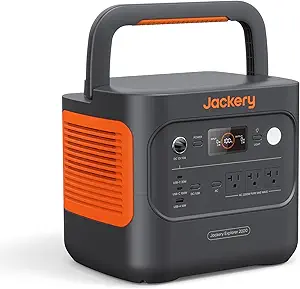
Jackery Explorer 2000 v2 Portable Power Station, 2042Wh LiFePO4 Battery, 2200W Solar Generator, USB-C PD 100W Fast Charging
The Jackery Explorer 2000 v2 offers an impressive 2042Wh capacity paired with 2200W output, making it ideal for backup power, small business needs, and serious outdoor use. It’s notably more portable than traditional 2kWh units thanks to its lighter weight of 39.5 pounds, yet it still provides enough juice to run essential appliances or power tools. Its fast charging, with a 102-minute full charge via AC and 6 hours with solar, outperforms many competitors like the EcoFlow DELTA 2, especially for quick turnaround. The quiet operation under 30dB and 10-year warranty add to its appeal for continuous, reliable use. The limited number of outlets (3 AC) could restrict simultaneous device use, but overall, this power station balances capacity, portability, and eco-friendliness well for those who need substantial backup power without sacrificing mobility.
Pros:- High-capacity 2042Wh battery suitable for backup and outdoor use
- Fast charging with AC and solar options
- Lighter and more portable than typical 2kWh units
- Quiet operation and up to 10-year warranty
Cons:- Limited to 3 AC outlets, restricting simultaneous high-power device use
- High price point relative to smaller portable options
Best for: Homeowners, small businesses, or campers who need high-capacity, portable backup power with fast recharge times
Not ideal for: Users seeking a lightweight, ultra-portable unit for day trips or short outdoor excursions with minimal power demands
- Wattage:2200 watts
- Capacity:2042Wh
- Battery Type:LiFePO4
- Weight:39.5 pounds
- Charging Time:102 minutes (AC), 6 hours (solar)
- Number of Outlets:3 AC outlets
Bottom line: This is a top choice for those who need substantial portable power for backup or work, accepting some added weight and cost for capacity and speed.
Anker Prime Power Bank, 26,250mAh, 300W Max Output, 3-Port Portable Charger with App Control, TSA-Approved, for MacBook, iPhone 17/16 Series, and More
The Anker Prime Power Bank combines a high 26,250mAh capacity with a formidable 300W maximum output, making it a versatile companion for power-hungry laptops and multiple devices. Its 3 ports, including dual USB-C, support fast charging, and the app control feature allows for detailed device management. Compared with the Jackery Explorer 300, it’s more focused on device charging rather than outdoor power supply, with a sleek design suitable for daily carry. Its rapid 50% recharge in just 13 minutes with dual USB-C inputs is a standout feature, ideal for busy schedules. However, the absence of detailed weight and dimension info can make portability assessment difficult, and the price might be a barrier for casual users. This power bank suits tech-heavy users who require reliable, fast, and high-power portable charging for multiple devices.
Pros:- Massive 26,250mAh capacity for multiple device charges
- Powerful 300W max output supports fast laptop charging
- Smart app control and detailed monitoring
- Rapid dual USB-C recharging in 13 minutes
Cons:- Price and availability could be limiting factors
- Size and weight details are not specified, affecting portability assessment
Best for: Tech-savvy professionals and travelers needing high-power, fast-charging portable power for laptops and multiple devices
Not ideal for: Outdoor users or campers seeking a dedicated outdoor power station with high wattage and solar compatibility
- Battery Capacity:26,250mAh
- Max Output Power:300W
- Ports:2 USB-C, 1 USB-A
- Fast Charging Output:140W
- Recharge Time:13 minutes (50%) with dual USB-C input)
Bottom line: This device is best suited for tech enthusiasts needing quick, high-power portable charging with smart management features, but it’s less ideal for outdoor or emergency use.
Anker Portable Power Station SOLIX C300, 288Wh LiFePO4 Battery, 300W (600W Surge) Solar Generator
The Anker SOLIX C300 offers a compact, lightweight design with a 288Wh LiFePO4 battery and a 300W continuous output, making it suitable for outdoor excursions, travel, and emergency scenarios. Its multiple charging ports, including fast USB-C, provide versatile device support, while the quiet operation of 25dB enhances outdoor usability. Compared to larger, more powerful stations like the Jackery Explorer 2000 v2, it sacrifices some capacity but gains in portability and ease of transport. The long cycle life of 3,000 cycles and the ability to recharge via wall or solar (though solar panels are sold separately) add to its appeal. The lack of specific weight and dimension info could complicate packing decisions for some users, but overall, it’s well-suited for those requiring lightweight, reliable power for outdoor adventures or minor emergencies.
Pros:- Portable and lightweight for outdoor use
- Multiple charging options including fast USB-C
- Long cycle life of 3,000 cycles for durability
- Quiet operation at 25dB
Cons:- Not compatible with certain solar panels (e.g., Anker SOLIX PS30)
- Weight and size details are not provided, affecting portability planning
Best for: Campers, travelers, and emergency prep buyers seeking lightweight, versatile portable power with long-lasting battery life
Not ideal for: Users needing to power high-wattage appliances or expecting to run multiple devices simultaneously for extended periods
- Battery Capacity:288Wh
- Power Output:300W (600W Surge)
- Charging Ports:8 including AC, USB-C, USB-A, car socket
- Cycle Life:3,000 cycles
- Noise Level:25dB
Bottom line: This power station is a reliable, lightweight solution for outdoor use and emergency backup where high capacity isn’t critical, provided solar panels are purchased separately.
EcoFlow DELTA 2 Portable Power Station, 1024Wh LiFePO4 Battery, 1800W AC/100W USB-C, Solar Generator for Home Backup, Camping & RVs
The EcoFlow DELTA 2 excels in delivering substantial power with its 1024Wh LiFePO4 battery, making it suitable for powering multiple appliances during outdoor adventures or emergencies. It surpasses smaller models like the Jackery Explorer 1000 v2 in capacity and expandability, supporting up to 3kWh with additional batteries. Its rapid 0-80% charge in 50 minutes and solar compatibility highlight its green energy credentials. However, at 27 pounds, it’s less portable than lighter options, and its higher price may deter budget-conscious buyers. This station is best suited for those needing serious power on the go—campers, RVers, or home backup users—who don’t mind the weight for extended runtime and expandability.
Pros:- Fast charging speeds with 0-80% in 50 minutes
- Expandable capacity up to 3kWh for flexibility
- High power output suitable for most appliances
- Supports solar recharging for eco-friendly use
Cons:- Relatively heavy at 27 pounds reduces portability
- Limited in base capacity compared to larger power stations
- Higher price point may be a barrier for some
Best for: Campers or homeowners seeking a versatile, high-capacity power source with renewable energy options
Not ideal for: Lightweight backpackers or users prioritizing ultra-portability, given its weight and size
- Battery Capacity:1024Wh
- Battery Chemistry:LiFePO4 (LFP)
- AC Output:1800W
- USB-C Output:100W
- Number of Outlets:15
- Weight:27 Pounds
Bottom line: This power station is ideal for users needing robust, expandable power in off-grid or backup scenarios, accepting some weight for capacity.
Jackery Explorer 1000 v2 Portable Power Station, 1070Wh LiFePO4 Battery, 1500W AC/100W USB-C, Fast 1-Hour Charge, Solar Generator for Camping, Emergency, RV, Off-Grid
The Jackery Explorer 1000 v2 delivers a compelling blend of power and portability, with a 1070Wh LiFePO4 battery capable of supporting 1500W appliances. It surpasses smaller models like the Jackery Explorer 300 in capacity and is easier to carry than the much heavier EcoFlow DELTA 2, making it well-suited for outdoor enthusiasts who need quick recharging—just one hour for a full charge stands out. Its compatibility with Jackery solar panels offers clean energy recharging, though the solar panel isn’t included, and it requires Jackery’s ecosystem for optimal use. This device strikes a balance between power, weight, and speed, making it ideal for camping or emergency scenarios where portability and rapid charging are priorities.
Pros:- Powerful 1500W output supports multiple devices
- Fast recharge in just one hour
- Lightweight and portable for outdoor use
- Long-lasting LiFePO4 battery with over 10 years of lifespan
Cons:- Requires Jackery-specific solar panels for solar charging
- Limited to 7 outlets, restricting multiple simultaneous high-power connections
- No included solar panel in the package
Best for: Campers or emergency prepper users who want high power with fast recharge times and portability
Not ideal for: Heavy-duty power users needing expandable capacity or multiple outlets for large appliances, as it’s limited to 7 outlets and 1070Wh
- Wattage:1500 watts
- Battery Capacity:1070Wh
- Fast Charging:1 hour
- Weight:23 Pounds
- Output Outlets:7
- Compatibility:Jackery solar panels
Bottom line: This power station is a smart choice for outdoor adventurers who need quick, reliable power without excess weight or complexity.

How We Picked
Our evaluation focused on a combination of capacity, portability, build quality, charging options, and value for money. We prioritized models that balance high performance with ease of use, considering how well each device suits different scenarios like camping, emergencies, or off-grid work. Battery technology, such as LiFePO4 versus lithium-ion, was also a key factor, with a preference for safer, longer-lasting options. The ranking reflects the overall versatility and reliability of each power station, with emphasis on real-world usability rather than just raw specs. Cost was considered, but only when it significantly impacted the performance or feature set for typical users.
Factors to Consider When Choosing Portable Power Stations
Choosing the right portable power station depends on your specific needs and how you plan to use it. Consider capacity first—larger batteries support more devices and longer use, but often come with increased weight. Portability is essential if you move frequently or hike, so balance size and weight accordingly. Compatibility with your devices, including ports and charging speeds, can make a significant difference. Price varies widely, so identify which features are worth the investment for your intended use, whether for emergency backup, camping, or daily device charging. Lastly, consider battery technology: LiFePO4 batteries last longer and are more stable but tend to cost more upfront.Capacity and Power Output
The capacity of a power station, measured in watt-hours (Wh), determines how long it can power your devices. Larger capacities like the 2042Wh Jackery Explorer 2000 v2 support multiple devices for extended periods, ideal for off-grid living or serious camping. Smaller models, such as the Jackery Explorer 300, are more portable but limited to light use. Power output, particularly surge and continuous wattage, also matters—ensure the station can handle your most demanding appliances. If you plan to run a refrigerator or power tools, prioritize higher wattage ratings. For casual device charging, lower wattage models often suffice.
Portability and Size
Size and weight are key when selecting a portable power station. Larger models like the EcoFlow DELTA 2 are better suited for stationary use or vehicle-based scenarios, thanks to their substantial capacity. Conversely, compact units such as the Anker 737 Power Bank are perfect for travelers who need quick, on-the-go device charges without bulk. Think about your typical use case—if you carry your gear often, lighter options will minimize fatigue. Also, consider the handle design and overall form factor, as these influence how easy it is to transport the device over distances.
Charging Options and Speed
Fast charging capabilities and multiple input options enhance convenience. Many models support AC wall charging, solar input, and sometimes car adapters, providing flexibility in different environments. For example, the Jackery Explorer 1000 v2 can be recharged in about an hour with fast charging, ideal when quick turnaround matters. Solar compatibility can be a game-changer for off-grid use, but check the input wattage and compatibility with solar panels. USB-C PD ports are increasingly common and vital for fast charging modern smartphones and laptops. Ensuring your power station supports your devices’ charging standards can save time and reduce frustration.
Battery Technology and Longevity
Battery chemistry impacts longevity, safety, and total lifespan. LiFePO4 batteries, used in models like the Jackery Explorer 1000 v2 and EcoFlow DELTA 2, offer longer cycle life and better thermal stability compared to traditional lithium-ion batteries. This means more charge-discharge cycles over the unit’s lifespan, decreasing replacement costs and increasing reliability. However, LiFePO4 models tend to cost more initially. Assess your expected usage and whether the investment in advanced chemistry matches your needs, especially if the power station will see frequent use or heavy loads.
Frequently Asked Questions
Can I run my refrigerator off a portable power station?
Many portable power stations can run small to medium-sized refrigerators, but you need to check their continuous wattage and surge ratings. Refrigerators typically require 100-200W, but some models can surge higher at startup. Units like the EcoFlow DELTA 2, which offers 1800W continuous power, are capable of supporting most household fridges. Always verify that the power station’s specs exceed your appliance’s startup and running wattage to prevent overloads. For larger or more power-hungry refrigerators, a high-capacity station with sufficient surge capacity is essential.
How long will a portable power station last during a power outage?
The runtime depends on the capacity of the power station and the power draw of your devices. For example, a 1000Wh unit running a 50W device can theoretically last around 20 hours. However, real-world factors like inefficiencies and simultaneous device use shorten this time. Larger capacity units like the Jackery Explorer 2000 v2, with over 2000Wh, can sustain multiple devices for days, making them suitable for emergency preparedness. To estimate your needs, list your essential devices and their wattages, then divide the total watt-hours by your total load to get a rough idea of runtime.
Are LiFePO4 batteries worth the extra cost?
LiFePO4 batteries provide significant advantages in lifespan, safety, and thermal stability over traditional lithium-ion cells, often lasting over 2000 cycles. This makes them a cost-effective choice over the long run, especially if you plan to use the power station frequently or for critical applications. Although initial costs are higher, their durability reduces replacement and maintenance expenses. If you need a reliable, long-lasting unit for off-grid use or emergency backup, investing in a LiFePO4-powered station is often a smart decision. However, for casual or infrequent use, more affordable lithium-ion options may suffice.
How do I choose the right capacity for my needs?
Selecting the right capacity depends on the devices you want to power and how long you need them to run. For charging smartphones, tablets, and small gadgets, a compact 300Wh model might be enough. If you need to run a laptop or small appliances during camping or outages, look for units around 1000Wh or more. For extended use or supporting multiple devices simultaneously, larger models like the Jackery Explorer 2000 or EcoFlow DELTA 2 are better suited. Always estimate your total power needs and add some buffer to ensure your power station can handle unexpected loads or longer durations.
Conclusion
For general outdoor enthusiasts and emergency preppers, the Jackery Explorer 1000 v2 offers a balanced mix of capacity and portability, making it the best overall choice. Those seeking maximum capacity for prolonged use will find the EcoFlow DELTA 2 ideal, especially for home backup or extended off-grid adventures. If budget is your primary concern, the Anker 737 Power Bank provides quick device charging in a compact form. Beginners or casual users should consider smaller, simpler models, while professionals requiring heavy-duty power should look at high-capacity, LiFePO4-based options. Tailor your choice to your specific needs, and you’ll find a reliable power companion for years to come.